Description
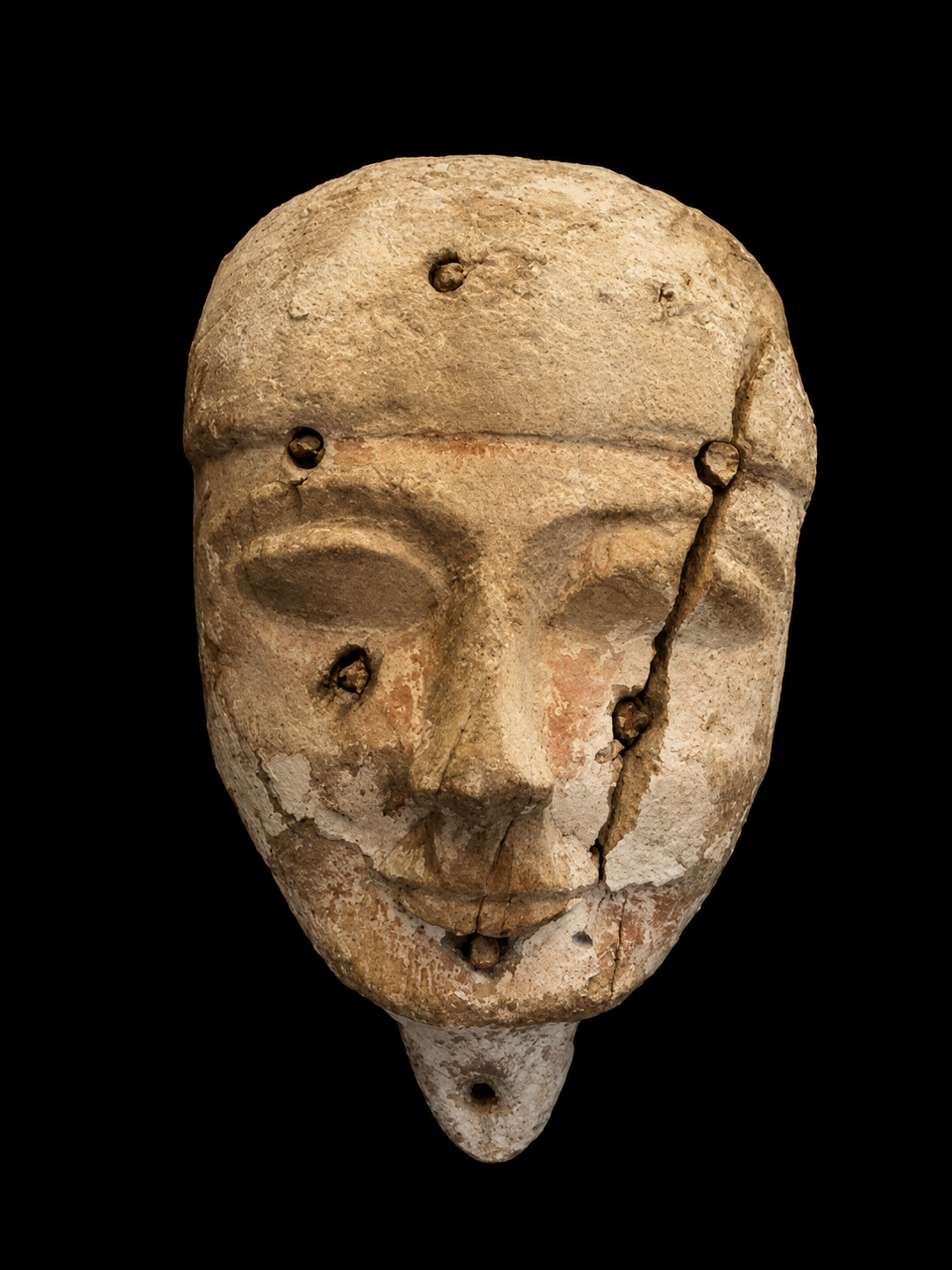
This Egyptian wooden sarcophagus mask, dating to the 1st Millennium BC, once adorned the coffin of the deceased, serving as an idealized portrait intended to preserve identity and ensure eternal life in the afterlife. Skillfully carved from wood and originally covered with a layer of painted gesso, the mask retains traces of its original polychrome decoration, reflecting the vibrant artistic traditions of ancient Egyptian funerary craftsmanship.
The serene facial features, carefully modeled eyes, and stylized wig embody the timeless conventions of Egyptian funerary art, emphasizing spiritual rebirth rather than individual likeness. Ancient repairs and surviving restoration pins testify to the mask’s long history and continued reverence through antiquity.
During the 1st Millennium BC, such masks formed an integral part of Egyptian burial customs, protecting the deceased while symbolically transforming them into an eternal being under the care of Osiris, the god of the afterlife. Today, this rare funerary mask stands as a remarkable testament to the religious beliefs, artistic mastery, and enduring cultural legacy of ancient Egypt.
REFERENCE #
SI-EG-1068
CIVILIZATION
Egyptian. 1st Millennium B.C.E.
SIZE
H. 30 cm
CONDITION
Fair condition
PRICE
$9000
PROVENANCE
Private Jerusalem Collection
Frequently Asked Questions
The Egyptian wooden sarcophagus mask served as an idealized portrait placed on the coffin of the deceased. Its purpose was to preserve the identity of the individual and ensure their eternal life in the afterlife, reflecting ancient Egyptian religious beliefs.
The mask was skillfully carved from wood and originally covered with a layer of painted gesso. It retains traces of its original polychrome decoration, showcasing the vibrant artistic traditions of ancient Egyptian funerary craftsmanship.
The serene facial features, carefully modeled eyes, and stylized wig embody the timeless conventions of Egyptian funerary art. They emphasize spiritual rebirth and transformation rather than an individual likeness, reflecting the religious focus on the afterlife.
During the 1st Millennium BC, such masks were integral to Egyptian burial customs. They protected the deceased and symbolically transformed them into an eternal being under the care of Osiris, the god of the afterlife, reinforcing religious beliefs about life after death.
The mask contains ancient repairs and surviving restoration pins, which testify to its long history and the continued reverence it received throughout antiquity, highlighting its cultural and religious significance over time.
The mask is in fair condition and measures 30 centimeters in height, making it a relatively small but significant artifact from ancient Egypt's 1st Millennium BC period.
Today, this rare funerary mask stands as a remarkable testament to the religious beliefs, artistic mastery, and enduring cultural legacy of ancient Egypt, offering valuable insight into their funerary practices and spiritual worldview.