Description
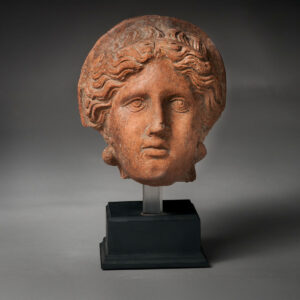
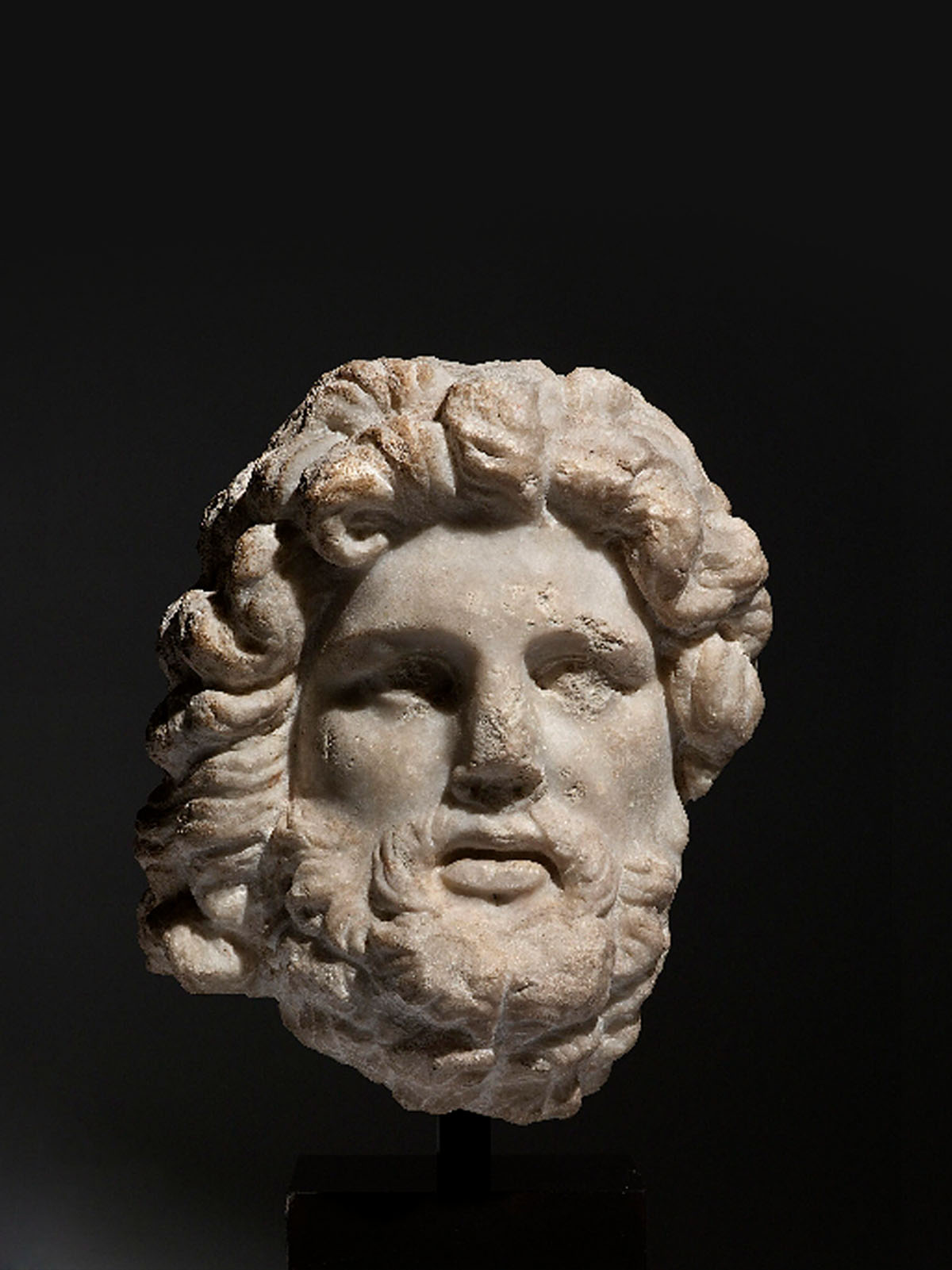
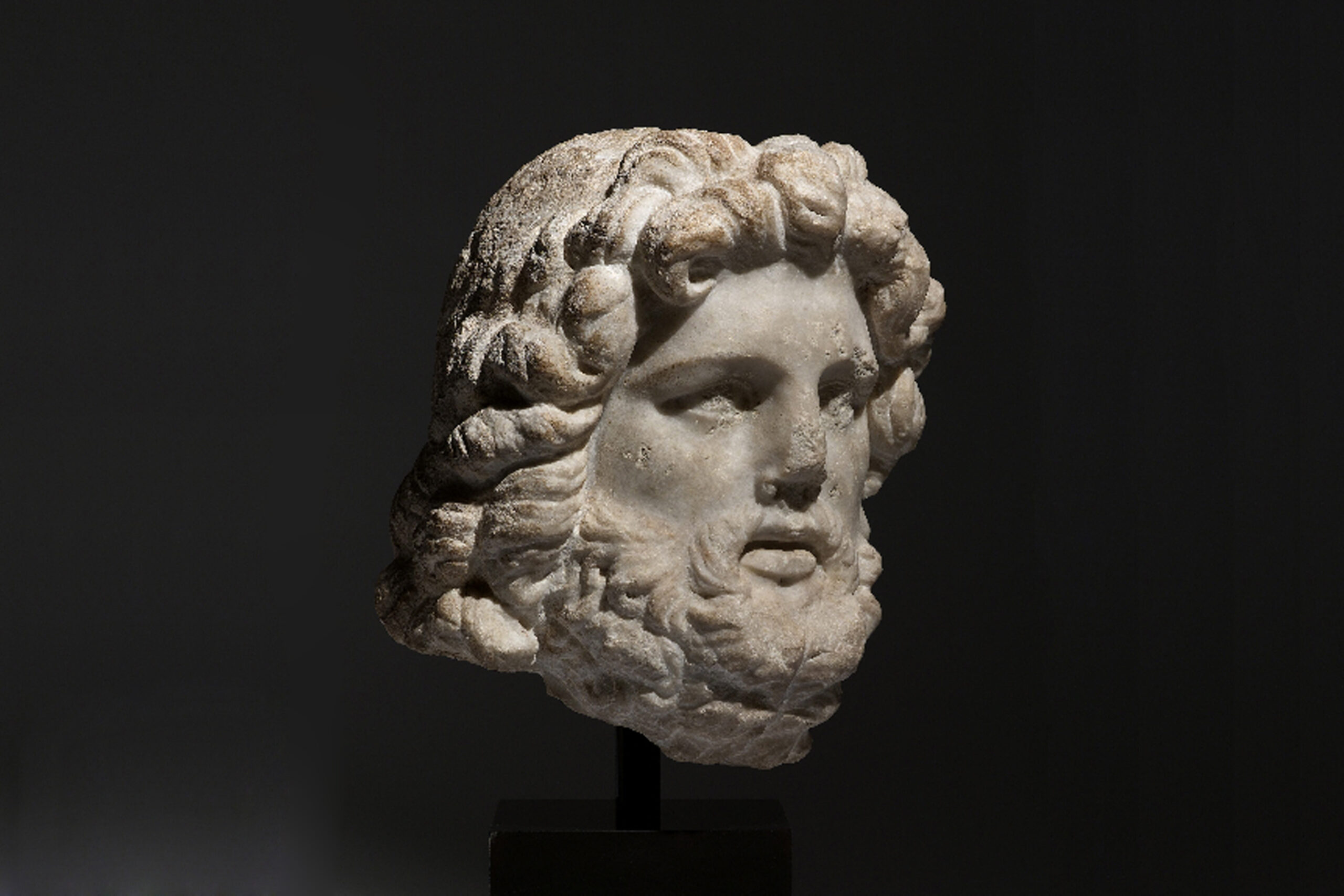
Zeus’ imposing presence was felt throughout Ancient Greece as evidenced by the many sculptures and paintings of his image that make up the region’s archaeological record. This white marble sculpture of Zeus dates from Greece’s Hellenistic period of approximately 300-200 B.C.E., a time when Greek sculpture had entered a Classical period defined by its rigid poses and severe features. This figure’s lush hair, parted lips, and strong brow show the emphasis placed on such stylized details during Greece’s Classical period.
This sculpture is a highly realistic representation of Zeus, and it may be that the sculptor based this image on someone he knew from his everyday life. This sculpture is a breathtaking example of the technical skill and detailed eye of Greece’s celebrated sculptors. The piece has been restored to reveal the sculpture’s original power, although the body has been lost to history’s vagaries.
REFERENCE #
SI_GR_1011
CIVILIZATION
Greek Hellenistic, 300 B.C.E. – 200 B.C.E.
SIZE
H. 30 cm
CONDITION
Fine condition
PRICE
P.O.R
PROVENANCE
English Private Collection of a German Professor, ca 1970’s
Frequently Asked Questions
The Zeus sculpture dates from the Greek Hellenistic period, approximately 300-200 B.C.E., a time when Greek sculpture was characterized by Classical features such as rigid poses and severe expressions.
This sculpture features lush hair, parted lips, and a strong brow, highlighting the Classical period's emphasis on stylized and detailed facial features. These elements contribute to the sculpture's realistic and imposing presence.
No, the sculpture's body has been lost over time, but the head remains in fine condition and has been restored to reveal its original power and detail.
The highly realistic representation suggests that the sculptor may have based the image on someone familiar from everyday life, demonstrating the artist's technical skill and attention to detail.
The sculpture stands at a height of 30 centimeters, making it a relatively small but detailed marble piece.
The sculpture was part of an English private collection owned by a German professor around the 1970s, indicating its history in private hands before being documented.
The sculpture is carved from white marble, a common and valued material in Greek sculpture for its durability and aesthetic qualities.