Description
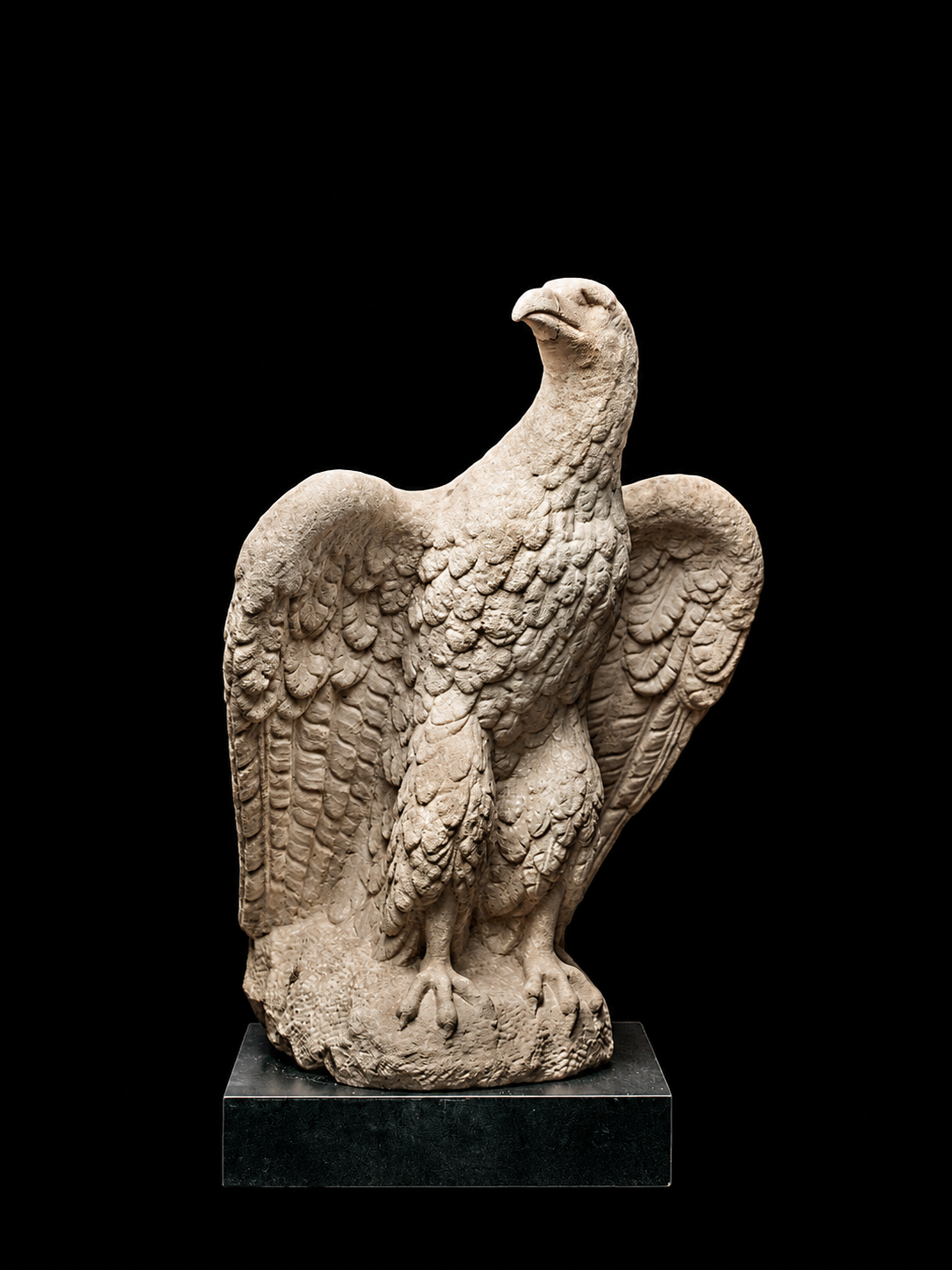
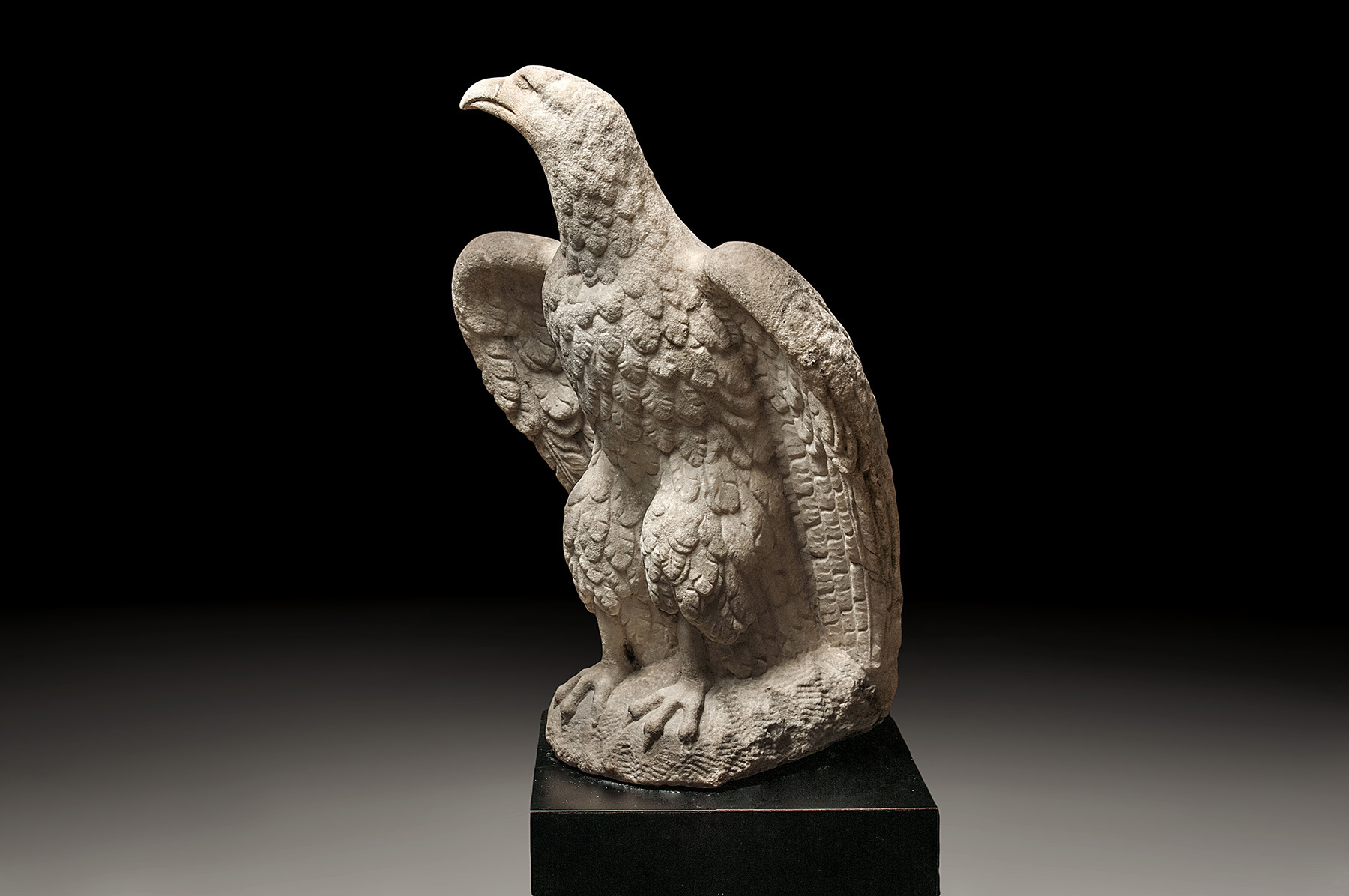
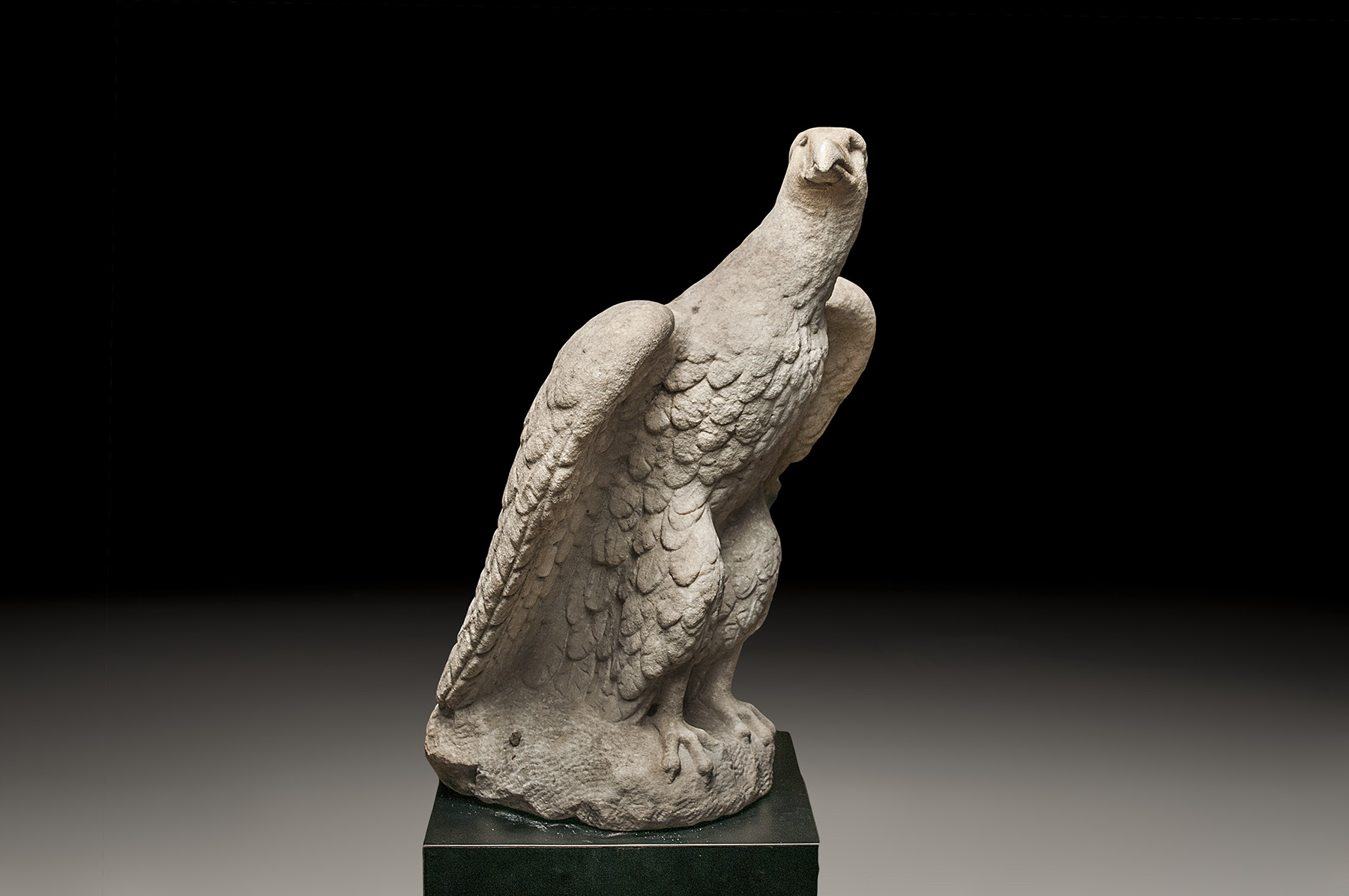
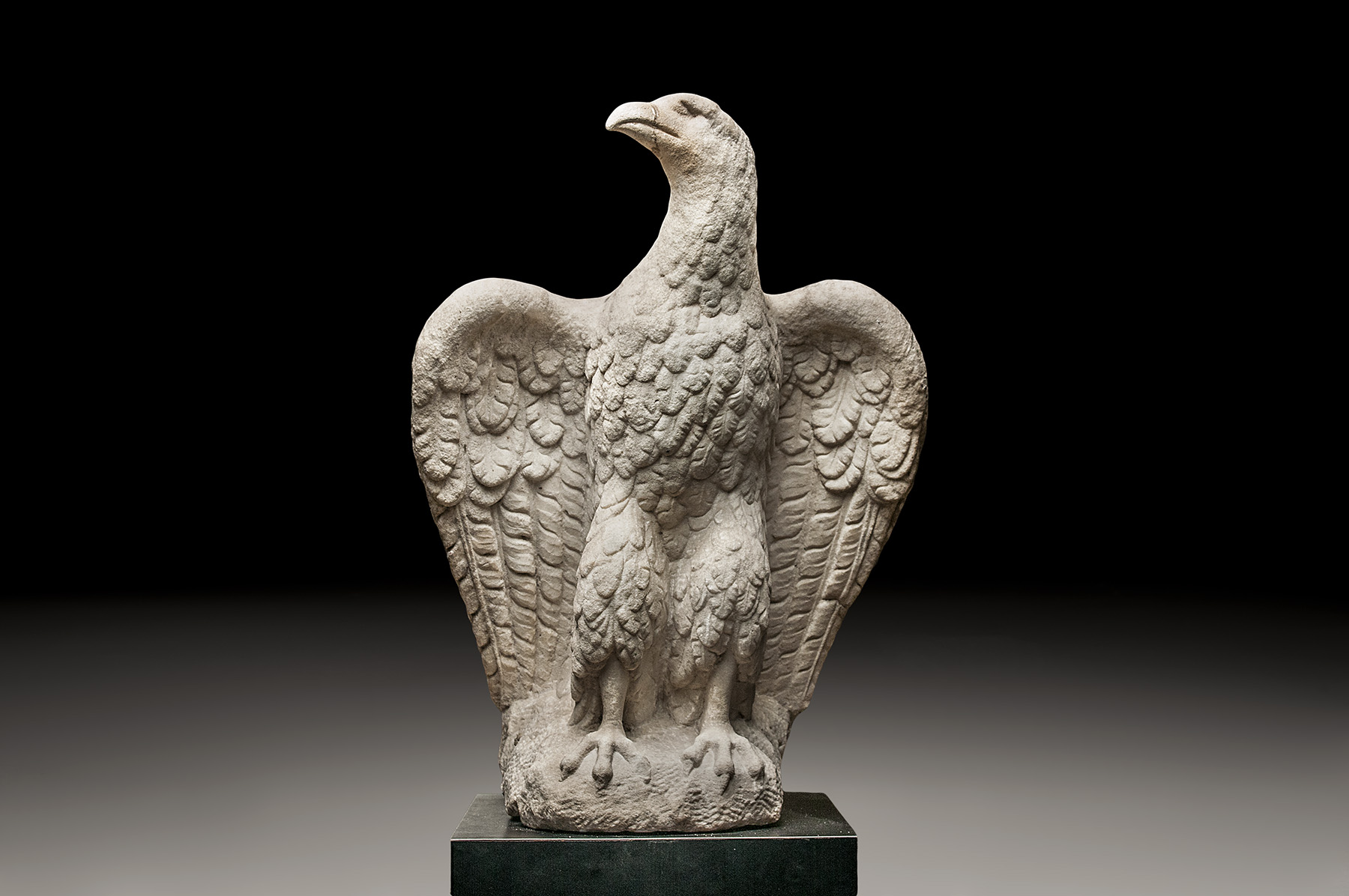
An imposing and exceptionally well-preserved Roman marble eagle, carved in the round and represented standing majestically upon an integral rocky base, its powerful wings raised and spread symmetrically to either side.
The eagle is conceived with a commanding frontal presence. Its long, upright neck rises prominently above the body, the head turned slightly to one side and terminating in the characteristic hooked beak of a bird of prey. The broad wings frame the body in an almost architectural composition, giving the sculpture a striking sense of monumentality and authority.
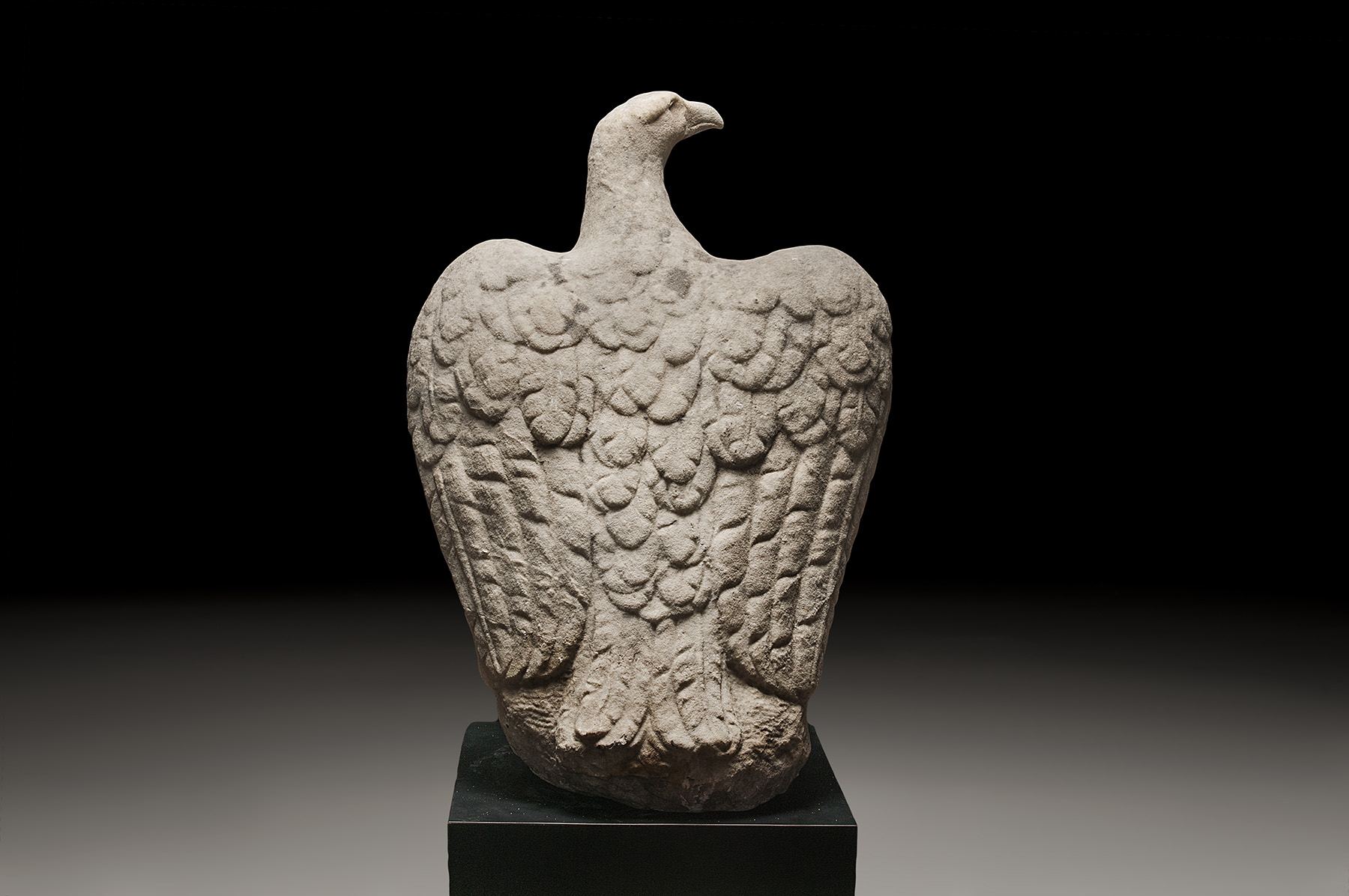
Considerable attention has been devoted to the treatment of the plumage. The breast, shoulders and upper wings are covered by successive registers of broad, overlapping feathers, while the long flight feathers descend along the outer portions of the wings in carefully articulated rows. The powerful legs emerge beneath the dense body plumage and terminate in strongly modeled talons firmly planted upon the rocky base. The reverse is likewise extensively carved, with overlapping plumage continuing across the back and wings, demonstrating that the sculpture was conceived as a fully three-dimensional work intended to be viewed from multiple directions.
The eagle (aquila) was among the most potent symbols of the Roman world. Sacred to Jupiter (Jupiter Optimus Maximus), supreme deity of the Roman pantheon, the eagle embodied divine authority, strength, victory and sovereignty. Its significance extended deeply into Roman state ideology: the aquila served as the sacred standard of the Roman legion and became one of the principal visual expressions of Roman military and imperial power.
The eagle also played an important role in Roman imperial funerary iconography. During the ceremony of imperial apotheosis (consecratio), the release and ascent of an eagle could symbolize the soul of the deceased emperor rising toward the heavens and joining the gods. Consequently, sculptural representations of eagles appeared in religious, imperial, commemorative and funerary settings throughout the Roman world.
At 64 cm from the top of the head to the bottom of the wings, the present eagle is a substantial example of Roman animal sculpture. Its imposing scale, frontal stance, symmetrically displayed wings and extensive carving in the round suggest that it was created for prominent display. Although its precise ancient context is unknown, its scale and powerful Jovian imagery would have been appropriate to an important religious, funerary, commemorative or architectural setting.
Published Parallel
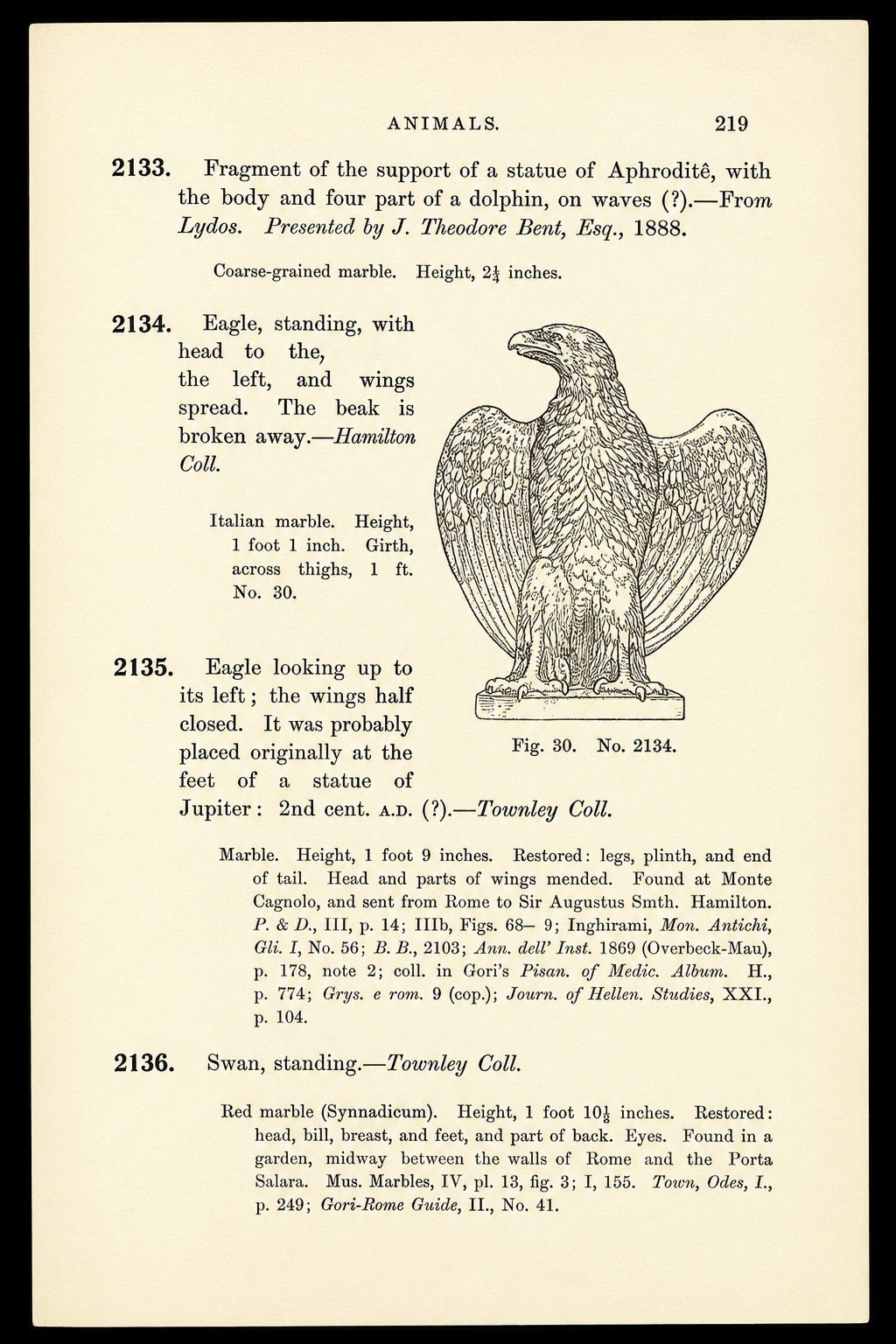
For a closely related Roman marble representation of an eagle standing frontally with its wings spread and its head turned to one side, see:
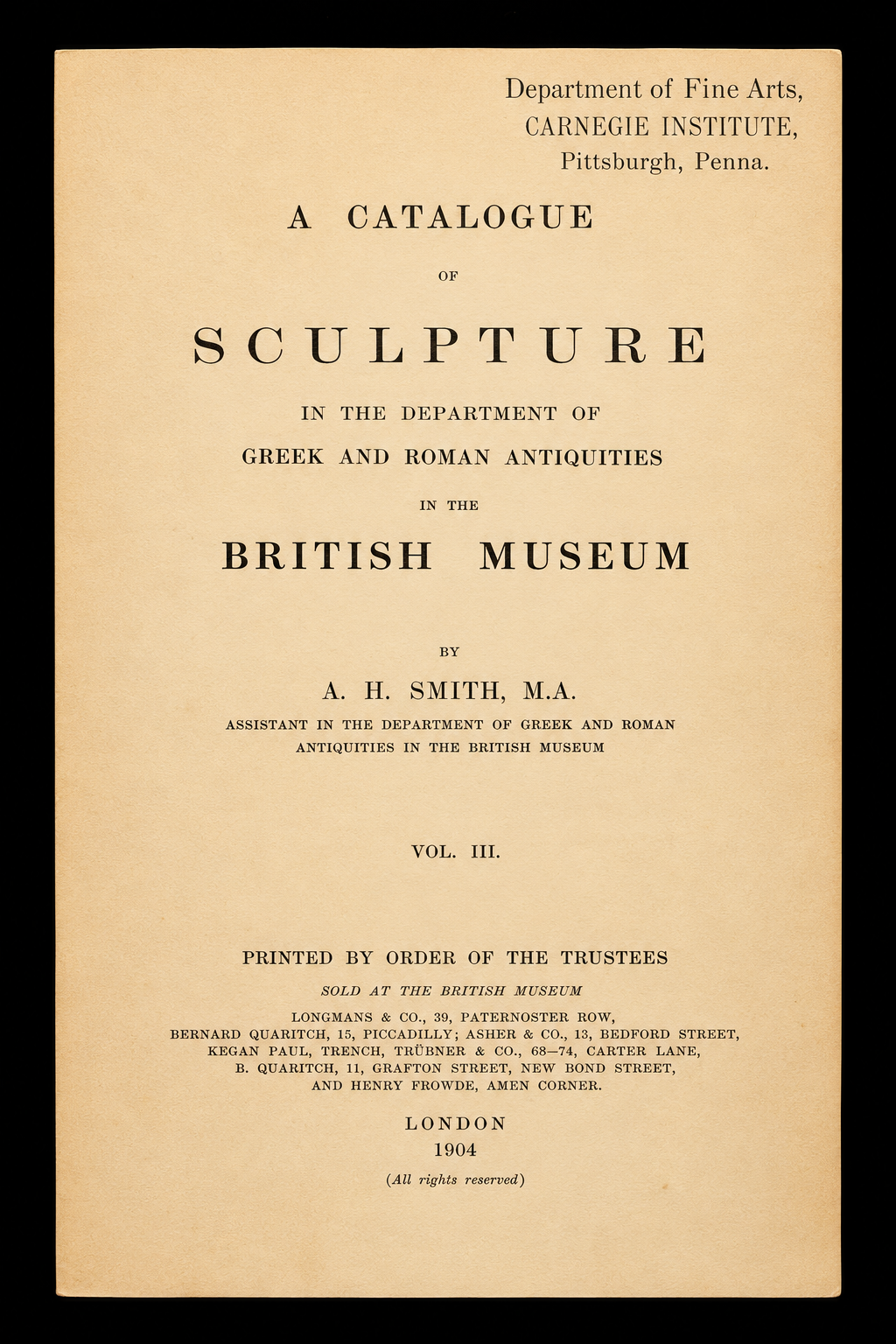
A. H. Smith, A Catalogue of Sculpture in the Department of Greek and Roman Antiquities, British Museum, Vol. III, London, 1904, no. 2134, fig. 30, described as an eagle “standing, with head to the left, and wings spread.”
The British Museum example provides a particularly relevant published comparison for the distinctive frontal, spread-wing composition of the present sculpture.
REFERENCE #
SI_RM_1100
CIVILIZATION
Roman, 100 C.E. – 200 C.E.
SIZE
H. 64 cm
CONDITION
Exceptionally well preserved overall, retaining the ancient head and neck, body, wings, legs, talons and integral base. The marble exhibits surface weathering, abrasions and minor localized losses consistent with age.
The projecting portion of the beak has been restored; the original ancient head and surviving portion of the beak are preserved. The restoration is confined to the missing projecting section of the beak.
PRICE
Price available upon request
PROVENANCE
Guy Ladrière Collection, Paris, acquired in the 1970s.
Baidun Family Collection, Jerusalem, acquired in 2012.
Frequently Asked Questions
The Roman marble eagle dates back to the period between 100 C.E. and 200 C.E., reflecting the artistic style and craftsmanship of that era in Roman civilization.
The sculpture stands at a height of 64 centimeters, making it a sizable and imposing piece suitable for display.
The eagle is in perfect condition except for the beak, which has been restored. This indicates careful preservation and restoration work to maintain its original appearance.
The eagle was purchased from a French private collection in Paris during the 1970s, indicating its provenance and history of ownership.
The price of the Roman marble eagle is not listed publicly and is available only upon request, suggesting it may be a high-value or rare item.
The eagle is depicted with wings spread and legs bent as if preparing to take flight, symbolizing majesty, power, and readiness, common themes in Roman art.