Description
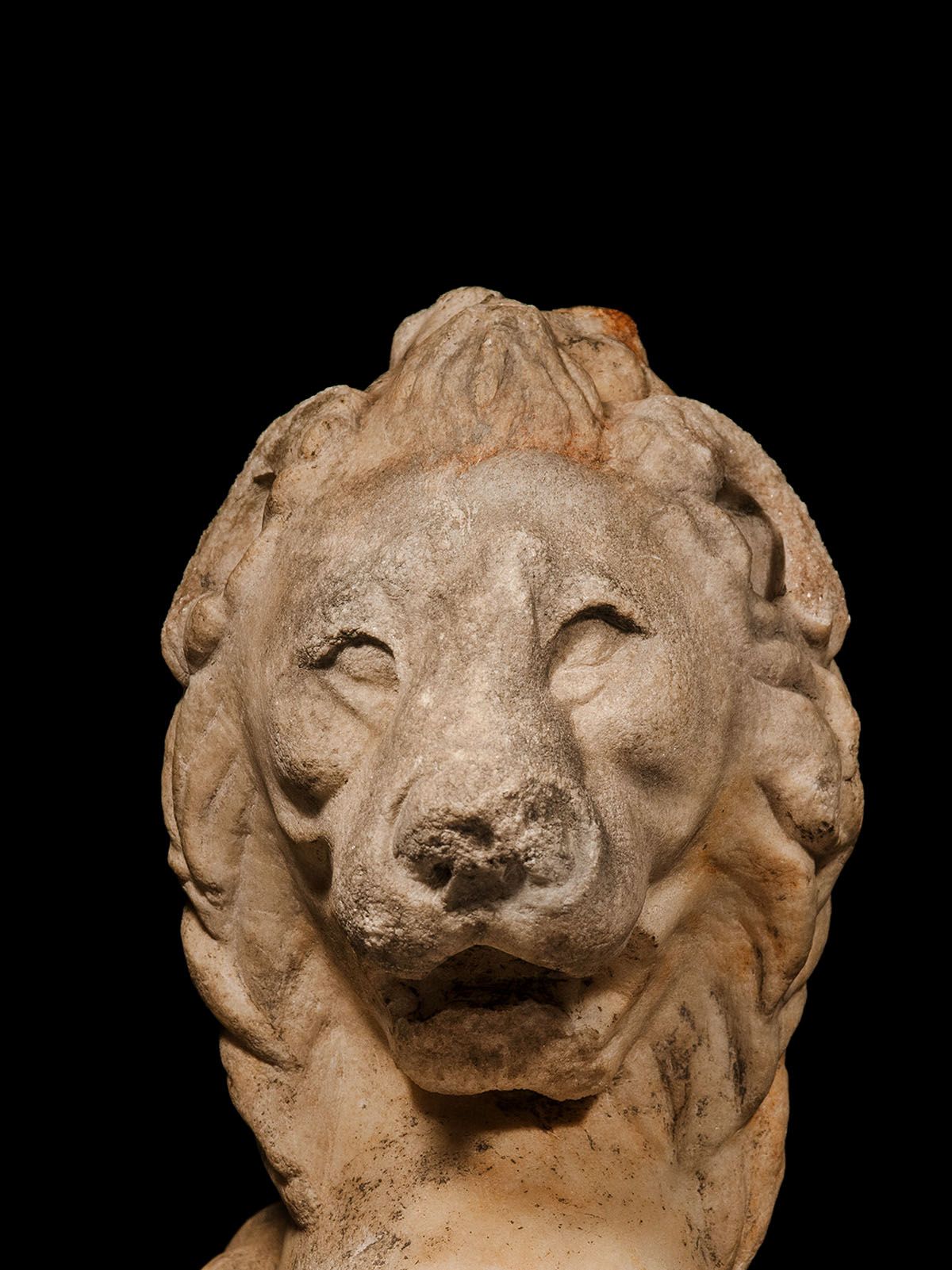
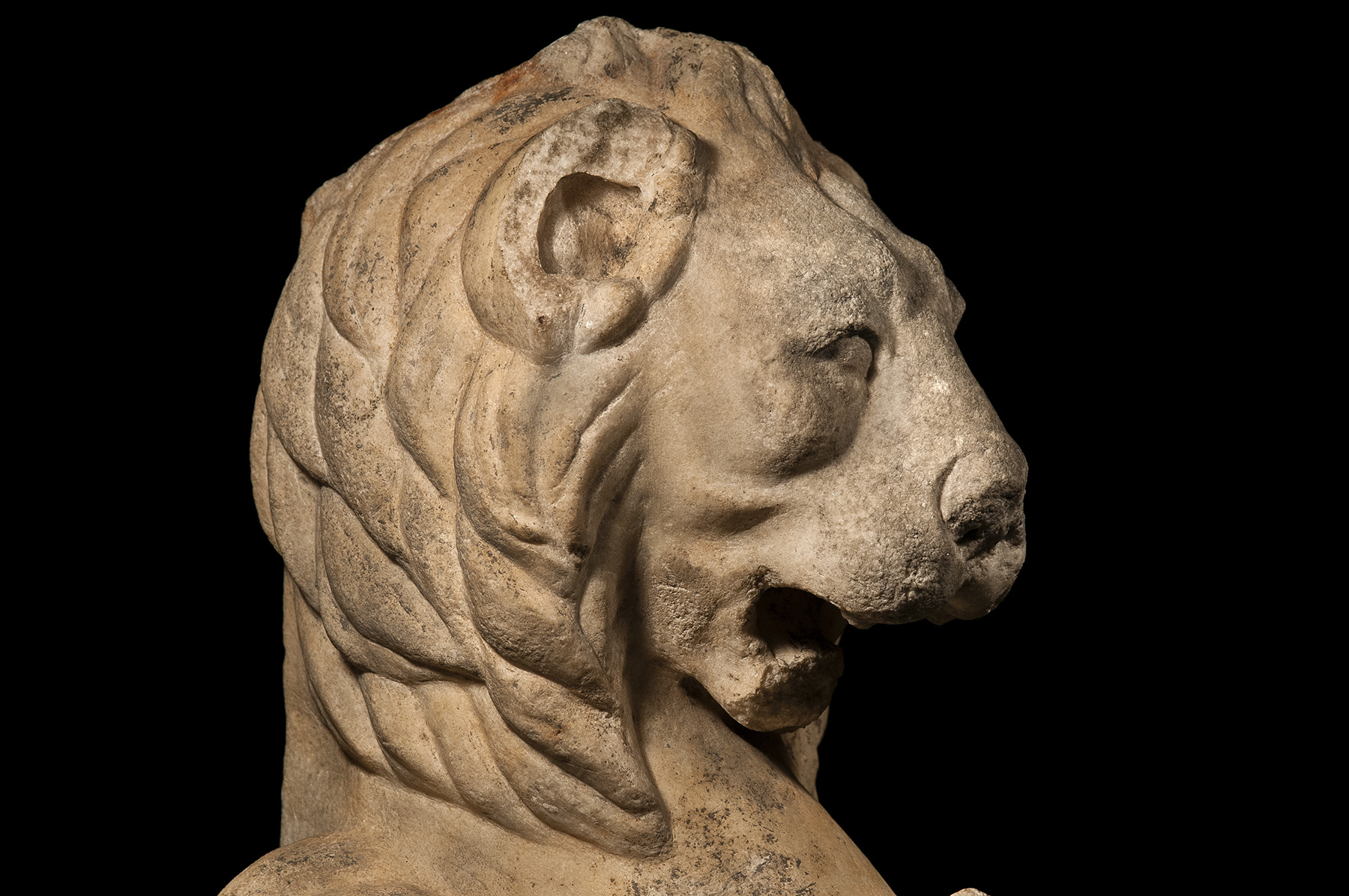
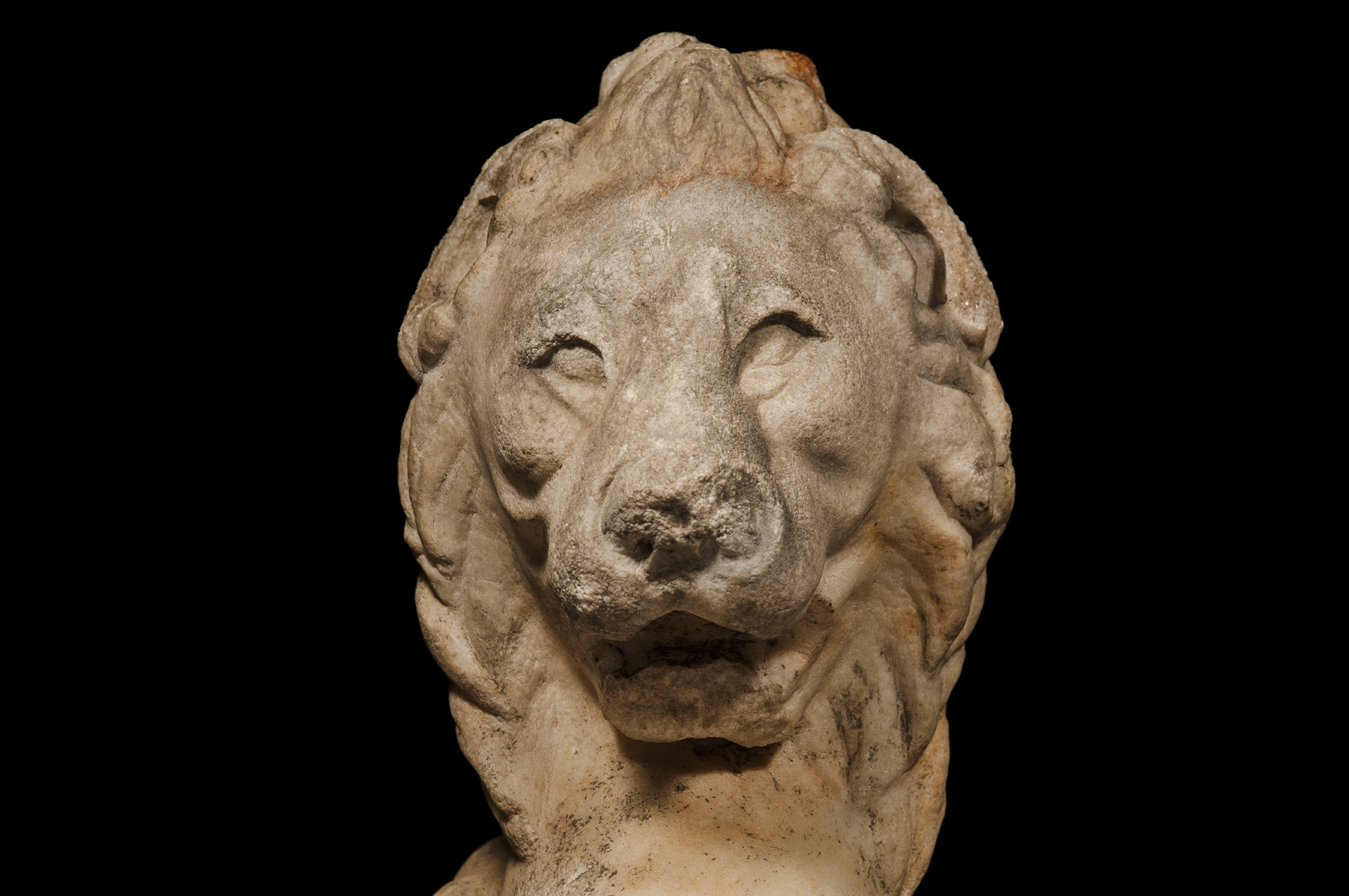
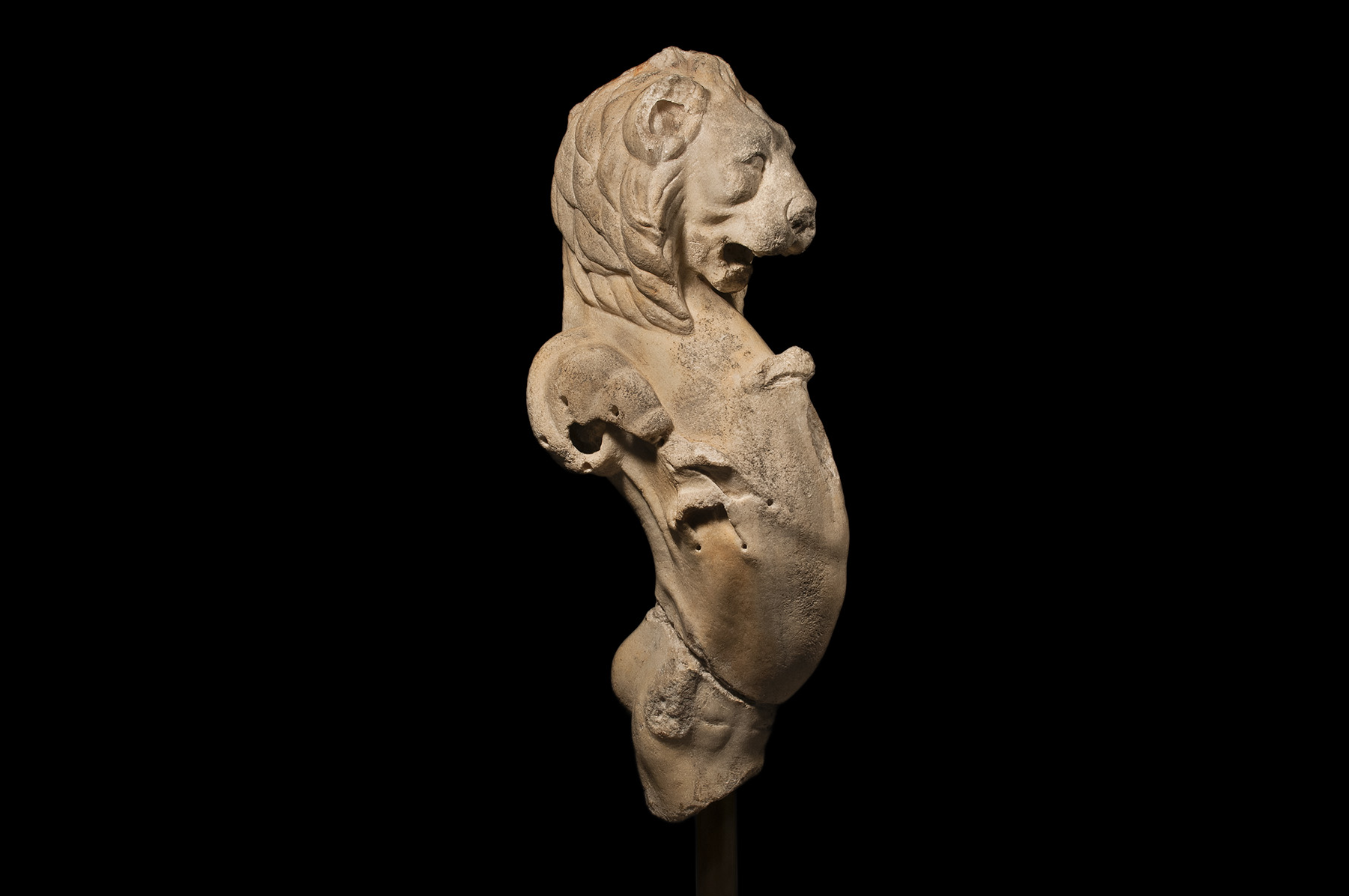
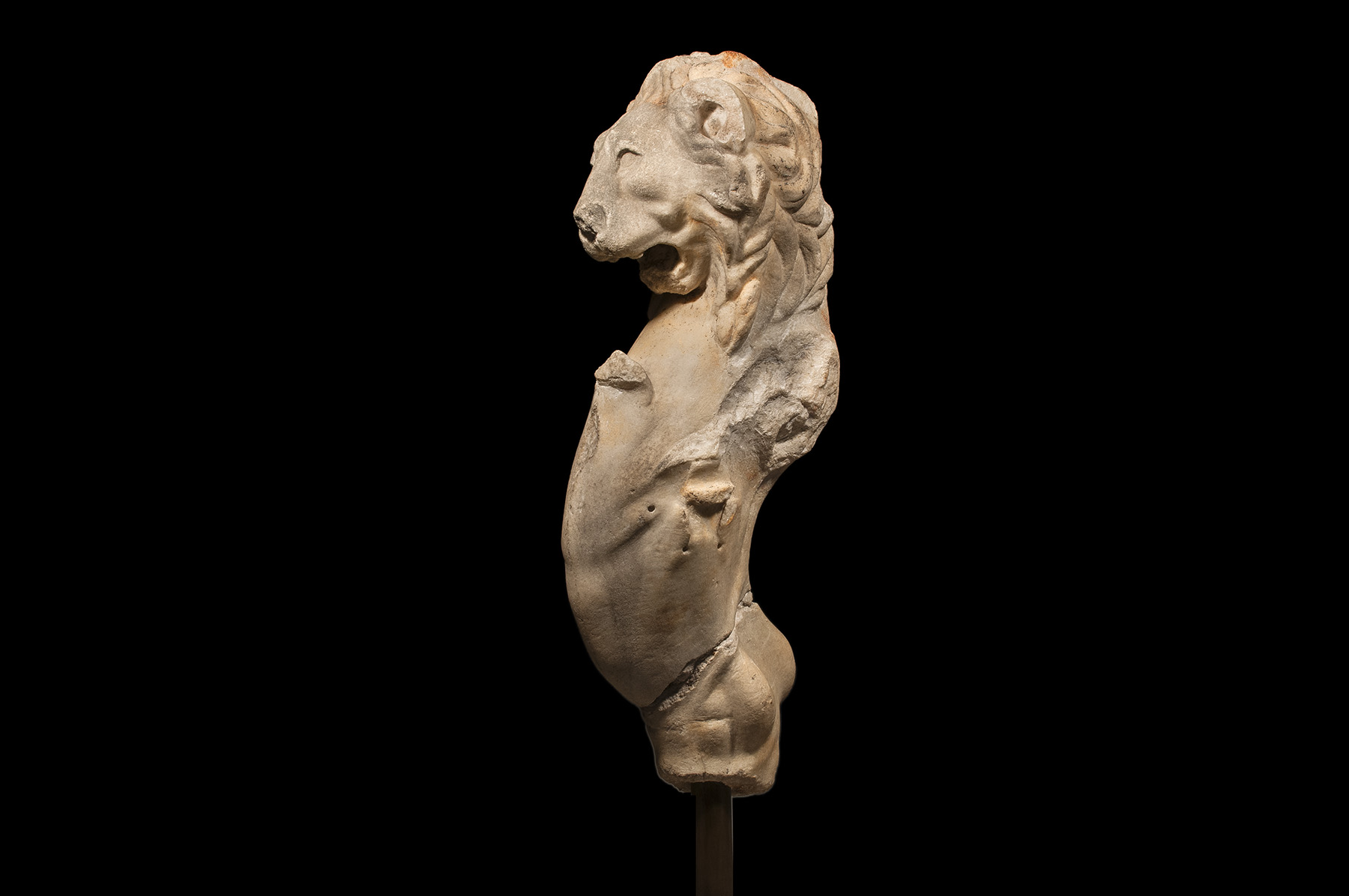
Table leg in the form of an upright lion. It’s back forms an S-shaped curve. The Jaws are wide open, revealing the canines and the tongue. The hair of the mane is arranged in regular tufts. Originally, acanthus leaves adorned it’s chest and sides. The reverse from the shoulders blades upward is flattened, forming a rectangular support. A circular drill hole between the shoulders to insert a horizontal bar supporting the table. On the top of the head, part of the pilaster on which the table top rested is missing. The lack of incised iris and pupil as well as the simple execution of the curls without drilling are indicative of an early date Drill holes on both sides of the lion’s chest where the acanthus emerge.
Reference: For the construction of a Roman table with trapezophoroi in the form of lions, cf. a marble table in the National Museum, Naples, in Richter – 1966, pl 577.
cf. two trapezophori in the Musei Vaticani in Rome, Arachne – 53732 and the Museum of Ancient Art Stockholm, Arachne – 130164
REFERENCE #
SI_RM_1082
CIVILIZATION
Roman, 100 C.E.
SIZE
H. 50 cm
CONDITION
Nose slightly worn, lower jaw and ears fragmentary. The rolled up leaf on the right largely preserved. The leaves on the chest and the left side missing. Preserved from the hips upward. Reassembled from two parts. Right hip slightly worn. Transition to foot preserved
PRICE
Price available upon request
PROVENANCE
English priv. collection 1940’s
Frequently Asked Questions
The table leg is designed in the form of an upright lion with an S-shaped curved back. It features wide-open jaws showing canines and tongue, a mane arranged in regular tufts, and originally had acanthus leaves adorning its chest and sides. The reverse side is flattened to form a rectangular support with a circular drill hole for a horizontal bar.
The early date is suggested by the lack of incised iris and pupil in the lion's eyes and the simple execution of the curls in the mane without drilling. These stylistic features point to an earlier period of Roman craftsmanship around 100 C.E.
The circular drill hole between the shoulders was used to insert a horizontal bar that supported the table top. Additionally, drill holes on both sides of the lion's chest mark where the acanthus leaves originally emerged, indicating decorative elements and structural function.
The sculpture is preserved from the hips upward but has some damage: the nose is slightly worn, the lower jaw and ears are fragmentary, and some acanthus leaves on the chest and left side are missing. It has been reassembled from two parts, with slight wear on the right hip and a preserved transition to the foot.
The table leg comes from an English private collection dating back to the 1940s. This provenance adds historical context and traceability to the artifact's ownership before it became available for study or sale.
Yes, similar Roman tables with trapezophoroi in the form of lions exist, such as a marble table in the National Museum in Naples and two trapezophori in the Musei Vaticani in Rome and the Museum of Ancient Art in Stockholm. These references help contextualize the design and function of the table leg.
The table leg stands 50 cm high and is made of marble, typical of Roman sculptural furniture elements from around 100 C.E. The material and size reflect its use as a sturdy support for a table top.