Description
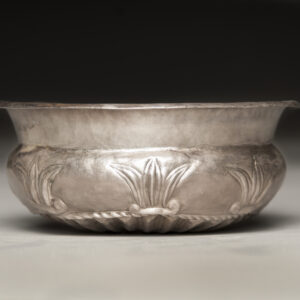
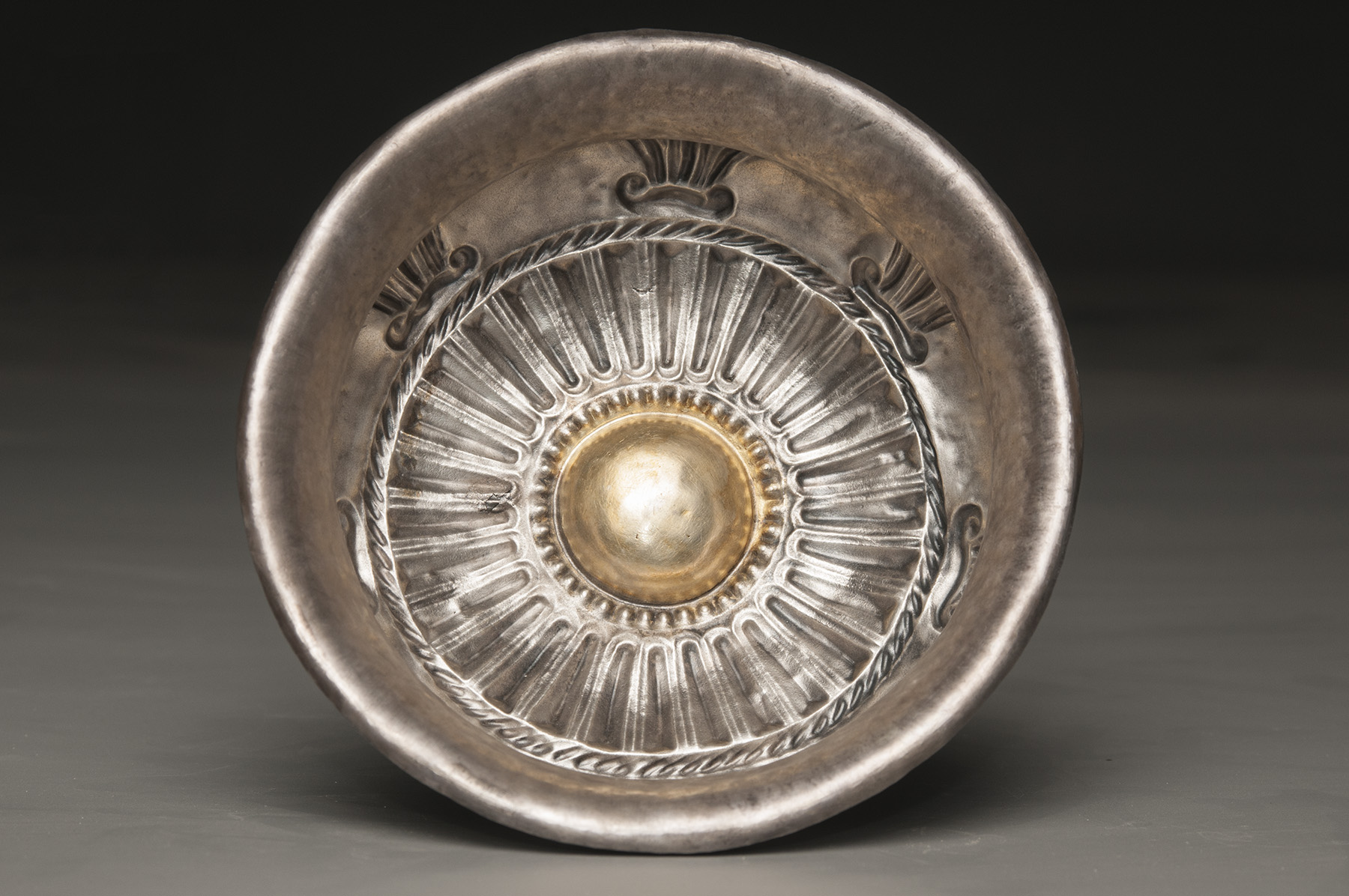
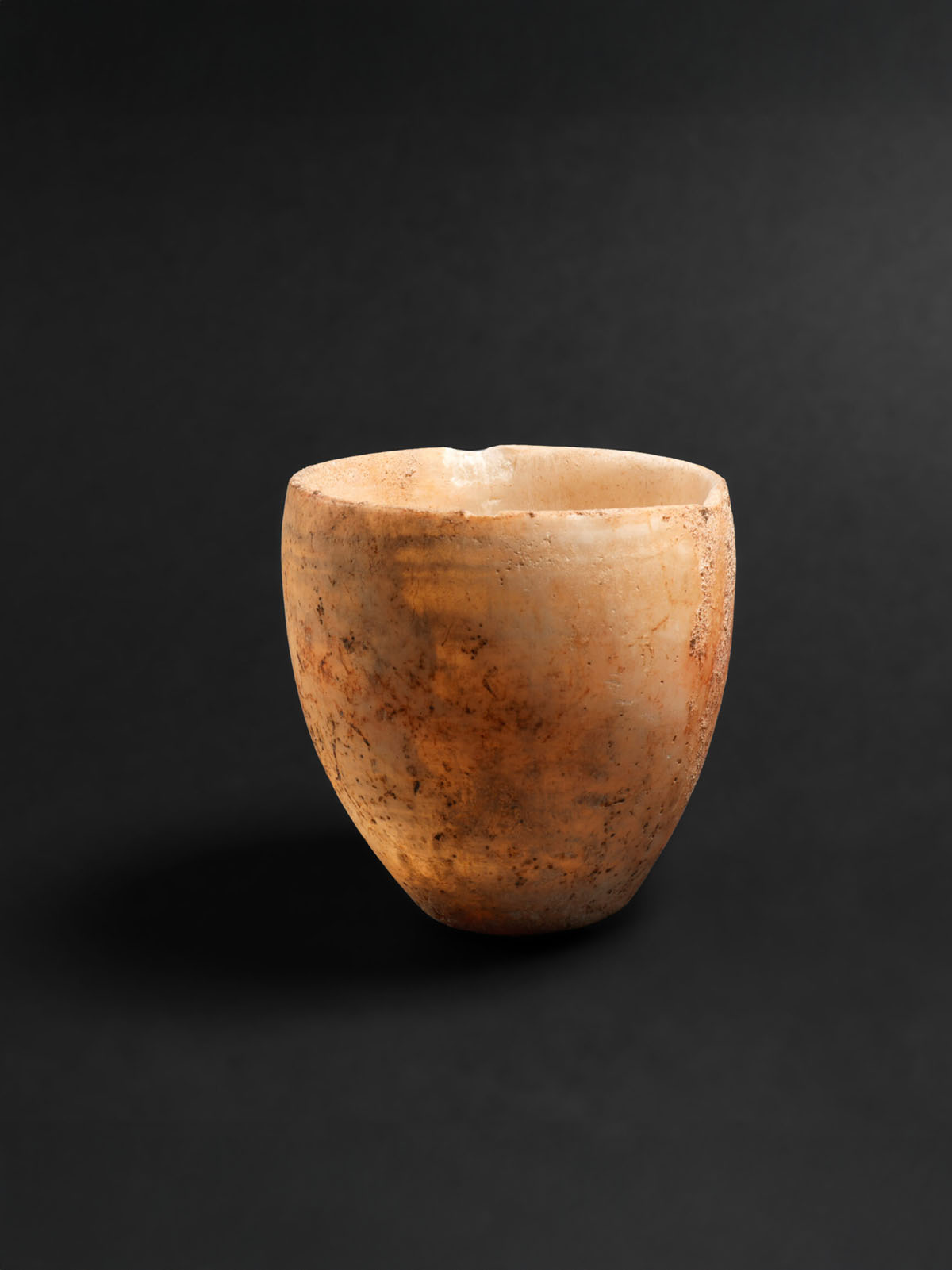
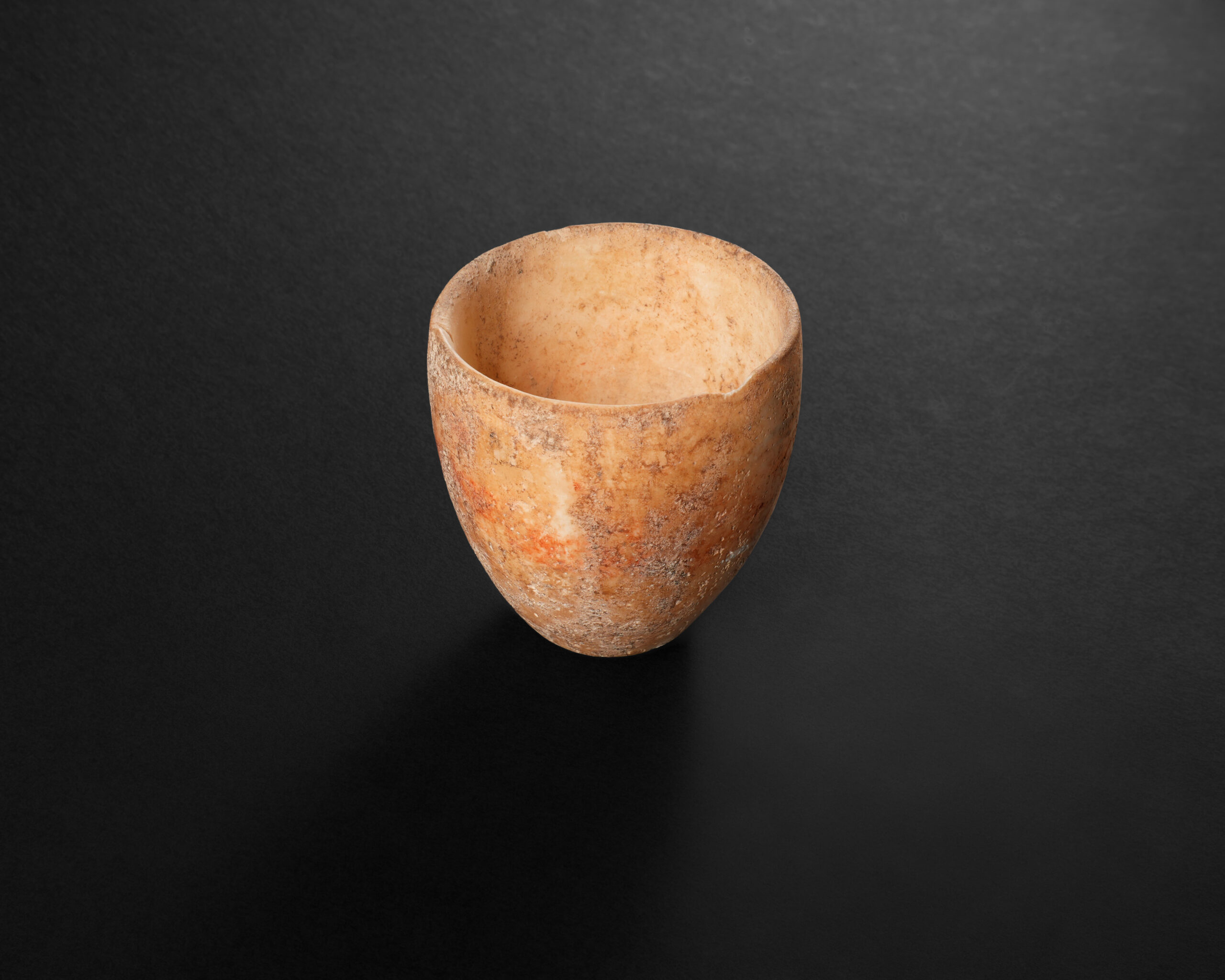
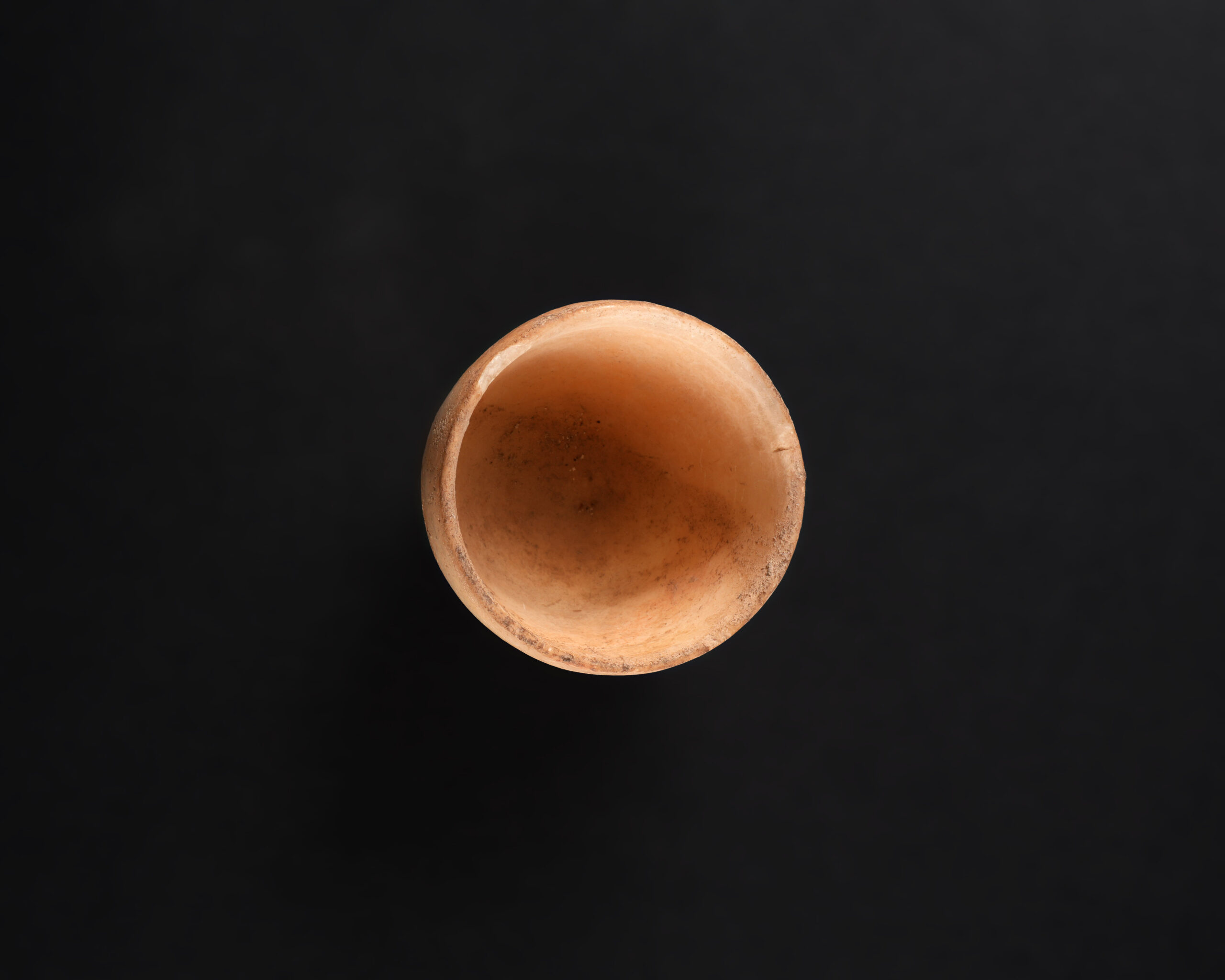
Alabaster cup from the Israelite kingdom period, dating to the time of King David, circa 1200–800 BC. This vessel has been carefully fashioned from fine, translucent alabaster, which remains in perfect condition, emphasizing the skill of its ancient maker. The cup measures approximately 6 cm in height and features a simple, elegant form with a rounded bowl and a narrow, slightly flared lip.
The use of alabaster, a soft stone prized for its translucence and smooth finish, suggests the object was valued and possibly used in ceremonial contexts. Both the interior and exterior surfaces have been polished to a glossy, refined texture, with no visible signs of damage or deterioration. Its translucent quality would have enhanced its visual appeal when held in light, creating a delicate play of shadow and glow.
Discovered in the Judean hills, this cup is linked to the material culture of early Israelite society during the Iron Age. Its form and material imply it may have played a role in rituals or religious offerings typical of the period, serving both practical and symbolic functions within domestic or religious settings. Objects of this nature are rare, providing valuable insight into the craftsmanship and spiritual practices of the ancient Israelites during the era of King David.
REFERENCE #
SW-CN-1019
CIVILIZATION
Israelite, 1200 B.C.E. – 800 B.C.E.
SIZE
H. 6cm
CONDITION
Fine condition
PRICE
$1450
PROVENANCE
The Baidun Collection
Frequently Asked Questions
The alabaster cup dates back to the Israelite kingdom period, specifically around the time of King David, circa 1200–800 BC. This places it within the Iron Age, a significant era for early Israelite society.
The cup is made from fine, translucent alabaster, a soft stone valued for its smooth finish and translucence. This material choice indicates the cup was likely prized and possibly used in ceremonial or religious contexts due to its aesthetic qualities.
The cup measures approximately 6 cm in height and features a simple, elegant form with a rounded bowl and a narrow, slightly flared lip. Both its interior and exterior surfaces are polished to a glossy finish, with no visible damage.
The cup was discovered in the Judean hills, linking it to the material culture of early Israelite society during the Iron Age. This provenance helps contextualize its historical and cultural significance.
Given its material and craftsmanship, the cup was likely used in rituals or religious offerings. It served both practical and symbolic functions within domestic or religious settings during the era of King David.
The cup remains in fine condition with no visible signs of damage or deterioration, highlighting the skill of its ancient maker and the care it received over time. Its preservation allows valuable insight into ancient craftsmanship.
Objects of this nature are rare, making them valuable for understanding the craftsmanship and spiritual practices of the ancient Israelites. Such artifacts provide important cultural and historical insights from the Iron Age period.