Description
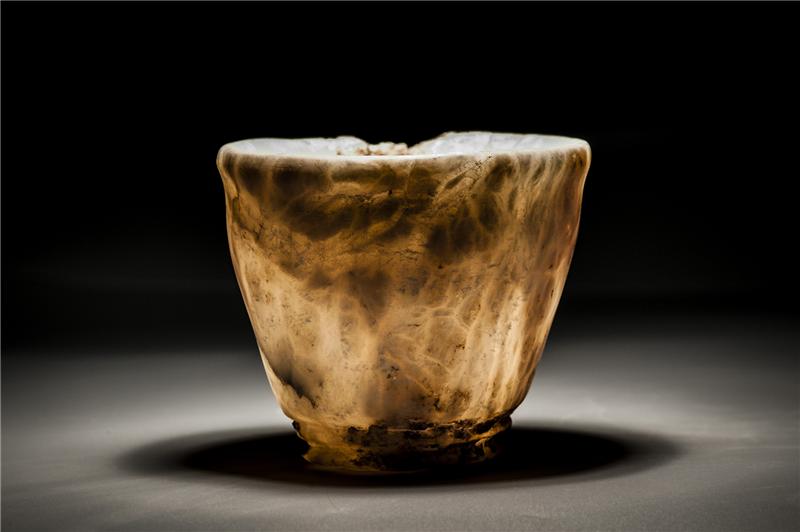
Under a strong light, the smoky natural patterns of this Mesopotamian alabaster beaker contain many hues as soft creams mix with dark coffees for an aesthetic that is decidedly delicious. Carved sometime during Mesopotamia’s early dynasty over 5000 years ago, this small vessel was once held by the ancient hands of one of our early-civilized ancestors.
Only 10.5 cm in height, this small beaker is a remarkable relic from an ancient age. The exterior is smooth yet subtly rippled by the alabaster’s natural texture. The edges are softened with age, yet this piece has been expertly cleaned and remains in excellent condition.
REFERENCE #
KB_ST_2305
CIVILIZATION
Mesopotamian Early Dynastic, 3500 B.C.E. – 2700 B.C.E.
SIZE
L. 10.5 cm
CONDITION
Fine condition
PRICE
Price available upon request
PROVENANCE
The Baidun Collection
Frequently Asked Questions
The Mesopotamian alabaster beaker dates back over 5000 years to the Early Dynastic period of Mesopotamia, making it a valuable artifact that offers insight into the craftsmanship and daily life of one of the world's earliest civilizations.
The beaker is carved from alabaster, a fine-grained, translucent stone known for its smooth texture and natural smoky patterns, which display a range of hues from soft creams to dark coffees under strong light.
The beaker measures 10.5 cm in height and is in fine condition. Despite its age, the edges have softened naturally, and the piece has been expertly cleaned to preserve its excellent state.
The natural texture of the alabaster creates subtle ripples on the beaker's smooth exterior, enhancing its aesthetic appeal by showcasing smoky patterns and a blend of soft cream and dark coffee hues under strong light.
The beaker is part of the Baidun Collection, indicating it has been preserved and curated within a recognized collection, which adds to its authenticity and historical value.
The price of the beaker is not listed publicly and is available only upon request, likely due to its rarity and historical significance.