Description
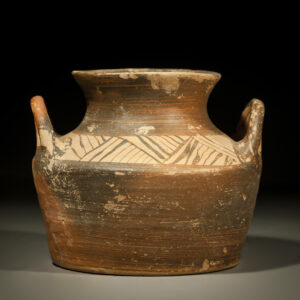
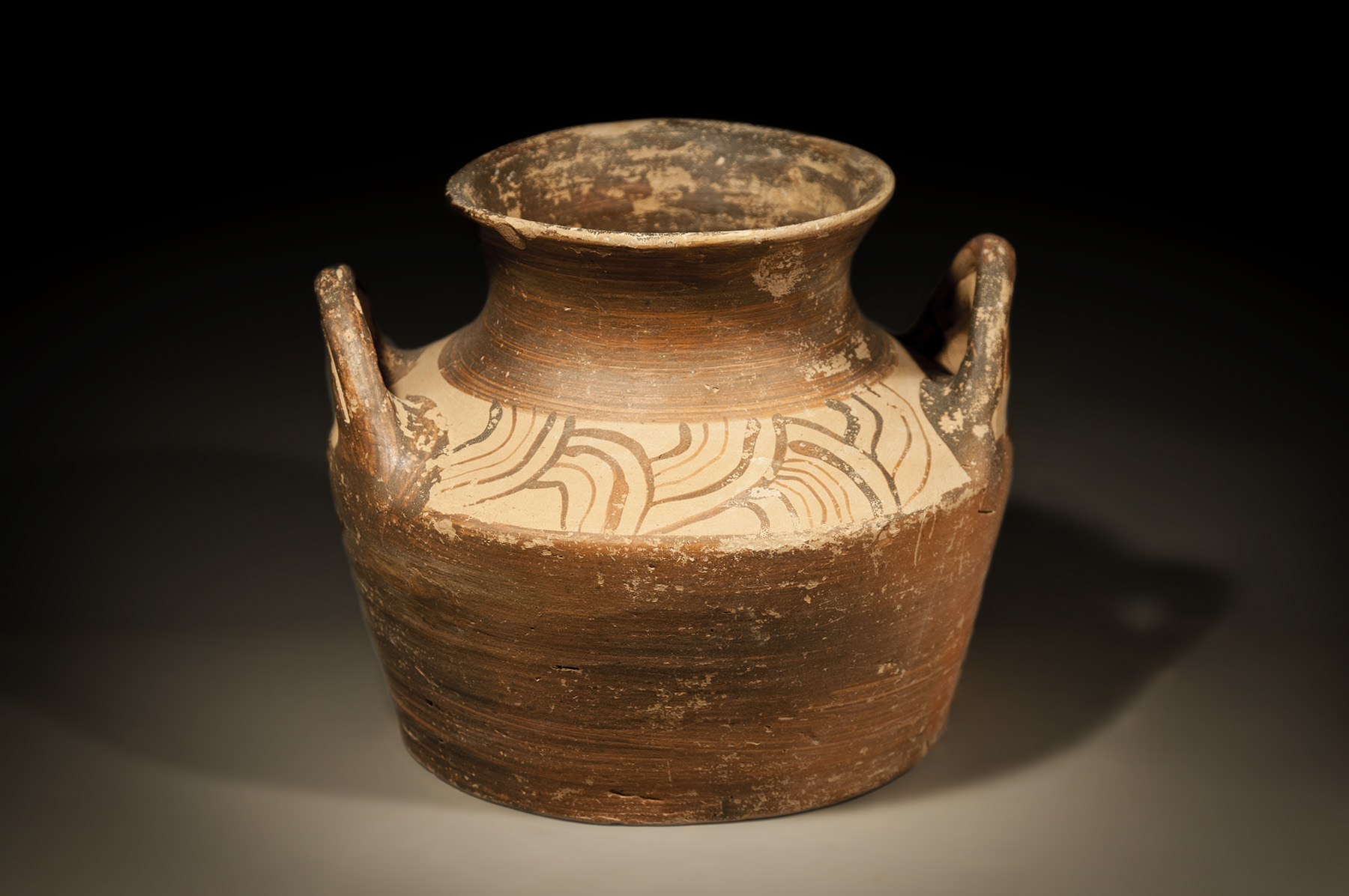
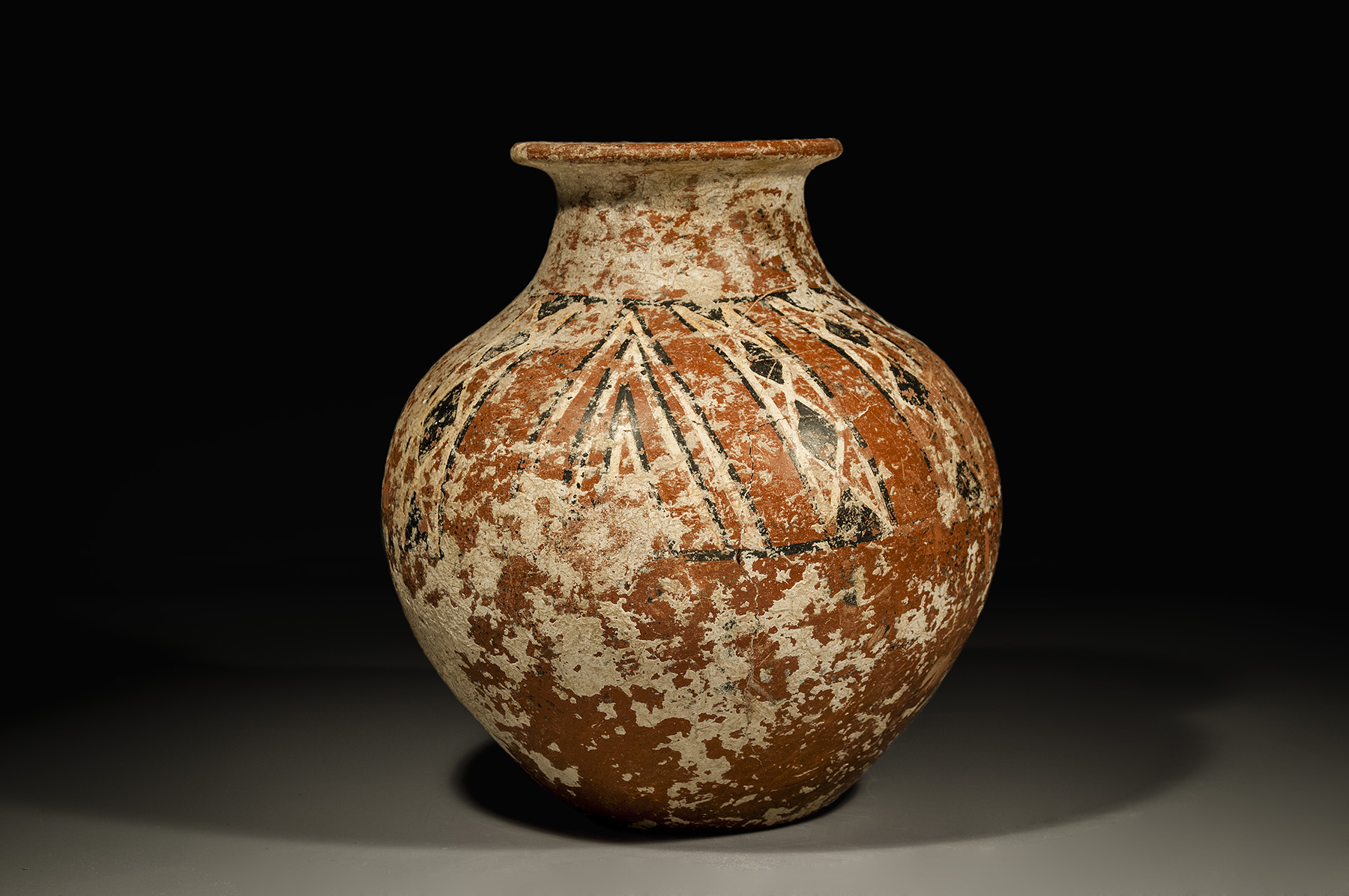
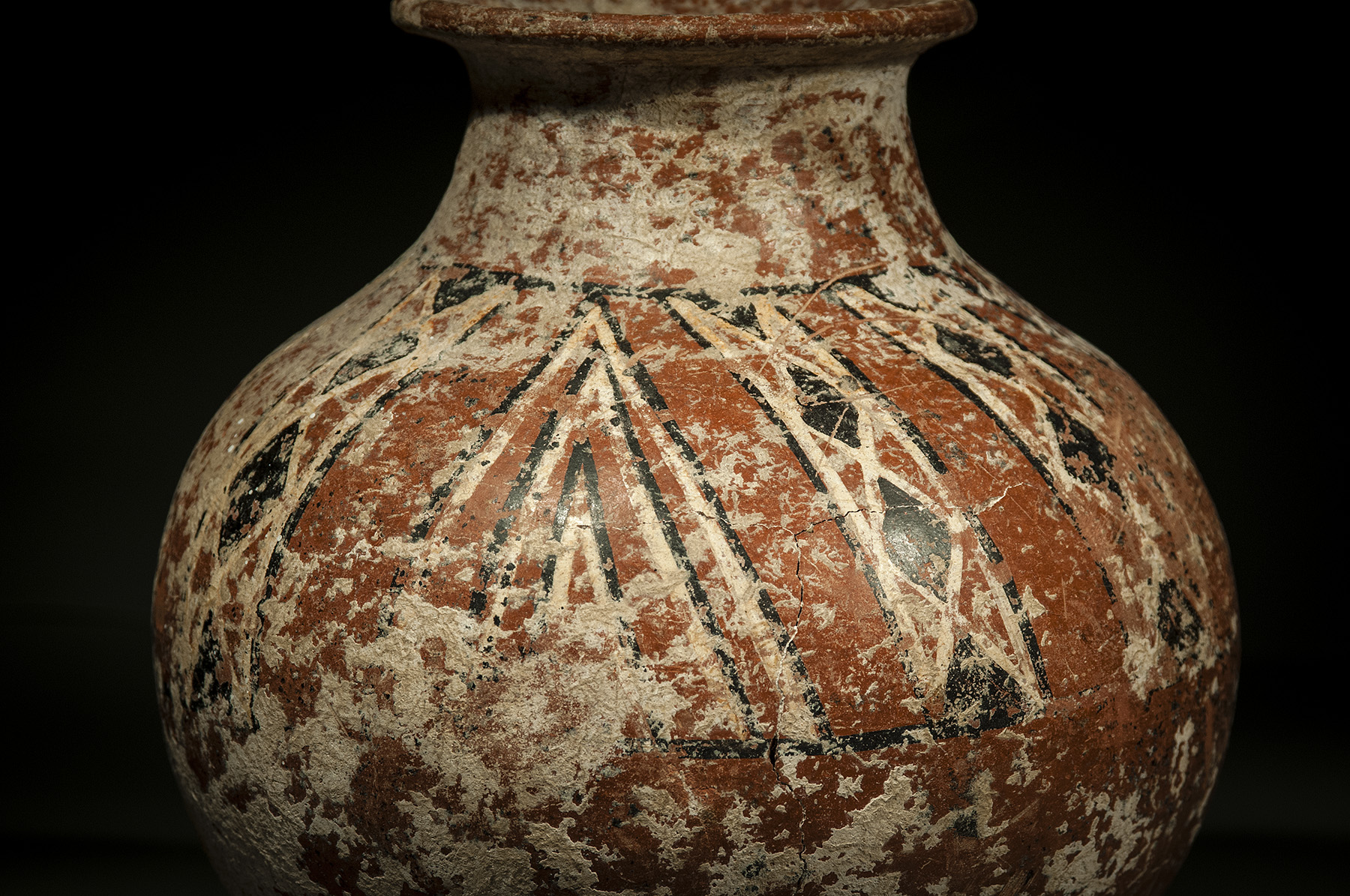
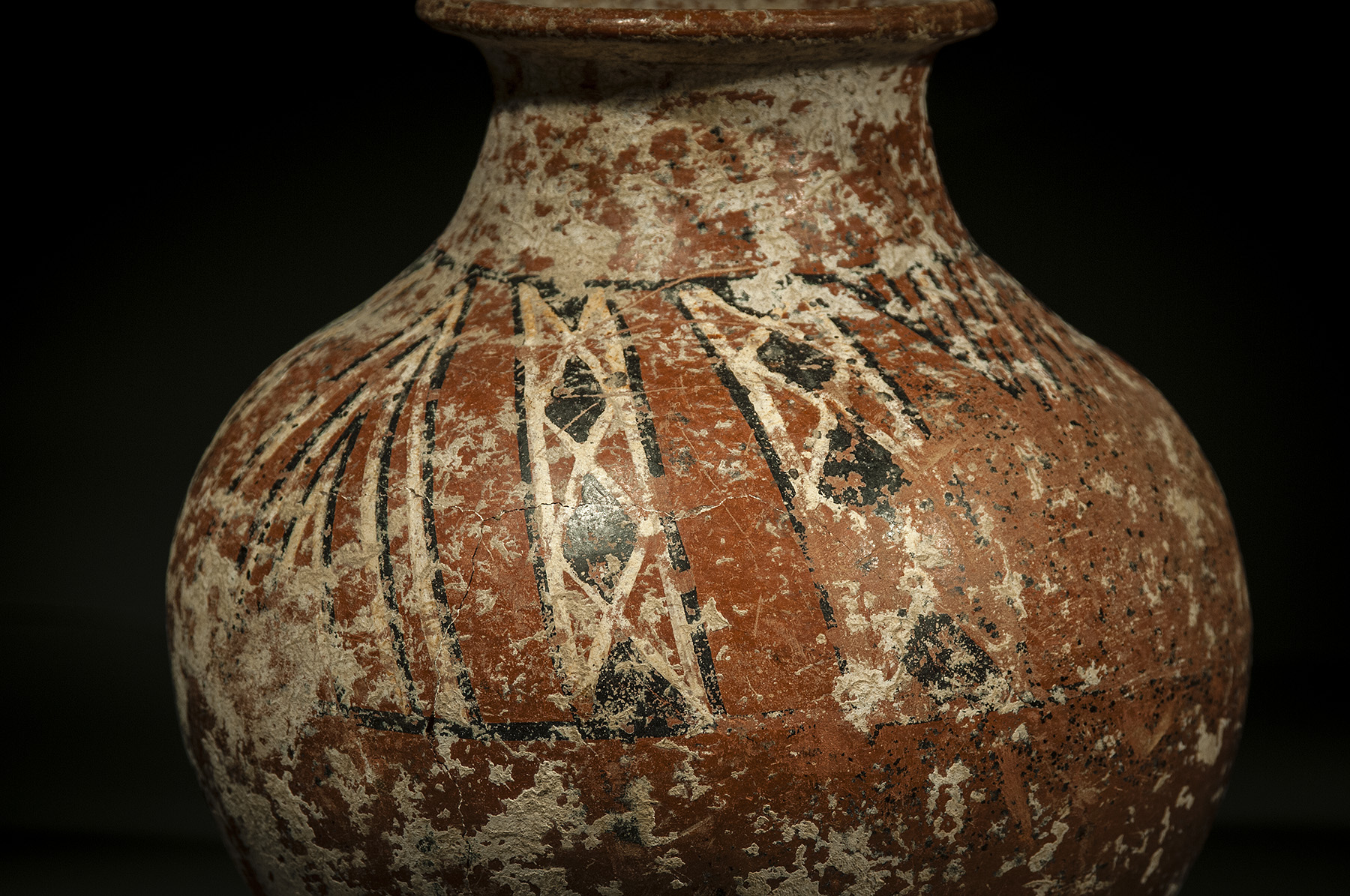
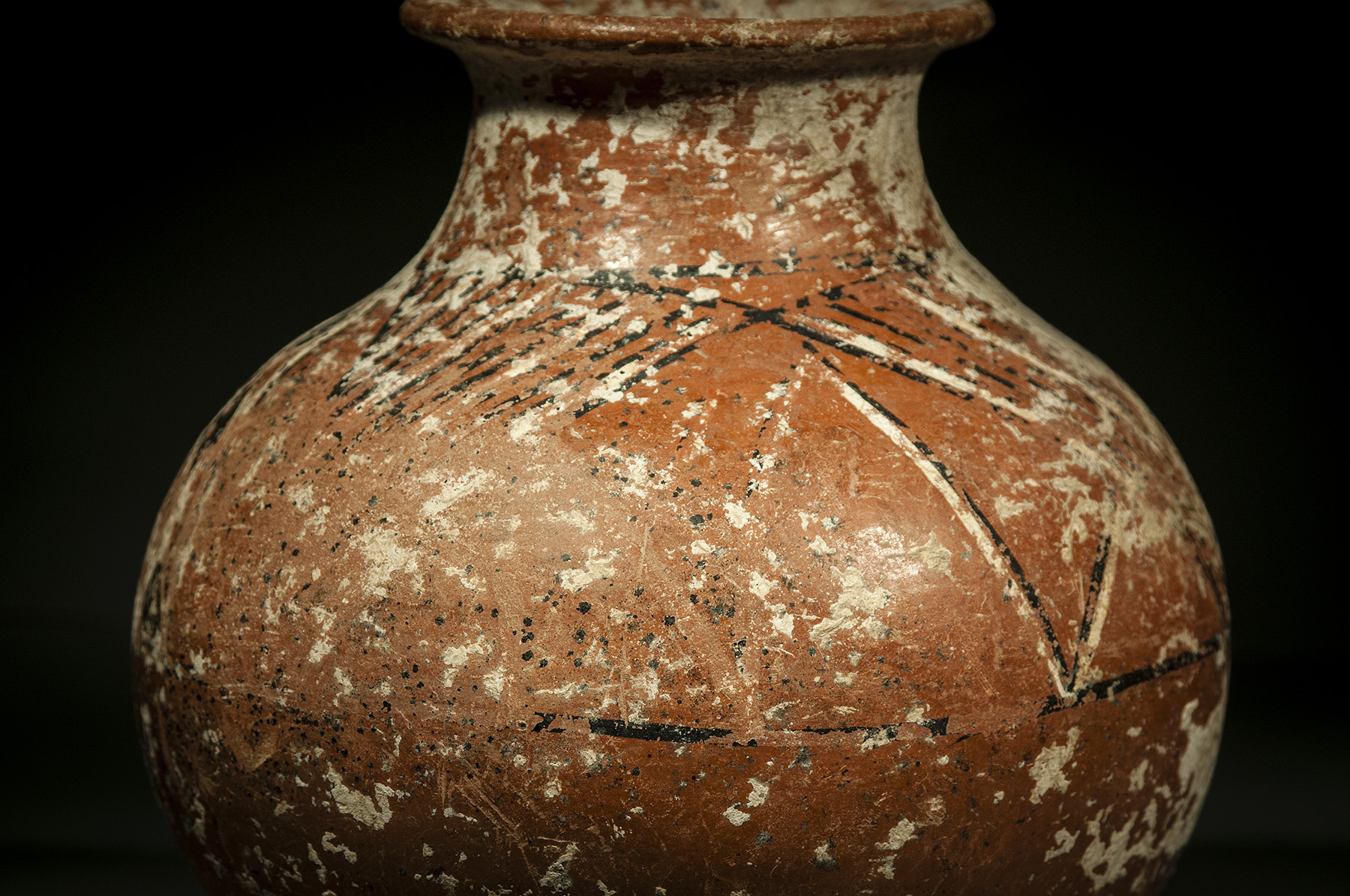
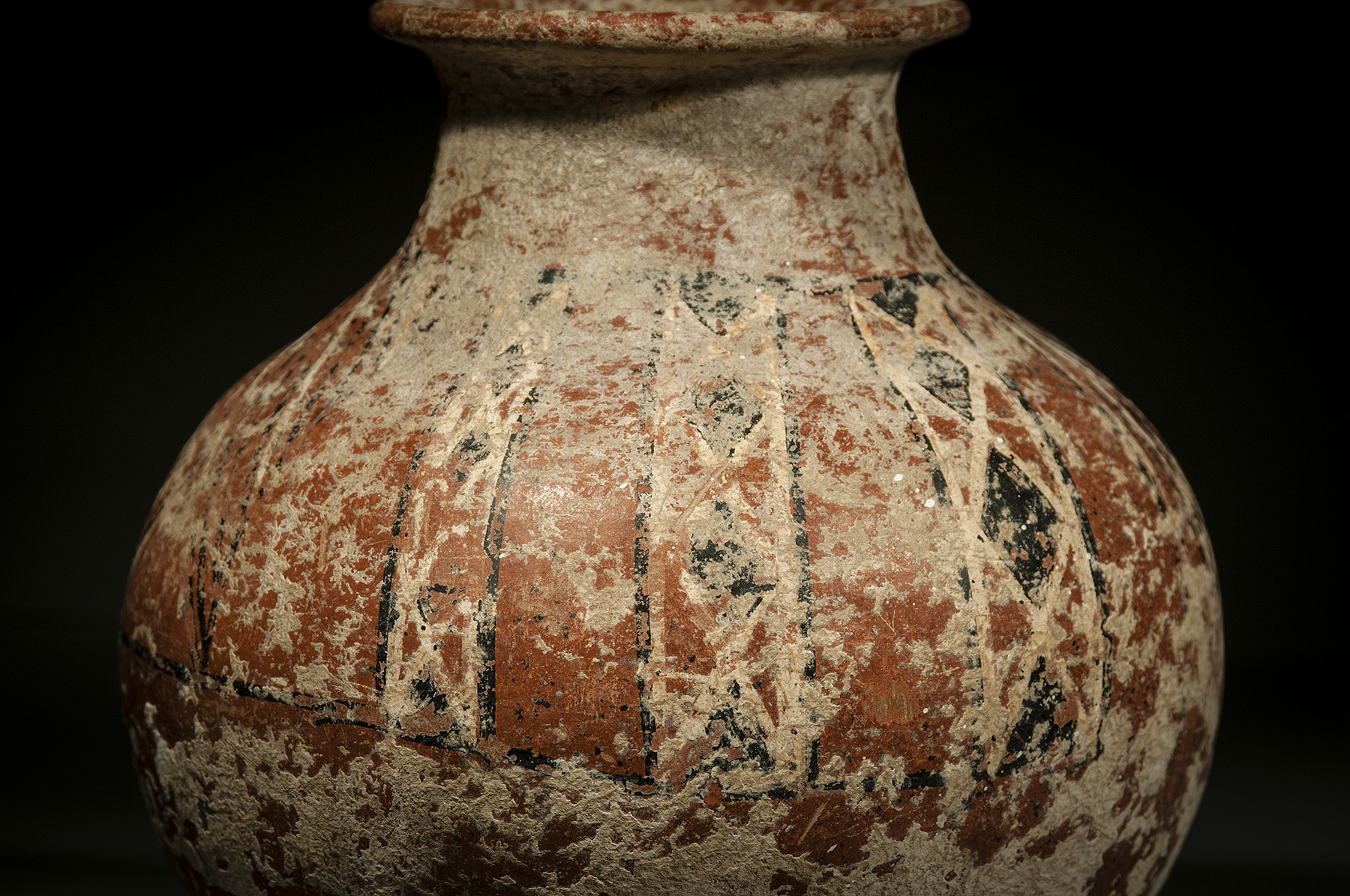
The bichrome decorations on this large jar were typical of Phoenician pottery from the late Iron Age. The painted diamonds and stripes on the jar’s upper half are modest adornments that contrast with the earthy tones of the red slip. Used in antiquity for the simple purpose of holding water or other ointments, this jug would have been one of many useful vessels found in the average Phoenician home.
Dating from approximately 1000 B.C.E. – 850 B.C.E., this jar is only moderately worn from age and remains whole. The jar is 20 cm in height from the flared top of its thin mouth to the bottom of its pinched base.
REFERENCE #
KB_PT_0005
CIVILIZATION
Iron Age II, 1000 B.C.E. – 850 B.C.E.
SIZE
H. 20 cm
CONDITION
Fine condition
PRICE
Price available upon request
Frequently Asked Questions
The Phoenician jar dates from the late Iron Age, specifically between 1000 B.C.E. and 850 B.C.E. This period is known as Iron Age II and reflects the cultural and artistic practices of the Phoenician civilization during that time.
The jar features bichrome decorations typical of Phoenician pottery, with painted diamonds and stripes on the upper half. These designs are modest and contrast with the earthy red slip that covers the jar, showcasing the traditional pottery techniques of the era.
In antiquity, this jar was primarily used for holding water or ointments. It was a practical vessel commonly found in average Phoenician homes, serving everyday domestic needs rather than purely decorative purposes.
The jar stands 20 cm tall, measured from the flared top of its thin mouth to the bottom of its pinched base. Despite its age, it remains in fine condition with only moderate wear, and the vessel is whole without any significant damage.
The bichrome decorations, including painted diamonds and stripes, are characteristic of Phoenician pottery from the late Iron Age. These modest adornments highlight the balance between functional design and aesthetic appeal typical of Phoenician artisans.
The price of the jar is not listed publicly and is available only upon request. Interested buyers or researchers need to contact the seller or institution directly to obtain pricing information.