Description
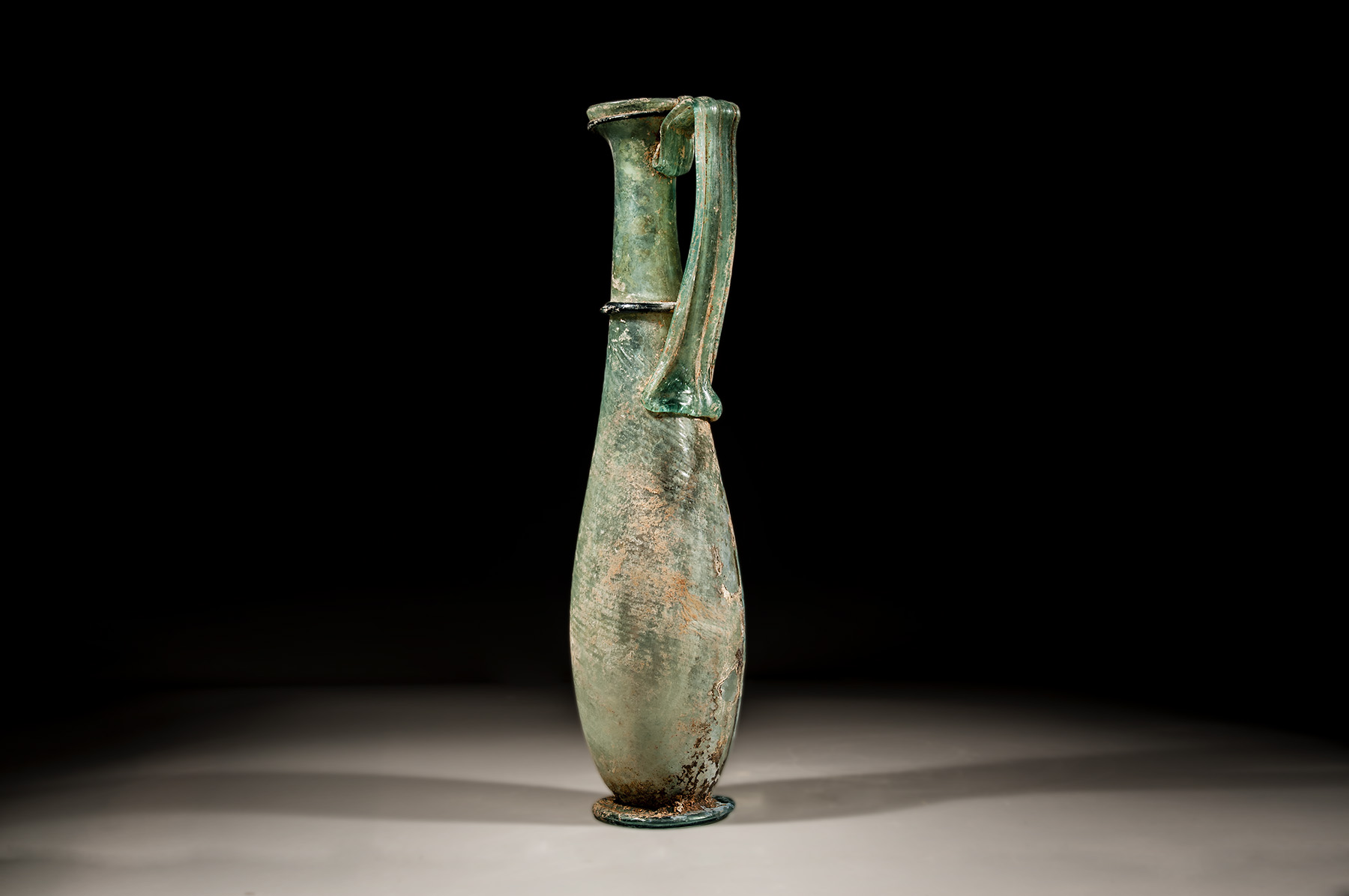
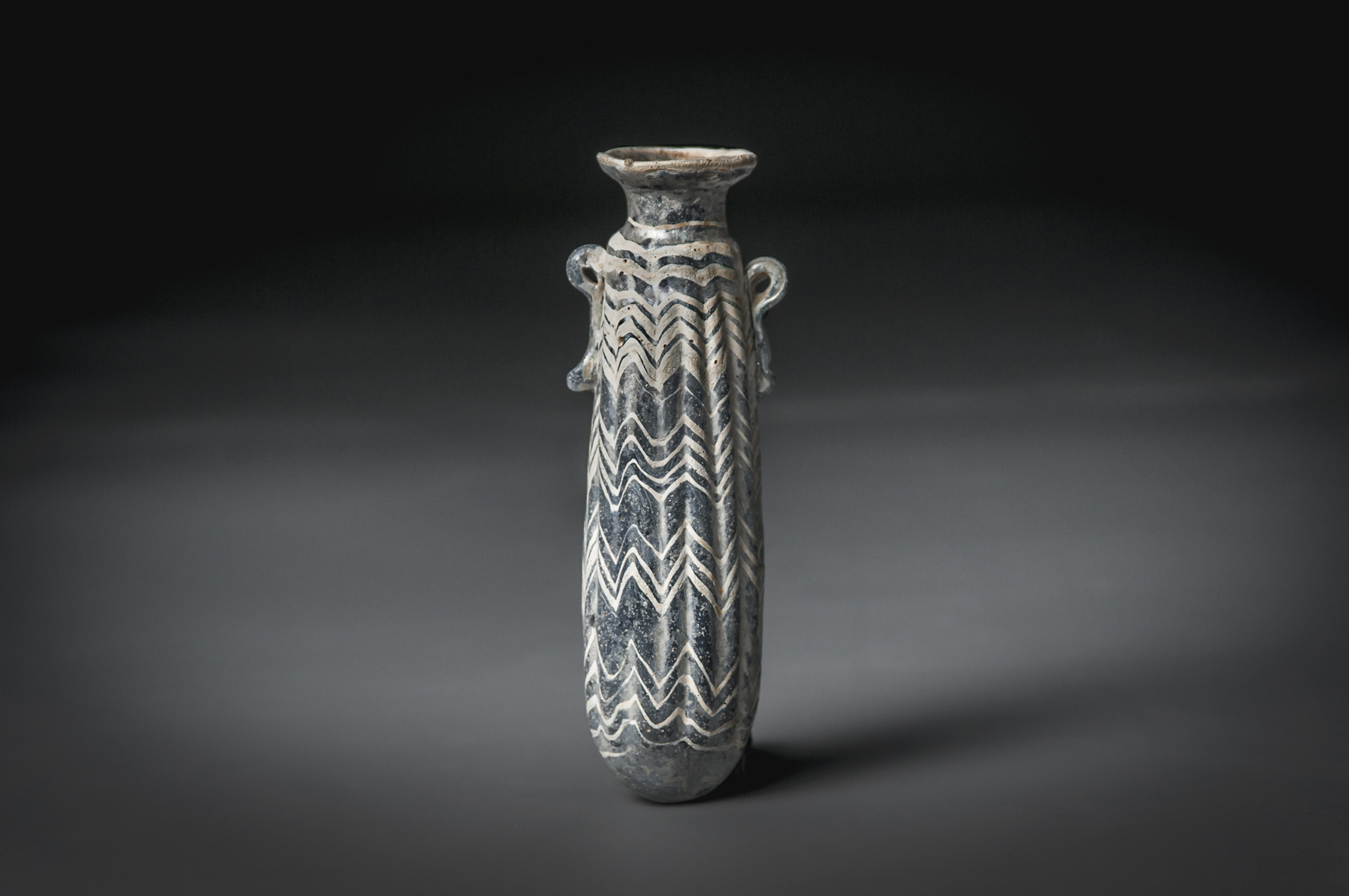
In translucent mid blue glass, with opaque cream trailed zigzag pattern. The vessel has an everted rim edged in cream, a short neck and a long tubular ribbed body widening slightly to the rounded base. Two handles in blue are applied to the shoulders.
Exhibited: San Diego Museum of Man, c. 1956
Literature: For a similar example see C. S. Lightfoot, ‘Ancient Glass in National Museums Scotland’ (Edinburgh, 2007) p.35, no.18.
REFERENCE #
GL_GR_1006
CIVILIZATION
Greco-Phoenician, 500 B.C.E. – 400 B.C.E.
SIZE
H. 12.4 cm
CONDITION
Intact
PRICE
Sold
PROVENANCE
Collection of the Dubois family, USA, acquired c.1920 and thence by descent
Frequently Asked Questions
The vessel is made of translucent mid blue glass with an opaque cream trailed zigzag pattern. It features an everted rim edged in cream, a short neck, and a long tubular ribbed body that widens slightly to a rounded base, with two blue handles applied to the shoulders.
The vessel originates from the Greco-Phoenician civilization, dating between 500 B.C.E. and 400 B.C.E. This period reflects a blend of Greek and Phoenician artistic and cultural influences.
The vessel measures 12.4 cm in height and is in intact condition, indicating it has been well-preserved without any significant damage.
The vessel was exhibited at the San Diego Museum of Man around 1956, showcasing its historical and cultural significance to the public.
The vessel was part of the Dubois family collection in the USA, acquired around 1920, and has been passed down by descent within the family.
Yes, a similar example is referenced in C. S. Lightfoot's book 'Ancient Glass in National Museums Scotland' (Edinburgh, 2007), specifically on page 35, item number 18.
The vessel has been sold and is no longer available for purchase, indicating its value and demand among collectors or institutions.