Description
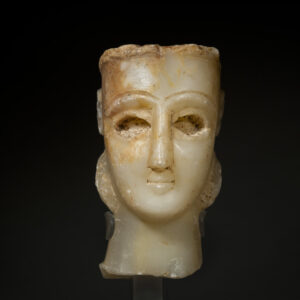
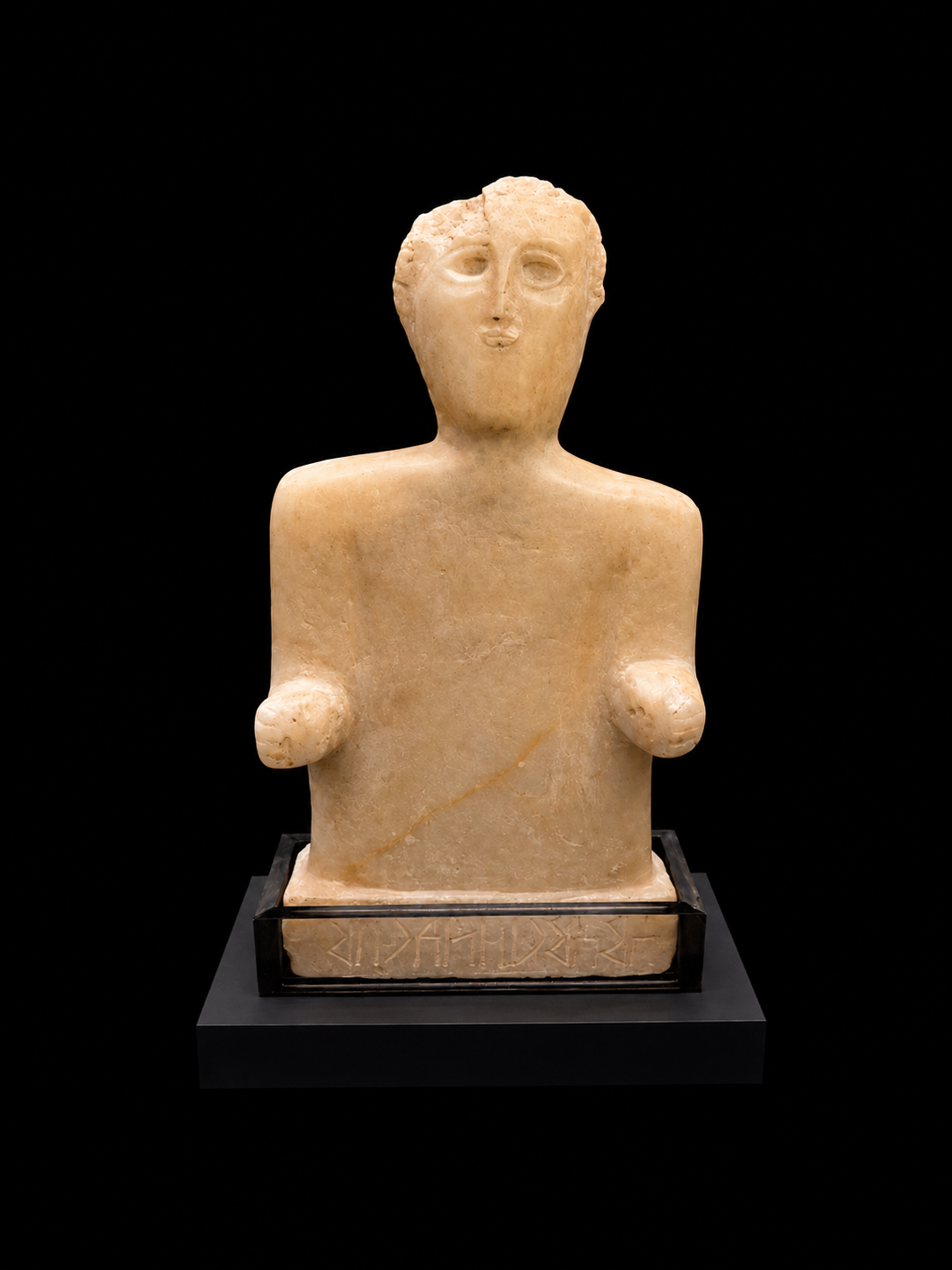
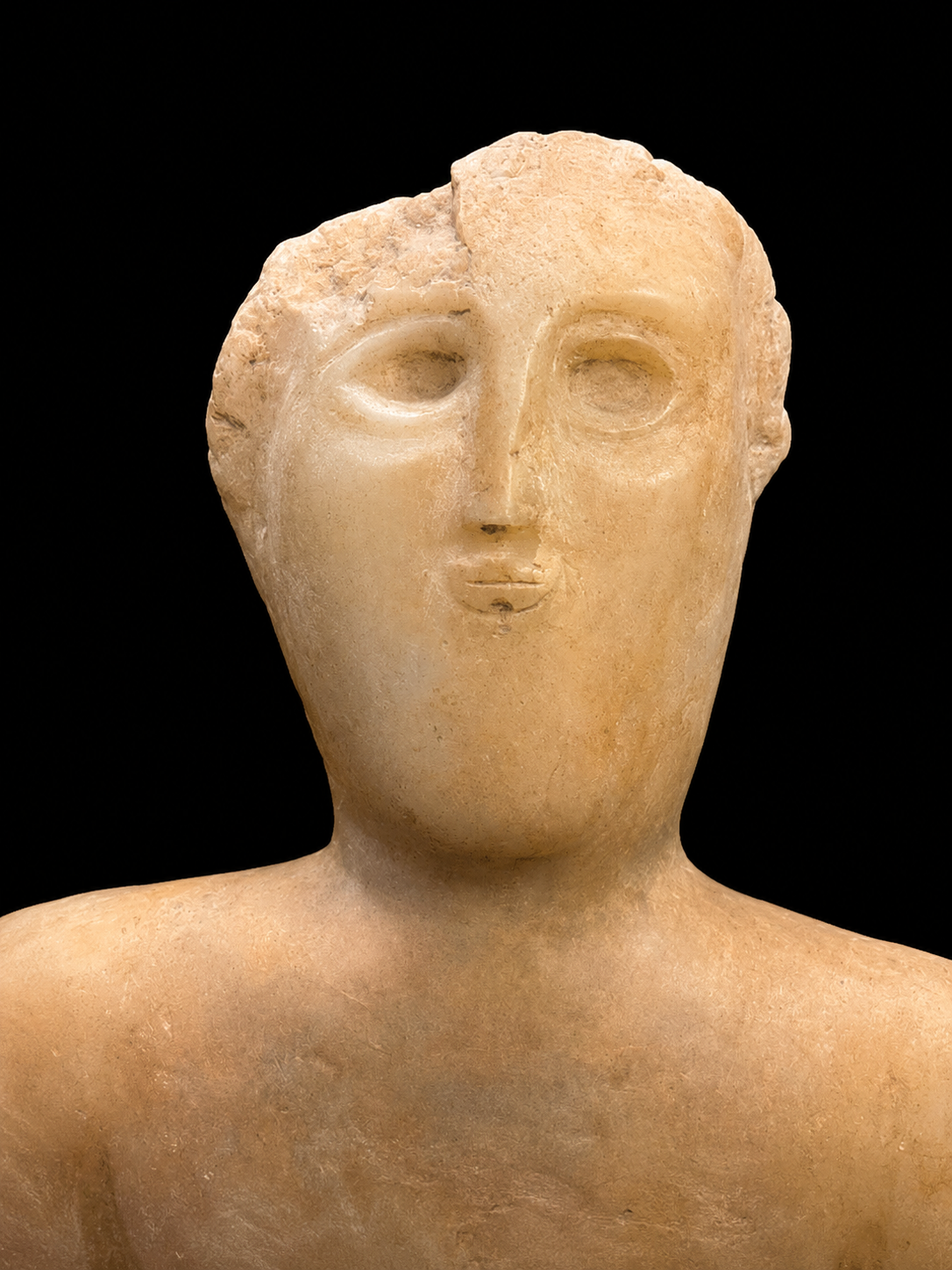
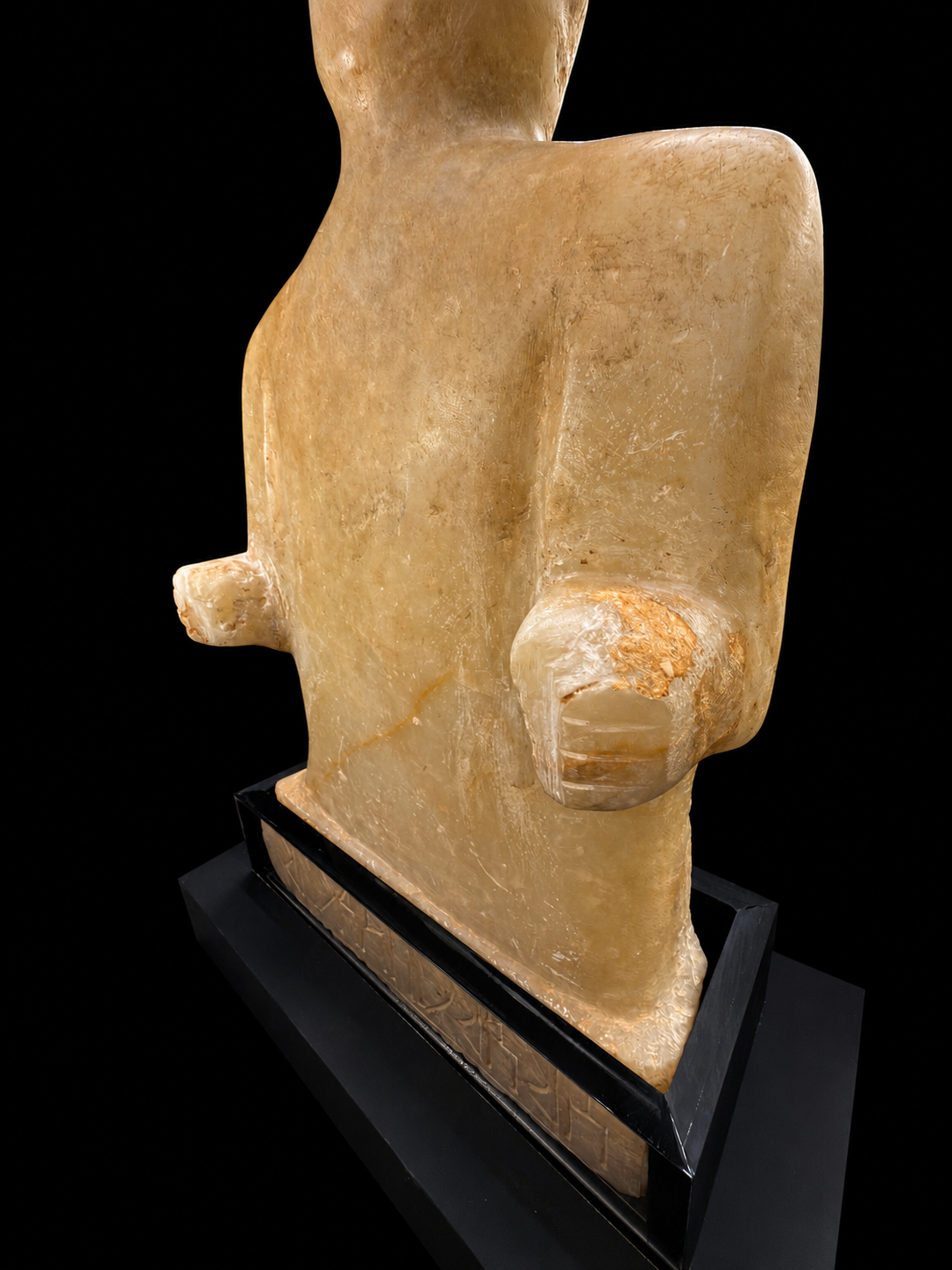
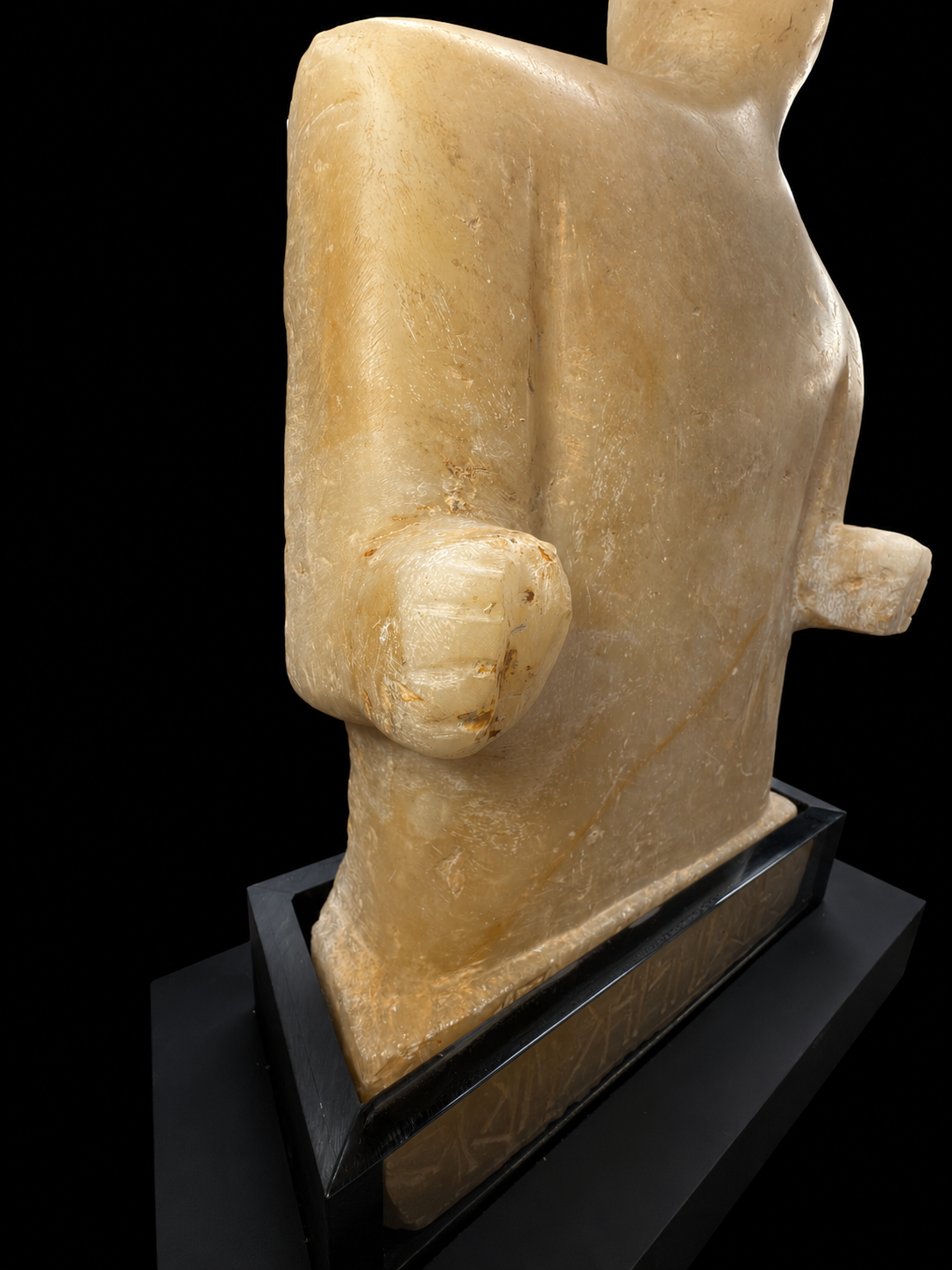
An important and exceptionally expressive South Arabian alabaster votive statue, representing a remarkable example of the distinctive sculptural traditions of the ancient Sabaean civilization. The figure is characterized by its elongated facial features, prominent nose, stylized proportions, and powerful geometric simplicity, reflecting the sophisticated artistic language of ancient South Arabia.
The sculpture embodies an extraordinary early expression of abstraction, in which naturalistic representation gives way to simplified forms, elongated features, and an emphasis on spiritual presence rather than anatomical realism. Its striking aesthetic invites compelling comparisons with the modern sculptural and artistic traditions of Amedeo Modigliani, Alberto Giacometti, and Pablo Picasso, particularly their exploration of elongated faces, geometric forms, and expressive simplification. Although direct artistic influence cannot be established, these remarkable visual parallels demonstrate the timeless and universal character of abstraction in sculpture.
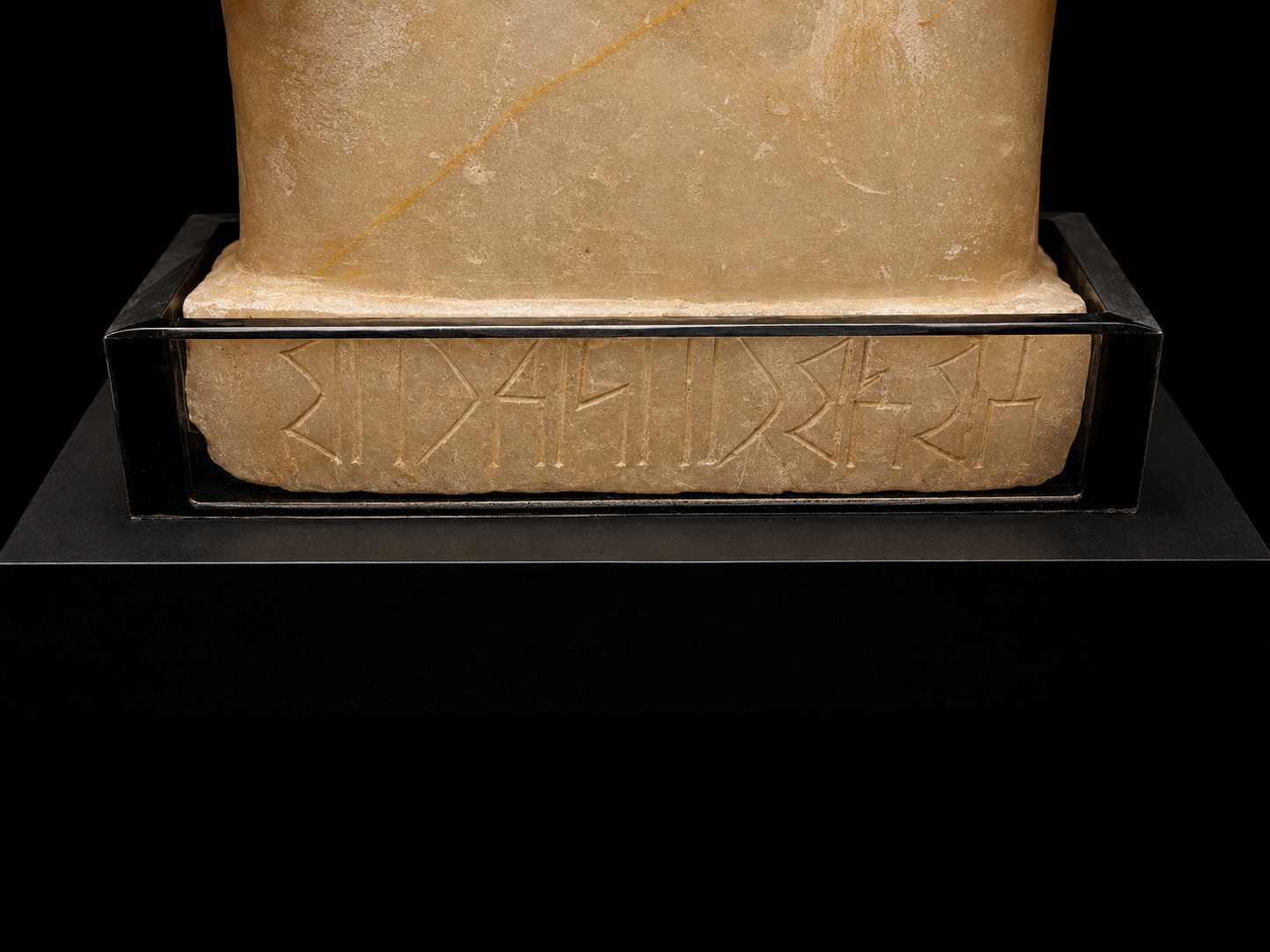
Of particular historical importance is the ancient Sabaic inscription, studied and interpreted by Professor Kerry Hull, a specialist in ancient South Arabian languages. The inscription reads:
S¹mʾmr / bn / krbm
Translated as “Smʾmr, of the family of Karibum,” the inscription identifies an individual through his family lineage, providing a valuable historical connection to the social and genealogical traditions of ancient Sabaean society. The name Karibum is associated with an attested Sabaean family, lending additional significance to the sculpture’s inscription.
Such statues were produced as votive or commemorative offerings, reflecting the religious beliefs, social identity, and artistic achievements of the prosperous South Arabian kingdoms, whose civilization flourished along the ancient incense trade routes.
A rare and historically significant example of ancient South Arabian sculpture, distinguished by its monumental artistic presence, compelling abstract aesthetic, and important Sabaic inscription. An exceptional work that bridges the artistic traditions of antiquity with the visual language of modern sculpture.
REFERENCE #
SI-SA-1017
CIVILIZATION
Sabean. ca 300 B.C.E.
SIZE
H. 55 cm, W 29 cm
CONDITION
Well preserved, displaying authentic ancient surface wear, minor losses, and mineral deposits consistent with age. The reverse retains its roughly worked ancient finish.
PRICE
POR
PROVENANCE
Jerusalem private collection
Frequently Asked Questions
The alabaster votive statue belongs to the ancient Sabaean civilization, a South Arabian culture known for its distinctive sculptural traditions and flourishing along the ancient incense trade routes around 300 B.C.E.
The statue is characterized by elongated facial features, a prominent nose, stylized proportions, and geometric simplicity. These elements reflect an early form of abstraction emphasizing spiritual presence over anatomical realism, linking it visually to modern artists like Modigliani, Giacometti, and Picasso.
The Sabaic inscription, studied by Professor Kerry Hull, identifies the individual as 'Smʾmr, of the family of Karibum.' This provides valuable historical insight into the social and genealogical traditions of the ancient Sabaean society and connects the statue to an attested Sabaean family.
These statues were produced as votive or commemorative offerings, reflecting the religious beliefs, social identity, and artistic achievements of the South Arabian kingdoms. They served as expressions of devotion and markers of social status within the prosperous incense trade culture.
The statue is well preserved, showing authentic ancient surface wear, minor losses, and mineral deposits consistent with its age. The reverse side retains its roughly worked ancient finish, indicating its historical authenticity and careful preservation.
The statue's abstract aesthetic, with elongated and simplified forms, invites comparisons to modern sculptors like Modigliani, Giacometti, and Picasso. While no direct influence is established, these parallels highlight the timeless and universal nature of abstraction in sculpture across cultures and eras.