
Description
REFERENCE #
SI-EG-1069
CIVILIZATION
Egypt, ca. 600 BC – 400 BC
SIZE
H. 17 cm
CONDITION
Excellent condition
PRICE
Por
PROVENANCE
Jerusalem Private Collection
Frequently Asked Questions
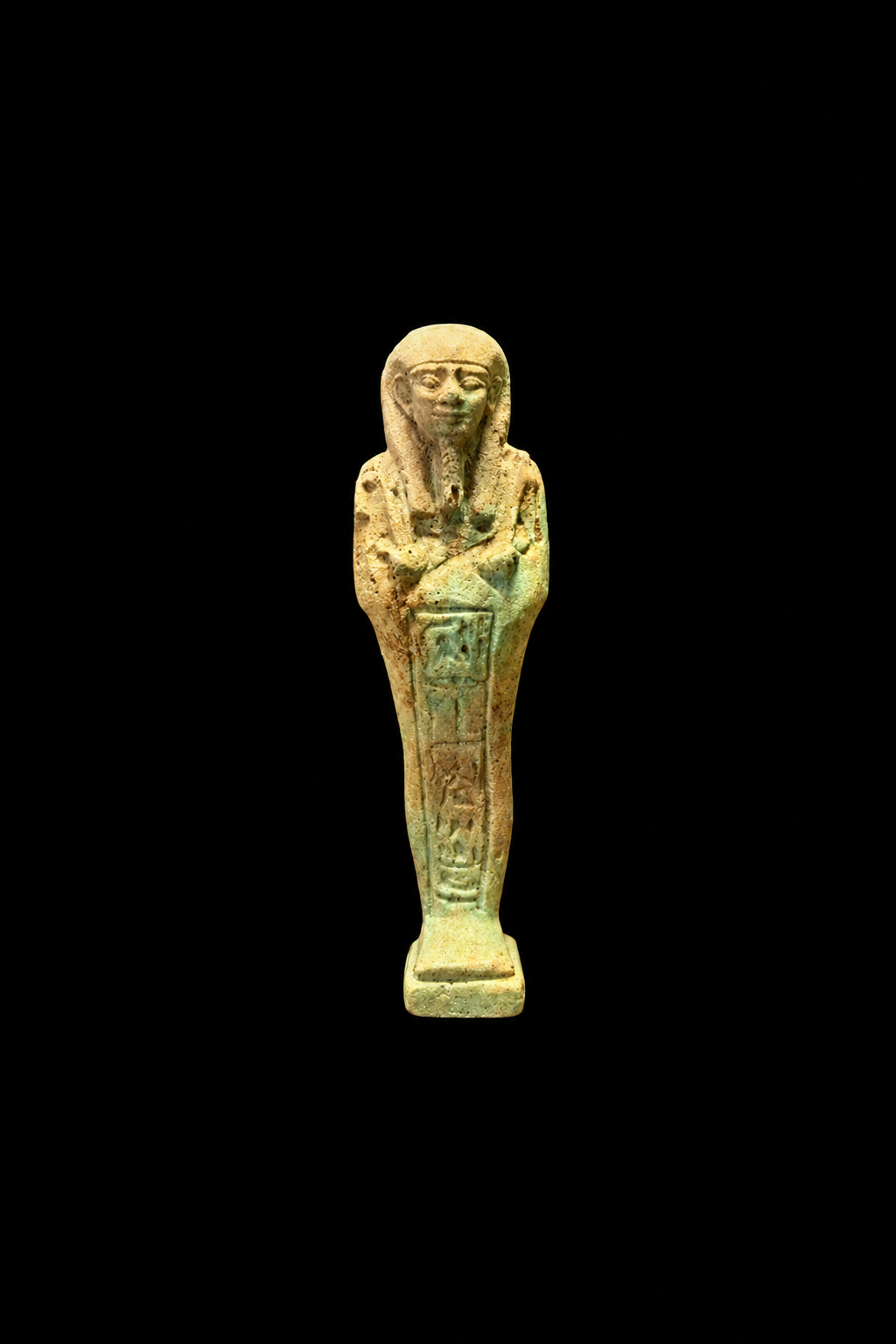
A mummiform ushabti is a funerary figurine modeled in the shape of a mummy, often depicted with crossed arms and holding agricultural tools. These figures served as worker-substitutes for the deceased in the afterlife, performing manual labor on their behalf.
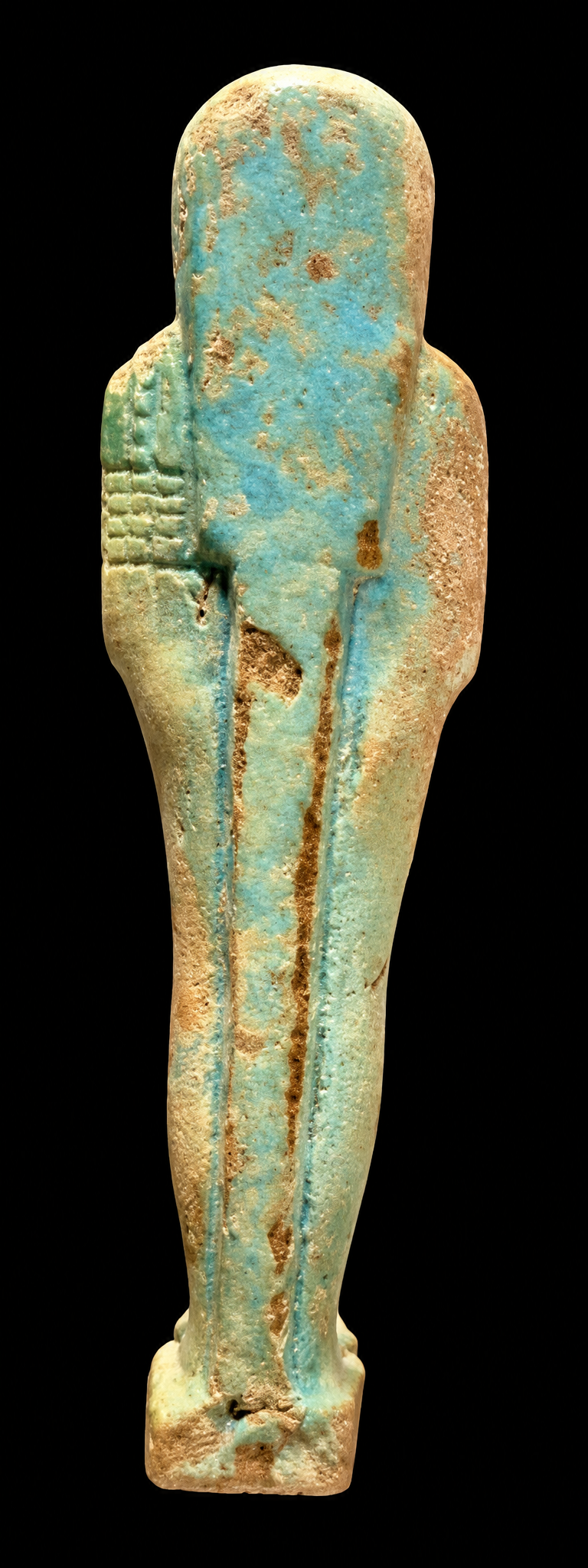
This ushabti is made from faience, a glazed non-clay ceramic material, characterized by its mottled blue-green surface. The glaze and mineral efflorescence indicate its age and burial conditions.
The hoe and pick held by the ushabti symbolize its role as a laborer in the afterlife, tasked with agricultural work to support the deceased. These tools are traditional attributes marking the figure's function as a worker-substitute.
This ushabti dates from approximately 600 BC to 300 BC, placing it in the Late Period of ancient Egypt, a time known for continued use of traditional funerary practices.
The tripartite wig and false beard are traditional royal and divine symbols in ancient Egyptian art, often used to idealize the figure and associate it with Osiris, the god of the afterlife, reinforcing the ushabti's protective and servile role.
The ushabti measures 17 cm in height and is reported to be in excellent condition, with surface wear and mineral deposits consistent with its age and burial environment.
This ushabti originates from ancient Egypt and was part of a private collection in Jerusalem before being referenced in the current catalog.