Description
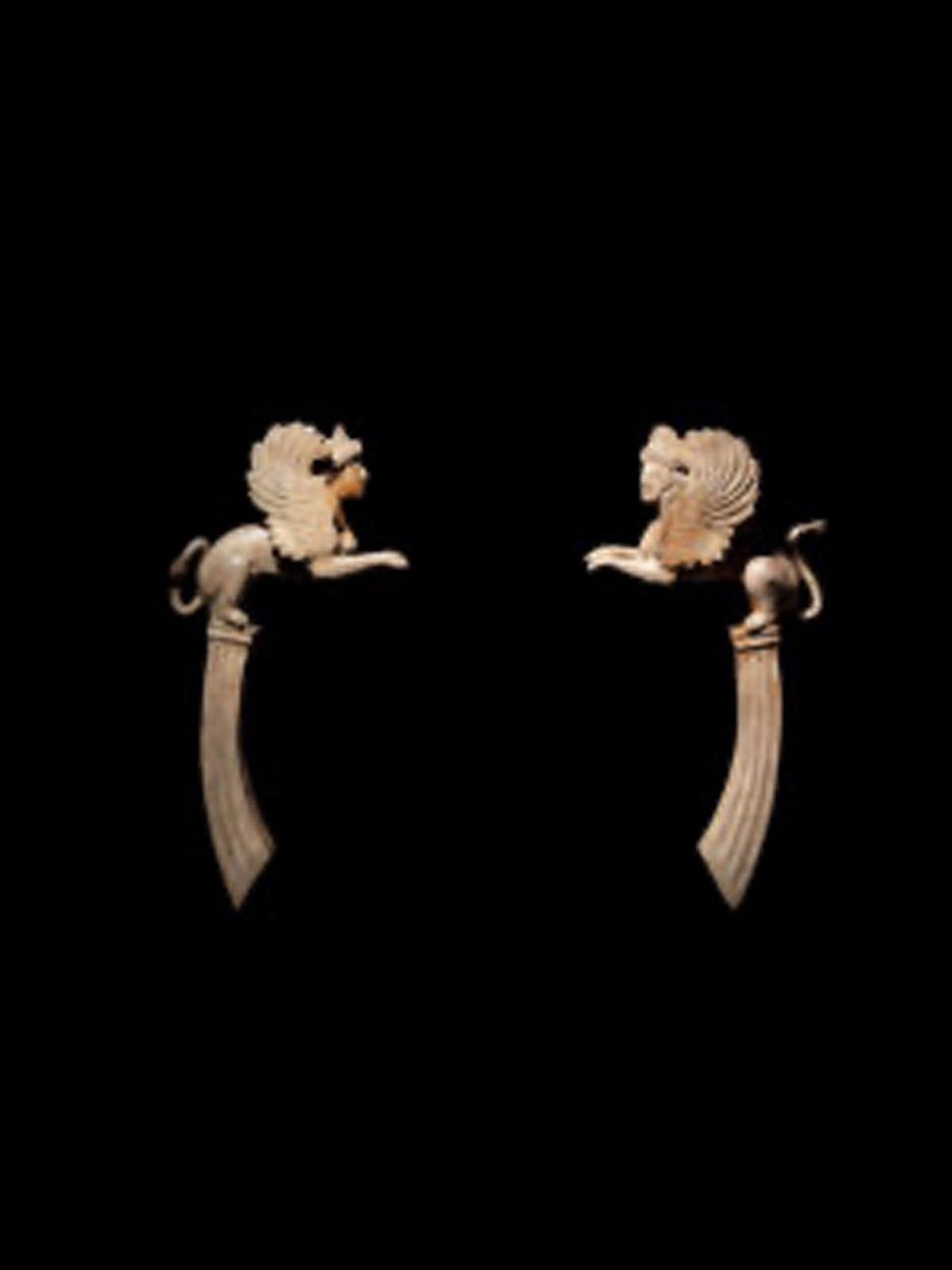
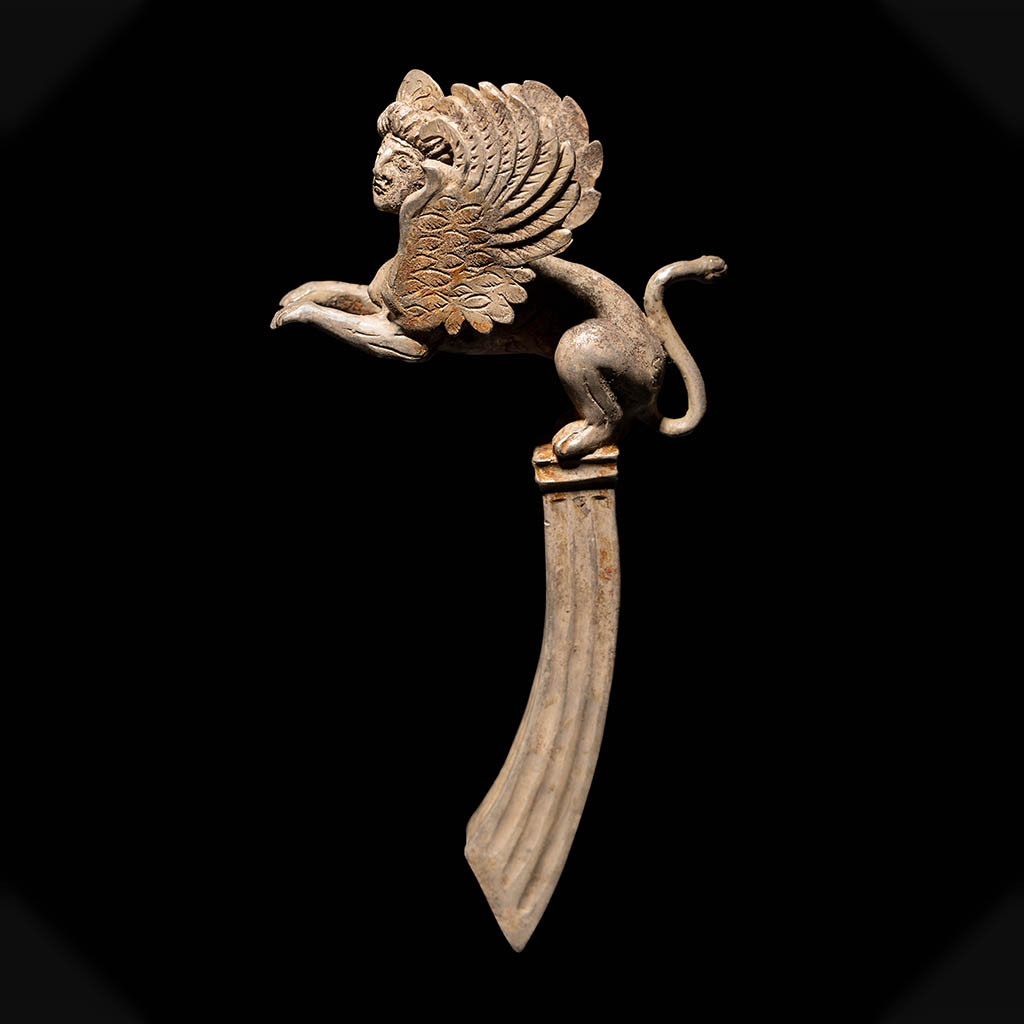
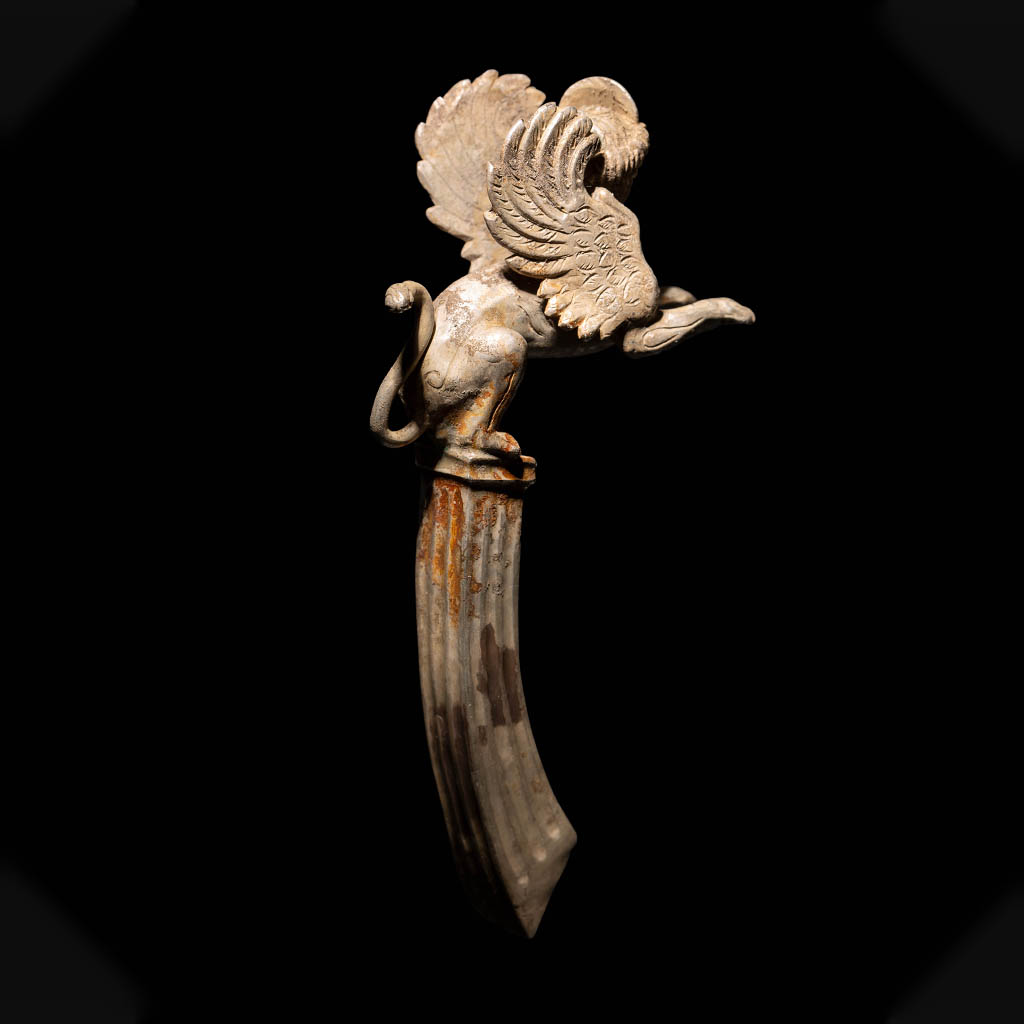
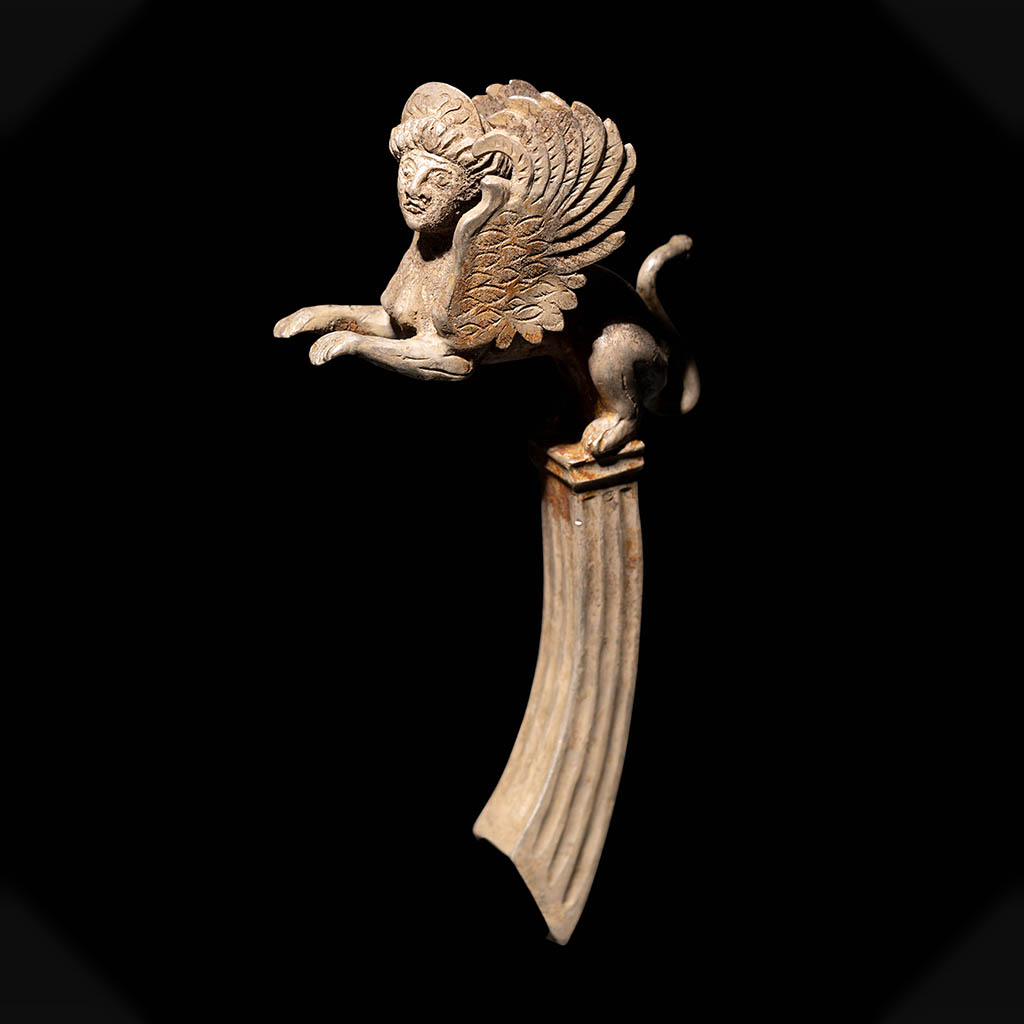
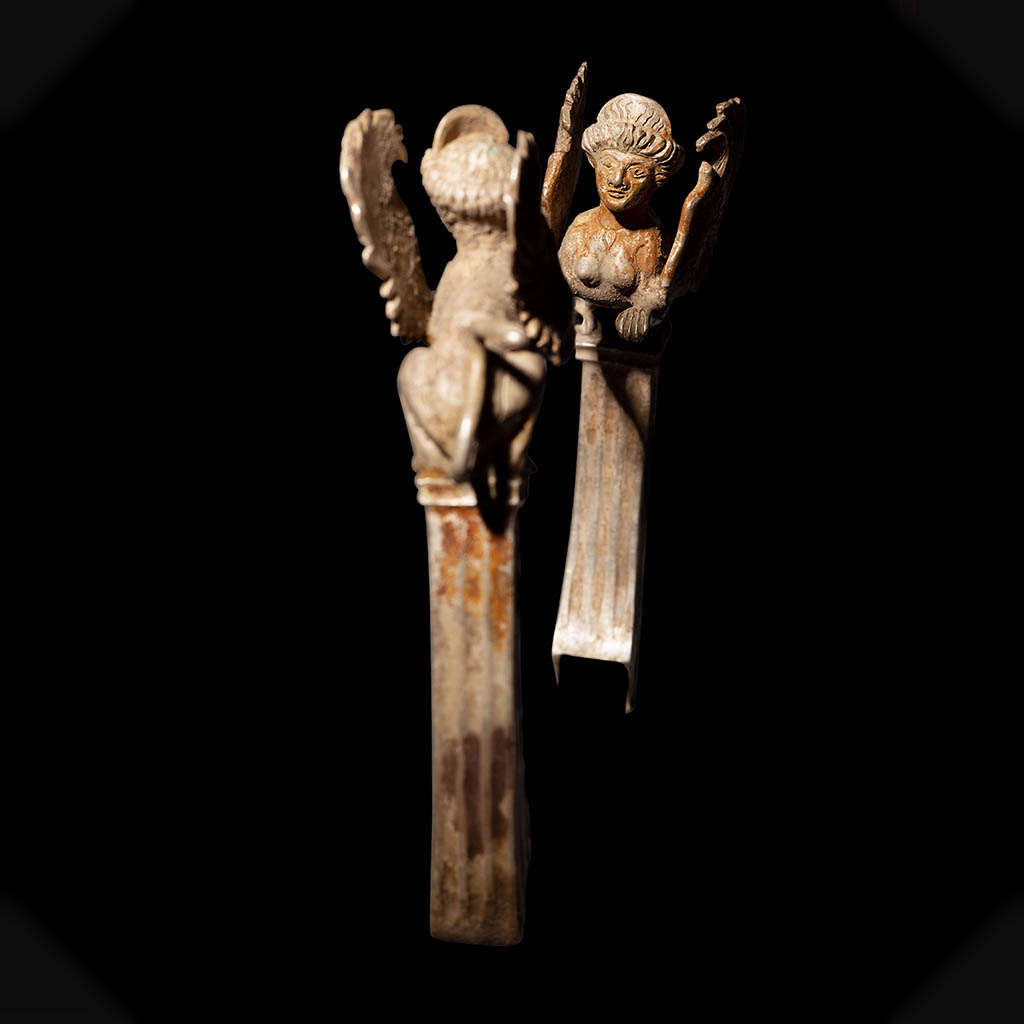
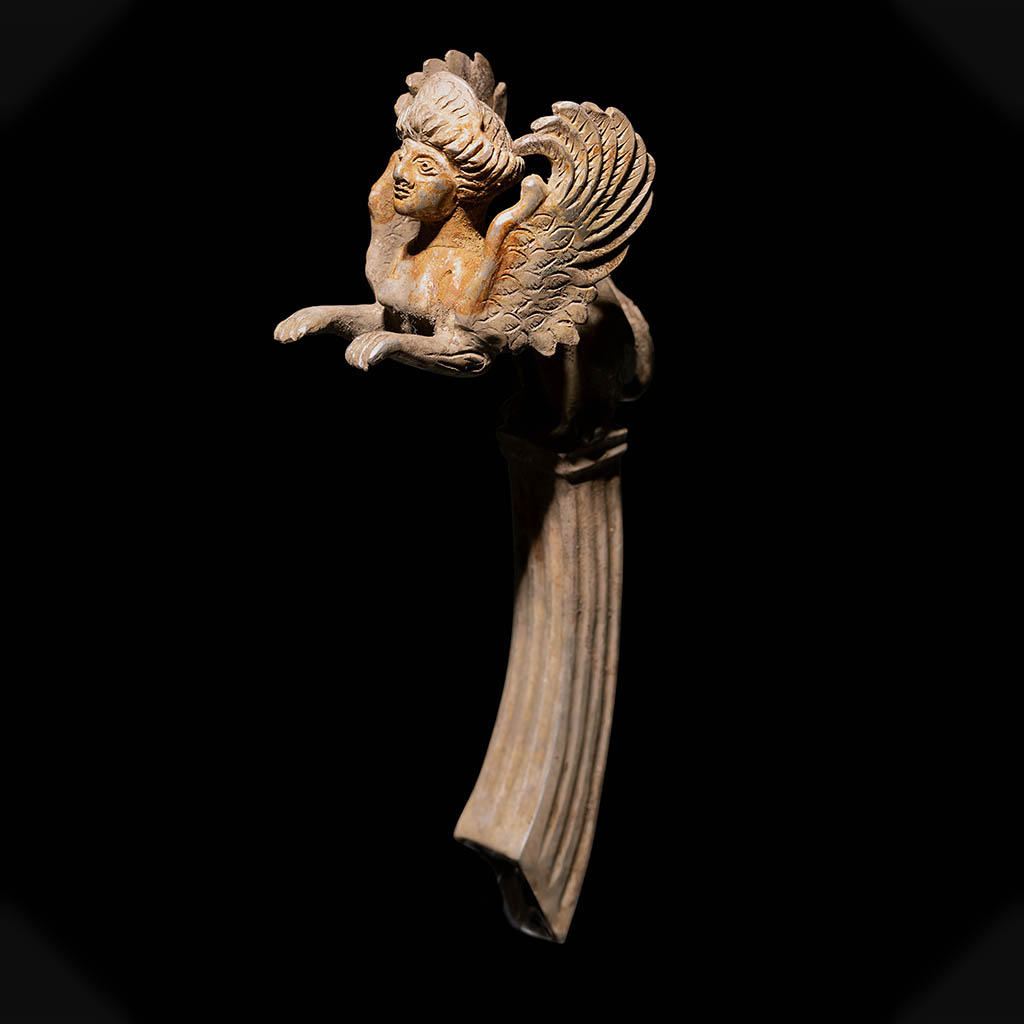
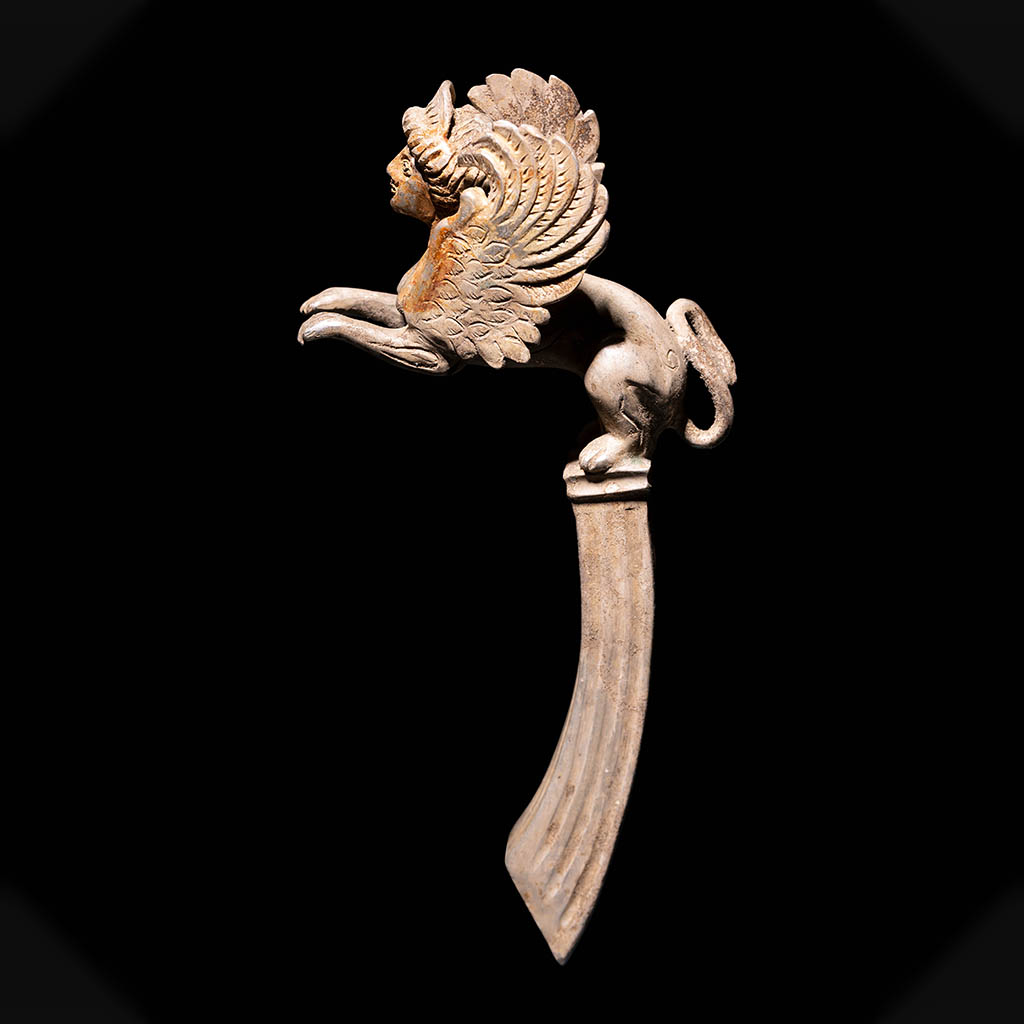
Two handles from a bowl, pot or goblet. The square section is hollow and convex in shape to make holding the vessel easier. Each handle terminates in a sphinx standing on its back legs, with its front paws outstretched. These would be the point where the handles were attached to the upper area of the vessel.
The sphinxes are identical apart from the fact that one head looks to the left and the other to the right, although not quite to the same degree. They are depicted according to the Greek social conception of this mythological creature. Each has the bust of a woman, the body and tail of a lion, great bird wings and a female human head. Each head is depicted wearing a diadem and with the hair swept up and held at the back of the head in a bun. The precision and detail of the working of the faces and wings is notable, giving a sense of movement and realism to the pair. One can appreciate a clear attempt to differentiate between the feathers of the wings: those inserted into the body itself are small and short, rather like scales, while those at the extreme end of the wings are long and narrow, to help the creature take flight.
According to ancient literary sources, the sphinx was a monster with the face and bust of a woman, the claws of a lion, the body of a dog, the tail of a snake and wings of a bird. This demon of divine origin, whose presence excited uncertainty and terror in humans, was also characterized by its pallid appearance, fiery look and venomous mouth. It’s possible that this hybrid had its origin in Egyptian iconography, where it was represented with a feline body and human face, possibly connected to the divine power of the pharaoh.
The sculptural prototype of Greek sphinxes appears around the 7th century BCE in terracotta and was usually found decorating large receptacles. A century later they appeared in marble crowning seated ex-votos on a column. The monstrous, aggressive nature of the hybrid was channelled into funerary art, serving as an apotropaic symbol to keep away malevolent forces. It was usual, therefore, to find this iconography in metopes and hollow acroteria in Greek necropoleis of the 6th century BCE, usually with the animal in profile and turning its head toward the public in an attitude of defiance.
Reference #
SI_GR_1034
Civilization Greek,
5th – 4th century B.C.E.
Size
H. 14 cm
Condition
Intact, Fine
Price
P.O.R.
Provenance
Private collection, Great Britain. Acquired before 1975
Frequently Asked Questions
The handles are hollow, convex square sections designed for easier holding, each ending in a sphinx figure standing on its hind legs with outstretched front paws. The sphinxes have female busts, lion bodies and tails, bird wings, and female human heads adorned with diadems and hair styled in buns, showcasing detailed craftsmanship.
The two sphinx figures are identical in design except for the direction their heads face; one looks to the left and the other to the right, though not symmetrically. This subtle difference adds balance and visual interest to the vessel's design.
In ancient Greek culture, the sphinx was a mythological hybrid creature symbolizing uncertainty and terror, often depicted with a woman's face and bust, lion claws, a dog's body, a snake's tail, and bird wings. It served as an apotropaic symbol in funerary art to ward off evil forces and was commonly used in necropoleis decoration.
The craftsmanship is evident in the precise and detailed rendering of the faces and wings, with a clear differentiation between the small, scale-like feathers near the body and the long, narrow feathers at the wing tips, creating a sense of movement and realism.
The Greek sphinx likely originated from Egyptian iconography, where the sphinx had a feline body and human face linked to pharaonic divine power. Greek sculptural prototypes appeared around the 7th century BCE in terracotta and later in marble, often used in funerary contexts to protect against malevolent forces.
Sphinx figures were commonly used to decorate large vessels, marble ex-votos on columns, metopes, and hollow acroteria in Greek necropoleis, especially during the 6th century BCE, serving both decorative and protective functions in funerary settings.
The sphinx handles are intact and in fine condition. They come from a private collection in Great Britain and were acquired before 1975, dating back to the 5th–4th century BCE Greek civilization.