Description
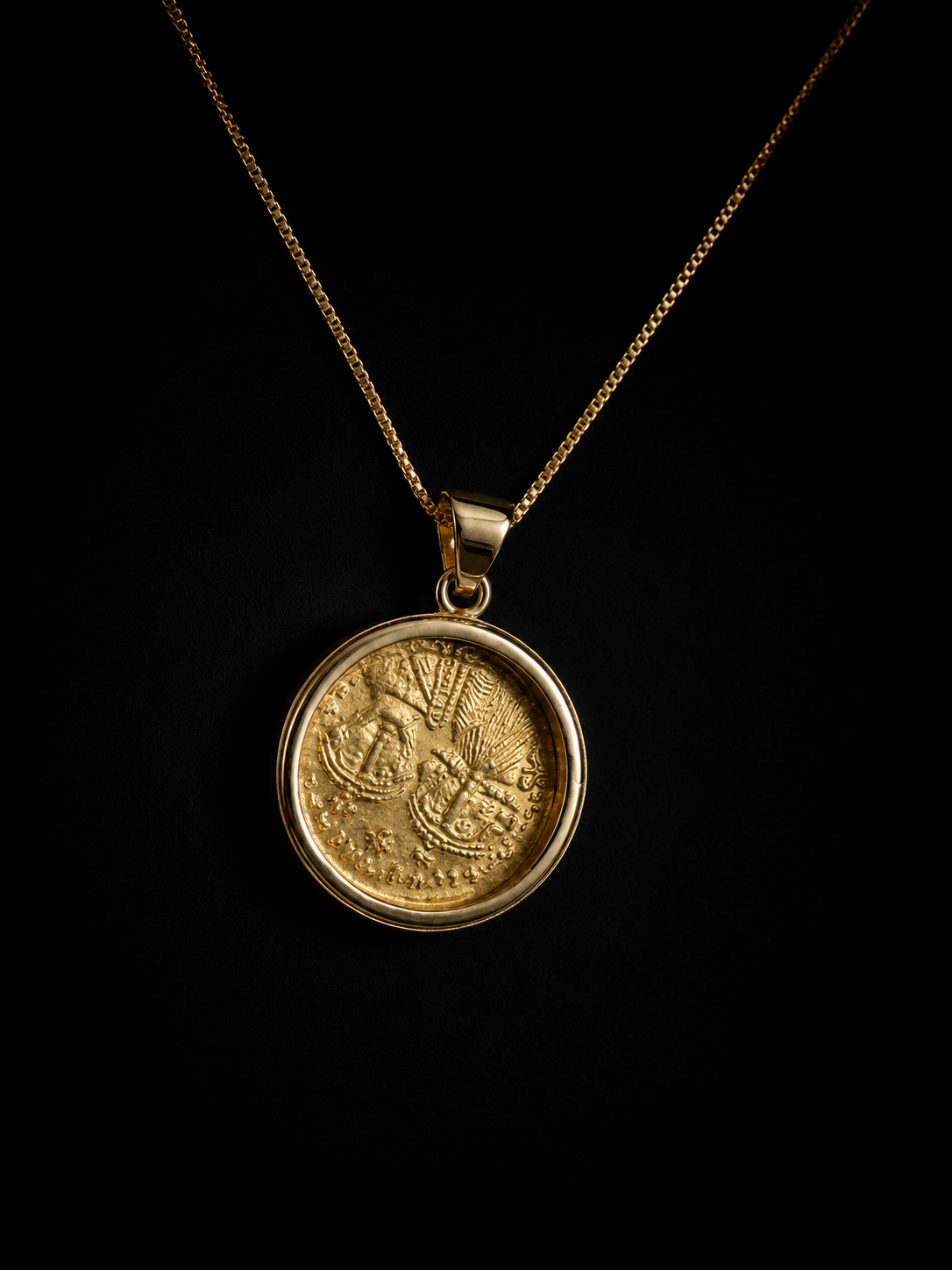
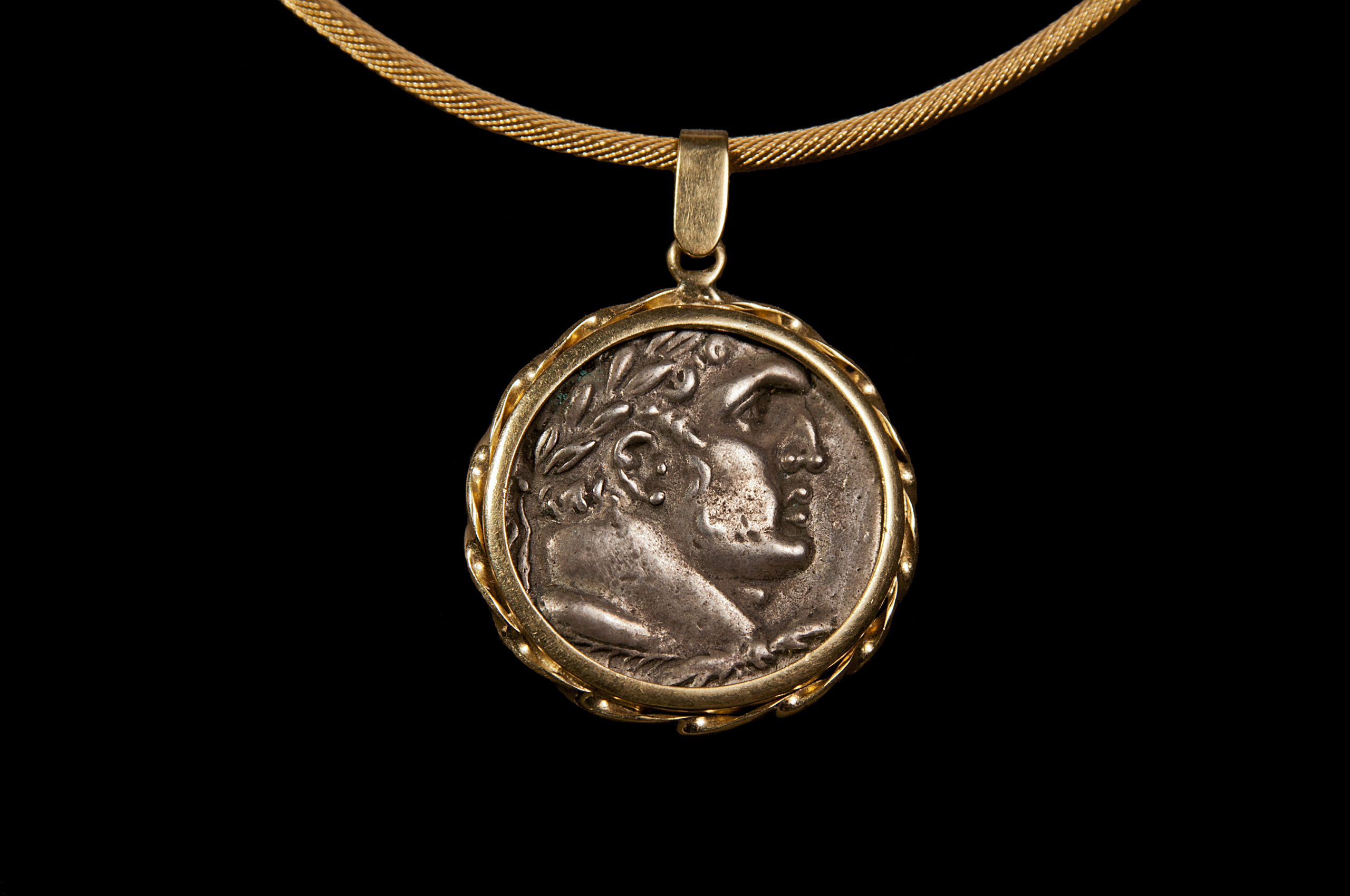
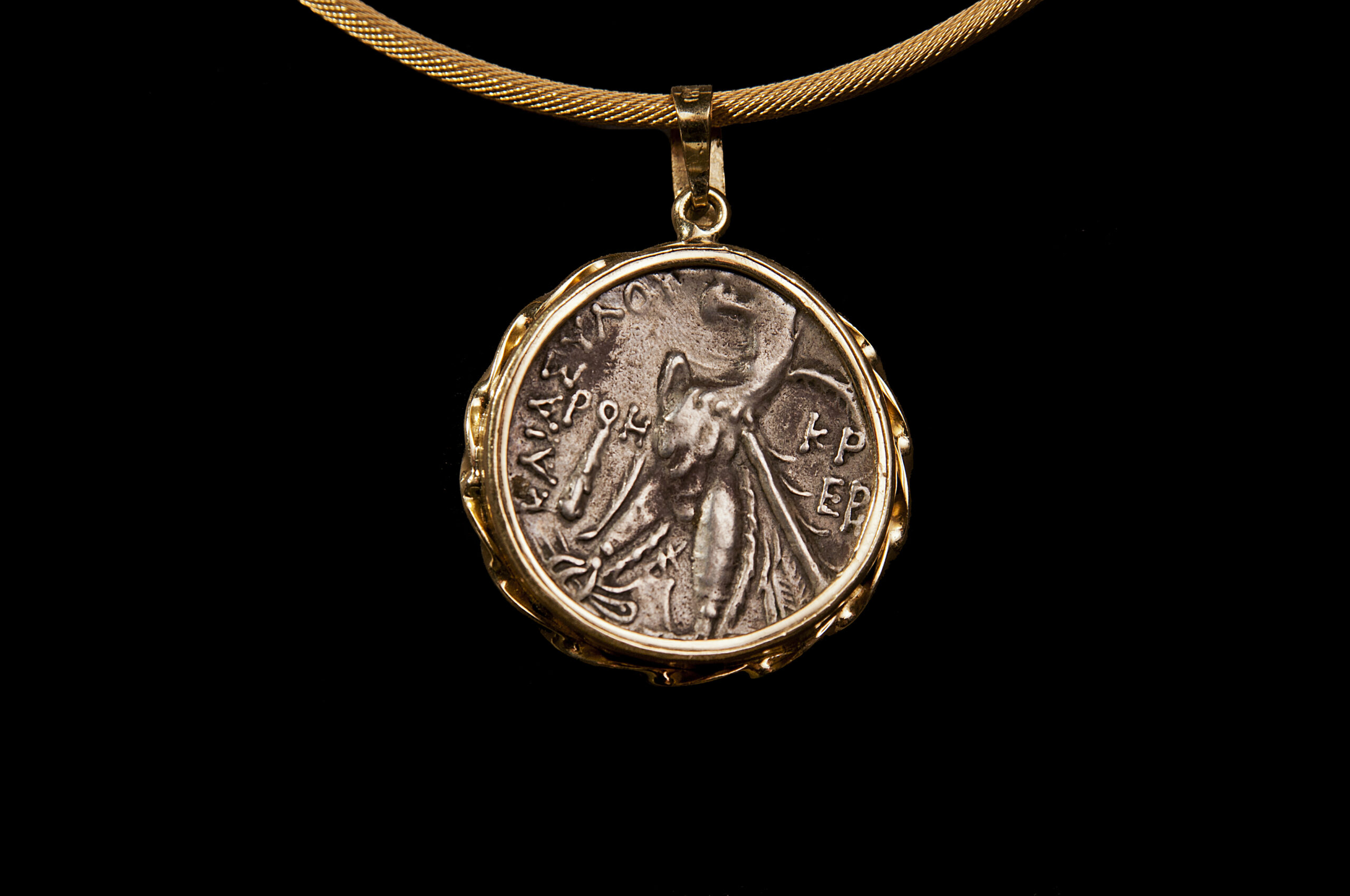
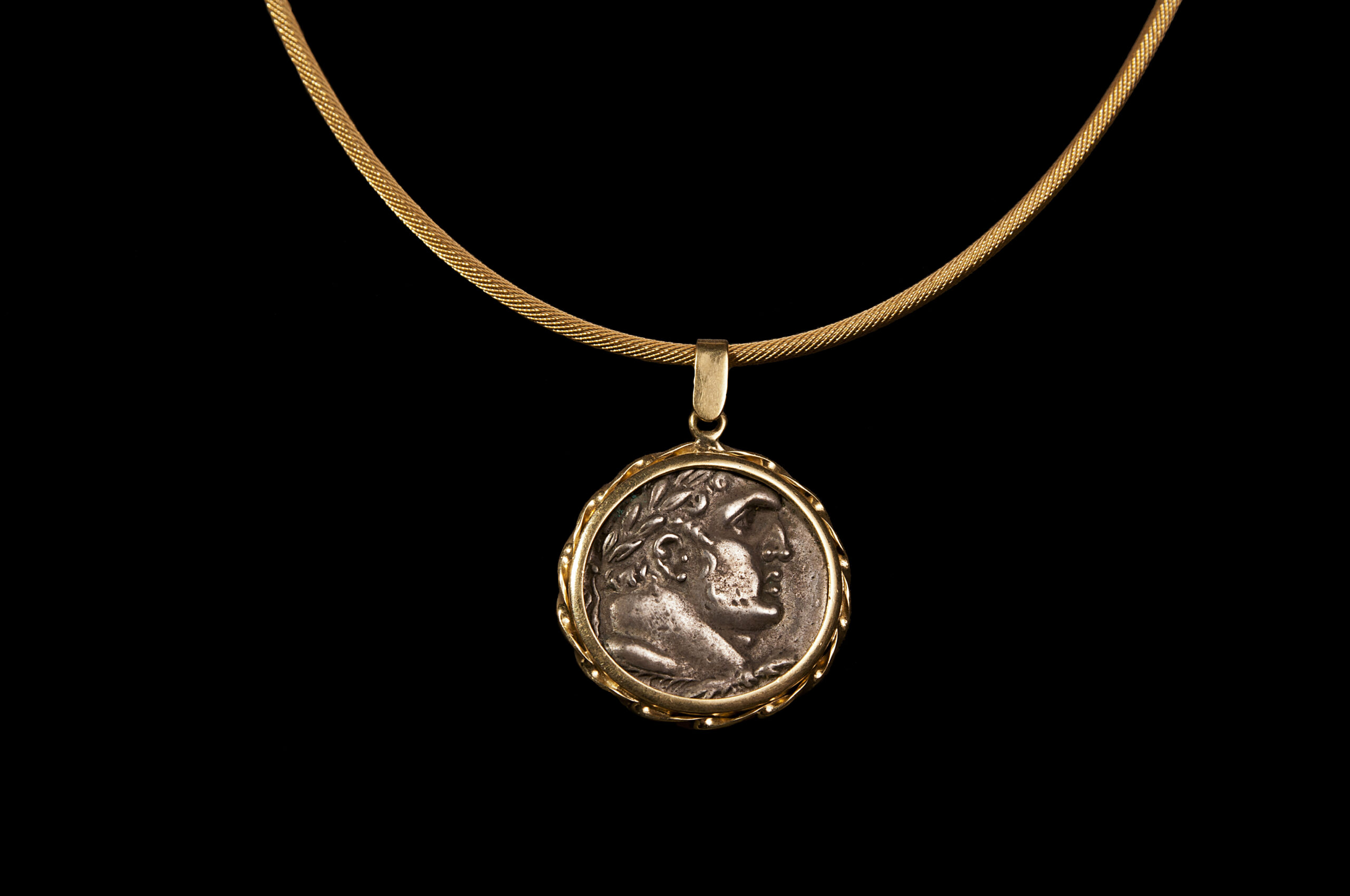
Hanging from an 18K gold necklace, the silver shekel coin seen here shows the face of a prominent individual with an olive leaf crown from ancient Tyre, a city in southern Lebanon. An eagle and ancient wording adorns the coin’s opposite side, intricately detailed to show the bird’s sharp talons and delicate feathers. The coin is brightly polished to bring out the bold embossing seen on both sides.
This pendant dates from 126 B.C.E. – 66 C.E. when Tyre had regained its independence and was allowed to remain so while the surrounding provinces came under Roman rule. It is in exquisite condition and looks beautiful enough to be worn today.
REFERENCE #
JW_PH_1001
CIVILIZATION
GREEK, 126 B.C.E. – 66 C.E.
SIZE
D. 2.5 cm
CONDITION
Excellent Condition
PRICE
Sold
Frequently Asked Questions
The silver shekel coin pendant dates back to 126 B.C.E. – 66 C.E., a period when the ancient city of Tyre in southern Lebanon regained its independence while surrounding provinces fell under Roman rule. It reflects the rich history and culture of the Greek civilization during that era.
The pendant features a silver shekel coin suspended from an 18K gold necklace. The coin itself is made of silver and is brightly polished to highlight its detailed embossing, while the necklace is crafted from high-quality 18K gold.
One side of the coin shows the face of a prominent individual wearing an olive leaf crown, symbolizing ancient Tyre. The opposite side features an intricately detailed eagle with sharp talons and delicate feathers, along with ancient inscriptions.
The coin has a diameter of 2.5 cm and is in excellent condition, with bright polishing that enhances the bold embossing on both sides. It is well-preserved enough to be worn as jewelry today.
According to the provided information, the pendant has been sold and is no longer available for purchase. However, it remains a valuable and exquisite historical piece.
The pendant belongs to the Greek civilization, specifically from the period between 126 B.C.E. and 66 C.E., reflecting the cultural and historical context of ancient Tyre during that time.