Description
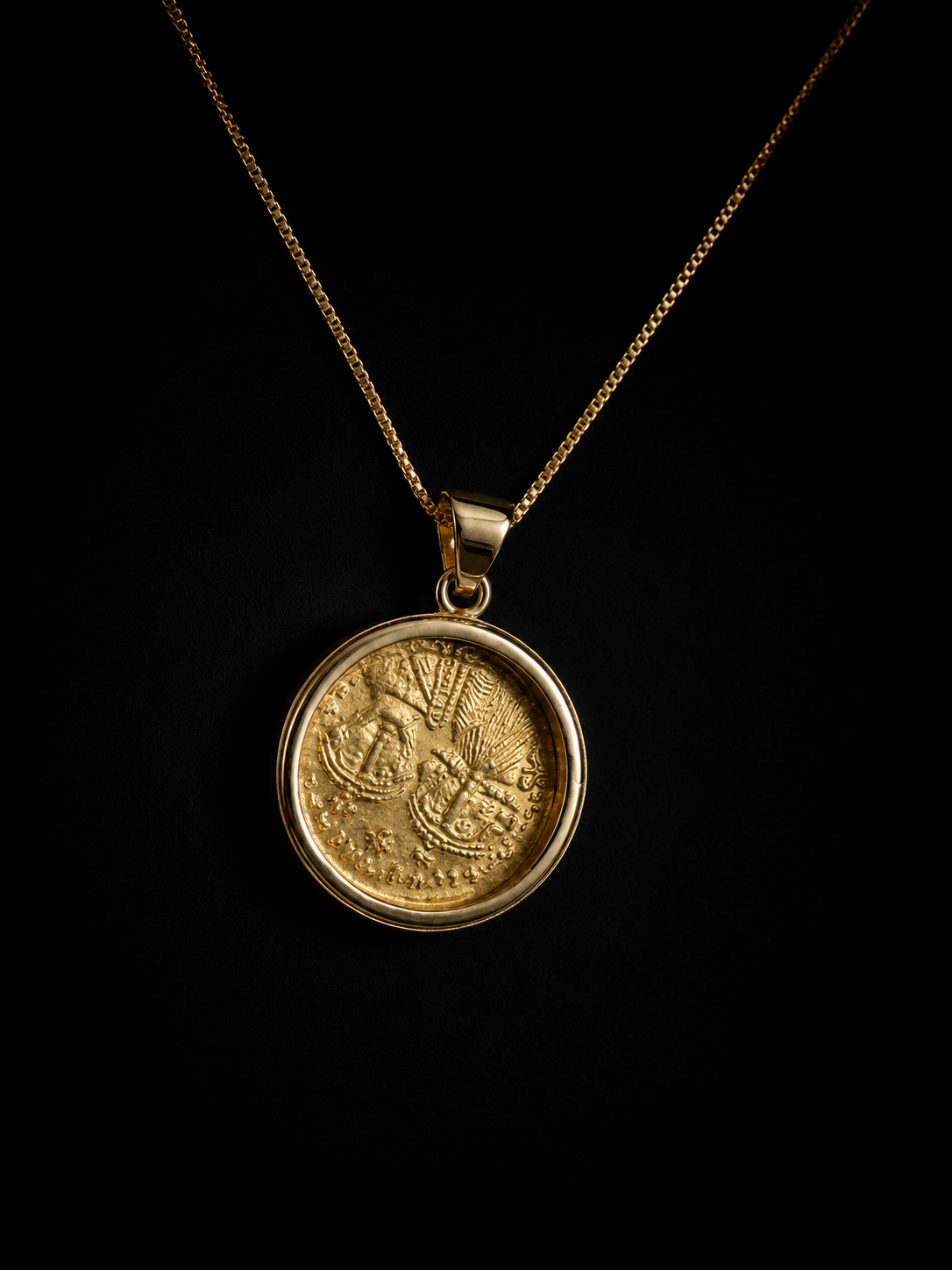
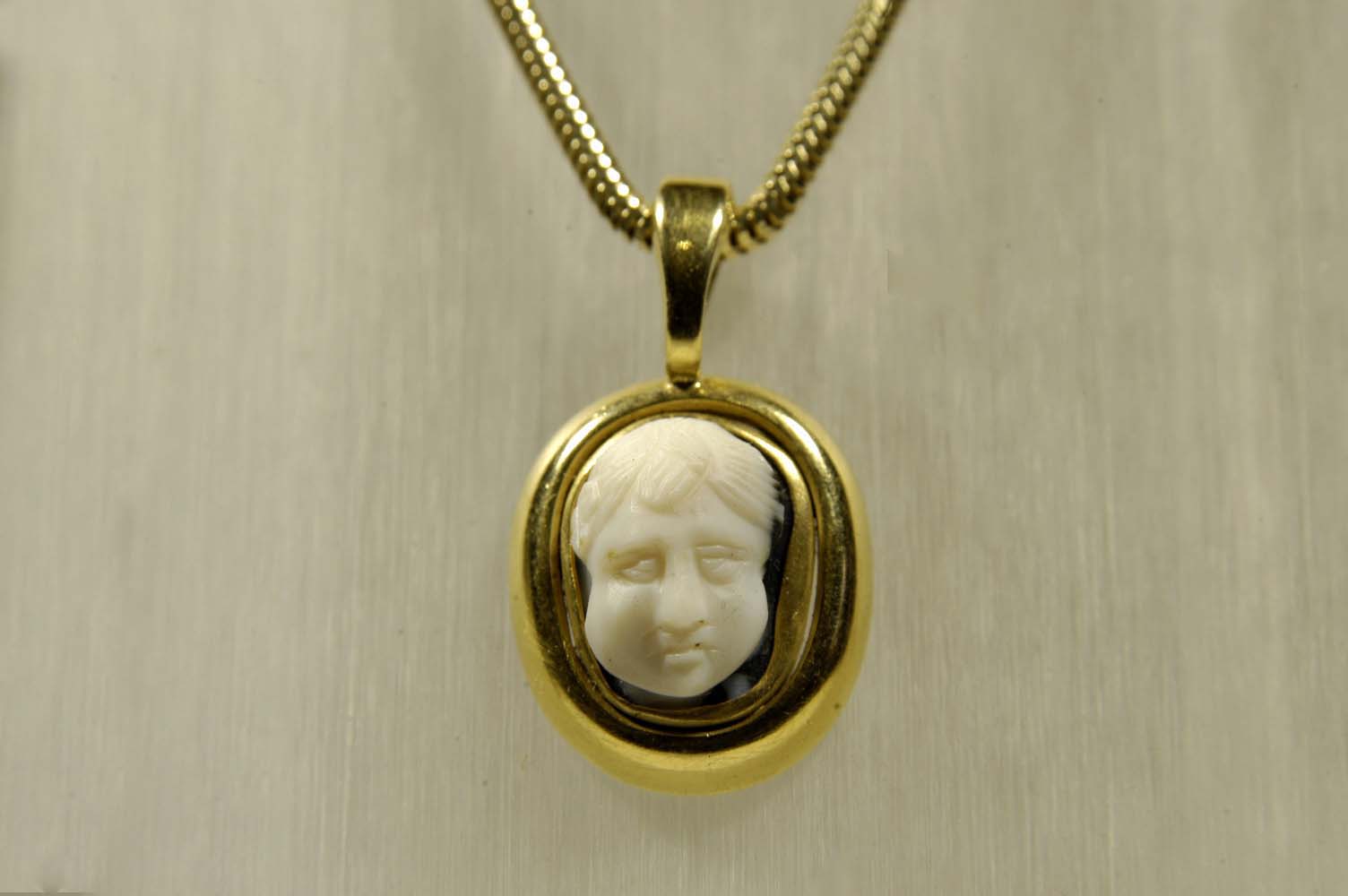
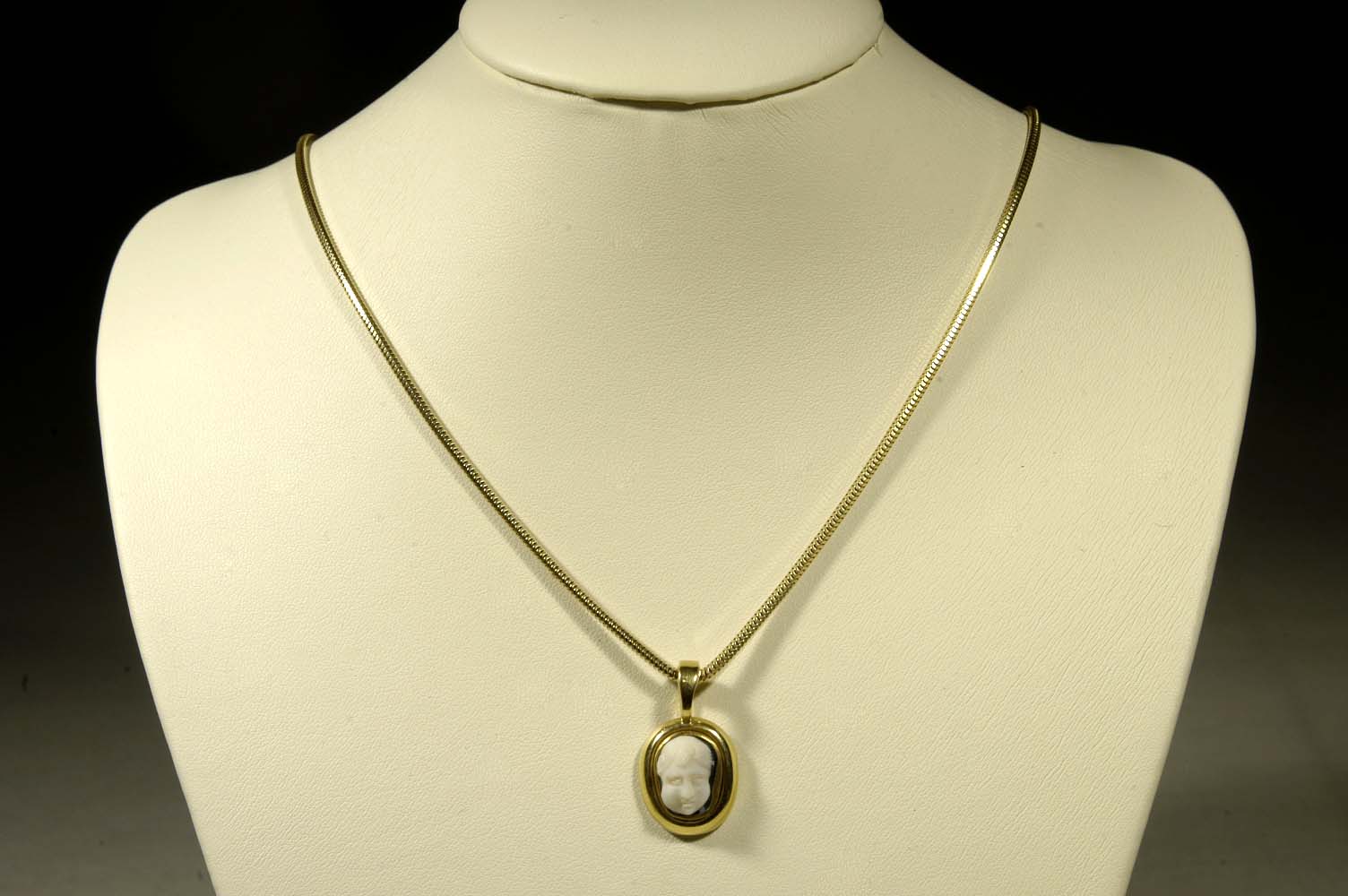
This striking piece is a Roman cameo mounted in a modern gold setting, together comprising an attractive and wearable piece of ancient art. The background stone is onyx, with a deep black and solid lustre against which the cameo stands out in strong contrast. The image depicted is a facing head of Medusa, the mythical snake-headed gorgon of Greek mythology, which was much admired by the Romans and which was incorporated into their own literature following the influx of Greeks into Graecia Magna (Southern Italy) in the latter part of the first millennium B.C.E..
Cameos were very popular among the Romans, who used them as seals, wore them as jewellery, and elevated what was a somewhat marginal art form to a major sculptural technique with supreme masterworks such as the Portland Vase, carved by an unnamed master, and currently in the British Museum, London.
REFERENCE #
JW_RM_1022
CIVILIZATION
Roman, 100 B.C.E. – 100 C.E.
SIZE
H. 2 cm
CONDITION
Excellent condition
PRICE
$2500
Frequently Asked Questions
The background stone of the Roman cameo is onyx, known for its deep black color and solid lustre, which provides a striking contrast to the carved image of Medusa.
The cameo depicts the facing head of Medusa, the mythical snake-headed gorgon from Greek mythology. Medusa was admired by the Romans and featured in their literature, symbolizing protection and warding off evil.
In Roman times, cameos were popular as seals and jewelry. They elevated cameo carving from a marginal art form to a major sculptural technique, with masterpieces like the Portland Vase exemplifying their artistic importance.
This Roman cameo measures 2 cm in height and is described as being in excellent condition, making it a well-preserved example of ancient art.
The Roman cameo mounted in a modern gold setting is priced at $2500, reflecting its historical value and craftsmanship.
The cameo dates from the Roman period between 100 B.C.E. and 100 C.E., a time when Roman art was heavily influenced by Greek culture.