


Description
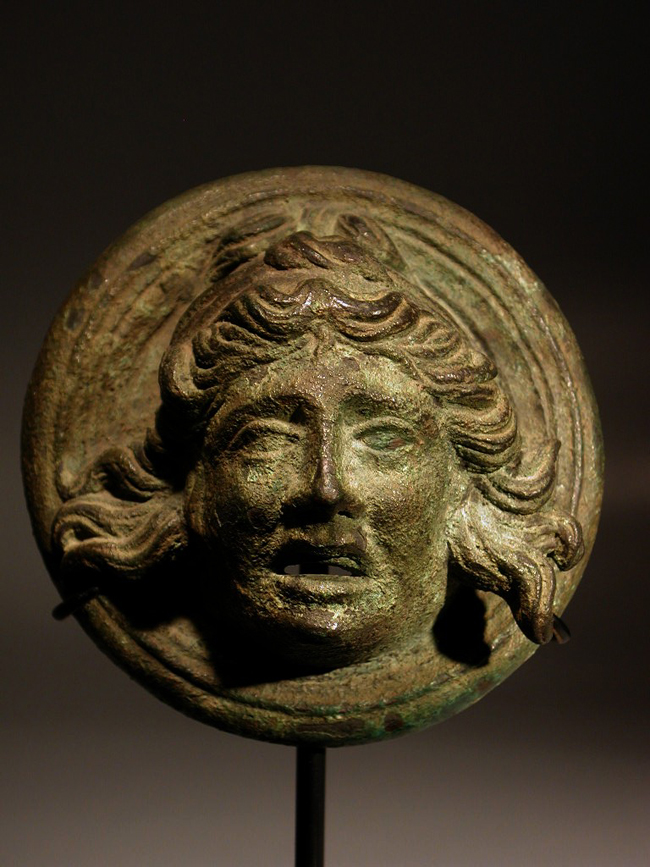
A finely cast Roman bronze appliqué representing the head of Medusa (Gorgoneion), executed in exceptionally pronounced high relief. The composition displays a sensitively modelled female countenance with deeply set eyes, a straight nose, and slightly parted lips, framed by luxuriant, deeply articulated locks of wavy hair. The head is enclosed within a circular border of concentric mouldings, lending the composition a striking sense of depth and sculptural presence.
In Roman art, the Gorgoneion served as an apotropaic emblem, traditionally associated with protection against evil and misfortune. Such representations were employed as decorative and protective elements on bronze vessels, furniture, armour, and architectural fittings. The refined facial modelling, balanced proportions, and vigorous treatment of the hair demonstrate the enduring influence of Classical Greek sculptural traditions upon Roman decorative arts.
An impressive example of Roman bronze craftsmanship, distinguished by its unusually deep relief, accomplished modelling, and monumental character despite its modest dimensions.
REFERENCE #
SI_RM_1110
CIVILIZATION
Roman, 100 C.E. – 200 C.E.
SIZE
8cm
CONDITION
Very well preserved, retaining sharply defined sculptural details and an attractive, naturally developed green-brown patina.
PRICE
$8800
Frequently Asked Questions
A Roman phalera is a decorative bronze disk used as an ornament on military uniforms or horse harnesses in ancient Rome. It served both decorative and symbolic purposes, often indicating rank or achievements.
This Roman phalera is made of bronze, a common material for such artifacts due to its durability and ability to hold detailed relief work. The bronze surface has developed a rich patina over centuries, showing green and brown hues.
The phalera features an intricate high-relief depiction of a classical figure, possibly a deity or mythological character, with expressive details and dynamic flowing hair. This design reflects the symbolic artistry of ancient Roman metalworkers.
This Roman phalera dates from approximately 100 C.E. to 200 C.E., placing it in the early Imperial period of Roman history when such military decorations were commonly used.
The phalera measures 8 centimeters in diameter and is in excellent condition, preserving the detailed relief and the bronze's natural patina despite its ancient age.
The price of this Roman phalera is $8,800, reflecting its historical significance, craftsmanship, and excellent preservation.