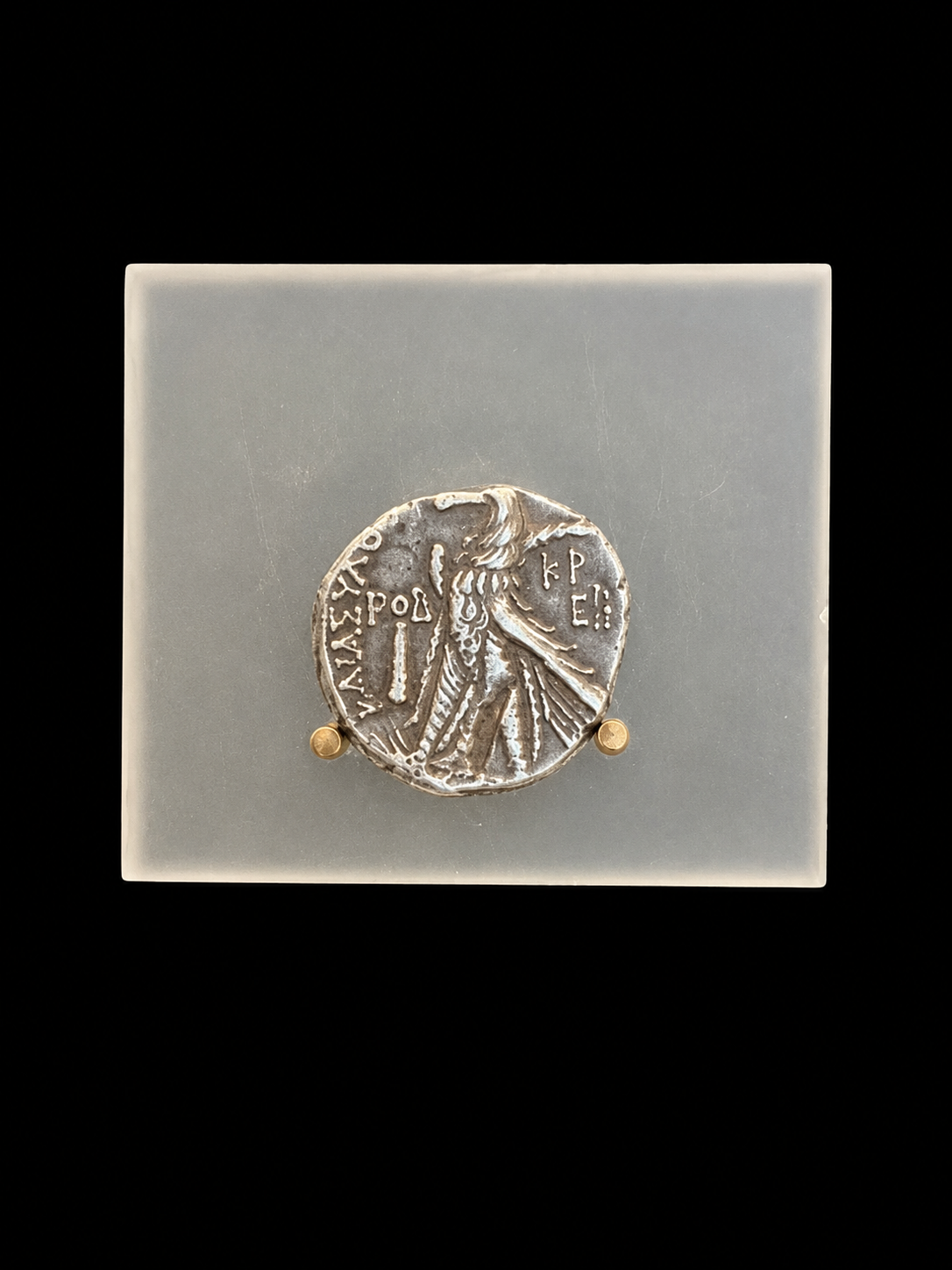
Description
The Coin from the Fish’s Mouth
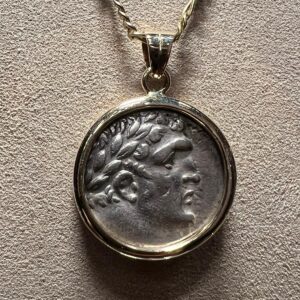
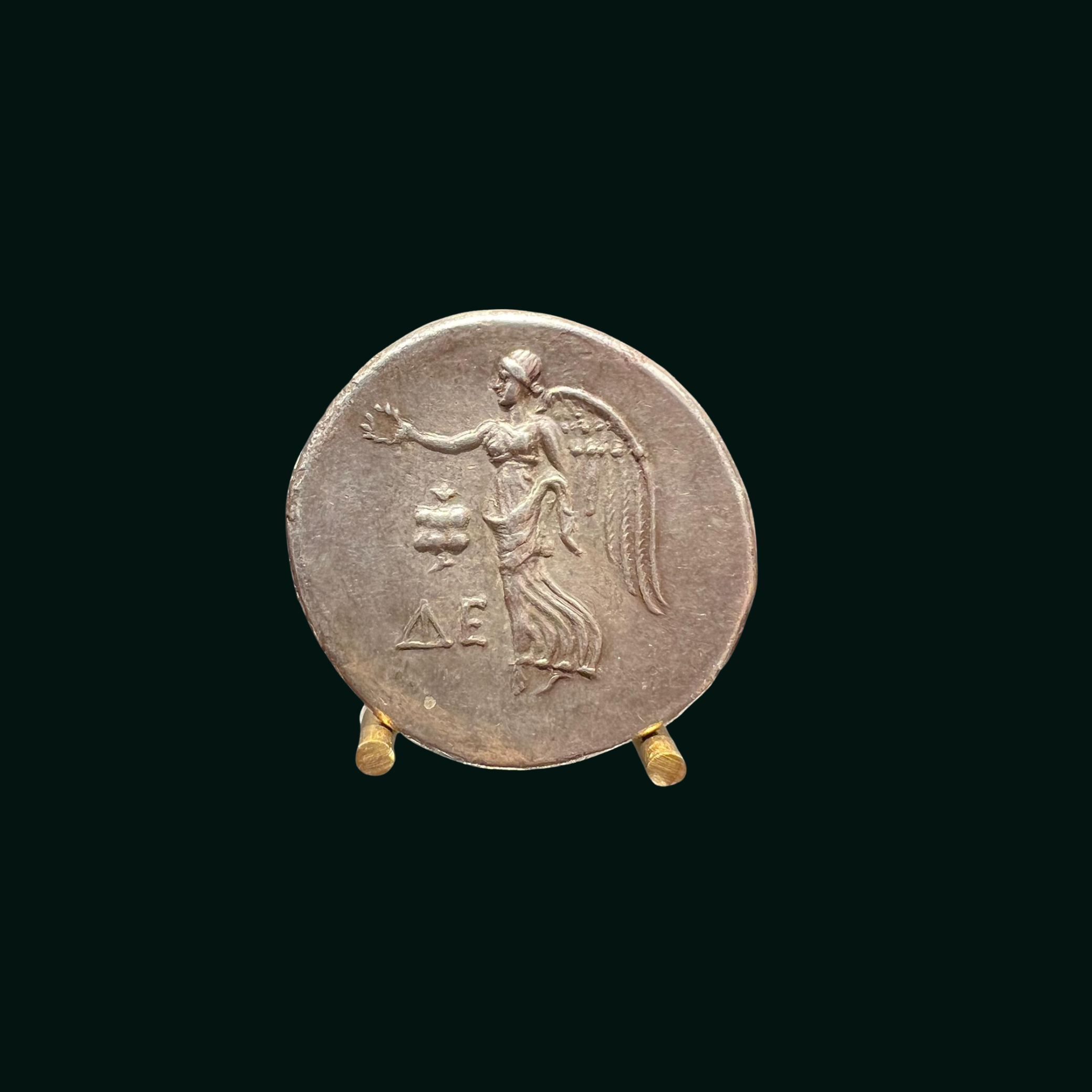
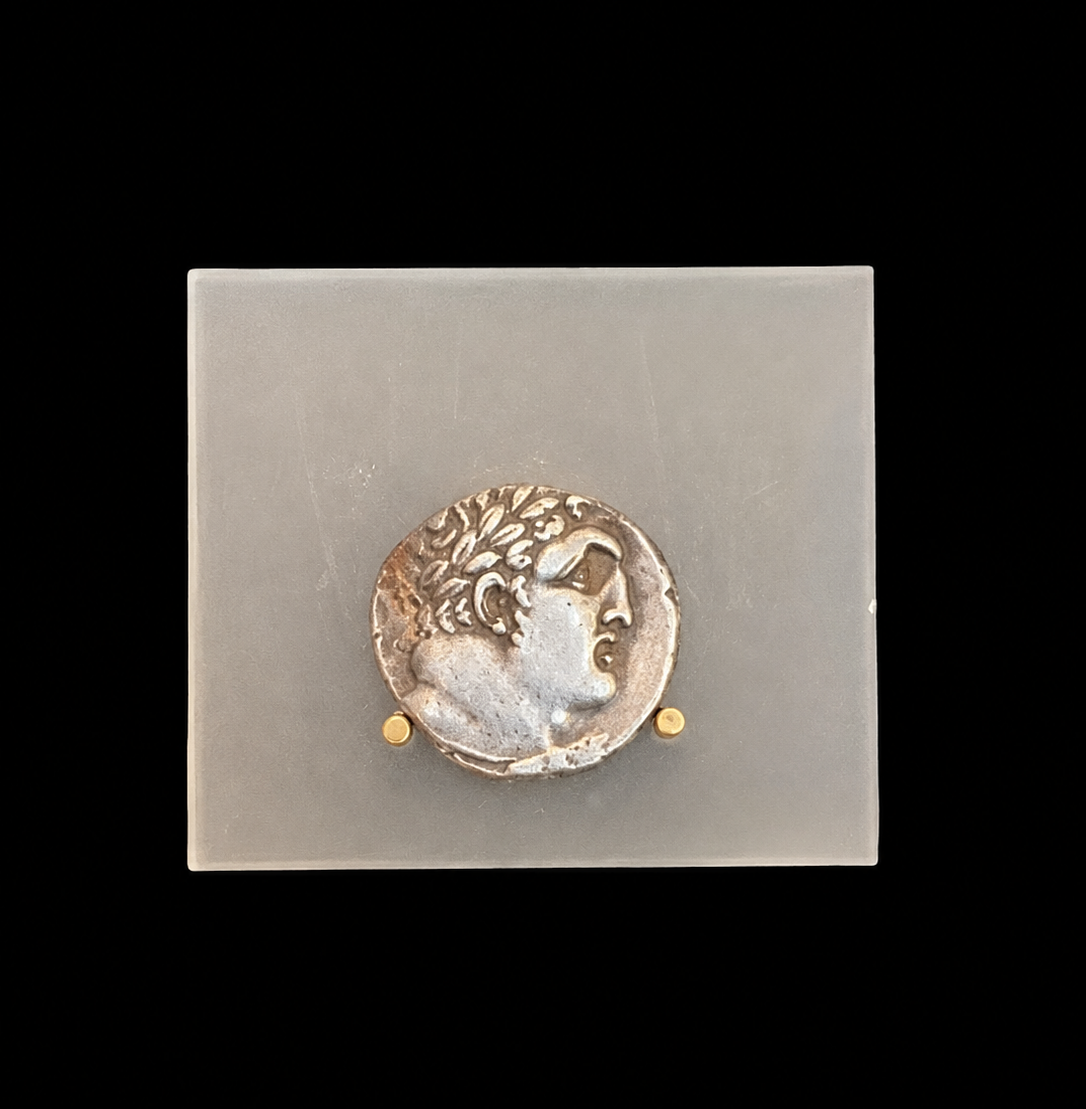
The silver shekel of Tyre holds an extraordinary place in the Biblical and monetary history of ancient Judaea. Renowned for its exceptionally high and reliable silver content, the Tyrian shekel became the principal coin accepted for payment of the annual half-shekel Temple tax in Jerusalem.
This is the coin type traditionally identified with the celebrated “coin in the fish’s mouth” described in the Gospel of Matthew. When collectors of the Temple tax approached Peter, Jesus instructed him:
“Go thou to the sea, and cast a hook, and take up the fish that first cometh up; and when thou hast opened his mouth, thou shalt find a piece of money: that take and give unto them for me and thee.”
— Matthew 17:27
The Greek Gospel identifies this “piece of money” specifically as a stater, a silver coin of sufficient value to pay the half-shekel Temple tax for both Jesus and Peter. In first-century Judaea, the Tyrian shekel corresponded to this value and is widely identified as the coin intended in the passage.
This coin belongs to the later series of Tyrian shekels, generally attributed to being minted in or near Jerusalem to maintain the supply of high-quality silver required for the Temple. Remarkably, these coins continued to bear the traditional Tyrian imagery of the Phoenician deity Melqart and an eagle, despite their use in Judaism’s holiest sanctuary.
Tyrian silver is also traditionally associated with another moment in the Passion narrative: the thirty pieces of silver paid to Judas Iscariot for the betrayal of Jesus (Matthew 26:14–16). Although the Gospel does not specify the denomination, Tyrian shekels are considered among the leading candidates because of their prominent role within the Jerusalem Temple economy.
Thus, the Tyrian shekel is intimately connected with the New Testament world—the Temple tax, the coin from the fish’s mouth, and traditionally the thirty pieces of silver—making it one of the most evocative Biblical coins surviving from the time of Jesus.
REFERENCE #
CO-PH-1001
CIVILIZATION
Phoenician. Circa 1st Century B.C.–1st Century A.D.
CONDITION
Very Fine Condition
PRICE
POR
PROVENANCE
Jerusalem Private Collection