Description
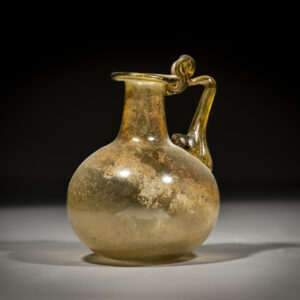
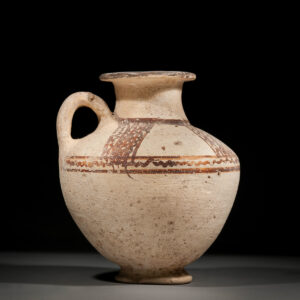
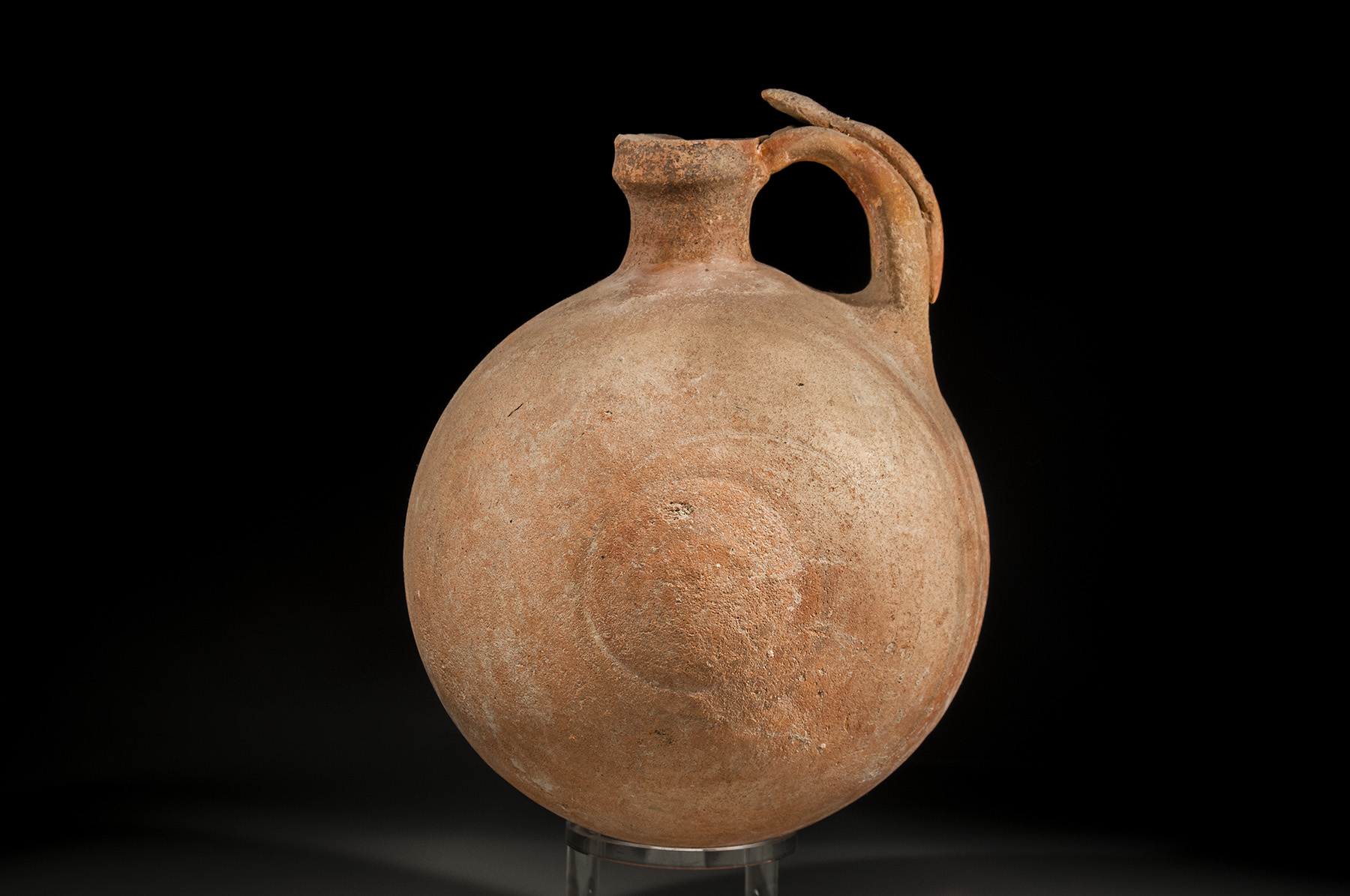
The Phoenicians were a maritime trade culture and later became known for their opulent pottery, jewelry, and silks. However, in the Early Iron Age, most Phoenician pottery was simple, unglazed, and undecorated. This globular jug, measuring 22cm in height and dating back to 1000 B.C.E. – 800 B.C.E., is spectacular not in its décor, but in its craftsmanship and subtle attention to detail.
The striations of color in along the side give insight into how this jug was made, layers of clay folded over each other. The artist’s hand is still present, even after 3,000 years: the seamless cylindrical shape indicates immense skill and sense of proportion. One can imagine how impressive this perfectly cylindrical jug must’ve appeared seated atop its base in the middle of a banquet table, the serpent coiled around the handle, staring as wine filled their cups.
REFERENCE #
KB_PT_0443
CIVILIZATION
Iron Age II, 1000 B.C.E. – 800 B.C.E.
SIZE
H. 22 cm
CONDITION
Fine condition
PRICE
Price available upon request
Frequently Asked Questions
The Phoenician jug dates back to the Early Iron Age, specifically between 1000 B.C.E. and 800 B.C.E., a time when Phoenician pottery was generally simple and unglazed.
Unlike most Early Iron Age Phoenician pottery, which was simple and undecorated, this jug is notable for its exceptional craftsmanship, seamless cylindrical shape, and subtle color striations that reveal the layered clay construction.
The jug was made by folding layers of clay over each other, creating striations of color along the side. The seamless cylindrical shape reflects the artist's skill and attention to proportion.
The jug measures 22 centimeters in height, making it a moderately sized vessel likely used for serving liquids such as wine.
The jug is reported to be in fine condition, preserving its craftsmanship and details despite being over 3,000 years old.
The handle of the jug features a serpent coiled around it, adding a subtle decorative and possibly symbolic element to the otherwise simple vessel.
The jug was likely used during banquets to serve wine, as suggested by the imagery of the serpent handle and the jug's placement on a banquet table, highlighting its functional and aesthetic role.