Description
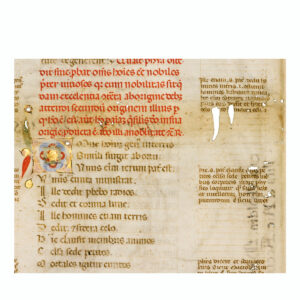
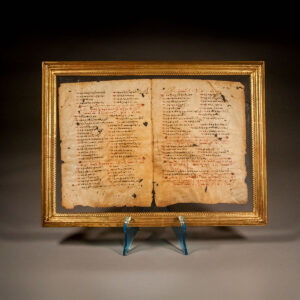
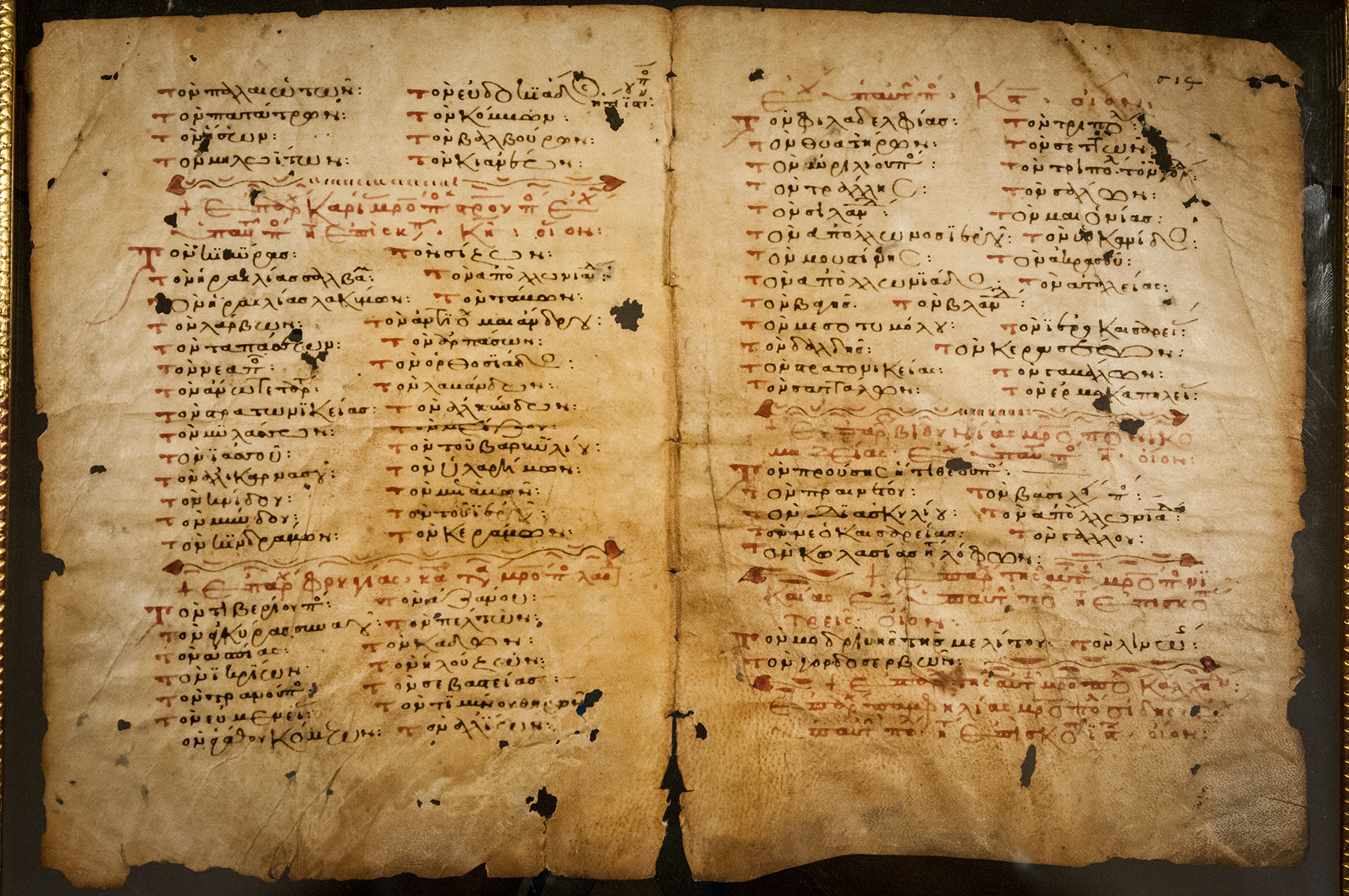
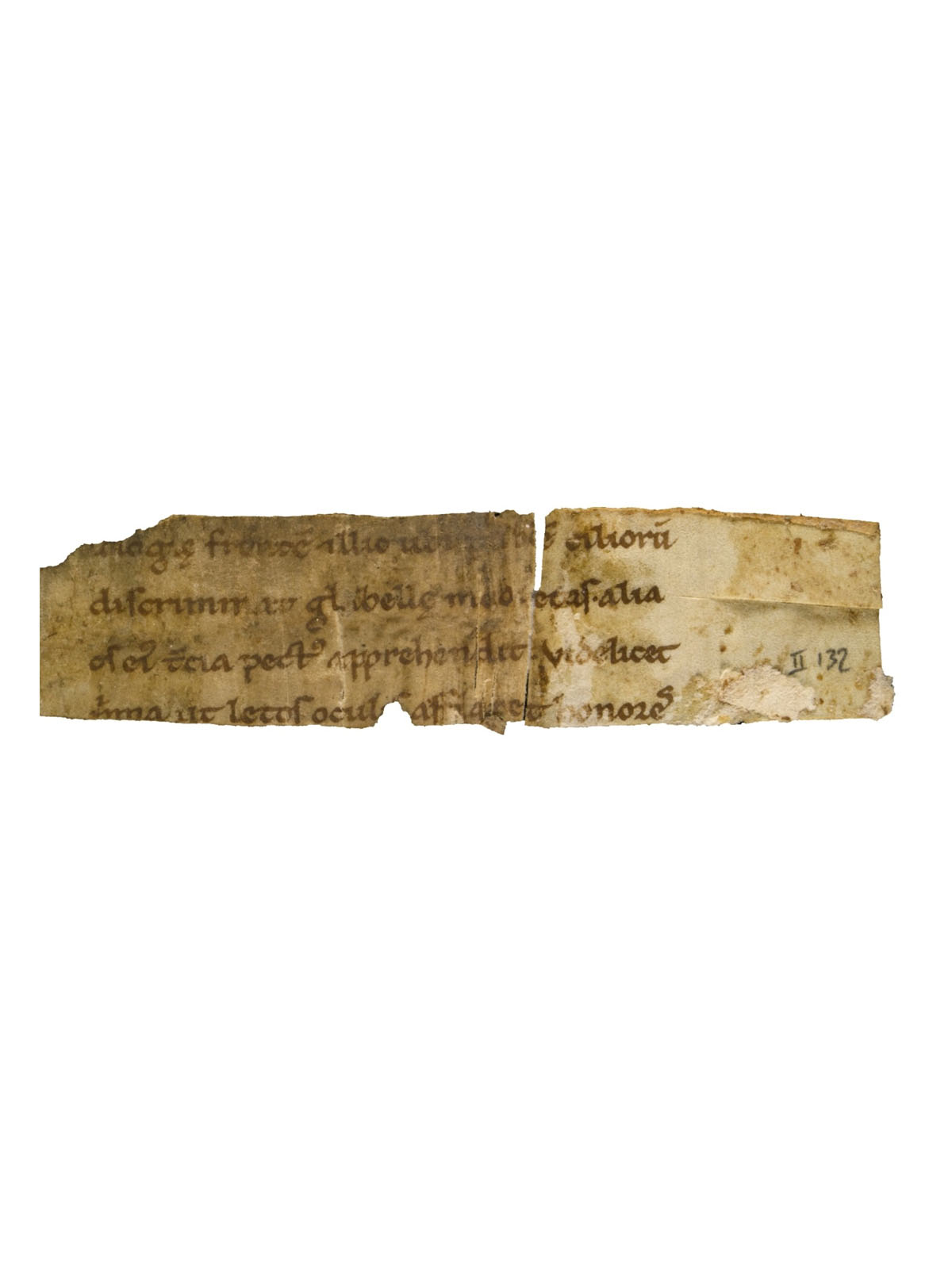
Manuscript Of The Text, In Latin, On Vellum [Germany, Early Twelfth Century] 9 fragments: 2 strips approximately 85mm. by 20mm. and 7 rectangular pieces, each approximately 42mm. by 25mm., one strip and one rectangle cut from same section of text allowing the reconstruction of 4 lines of a single column (35mm. wide): II:132-33, “Philologie frontem illuc ubi … oculis afflaret honores” and on back “sunt inclytam majestatem … hac regali lectica in”, and showing that the original volume was single-column and pocket-sized (with only approximately 21 lines missing between the lines here), other fragments with text from II:109, 110, 113, 130, and another part of 132, text in a fine late Carolingian hand with a pronounced ct-ligature, recovered from a binding of an sixteenth-century printed book from Leipzig, and hence with stains, cockling and splits.
Reference #
MS_BZ_1009
Civilization
Byzantine, Medieval , 1200 C.E.
Size
W. 8.5 cm, H. 2 cm
Condition
Fine condition
Price
Price available upon request
Provenance
Baidun Collection, acquired at Sotheby’s sale December 2013
Frequently Asked Questions
The manuscript fragment is a Latin text written on vellum, consisting of 9 pieces including strips and rectangular fragments. It features text from a single-column, pocket-sized volume with fine late Carolingian handwriting and a pronounced ct-ligature.
The fragments include two strips approximately 85mm by 20mm and seven rectangular pieces each about 42mm by 25mm. One strip and one rectangle come from the same section of text, allowing reconstruction of four lines of a single column about 35mm wide.
The manuscript dates to around 1200 C.E. and is associated with the Byzantine and Medieval civilizations, reflecting the late Carolingian script style of that era.
The fragments are in fine condition despite being recovered from the binding of a sixteenth-century printed book, which caused some stains, cockling, and splits. The vellum and text remain legible and well-preserved.
They were recovered from the binding of a sixteenth-century printed book from Leipzig, which contributed to their current physical condition including stains and splits.
The fragments were part of the Baidun Collection and were acquired at a Sotheby's sale in December 2013, indicating a well-documented ownership history.
The price for the manuscript fragments is not publicly listed and is available only upon request, suggesting a private sale or negotiation process.