Description
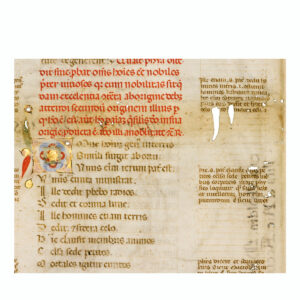
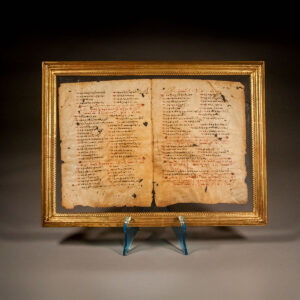
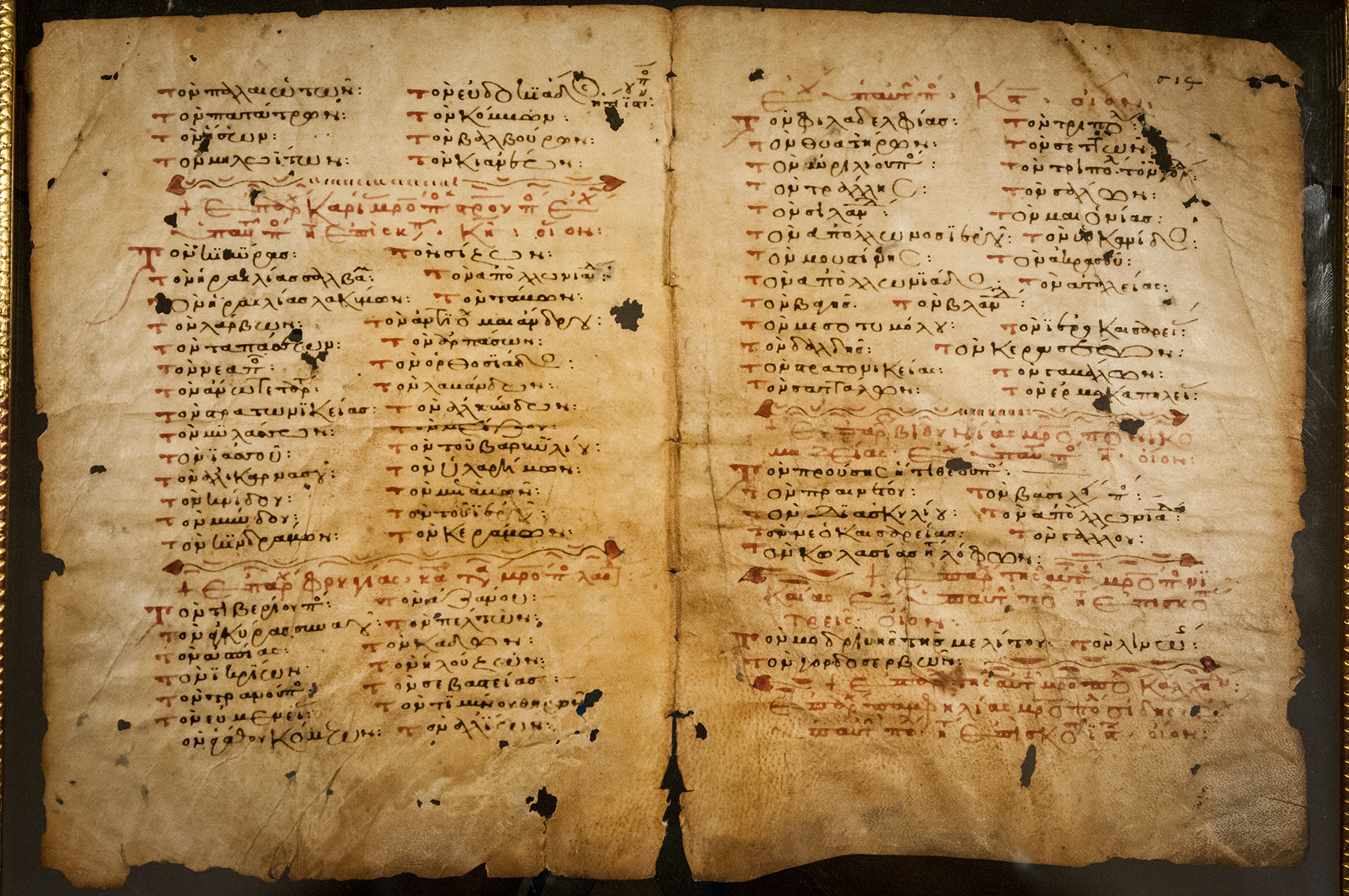
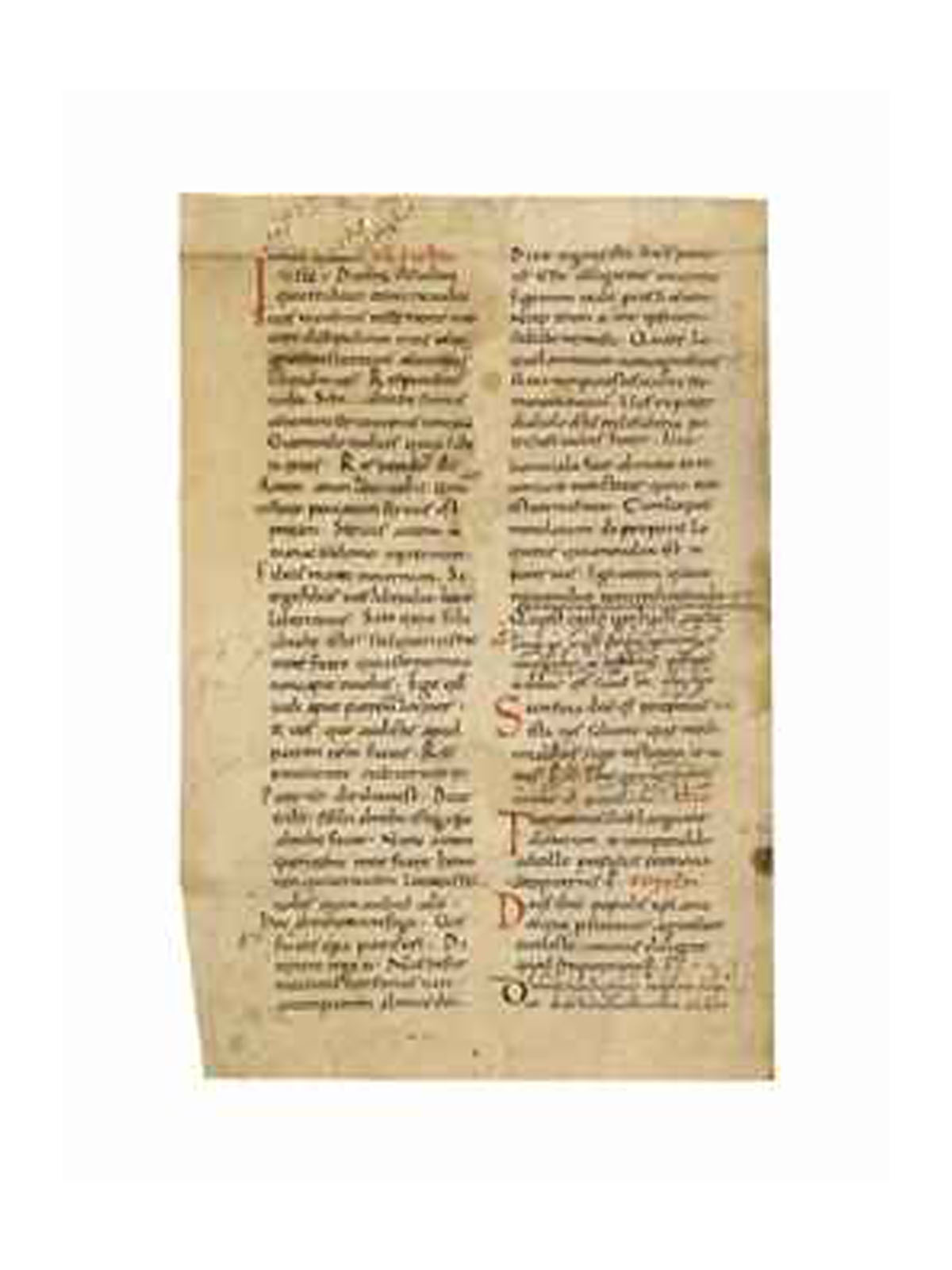
7 leaves and one part-leaf, 312 x 215mm — 372 x 265mm: (i) ORIGEN (d.253/4), translated by RUFINUS (d.410), In Numeros Homiliae, in Latin, [Italy, perhaps Tuscany, early 12th century], 2 almost complete leaves, two columns of 34 lines written in a fine rounded Carolingian minuscule bookhand in dark brown ink, the text containing parts of Homily XXVI and XXVII, with a December 1580 inscription in Italian on f.1v, 372 x 265mm; A MISSAL, in Latin, [Italy, probably Tuscany, early 13th century], 2 leaves, two columns of 31 lines written in brown ink, rubrics and initials in red, the text from the Sanctoral containing masses for Saints Zenobius, Romulus, Reparata and Cerbonius, all Tuscan, 311 x 215mm; ROLANDINUS RODOLPHINUS (d.1300), Summa artis notariae, in Latin, [Italy, late 13th or early 14th century], 1 leaf and one part leaf, two columns of 44 lines written in brown ink, rubrics and paraphs in red, the text containing parts of chapters VIII and IX, 320 x 223mm; A BREVIARY, in Latin, [Italy, late 14th century], two leaves, two columns of at least 23 lines, initials in red and blue, rubrics in red, with part of the text for Feria VI in Easter week, ownership inscriptions in Italian, 355 x 275mm (all recovered from bindings, some cropping, staining and creasing). All in modern card bindings.
Reference #
MS_BZ_1005
Civilization
Medieval , 1200 C.E. – 1400 C.E.
Size
7 leaves and one part-leaf, 312 x 215mm — 372 x 265mm
Condition
Fine Condition
Price
Price available upon request
Provenance
Baidun Collection, acquired at Christies sale November 2013
Frequently Asked Questions
The collection includes several medieval manuscripts such as Origen's 'In Numeros Homiliae' translated by Rufinus, a Latin Missal with masses for Tuscan saints, Rolandinus Rodolphinus's 'Summa artis notariae', and a Latin Breviary with liturgical texts. These manuscripts are written in Latin and feature various medieval scripts and decorations.
The manuscripts are described as being in fine condition despite some cropping, staining, and creasing. They have been recovered from bindings and are now housed in modern card bindings to preserve their state.
The leaves in the collection vary in size, ranging from 312 x 215 mm to 372 x 265 mm, reflecting the different manuscripts and their formats within the collection.
These manuscripts date from the medieval period, specifically between 1200 C.E. and 1400 C.E., representing religious and scholarly texts from that era.
All the manuscripts in this collection are written in Latin, which was the scholarly and liturgical language of medieval Europe.
The manuscripts were part of the Baidun Collection and were acquired at a Christie's sale in November 2013, indicating their passage through notable collections and auctions.
Yes, the manuscripts feature fine rounded Carolingian minuscule bookhand, rubrics and initials in red and blue, and paraphs in red. These elements highlight the medieval scribal artistry and liturgical importance of the texts.