Description
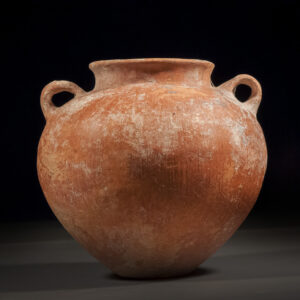
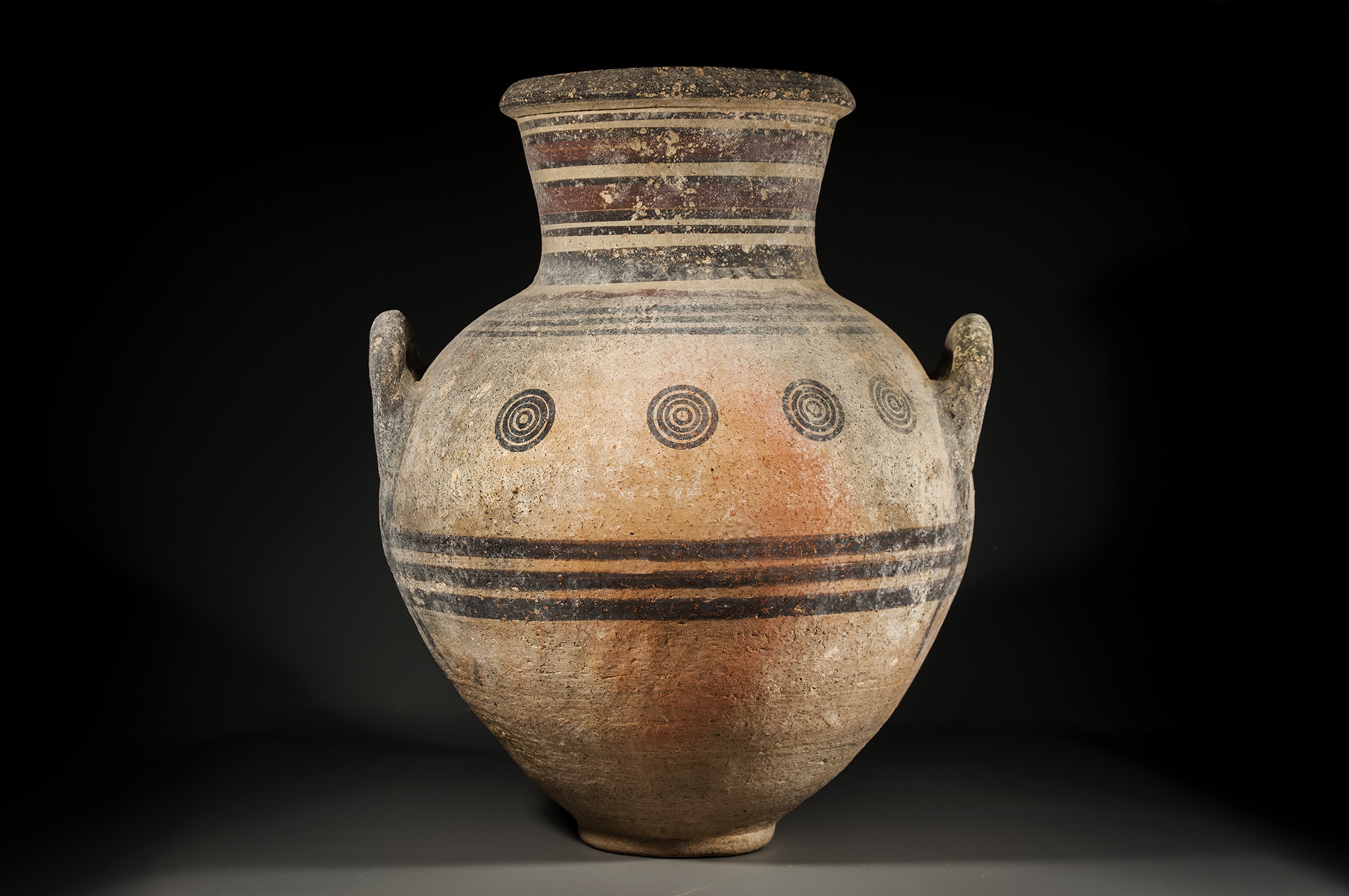
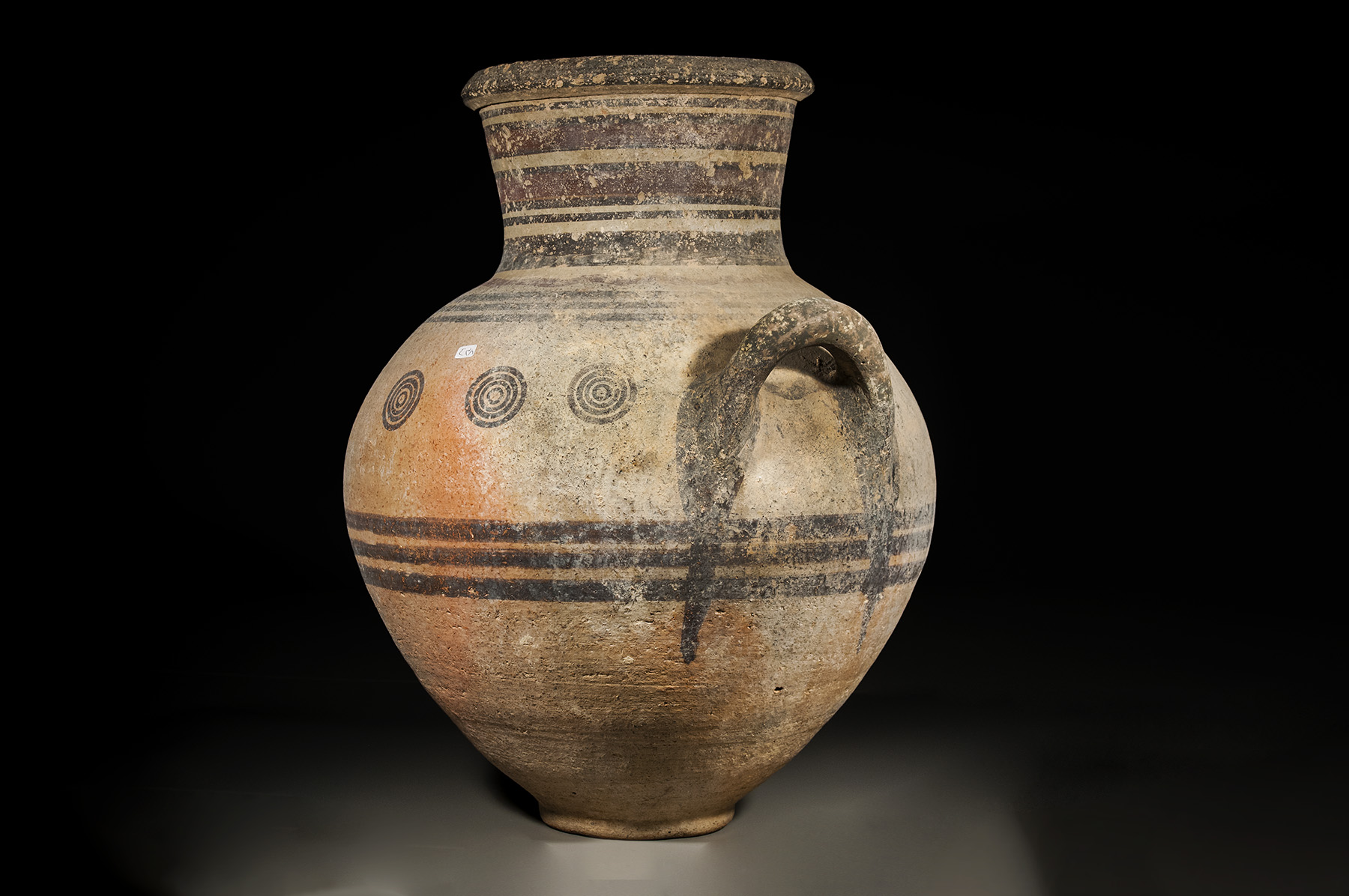
This amphora from the Cypro-Geometric period dates back to 900 B.C.E. – 800 B.C.E. This is what is known as a “belly amphora,” meaning the belly of the vase is more distinguished than the neck. Judging by the limited decoration around the neck and middle of the amphora, the concentric circles and the wide horizontal bands, it is evident this item is from the Protogeometic Period of Greek art.
This particular amphora from Cyprus measures 39.5 cm and was probably used for storage of grapes, olive oil, wine, grain, etc… Amphorae were also traditionally used in various ceremonial purposes, or even funeral rites. Many of these were even produced on an industrial scale and were as ubiquitous in Greek or Cypriot homes as television sets are today.
REFERENCE #
KB_PT_0438
CIVILIZATION
Cypro-Geometric Period II, 900 B.C.E. – 800 B.C.E.
SIZE
H. 39.5 cm
CONDITION
Fine condition
PRICE
Price available upon request
PROVENANCE
The Private Collection of the late M. Baidun. 1960’s
Frequently Asked Questions
A belly amphora is a type of vase where the belly or main body is more prominent than the neck. This particular amphora is identified as a belly amphora due to its distinguished belly shape compared to the neck, which is typical of the Cypro-Geometric period.
This amphora dates back to the Cypro-Geometric Period II, specifically between 900 B.C.E. and 800 B.C.E. It also shows characteristics of the Protogeometric Period of Greek art, evident from its decoration style.
Amphorae like this one were commonly used to store grapes, olive oil, wine, grain, and other similar goods. They were practical storage vessels in ancient Greek and Cypriot households.
Besides storage, amphorae were used in various ceremonial purposes and funeral rites. They held cultural and ritual significance in addition to their everyday practical use.
This specific amphora from Cyprus measures 39.5 centimeters in height, making it a moderately sized vessel suitable for household or ceremonial use.
The amphora is described as being in fine condition, indicating it has been well-preserved over the centuries with minimal damage or wear.
This amphora was part of the private collection of the late M. Baidun during the 1960s. Provenance details help establish its authenticity and historical significance.