Description
In ancient Israel, olive oil was useful for much more than simple cuisine and dining. The myriad uses of this verdant oil and the wealth generated by its production and trade, made it as valuable as liquid gold. It seems only natural then, that such a cherished and prized item would be carried in a beautiful, artisanal jar.
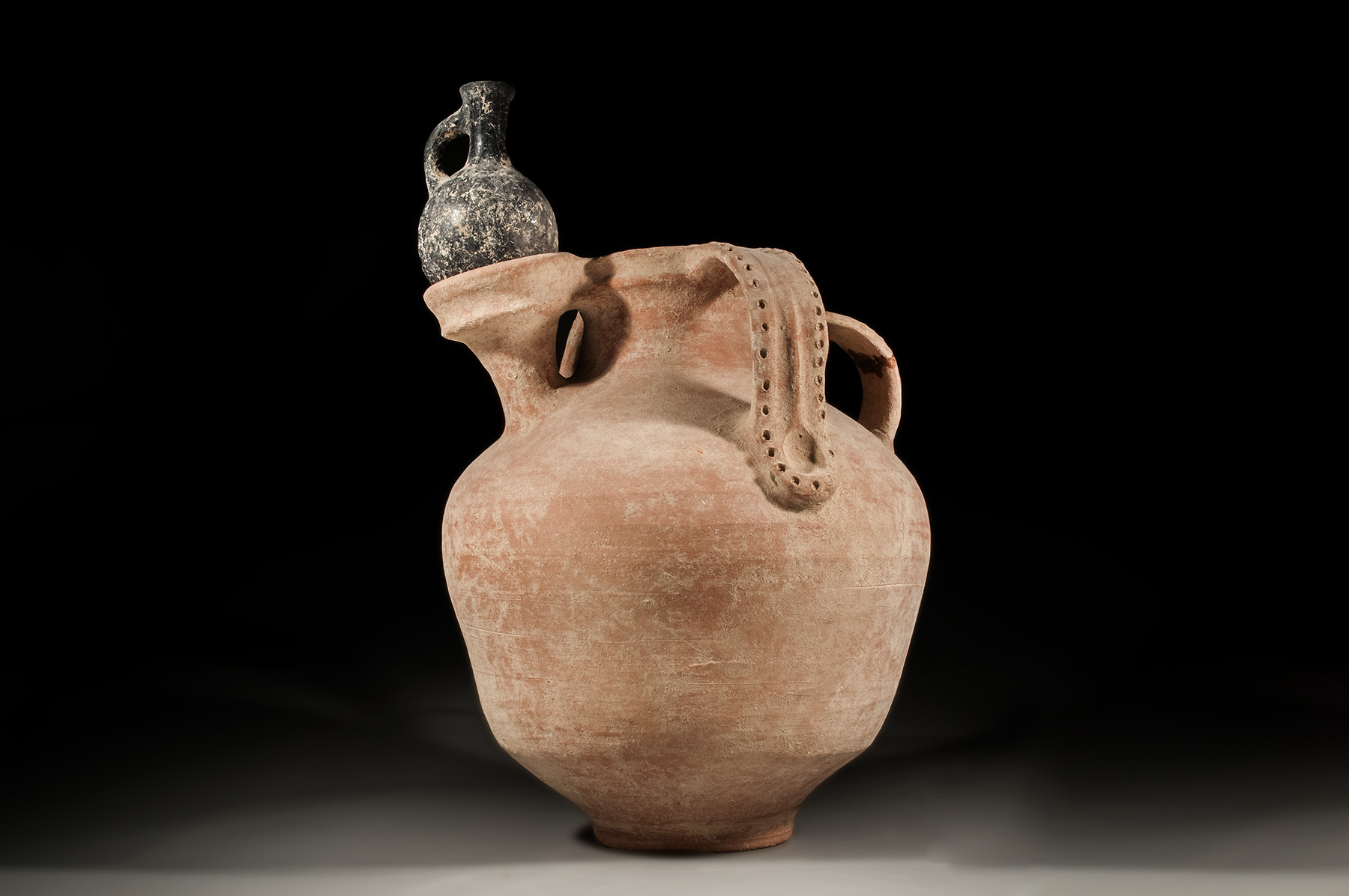
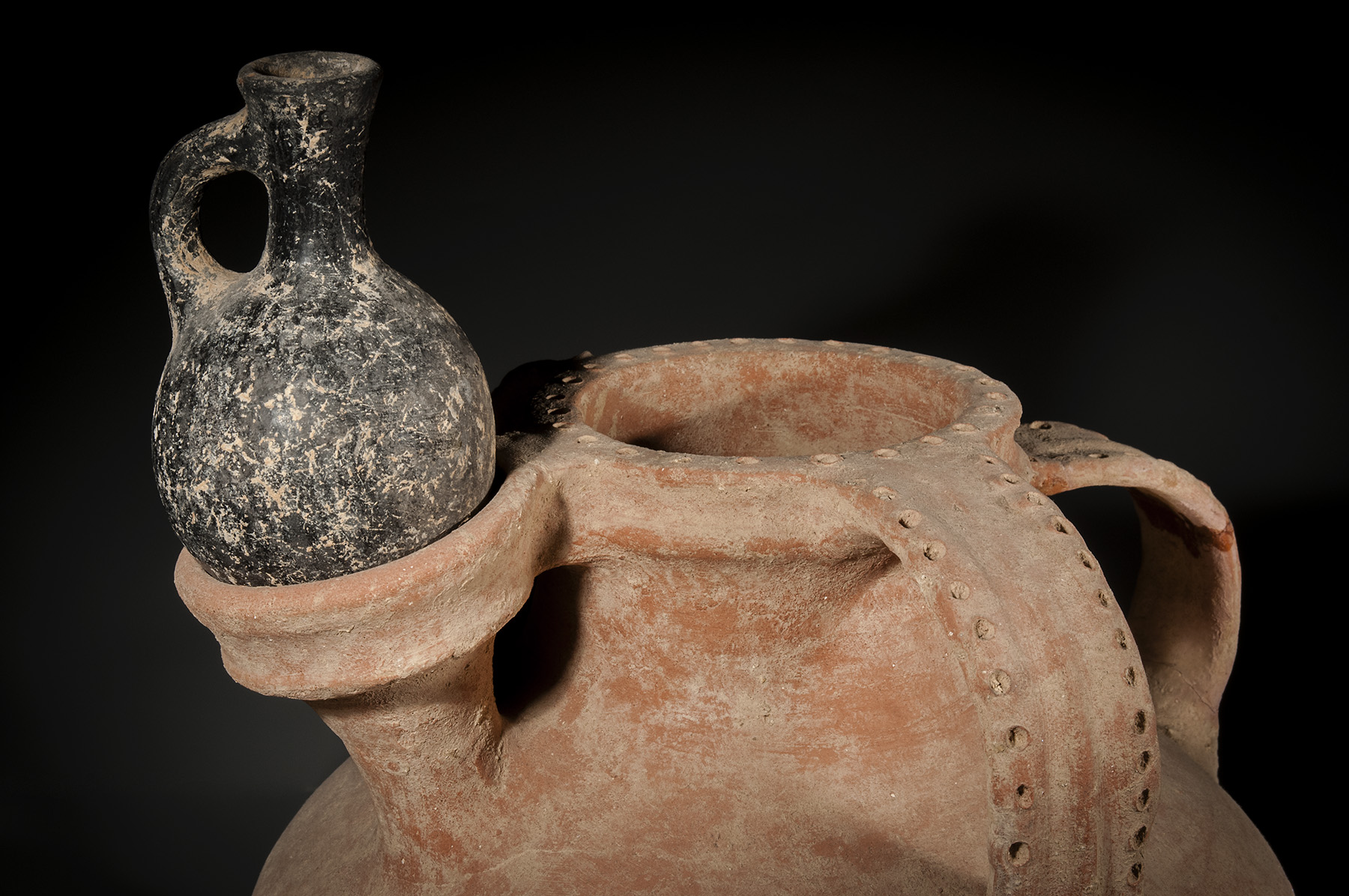
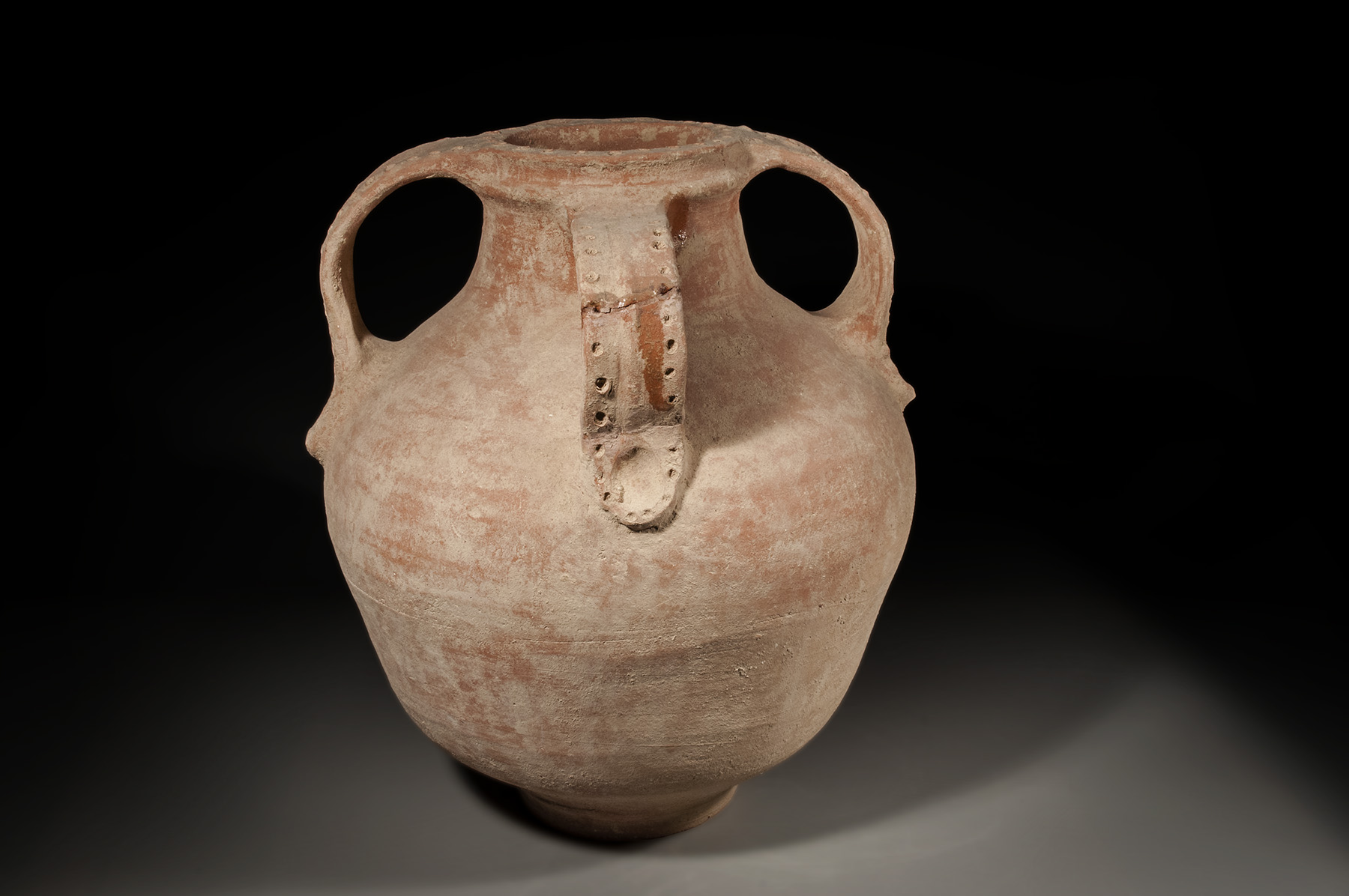
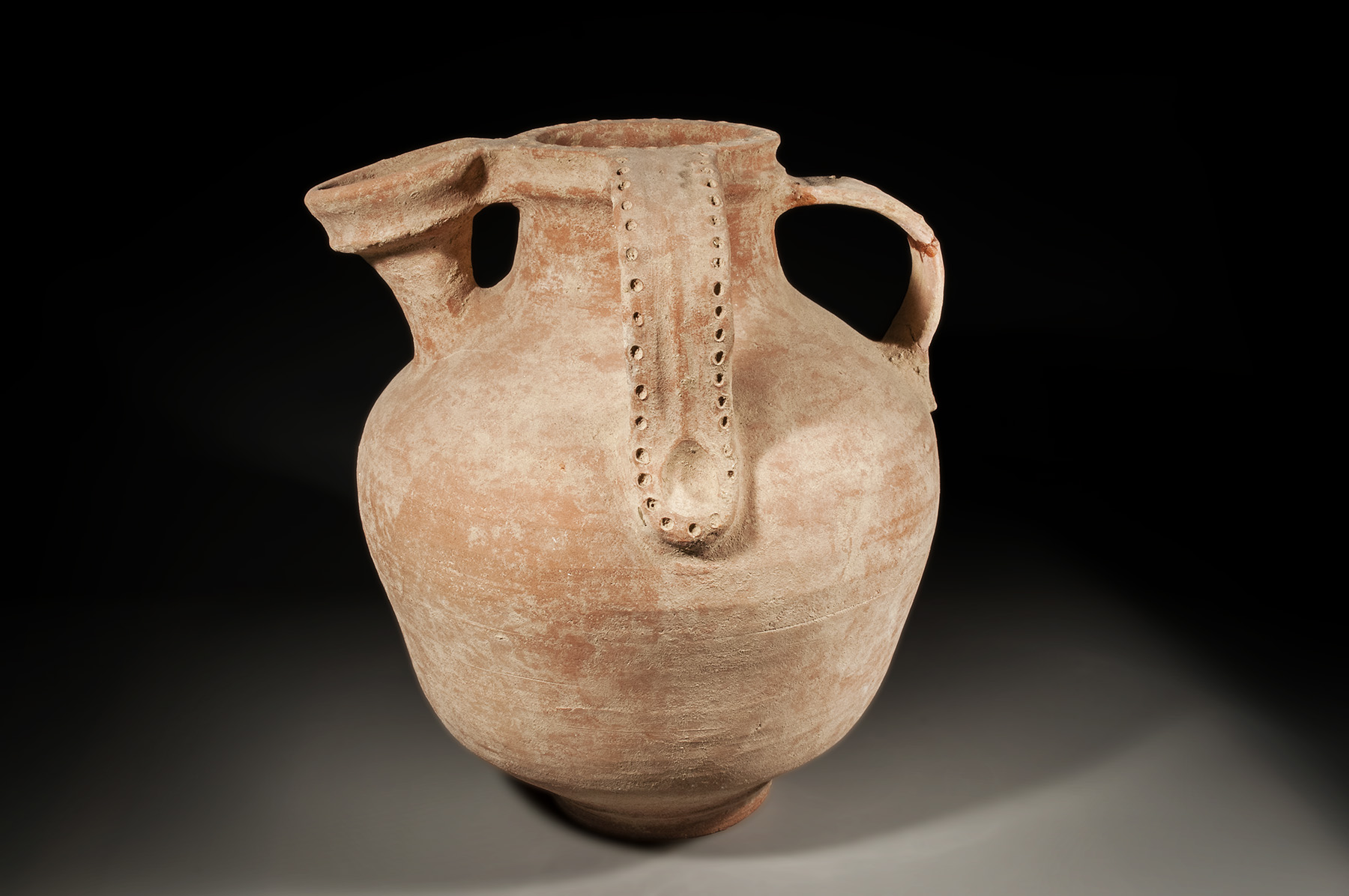
Its large size (31.5 cm) and the dipper juglet holder located on the side suggest that this jar likely was used for storage and remained in the kitchens or storerooms of the home. The jug dates back to 900 B.C.E. – 700 B.C.E. and features three decorative strap handles. Surely a jug of this size could hold enough oil for extended families to feast for months.
REFERENCE #
KB_PT_0444
CIVILIZATION
Iron Age II, 900 B.C.E. – 700 B.C.E.
SIZE
H. 31.5 cm
CONDITION
One handle is rejoined
PRICE
Sold
PROVENANCE
The Private Collection of K. Baidun. 1970’s
Frequently Asked Questions
In ancient Israel, olive oil was used for much more than just cooking and dining. It had numerous applications including religious rituals, lighting lamps, medicinal purposes, and as a valuable trade commodity, making it as precious as liquid gold.
The jar's large size (31.5 cm) and the presence of a dipper juglet holder suggest it was primarily used for storage in kitchens or storerooms. Its capacity was sufficient to hold enough olive oil to supply extended families for several months.
The olive oil jar dates back to the Iron Age II period, specifically between 900 B.C.E. and 700 B.C.E., reflecting the craftsmanship and daily life of that era in ancient Israel.
The jar features three decorative strap handles and a dipper juglet holder on the side. One of the handles has been rejoined, indicating restoration. These features highlight both its functional and artistic value.
Olive oil's value stemmed from its wide range of uses, including culinary, religious, medicinal, and commercial purposes. Its production and trade generated significant wealth, making it a highly prized commodity akin to liquid gold.
Given its size and design, the jar was likely kept in kitchens or storerooms within ancient homes, where it served as a practical storage container for olive oil used regularly by the household.
The olive oil jar comes from the private collection of K. Baidun, acquired in the 1970s. This provenance adds historical and collectible value to the artifact.