Description
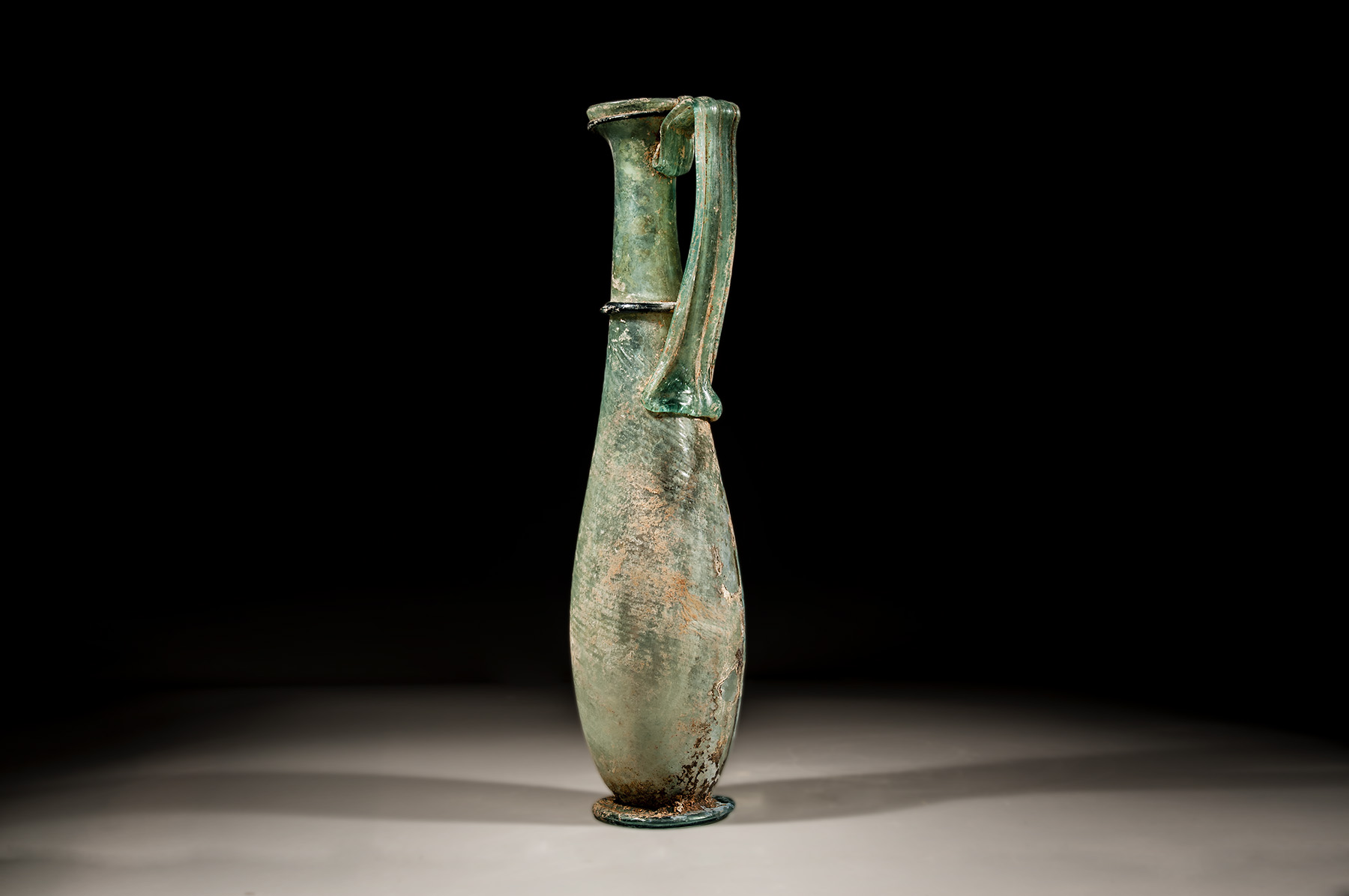
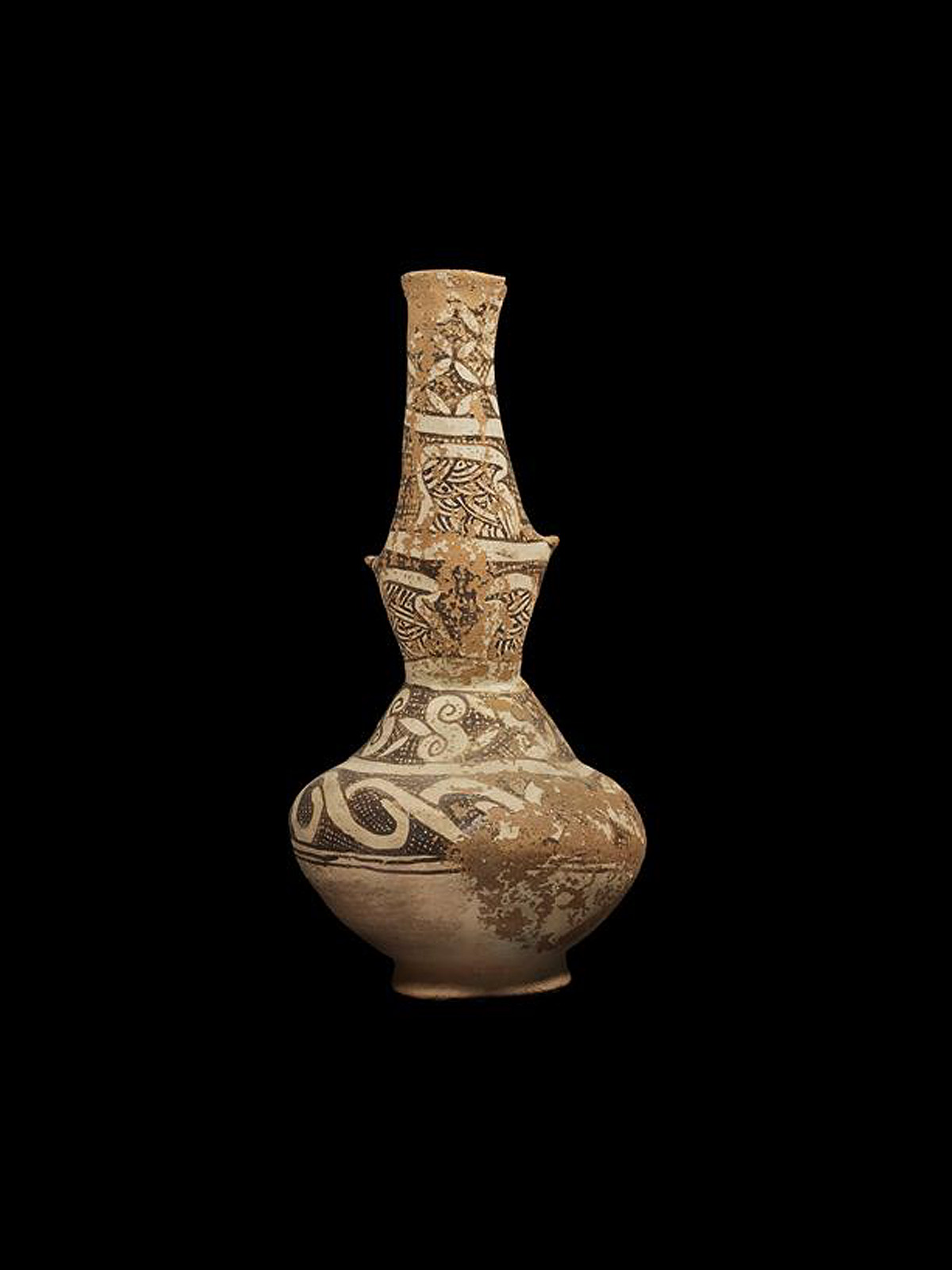
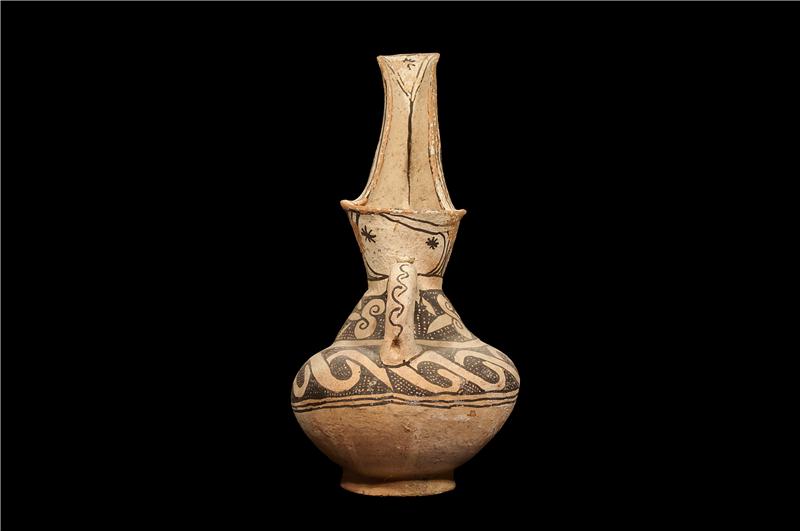
This ewer is from the reign of the Ayyubid dynasty that ruled much of the Middle East for over a century starting in approximately 1100 C.E.. The Ayybuids were Islamic warriors who conquered parts of Egypt, Syria, northern Mesoptamia, the Kingdom of Jerusalem and the southwestern swath of the Arabian Peninsula. In such a region, water was essential in daily life, and the cool relief that this ewer brought was not lost on those who received a glass from its long spout.
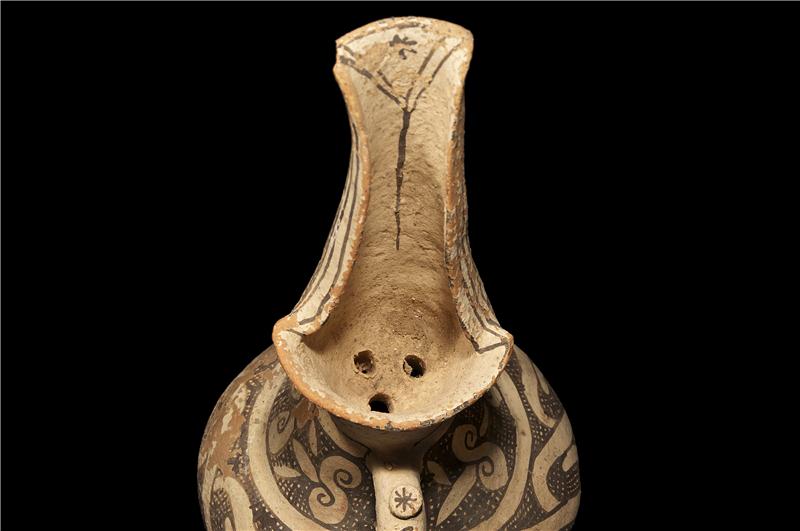
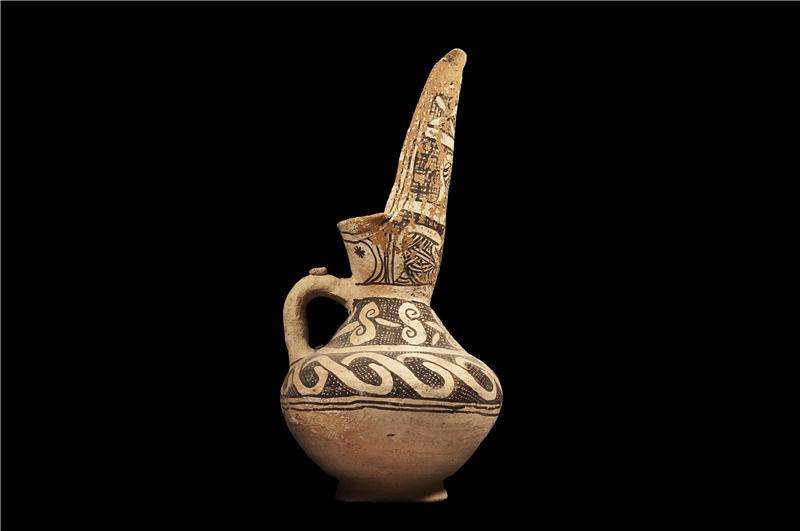
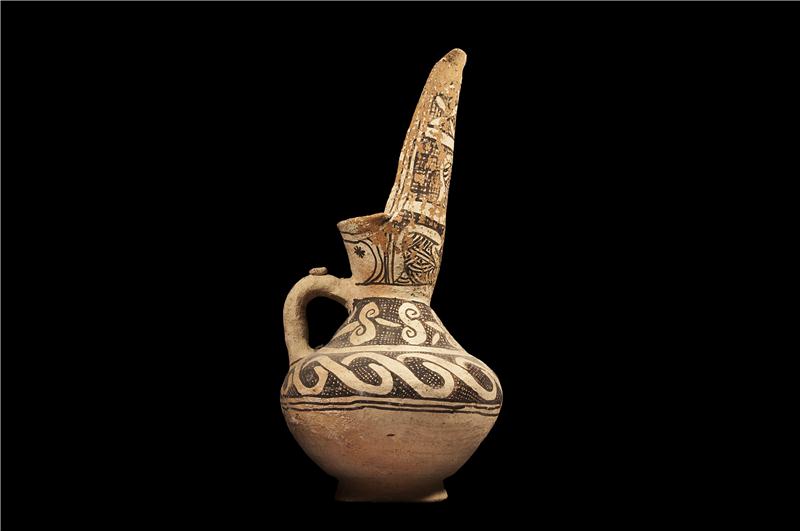
This ewer is of a recognizable shape, although the elongated mouth and the three careful holes at the neck’s top show how water was guarded preciously from being wasted in the desert. We see distinct Islamic designs that closely resemble the fluid movement of Arabic calligraphy. The crude craftsmanship gives way to the ewer’s brilliant front, designed with such intricate lines and patterns so as to lift this everyday object up beyond the everyday into a truly beautiful piece of antiquity. The ewer dates from approximately 1000 C.E. – 1200 C.E. and is 28 cm in height.
REFERENCE #
CR_IS_1002
CIVILIZATION
Islamic, 1000 C.E. – 1200 C.E.
SIZE
H. 28 cm
CONDITION
Fine condition
PRICE
Sold
PROVENANCE
The Baidun Collection
Frequently Asked Questions
The Ayyubid dynasty, ruling from around 1100 C.E., was a powerful Islamic warrior dynasty that controlled much of the Middle East, including Egypt, Syria, and parts of the Arabian Peninsula. This ewer reflects the cultural and practical aspects of life during their reign, especially the importance of water in the arid regions they governed.
This ewer features an elongated mouth and three small holes at the neck's top, designed to conserve water in the desert environment. Its shape is recognizable, and it is decorated with intricate Islamic designs that resemble Arabic calligraphy, elevating it from a simple vessel to a beautiful piece of art.
While the craftsmanship is somewhat crude, the ewer's front is decorated with intricate lines and patterns typical of Islamic art. This combination of practical design and artistic decoration highlights the dual purpose of the ewer as both a functional object and a decorative piece.
The ewer dates from approximately 1000 C.E. to 1200 C.E., placing it within the Ayyubid dynasty period. It stands 28 cm tall, making it a moderately sized vessel suitable for daily use.
In the arid regions ruled by the Ayyubids, water was precious, and this ewer was used to serve water carefully. Its design, including the long spout and holes, helped conserve water and provided cool relief, making it an essential household item.
The ewer is in fine condition, indicating it has been well-preserved over the centuries. It comes from the Baidun Collection, which suggests it has been part of a recognized collection of Islamic antiquities.