Description
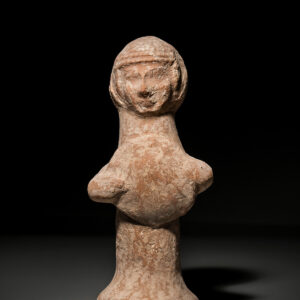
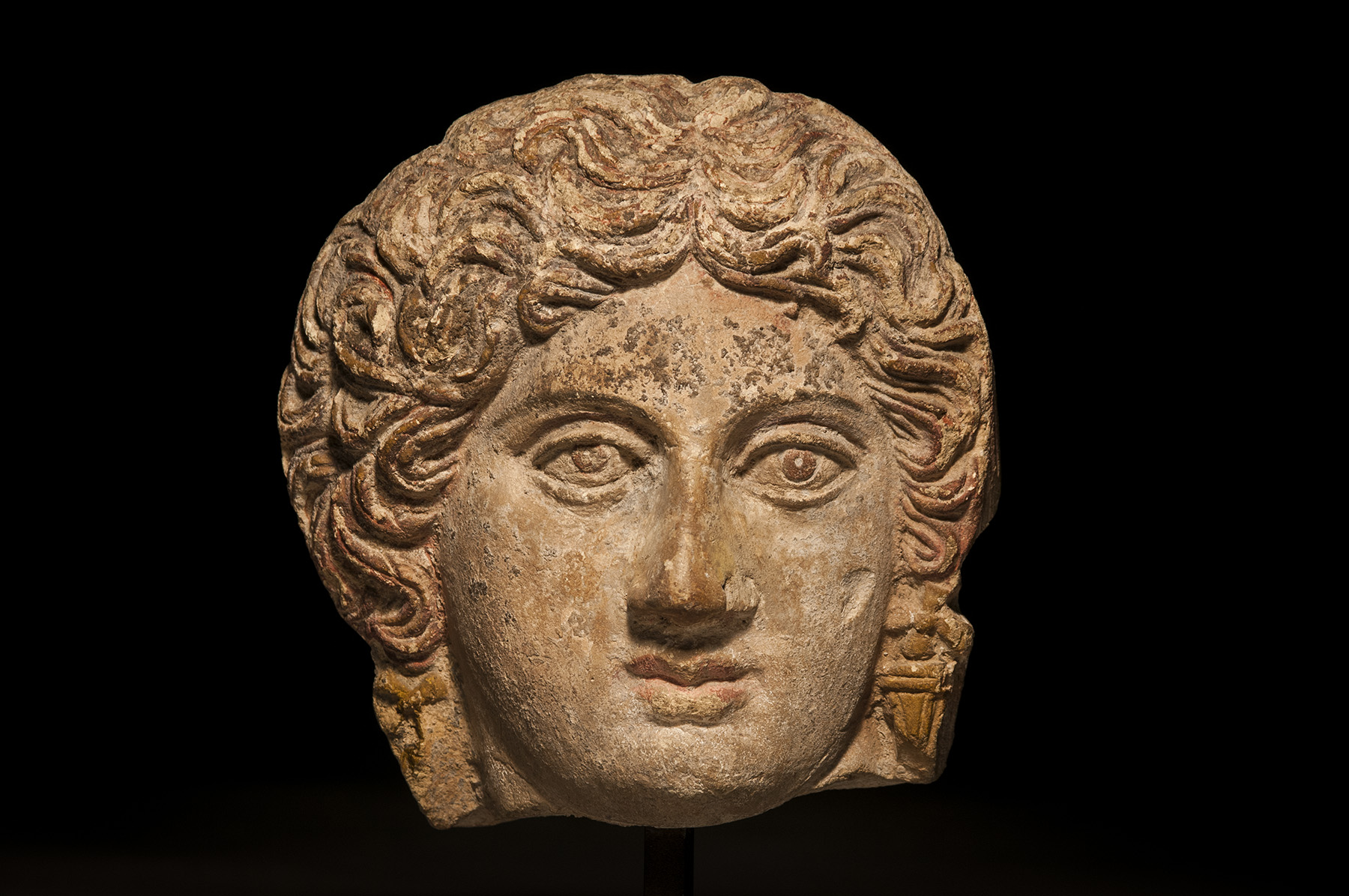
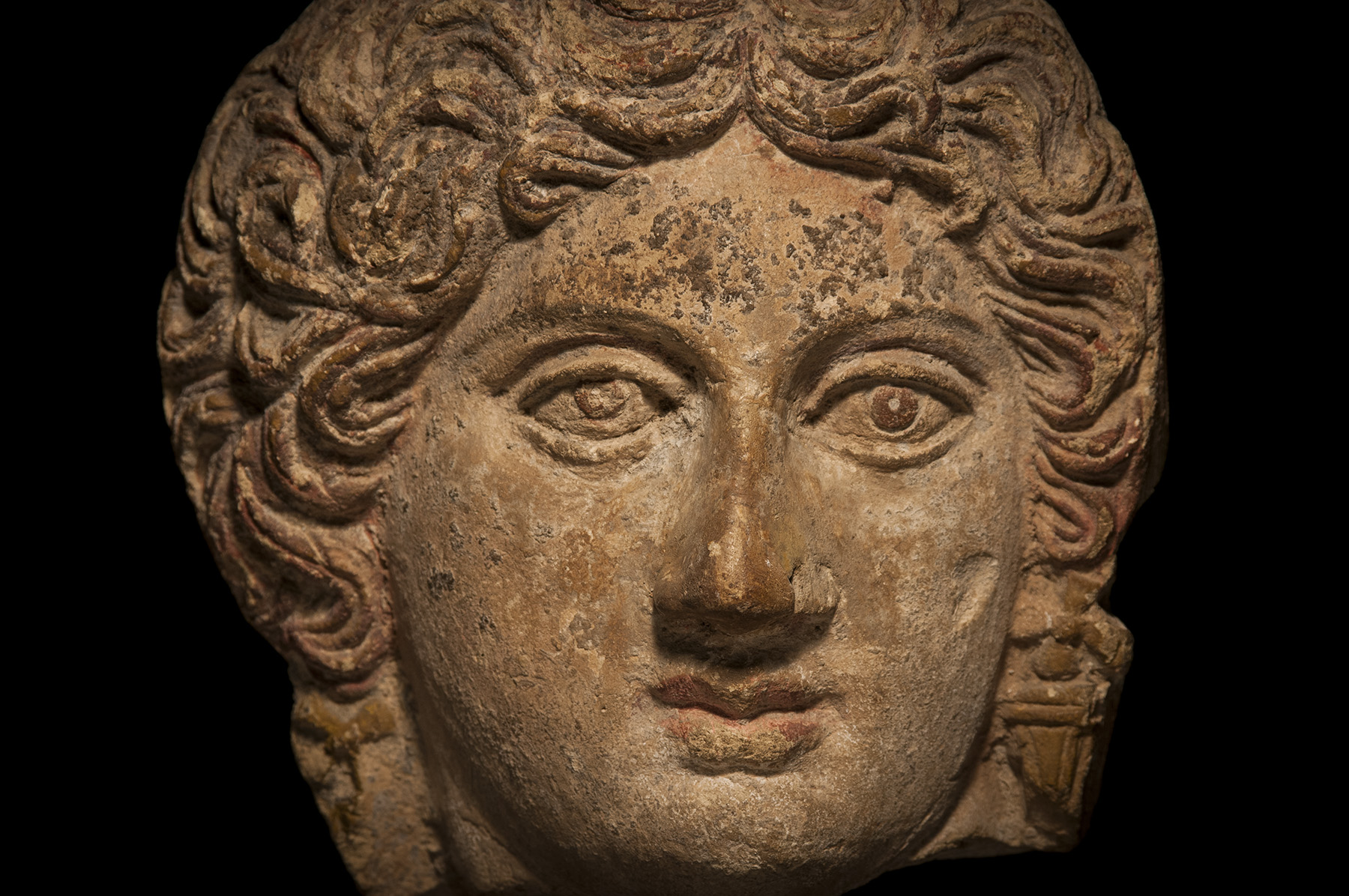
Probably from an antefix, the woman’s face is shown in slightly three-quarter view the gaze directed to her left. Her rounded face framed with copious long curly hair centrally parted, over a straight nose, large lips and large eyes with incised pupils set under elegant arched brows. Long yellow painted earrings in the form of inverted pyramids decorate her ears and traces of paint can be seen to the rest of the face and in the hair.
Literature: For a similar head, perhaps from the same mould and now in the British Museum, see R. A. Higgins, ‘Catalogue of the Terracottas in the Department of Greek and Roman Antiquities, British Museum, Vol. I. Greek 730-330 B.C.’ (London, 1969) pl. 190 no. 1361. Also Wilhelm Hornbostel et al, ‘Aus Gräben und Heiligtümern – Die Antikensammlung Walter Kropatscheck’ (Mainz, 1980) pp. 183-184.
REFERENCE #
SI_GR_1024
CIVILIZATION
Tarentine, Second half of the 4th century B.C.E.
SIZE
H. 14.3 cm
CONDITION
Fine condition
PRICE
Price available upon request
PROVENANCE
Private collection Long Island, acquired Mathias Komor, New York
Frequently Asked Questions
The terracotta woman's head originates from Tarentine civilization and dates back to the second half of the 4th century B.C.E. It reflects the artistic style and cultural elements of that era.
The head features a slightly three-quarter view with the gaze directed to the left. It has a rounded face framed by long curly hair parted in the center, a straight nose, large lips, large eyes with incised pupils, and elegant arched eyebrows. The ears are decorated with long yellow painted earrings shaped like inverted pyramids.
The terracotta woman's head is reported to be in fine condition, with traces of paint still visible on the face and hair, indicating good preservation of its original features.
The terracotta head was part of a private collection in Long Island and was acquired through Mathias Komor in New York, indicating its provenance before any current ownership.
Yes, a similar head, possibly from the same mould, is held in the British Museum. This comparison is documented in R. A. Higgins' catalogue of Greek and Roman terracottas, suggesting a connection between the pieces.
Key literature includes R. A. Higgins' 'Catalogue of the Terracottas in the Department of Greek and Roman Antiquities, British Museum' and Wilhelm Hornbostel et al.'s 'Aus Gräben und Heiligtümern - Die Antikensammlung Walter Kropatscheck,' which discuss similar artifacts and provide scholarly context.
The terracotta head measures 14.3 centimeters in height, making it a relatively small and detailed artifact from the ancient period.