Description
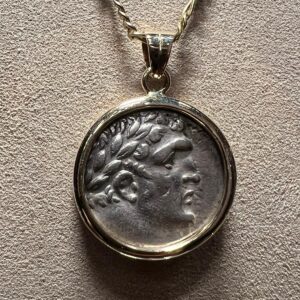
This authentic Byzantine gold solidus of Constantine I the Great (AD 306–337) is beautifully set in a handcrafted 14k gold pendant, combining one of the most iconic coins of the early Byzantine and Late Roman world with timeless elegance.
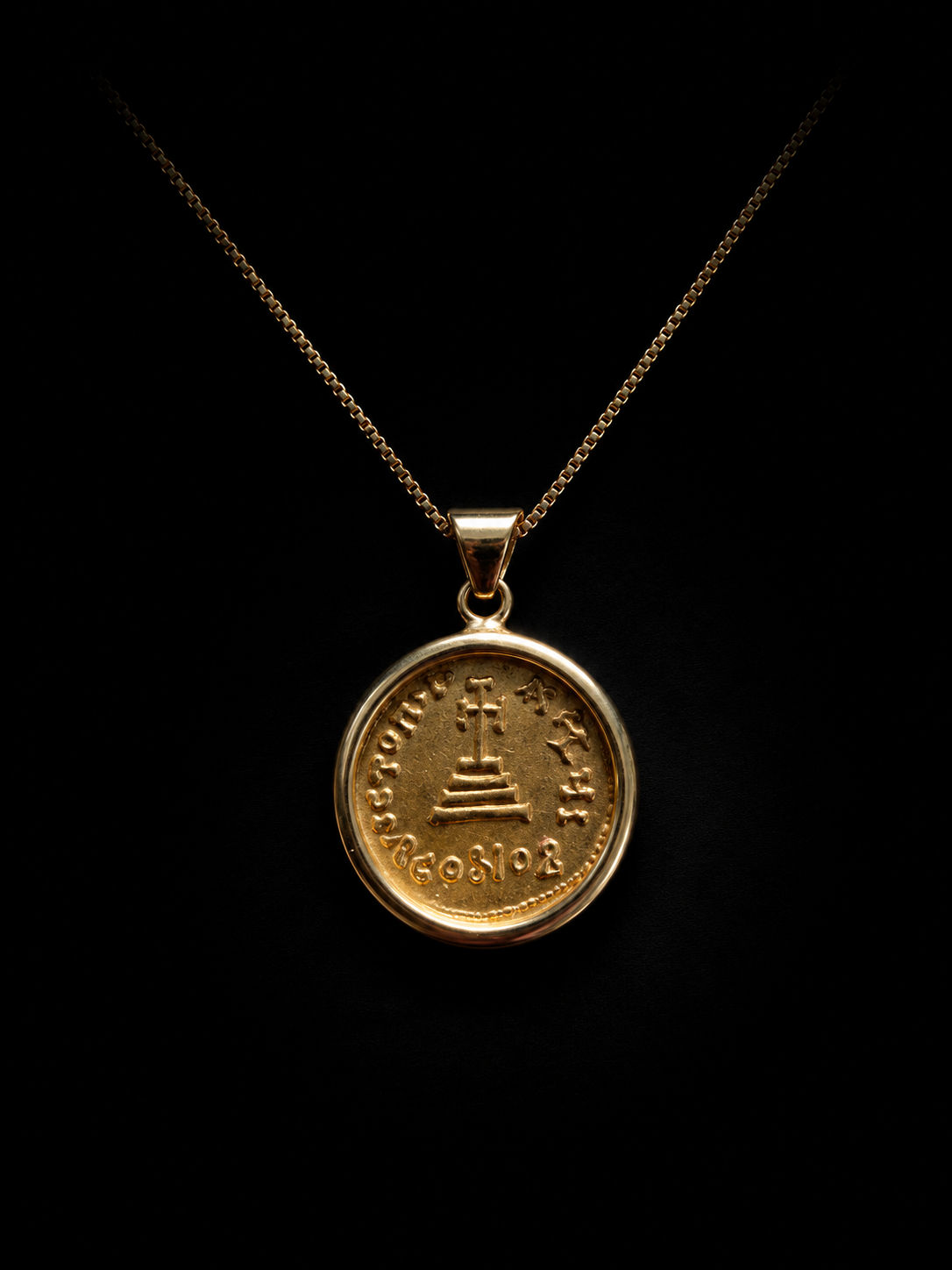
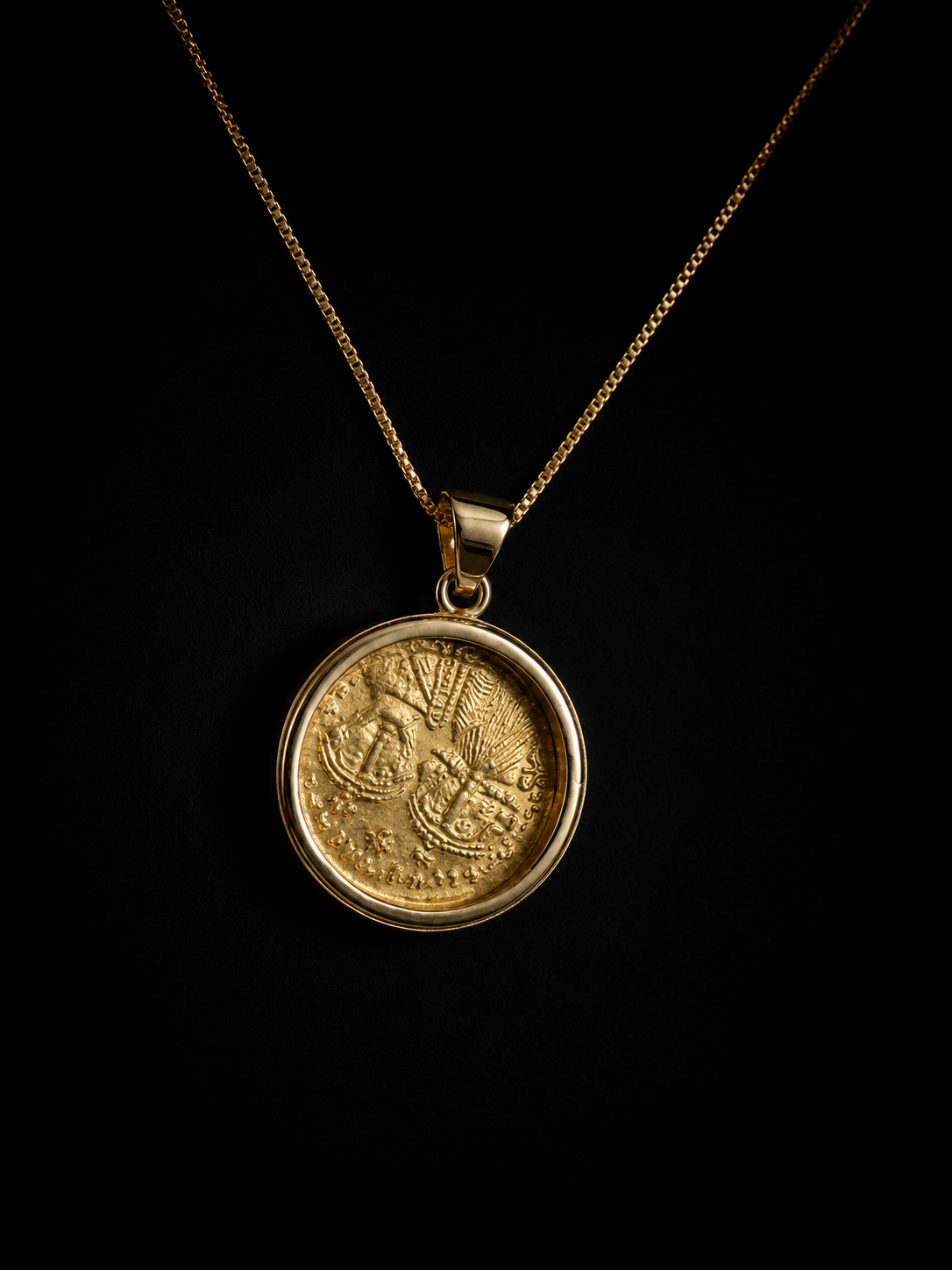
The obverse features the imperial portrait of Constantine I, the first Roman emperor to embrace Christianity and establish Constantinople as the new capital of the Empire. The reverse depicts a jeweled cross standing on three steps, symbolizing the triumph of Christianity and the enduring legacy of Constantine’s reign, surrounded by a Latin inscription.
Struck in high-purity gold, Constantine’s solidi became the foundation of Byzantine coinage and remained the gold standard of international commerce for centuries. Expertly mounted in a handcrafted 14k gold pendant, this exceptional piece is both a remarkable historical artifact and an elegant work of wearable ancient history.
REFERENCE #
JW-BZ-1002
CIVILIZATION
Byzantine, ca. 306 – 337 AD
CONDITION
Mint condition
PRICE
POR
PROVENANCE
Jerusalem Private Collection
Frequently Asked Questions
A Byzantine gold solidus is a high-purity gold coin first introduced during the reign of Constantine I. It served as the foundation of Byzantine coinage and was widely used as the gold standard in international commerce for centuries.
Constantine I was the first Roman emperor to embrace Christianity and established Constantinople as the new capital of the Roman Empire. His reign marked a significant shift in religious and political history, symbolized on the coin by the jeweled cross on the reverse side.
The obverse of the coin features the imperial portrait of Constantine I, while the reverse shows a jeweled cross standing on three steps, symbolizing the triumph of Christianity. The reverse is also surrounded by a Latin inscription.
The coin is expertly mounted in a handcrafted 14k gold pendant, combining the historical significance of the solidus with the timeless elegance of fine jewelry craftsmanship.
The solidus is described as being in mint condition, indicating it has been exceptionally well-preserved without signs of wear or damage.
This pendant comes from a private collection in Jerusalem, adding to its historical and collectible value by confirming its authenticity and traceable ownership.
The solidus coin introduced by Constantine I became the standard gold currency for the Byzantine Empire and influenced international trade for centuries, making it a key artifact in economic and numismatic history.