Description
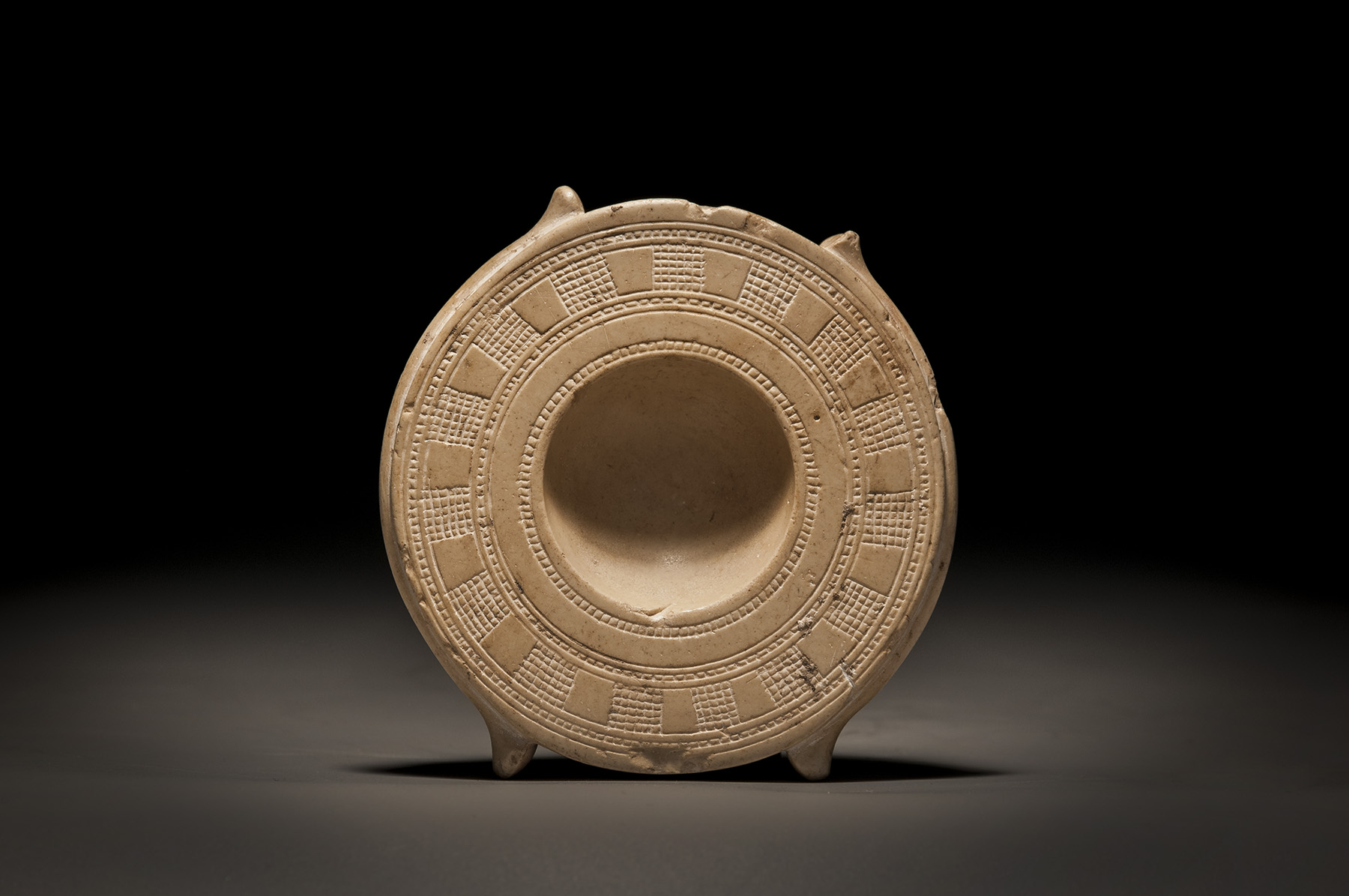
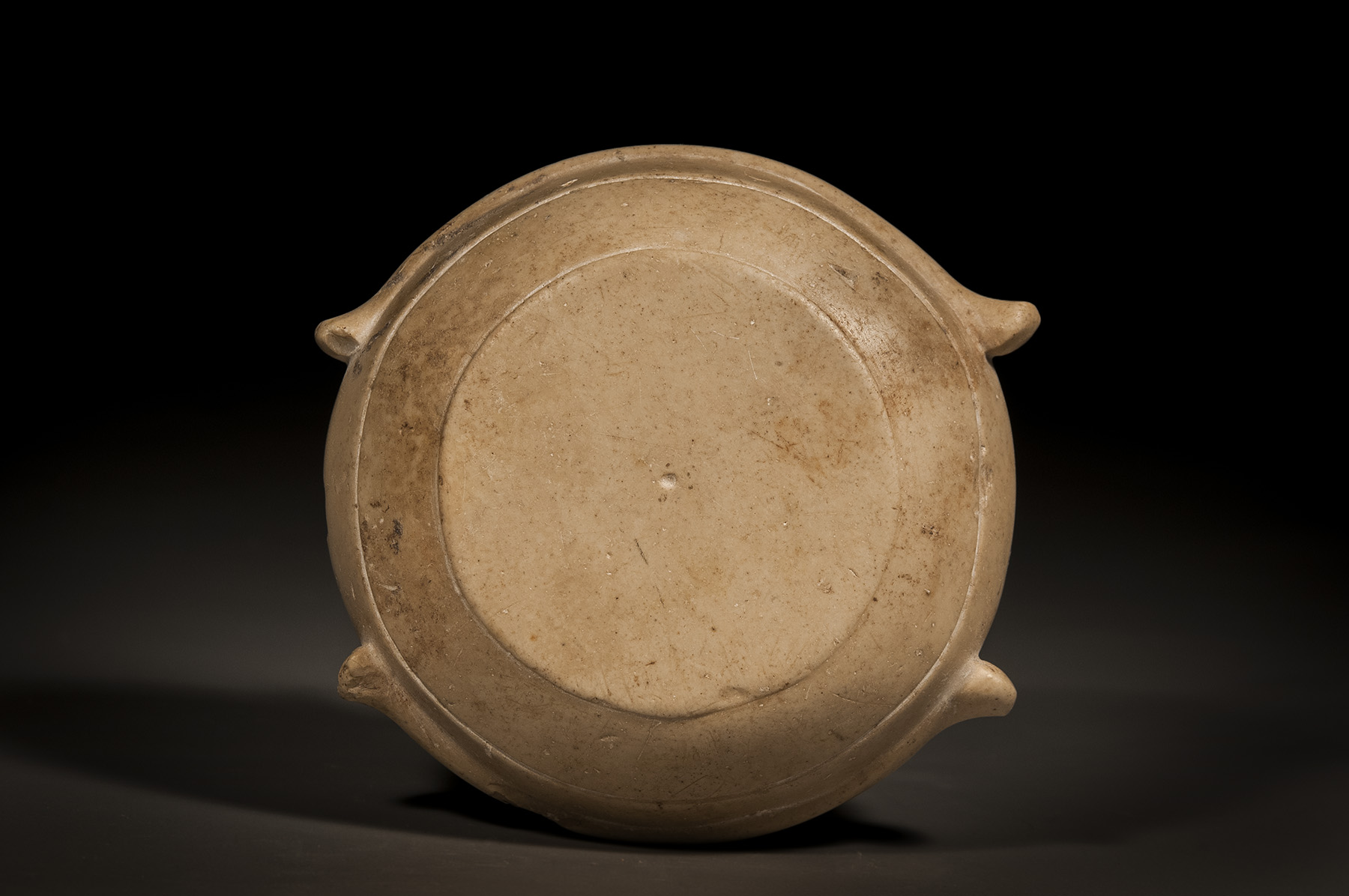
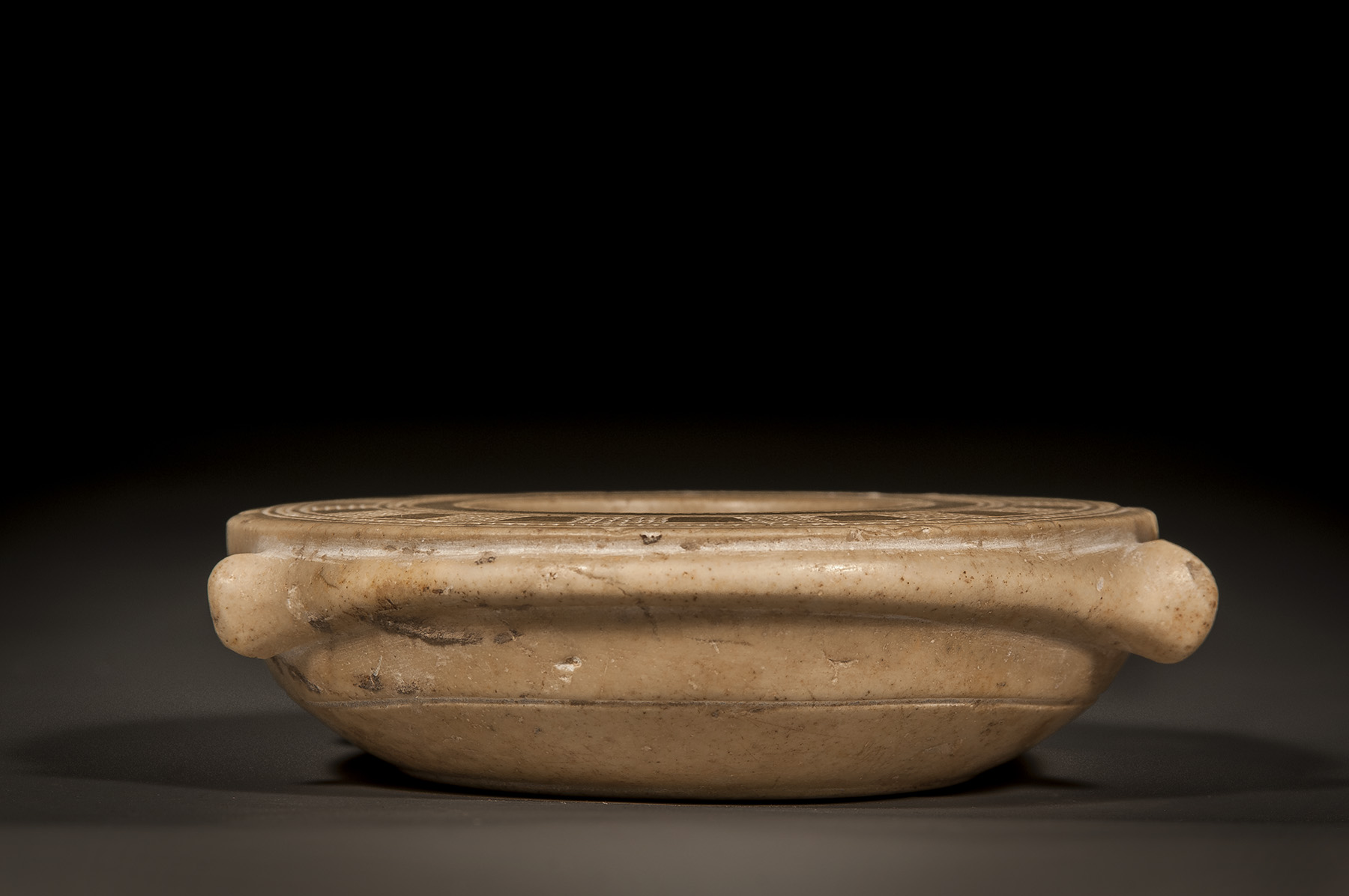
A cosmetic utensil used for making up the eyes or face. Such bowls were widespread in the holy land, Transjordan, and Phoenicia in the 8th-7th centuries B.C.E.. These are cosmetic palettes with around hollow at the center for grinding the material or mixing it with oil to make it easy to spread. The palettes are well polished inside and the outside, and are usually decorated on their rims with simple but beautiful geometric designs like this one. Bar handles on either side, similar to what is found on the Phoenician red slipped ceramic bar handle bowls.
REFERENCE #
SW_PH_1001
CIVILIZATION
Iron Age, 900 B.C.E. – 800 B.C.E.
SIZE
D. 12 cm
CONDITION
Fine condition
PRICE
Sold
Frequently Asked Questions
The cosmetic utensil was primarily used for making up the eyes or face. It served as a palette for grinding cosmetic materials or mixing them with oil to facilitate easy application.
These cosmetic palettes were widespread in the holy land, Transjordan, and Phoenicia during the 8th to 7th centuries B.C.E. They reflect the cosmetic practices of these ancient civilizations.
The palettes typically have a hollow center for grinding or mixing cosmetics, are well polished inside and out, and often feature simple yet beautiful geometric designs on their rims. They also have bar handles on either side, similar to those on Phoenician ceramic bowls.
The cosmetic palette dates back to the Iron Age, specifically between 900 B.C.E. and 800 B.C.E., reflecting the artistic and cosmetic traditions of that era.
The palette measures 12 cm in diameter and is noted to be in fine condition, indicating it has been well preserved over time.
Yes, the palette is decorated on its rims with simple but beautiful geometric designs, which add an aesthetic appeal while reflecting the artistic style of the period.