Description
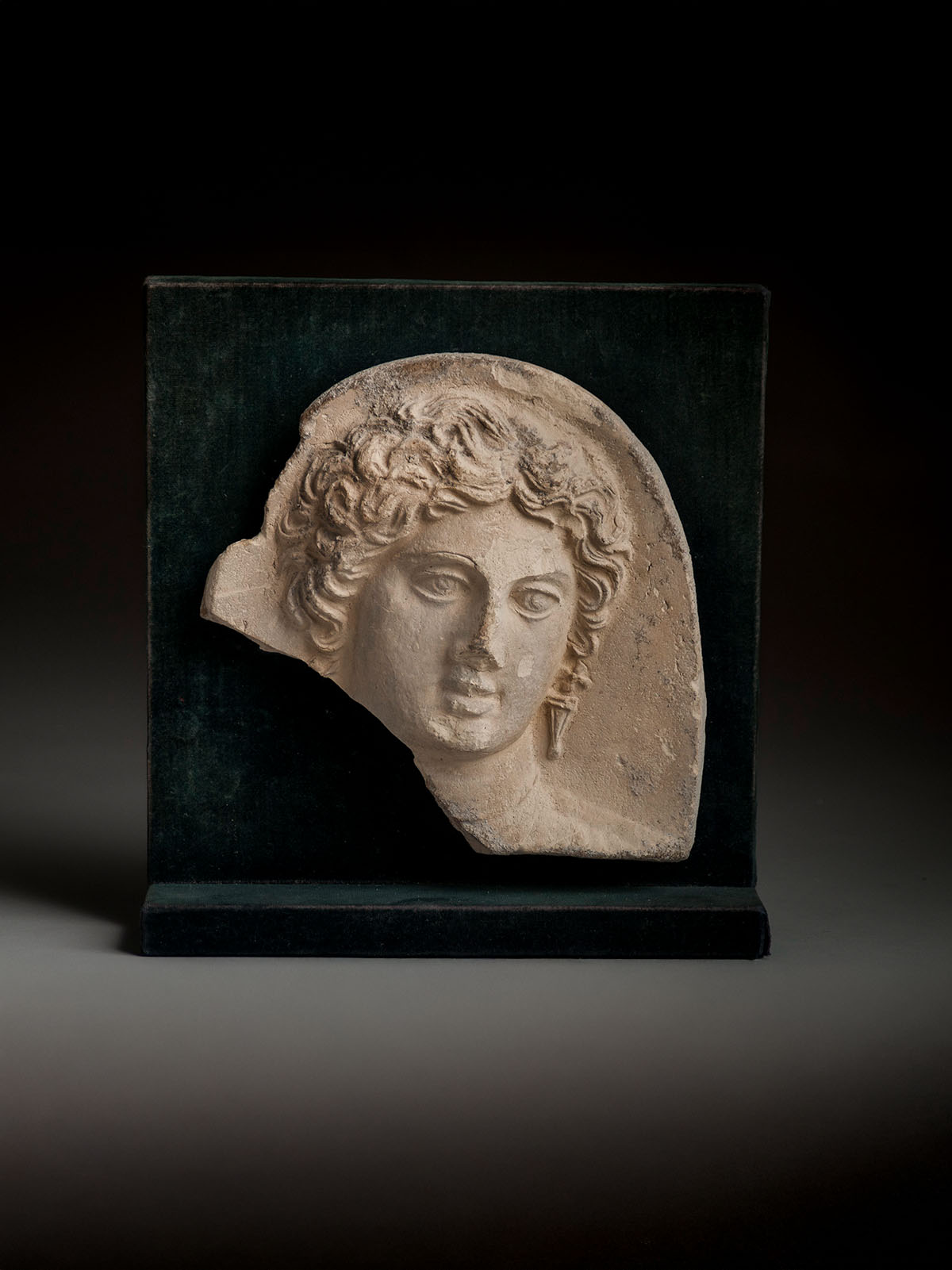
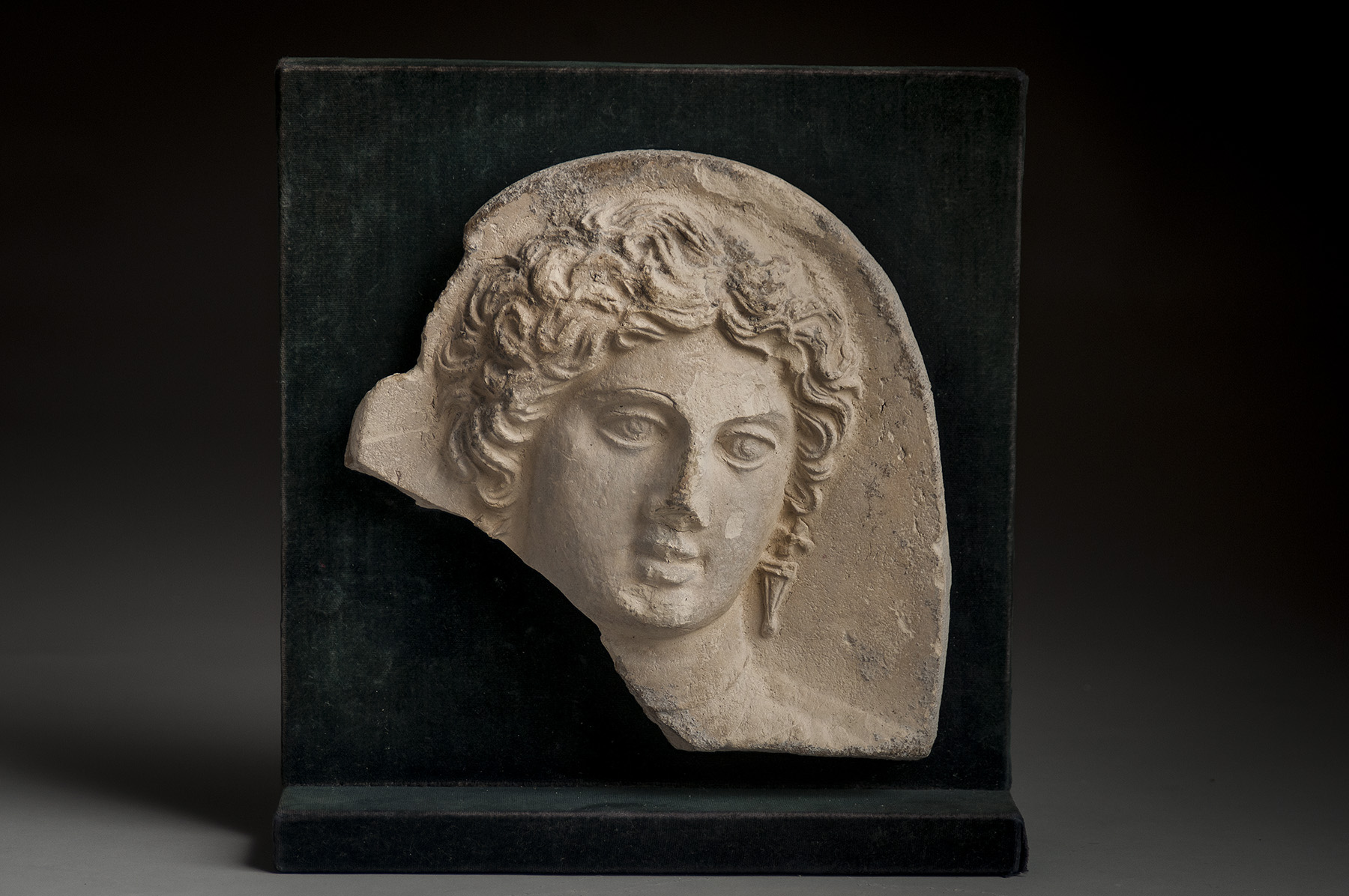
A beautiful reddish tone Antefixes, an antefix is a decorative brick used on buildings. This semi- oval relief was made from a mold. The illustration shows a bust of a young woman looking to her right. The face is sunken by both Eyes to emphasize them with shaped bold eyelids. The pupils are incised; the protruding nose and the pair of lips are slightly worn. The head is framed by a powerful hairstyle, with hair parted in the center, and with numerous curls to the sides and some combed back . The woman is wearing a Cross and pyramidal earrings. The relief is mounted on a base with velvet .
Cf. :H. Herdejurgen , Basel Museum of Antiquities . (1982 ). Ancient Art Works from the Ludwig Collection
REFERENCE #
P 20752
CIVILIZATION
Greek. 400 B.C.E.
SIZE
H. 18.5 cm, W 18.8 cm, D. 6 cm
CONDITION
The left corner is missing. A small chip on top. Otherwise only minor abrasions on nose and lips.
PRICE
SOLD
PROVENANCE
Ex. Private German collection, 1980’s
Frequently Asked Questions
An antefix is a decorative brick used on buildings, typically placed at the edge of a roof to conceal the ends of roof tiles and add ornamental detail. It often features relief designs and was common in ancient architecture.
The relief shows a bust of a young woman looking to her right, with sunken eyes emphasized by bold eyelids, incised pupils, a protruding nose, and slightly worn lips. Her hairstyle is powerful, parted in the center with numerous curls, and she wears a cross and pyramidal earrings.
This antefix originates from the Greek civilization and dates back to around 400 B.C.E., reflecting the artistic styles and decorative practices of that era.
The antefix measures 18.5 cm in height, 18.8 cm in width, and 6 cm in depth. It has some damage including a missing left corner, a small chip on top, and minor abrasions on the nose and lips, but is otherwise well-preserved.
The antefix is made from a reddish brick formed in a mold to create a semi-oval relief. The detailed facial features and hairstyle were carefully incised and shaped to emphasize the design.
This antefix was part of a private German collection in the 1980s before being sold. It is referenced in the Basel Museum of Antiquities and the Ludwig Collection's ancient artworks.