Description
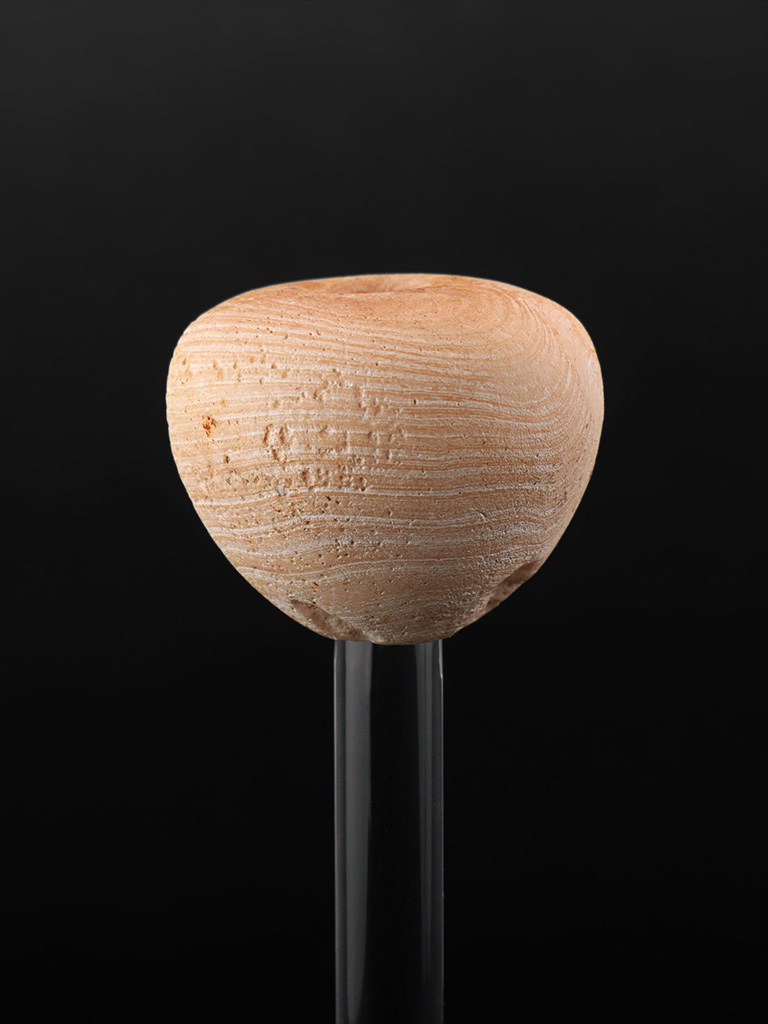
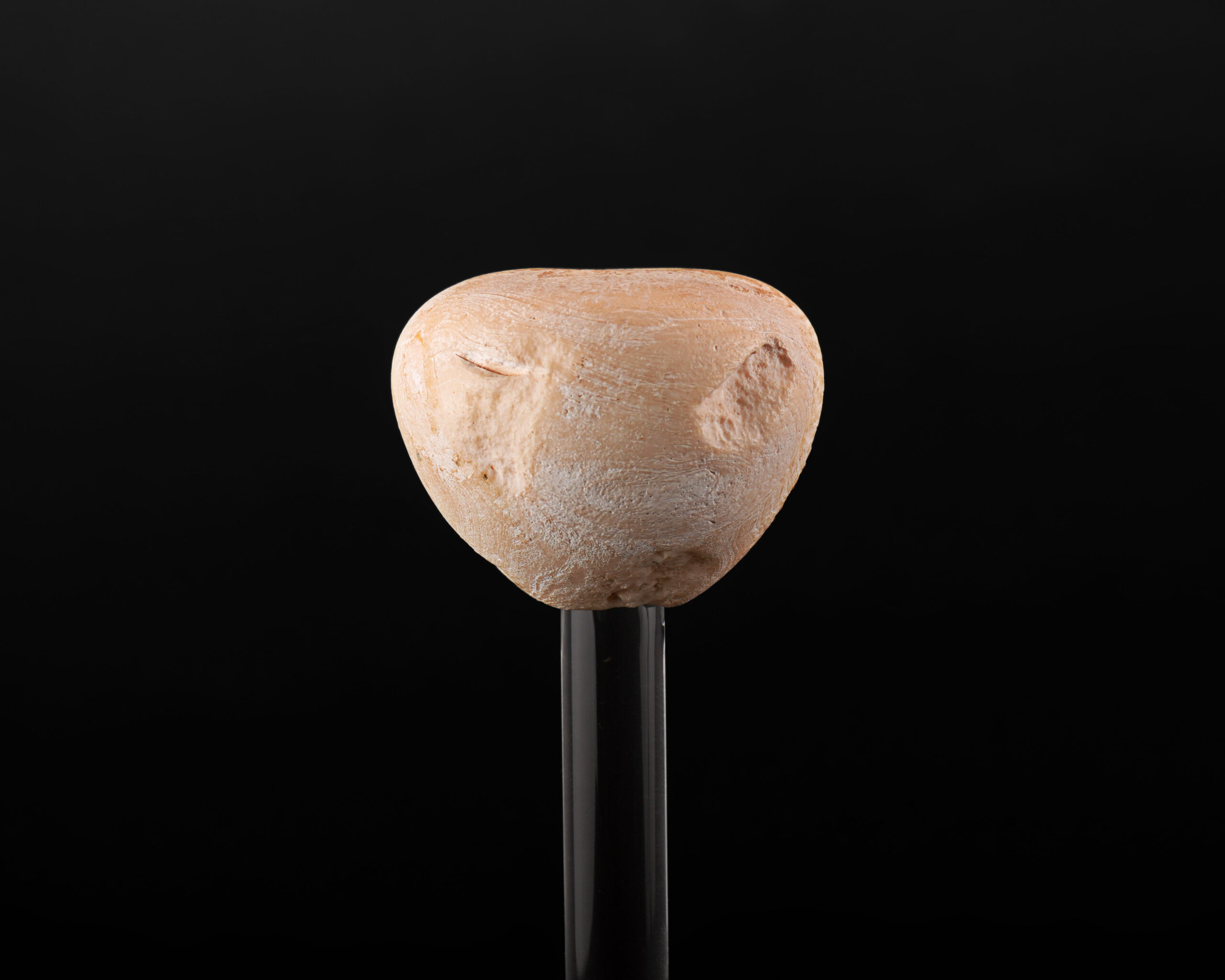
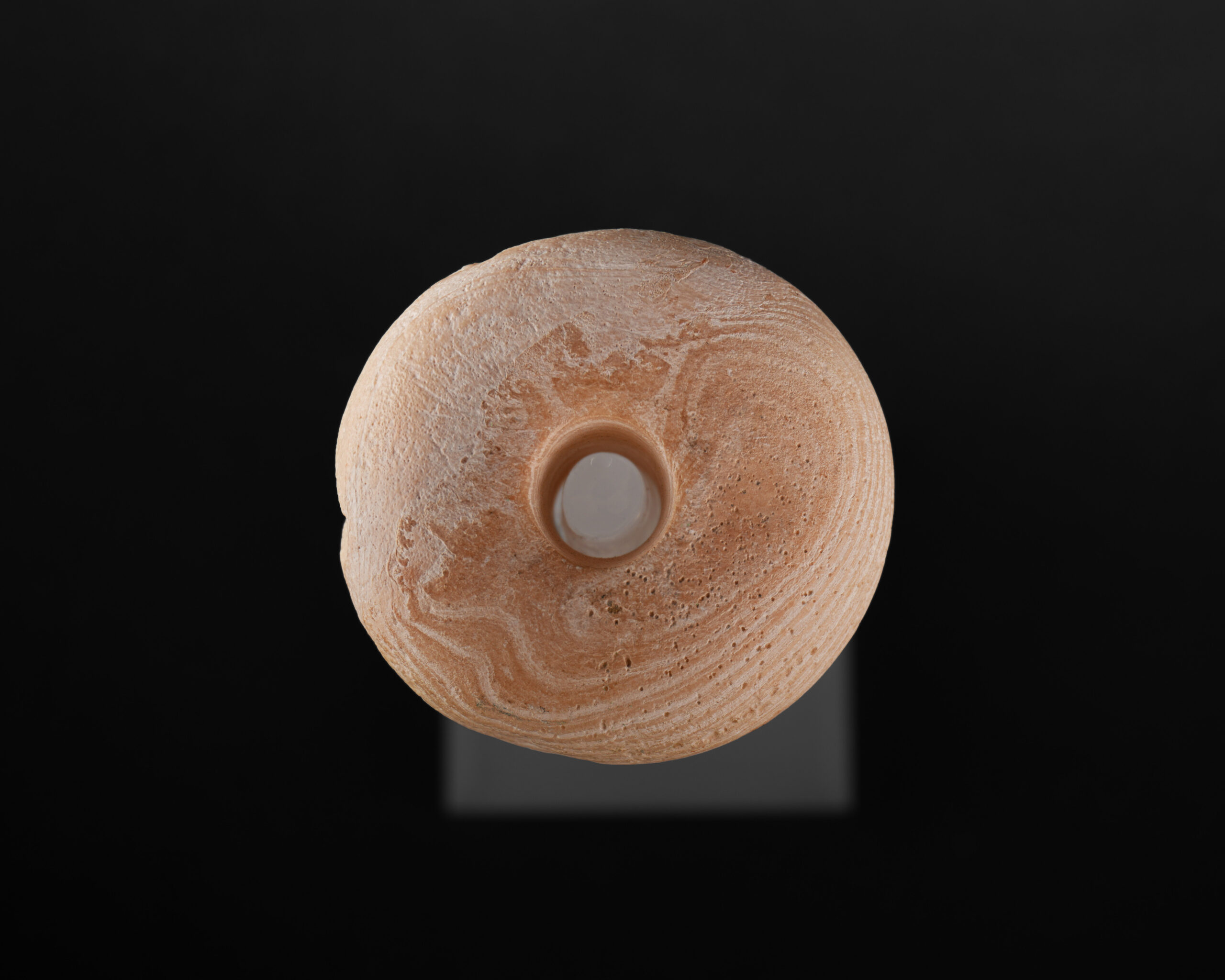
This commanding alabaster mace head exemplifies the artistry and technical skill of Egyptian stone‑workers of the Middle Bronze Age. Crafted from fine, dense alabaster, the piece presents a rounded, slightly pear‑shaped mass terminating in a short, tapering socket for hafting; its surfaces are smoothly finished to reveal the stone’s subtle veining and a soft, satin-like luster. Measuring approximately [dimensions available on request], it is a compact yet powerfully rendered implement.
The most striking feature of the mace head is its sculptural silhouette and the careful modulation of form between the striking face and the haft socket, which together create a balanced, purposeful object. The workmanship demonstrates mastery of stone‑shaping techniques, with precise contouring and evidence of controlled tool work around the socket and perimeter. Minor surface abrasions and faint impact marks may be present, consistent with functional use, while surviving tool marks are minimal and secondary to the overall polished presentation.
This object likely served both practical and symbolic roles: employed as a percussive weapon in conflict or as a status emblem and ceremonial object signaling authority and power. The selection of alabaster—a prized material—speaks to the prominence of its owner and the value attributed to finely
REFERENCE #
WP-PR-1002
CIVILIZATION
Egyptian, Circa 2100 B.C.E. – 1550 B.C.E.
Time Of Abraham
SIZE
L. 5cm
CONDITION
Fine condition
PRICE
$1850
PROVENANCE
The Baidun Collection
Frequently Asked Questions
The mace head is crafted from fine, dense alabaster, a prized material known for its subtle veining and soft, satin-like luster. This choice of material highlights the prominence of its owner and the value placed on finely made objects during the Middle Bronze Age in Egypt.
The mace head measures approximately 5 centimeters in length and is in fine condition. Its compact size and well-preserved state make it a notable example of Middle Bronze Age Egyptian craftsmanship.
The mace head features a rounded, slightly pear-shaped mass with a short, tapering socket for hafting. Its smoothly finished surfaces reveal the stone's veining, and the careful modulation between the striking face and haft socket creates a balanced and purposeful sculptural silhouette.
Egyptian stone-workers demonstrated mastery of stone-shaping techniques, including precise contouring and controlled tool work around the socket and perimeter. The surface is polished with minimal surviving tool marks, indicating skilled craftsmanship and attention to detail.
The mace head likely served both practical and symbolic roles. It could have been used as a percussive weapon in conflict and also as a status emblem or ceremonial object signaling authority and power in ancient Egyptian society.
The mace head originates from the Egyptian civilization during the Middle Bronze Age, specifically circa 2100 B.C.E. to 1550 B.C.E., a time frame associated with the era of Abraham.
The mace head comes from The Baidun Collection and is priced at $1850. Its provenance and fine condition contribute to its value as a collectible artifact.