Ancient Phoenician Silver Shekel of Tyre Set in 14K Gold
An impressive ancient silver shekel of Tyre, one of the most historically significant coins of the Holy Land, elegantly mounted in a polished 14-karat gold pendant.
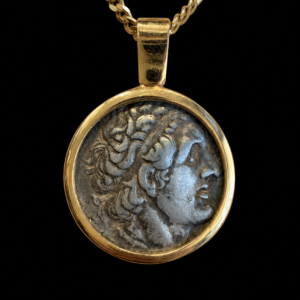
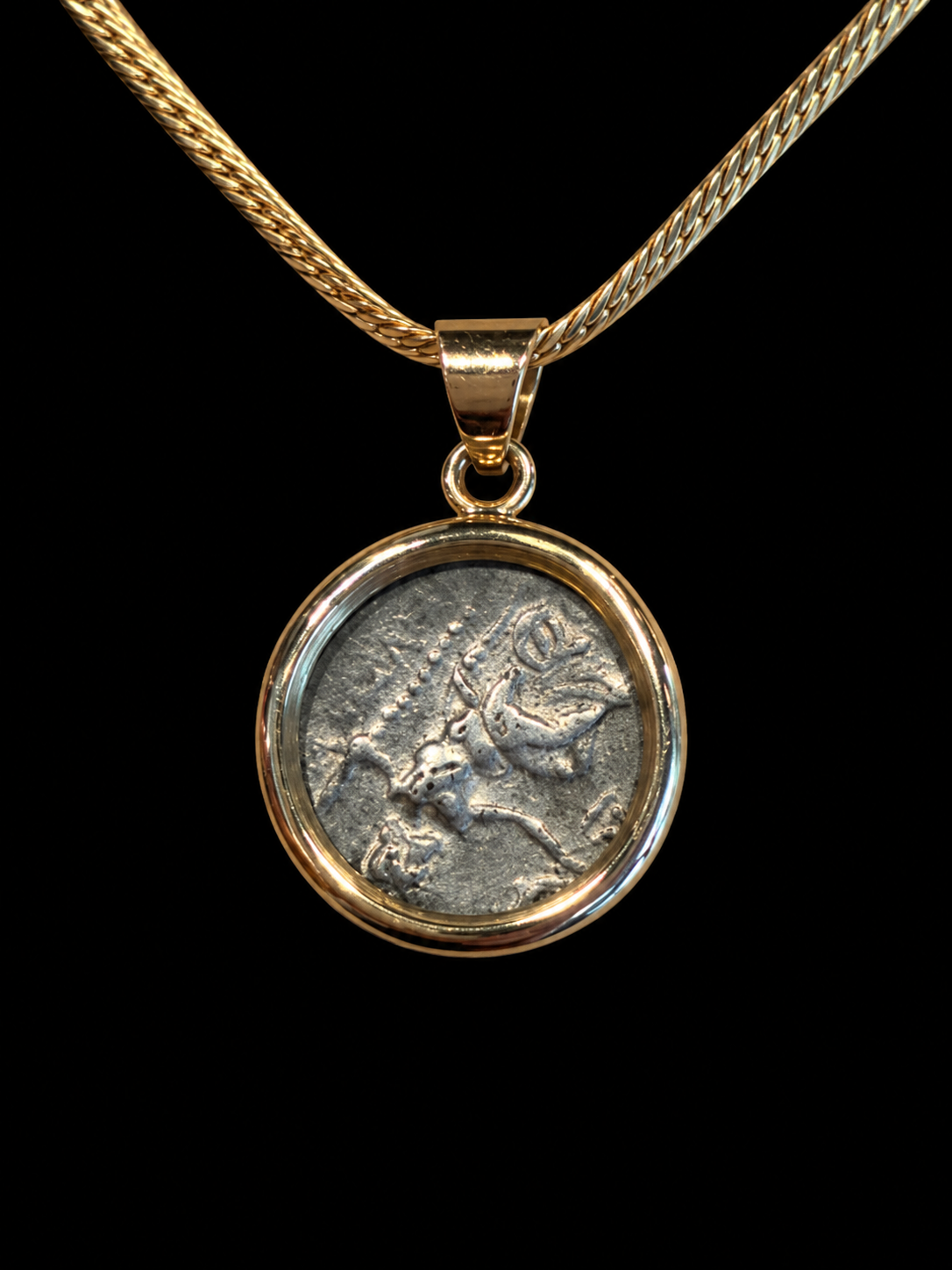
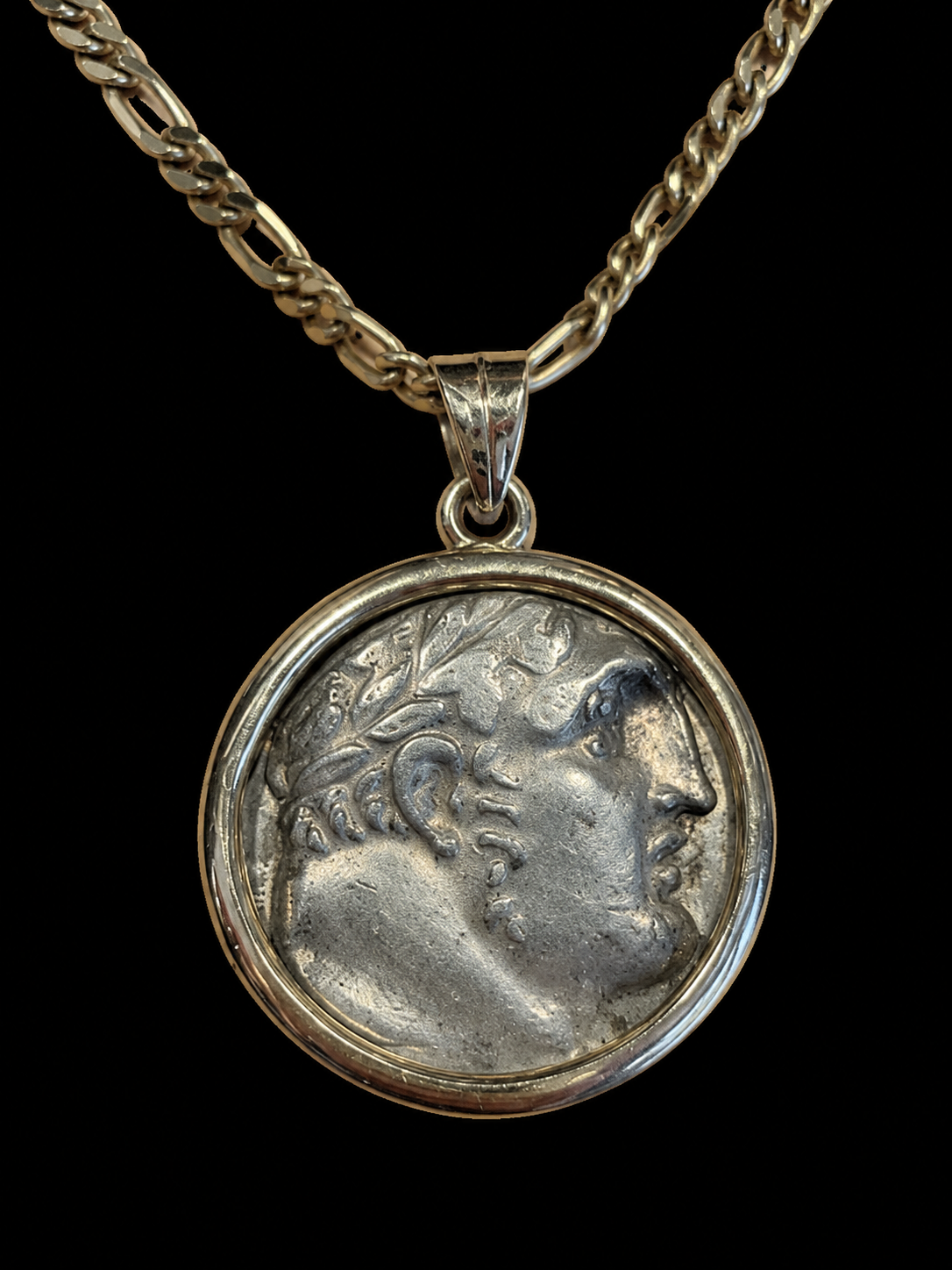
The obverse features a striking laureate portrait of Melqart, the principal deity of ancient Tyre, identified with the Greek hero Heracles (Hercules). His powerful facial features, finely sculpted hair, and commanding expression reflect the distinguished artistry of ancient Phoenician coinage.
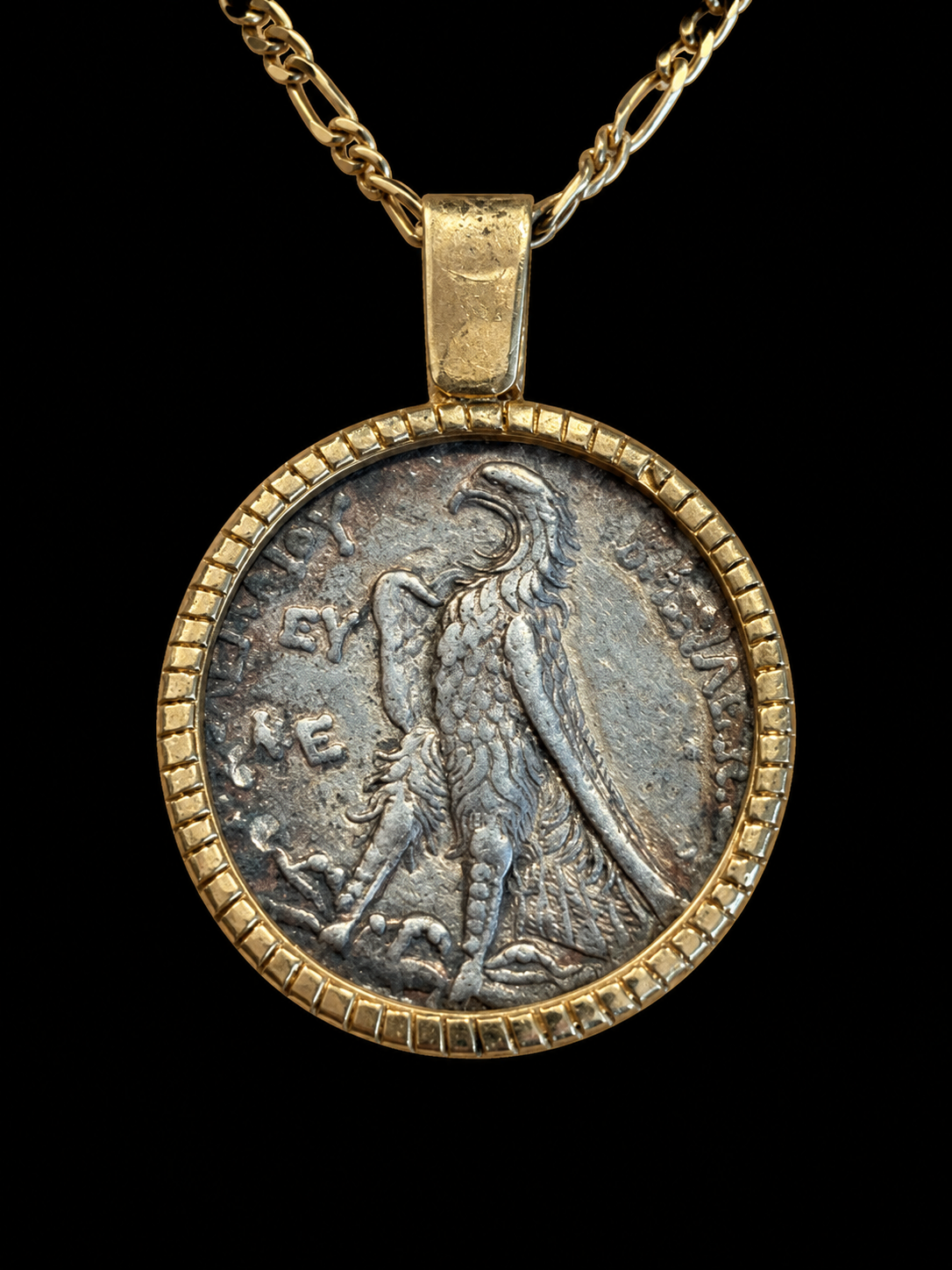
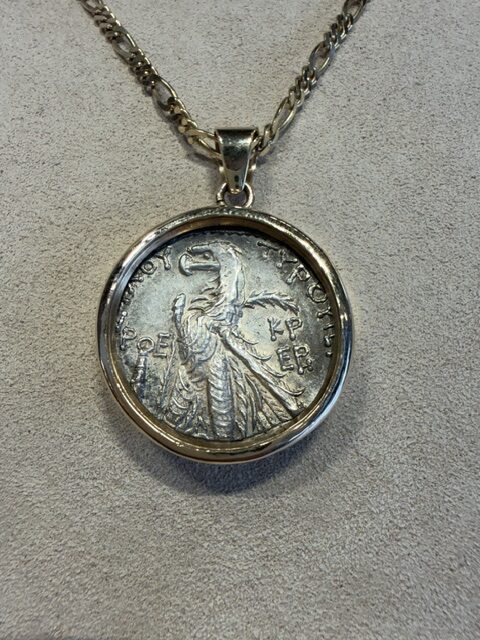
The reverse depicts a majestic eagle standing upon the prow of a ship, with a palm branch extending over its shoulder. The Greek inscription ΤΥΡΟΥ ΙΕΡΑΣ ΚΑΙ ΑΣΥΛΟΥ translates as “Of Tyre, the Holy and Inviolable.” The eagle symbolizes divine authority, while the accompanying club represents Melqart-Heracles.
Renowned for their high silver purity, Tyrian shekels held exceptional importance in ancient Judaea and were used for the annual half-shekel Temple tax in Jerusalem. They are also traditionally associated with the thirty pieces of silver mentioned in the New Testament (Matthew 26:15), although the precise coins used in that event cannot be established.
The coin exhibits bold classical portraiture, well-defined details, and attractive natural silver toning. Its elegant 14-karat gold setting beautifully complements the ancient silver, transforming this historically significant coin into a distinguished piece of wearable antiquity.
A remarkable combination of Phoenician craftsmanship, biblical history, and fine gold jewelry, preserving the legacy of ancient Tyre and its enduring connection to the religious and commercial life of Jerusalem.
REFERENCE #
JW-PH–1002
CIVILIZATION
Tyre, Phoenicia, Year 175 (A.D. 49–50)
PRICE
$4,500
PROVENANCE
Found in Judea
Frequently Asked Questions
The Tyrian silver shekel is historically significant as it was widely used in ancient Judaea, particularly for the annual half-shekel Temple tax in Jerusalem. It is also traditionally linked to the thirty pieces of silver mentioned in the New Testament, symbolizing its importance in both religious and commercial contexts.
The obverse of the Tyrian silver shekel features a laureate portrait of Melqart, the principal deity of ancient Tyre, who is identified with the Greek hero Heracles (Hercules). This portrait showcases the distinguished artistry of ancient Phoenician coinage with powerful facial features and finely sculpted hair.
The reverse side of the coin depicts a majestic eagle standing on the prow of a ship, with a palm branch extending over its shoulder. The Greek inscription translates to 'Of Tyre, the Holy and Inviolable,' symbolizing divine authority and the sacred status of the city.
Tyrian shekels were renowned for their high silver purity, which made them a trusted and valuable currency in ancient times. This purity contributed to their acceptance for religious payments like the Temple tax and their lasting historical and numismatic importance.
The ancient silver shekel is elegantly mounted in a polished 14-karat gold pendant, which complements the natural silver toning and classical portraiture. This setting transforms the coin into a distinguished piece of wearable antiquity, blending Phoenician craftsmanship with fine jewelry.
This particular Tyrian silver shekel was found in Judea and dates back to Year 175 (A.D. 49–50) of the Tyre civilization in Phoenicia. Its provenance adds to its historical and cultural value, linking it directly to the region where it was used.
The Greek inscription 'ΤΥΡΟΥ ΙΕΡΑΣ ΚΑΙ ΑΣΥΛΟΥ' translates to 'Of Tyre, the Holy and Inviolable.' This phrase emphasizes the sacred and protected status of the city of Tyre, reflecting its religious and political significance in antiquity.
Related products
-
Ancient Egyptian Silver Tetradrachm of Ptolemy I Soter Set in 18K Gold
-
THE WIDOW’S MITE BRONZE PRUTAH
-
Ancient Greek Silver Drachm of Alexander the Great Set in 14K Gold
-
Ancient Greek Silver Tetradrachm with Portrait of Ptolemy I Soter Set in 18K Gold