Ancient Judaean Widow’s Mite Bronze Coin – Biblical Prutah of Alexander Jannaeus
An ancient Judaean bronze prutah attributed to Alexander Jannaeus, the Hasmonean king and high priest who ruled Judaea from 103 to 76 B.C. Commonly known as the Widow’s Mite, this small bronze coin belongs to the monetary tradition associated with the biblical account of the poor widow who offered two small coins at the Jerusalem Temple.
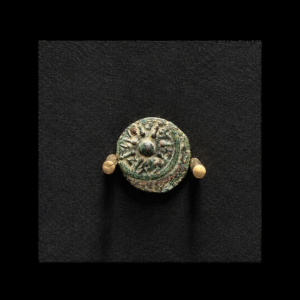
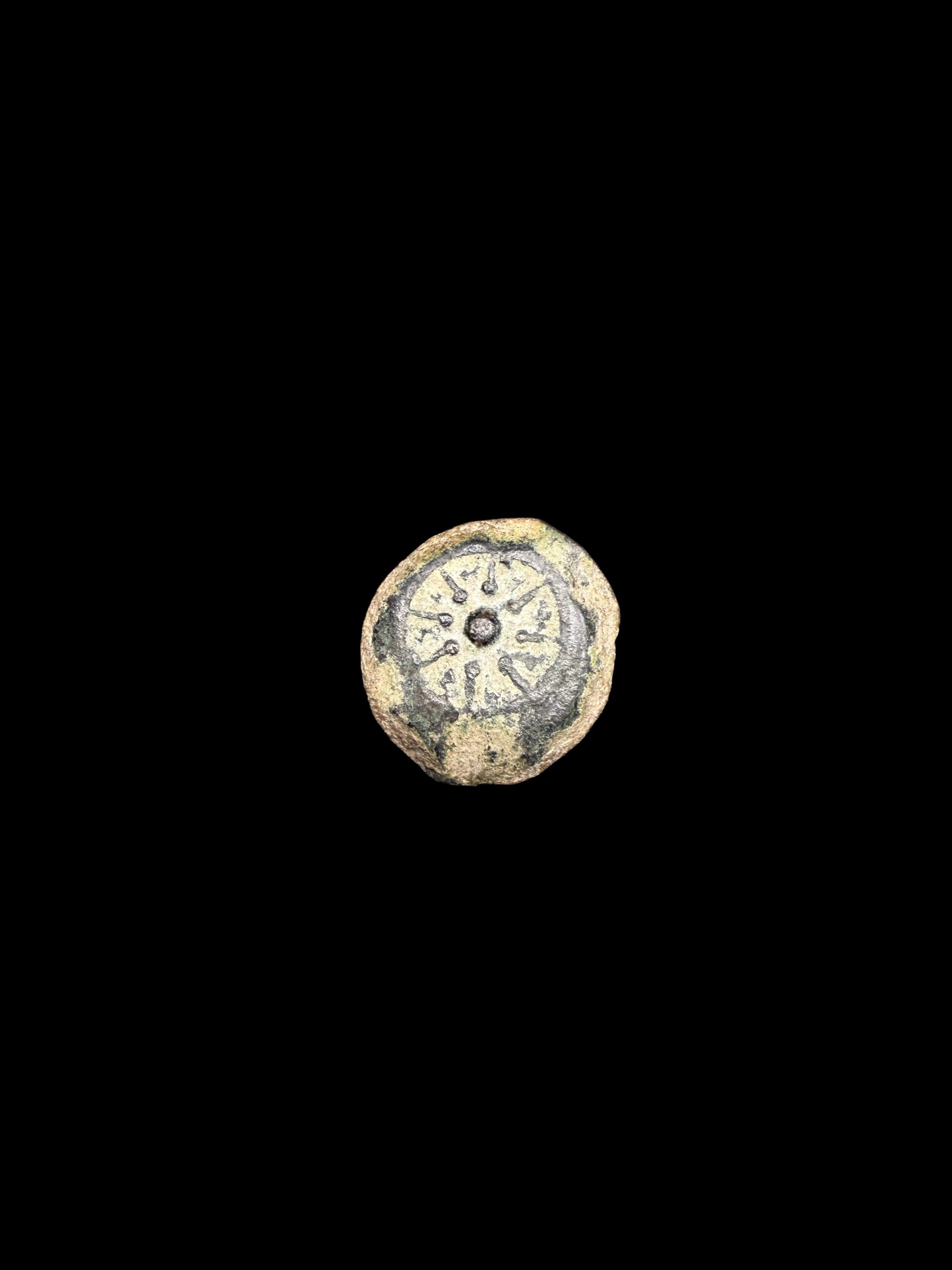
Obverse: An eight-rayed star or wheel-like design within a circular border, with a central pellet and additional pellets near the ends of the rays. This characteristic design is associated with the bronze coinage of Alexander Jannaeus.
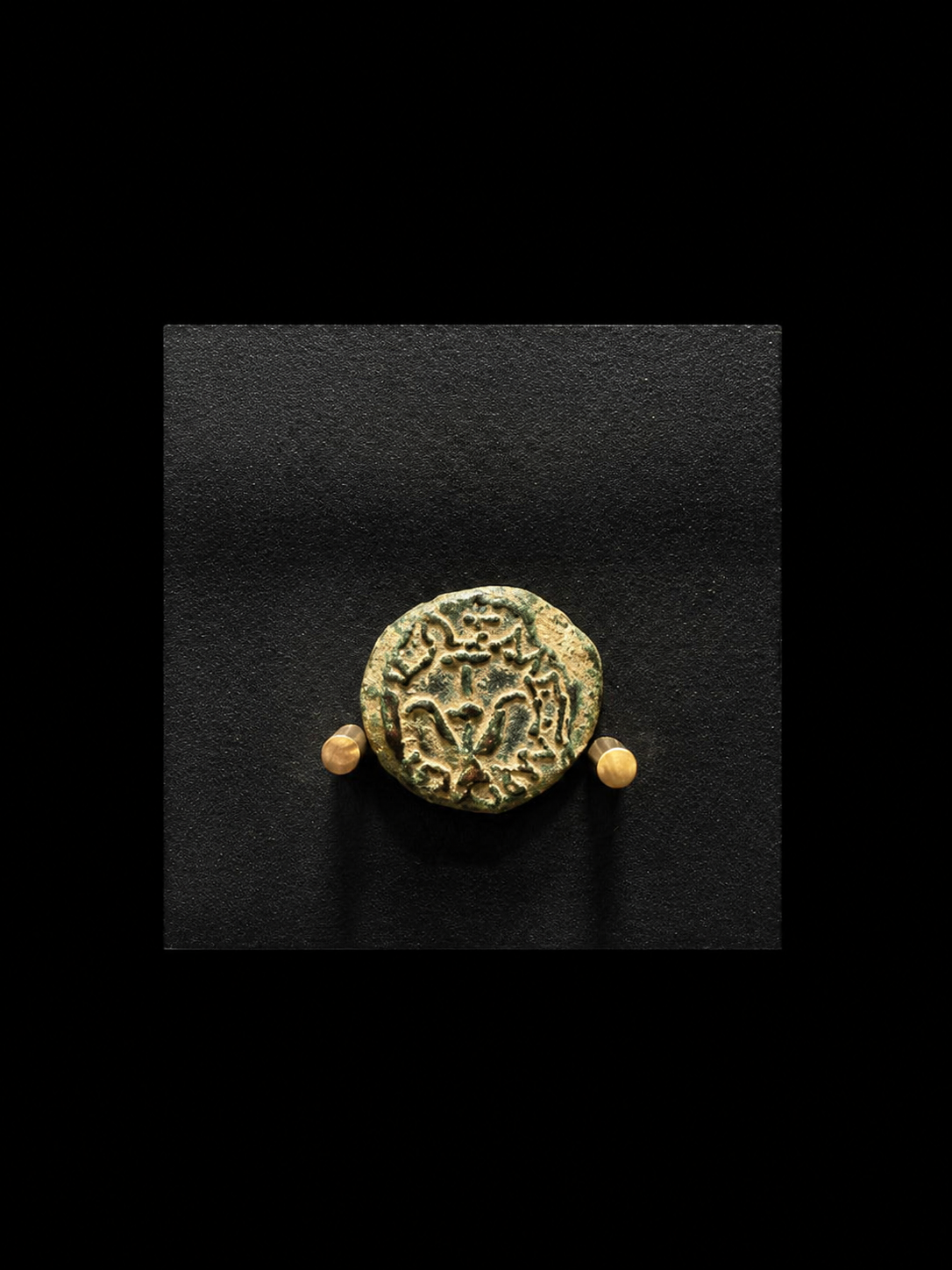
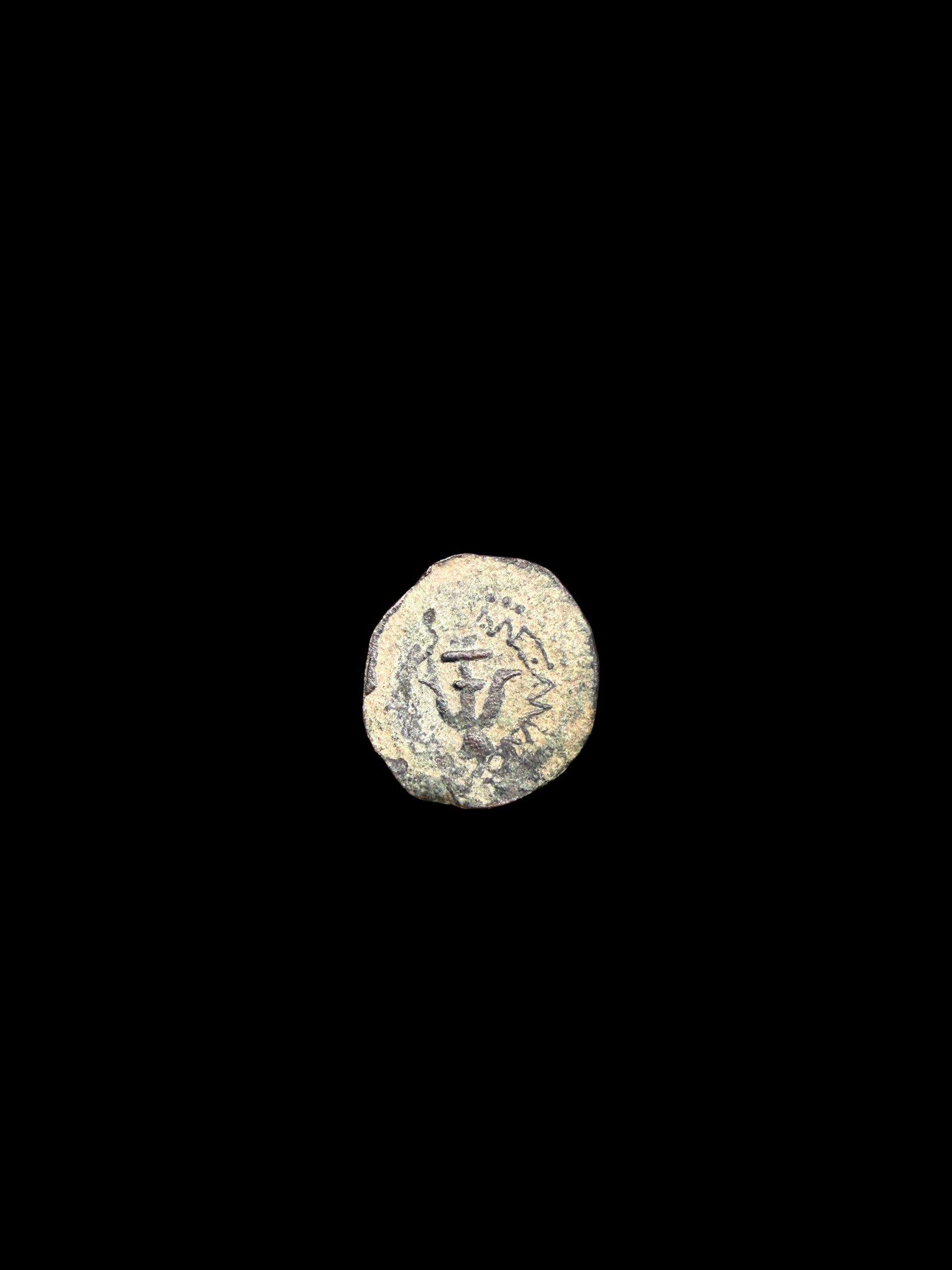
Reverse: A royal anchor surrounded by a partially preserved Greek inscription identifying King Alexander. The anchor, a prominent emblem of Hasmonean coinage, symbolized royal authority and the kingdom’s connections with the Hellenistic world.
Historical and Biblical Significance
The Widow’s Mite holds a special place in biblical history through its traditional association with the account recorded in the Gospels of Mark and Luke.
In Mark 12:41–44 and Luke 21:1–4, Jesus observes a poor widow placing two small coins into the Temple treasury. Although their monetary value was insignificant, he praises her offering because she gave out of her poverty rather than her abundance.
The biblical text does not identify the exact coin type, but small bronze prutot of Alexander Jannaeus were among the coins circulating in Judaea during the late Second Temple period and are traditionally associated with this account.
Historical Importance
Alexander Jannaeus was one of the most influential rulers of the Hasmonean dynasty, expanding Judaea’s territory and consolidating its political independence before the Roman conquest.
His bronze coinage, featuring the star and anchor motifs, represents an important chapter in the monetary history of ancient Judaea. These modest coins circulated in everyday commerce and provide a tangible connection to the economic and religious life of the Jewish population during the centuries surrounding the birth of Christianity.
REFERENCE #
CO-JU-1010
CIVILIZATION
Judaea, Hasmonean Kingdom, Alexander Jannaeus, circa 103–76 B.C.
CONDITION
Ancient bronze with earthen deposits, dark patination, and age-related surface wear. The principal star and anchor motifs remain recognizable, with portions of the surrounding inscriptions preserved.
PRICE
$250
Frequently Asked Questions
The Widow’s Mite is a small bronze prutah coin attributed to Alexander Jannaeus, a Hasmonean king who ruled Judaea from 103 to 76 B.C. It is significant because it is traditionally associated with the biblical story of a poor widow who offered two small coins at the Jerusalem Temple, symbolizing selfless giving despite poverty.
Alexander Jannaeus was a Hasmonean king and high priest who ruled Judaea from 103 to 76 B.C. He expanded the kingdom’s territory and strengthened its political independence before the Roman conquest, making him one of the most influential rulers of the Hasmonean dynasty.
The Widow’s Mite features an eight-rayed star or wheel-like design with pellets on the obverse, and a royal anchor surrounded by a Greek inscription on the reverse. These motifs symbolize royal authority and the kingdom’s Hellenistic connections, characteristic of Alexander Jannaeus’s bronze coinage.
In the Gospels of Mark and Luke, Jesus observes a poor widow offering two small coins at the Temple treasury. Although the exact coin type is not specified, the small bronze prutot of Alexander Jannaeus are traditionally linked to this story as they were common in Judaea during that period.
The anchor on the reverse of the Widow’s Mite is a royal emblem used in Hasmonean coinage. It symbolizes royal authority and reflects the kingdom’s cultural and political connections with the Hellenistic world during Alexander Jannaeus’s reign.
Alexander Jannaeus’s bronze coins, including the Widow’s Mite, are important because they circulated widely in everyday commerce and provide insight into the economic and religious life of Jewish people during the late Second Temple period, bridging history and biblical tradition.
The Widow’s Mite is usually found as an ancient bronze coin with earthen deposits, dark patination, and surface wear due to age. Despite this, the main star and anchor motifs and parts of the inscriptions often remain recognizable.
Related products
-
Ancient Greek Silver Tetradrachm with Portrait of Ptolemy I Soter Set in 18K Gold
-
Ancient Greek Silver Tetradrachm of Alexander the Great Set in 14K Gold
-
THE WIDOW’S MITE BRONZE PRUTAH
-
Bronze Coin of the Bar Kokhba Revolt Set in Gold