Ancient Greek Silver Tetradrachm of Side, Pamphylia, Set in 14K Gold
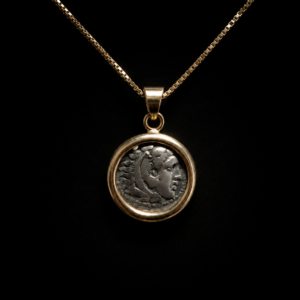
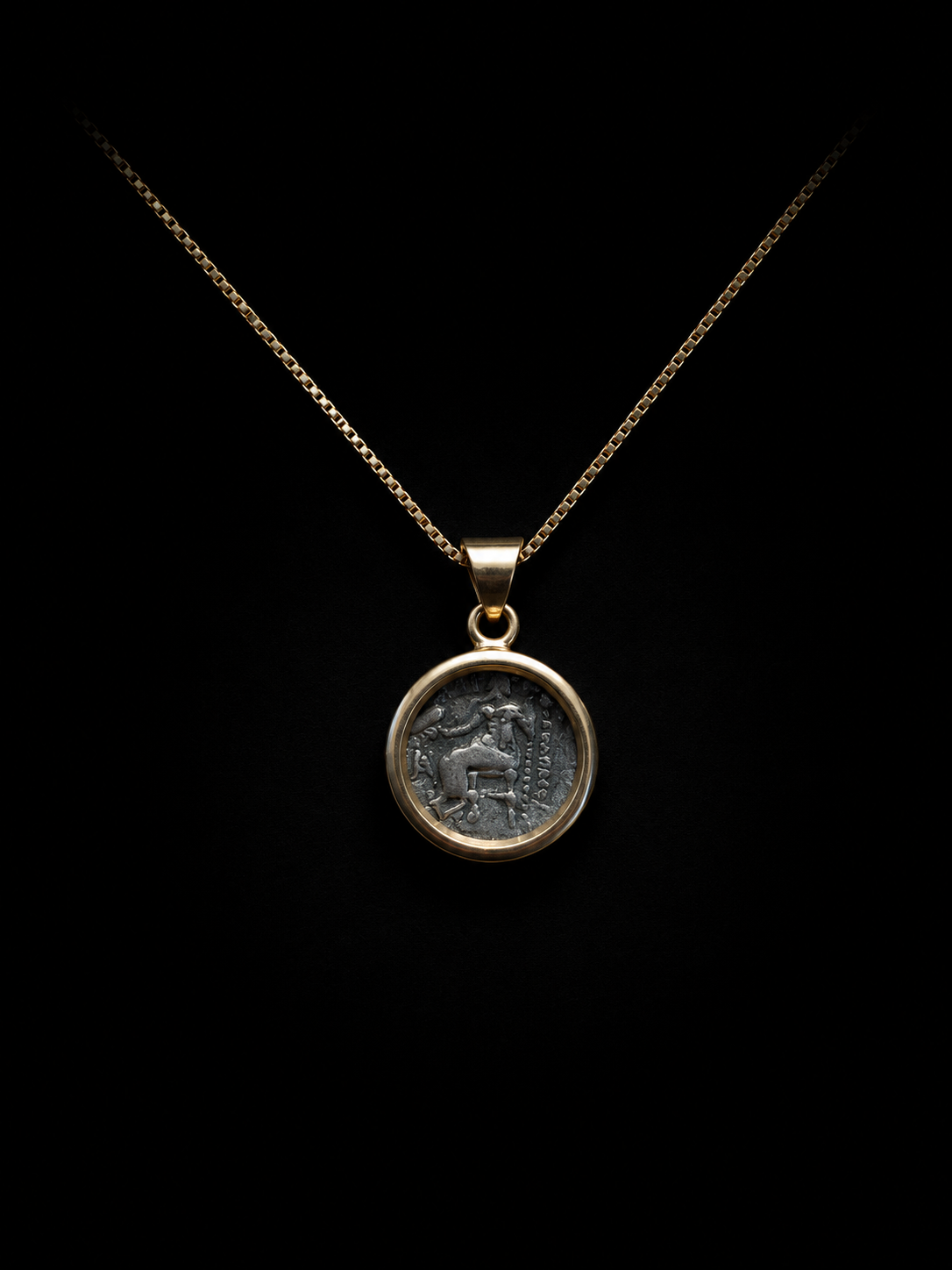
A fine ancient Greek silver tetradrachm from the historic city of Side in Pamphylia, Asia Minor (modern-day Turkey), elegantly mounted in a polished 14-karat gold pendant.
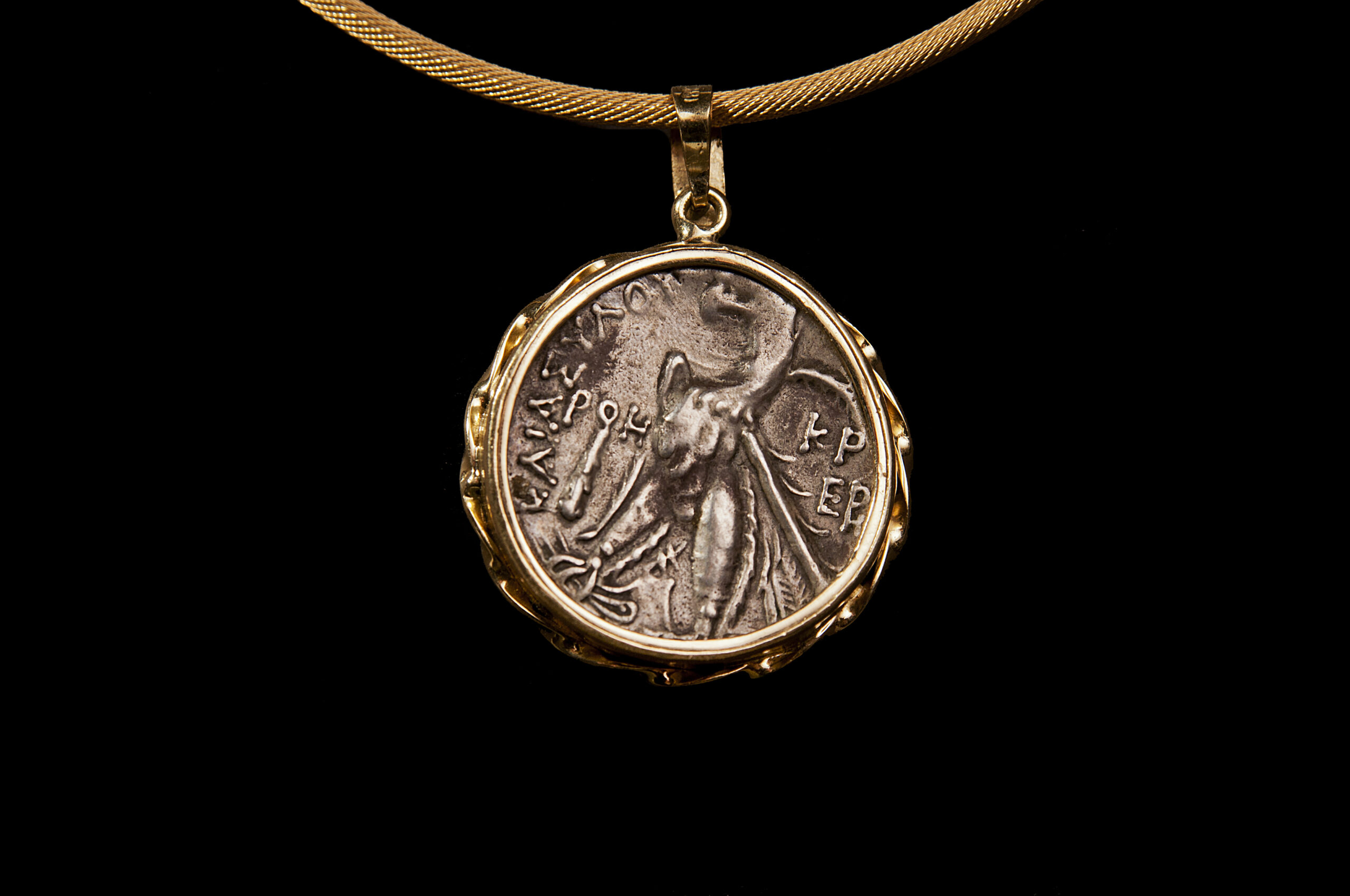
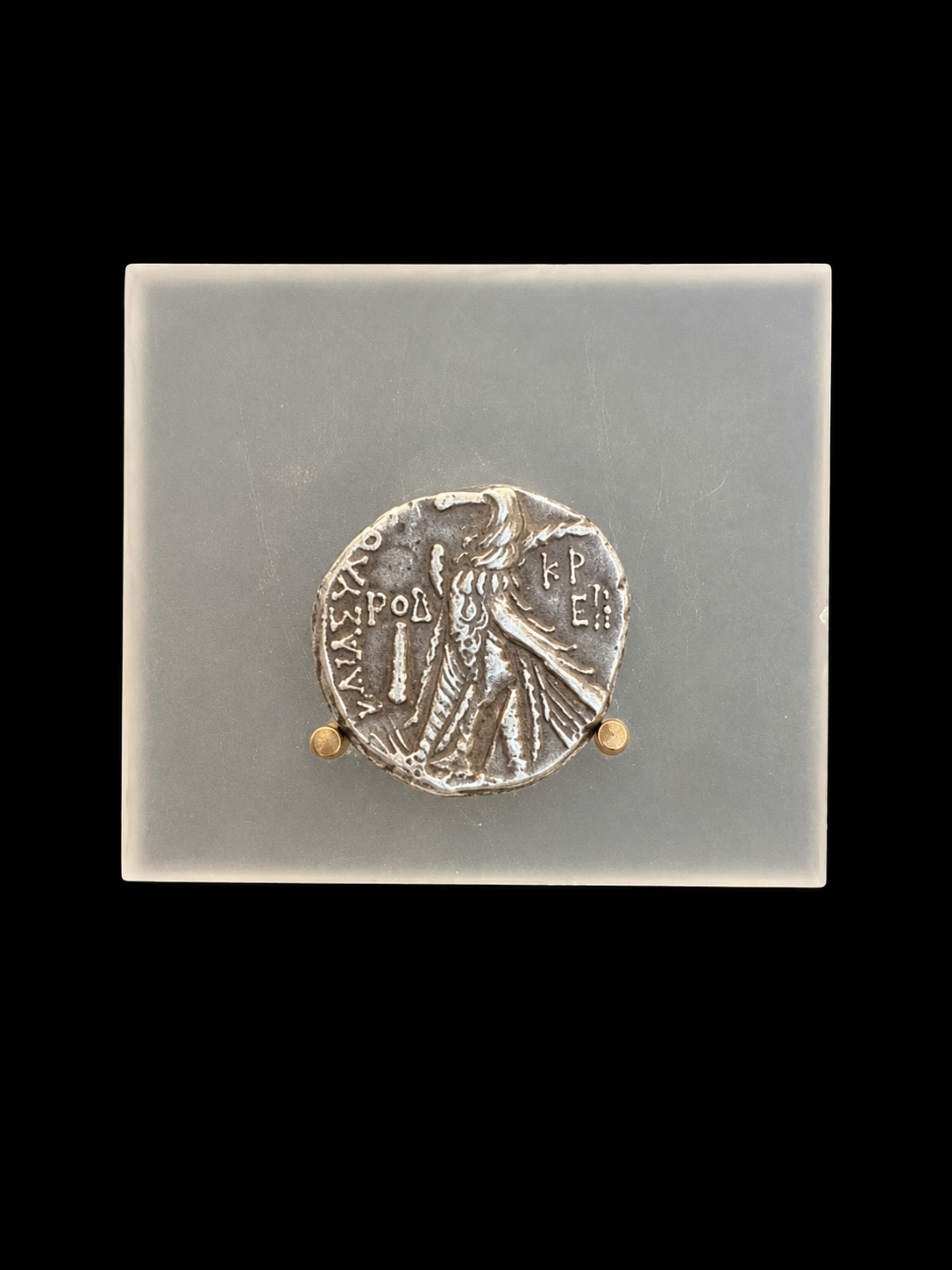
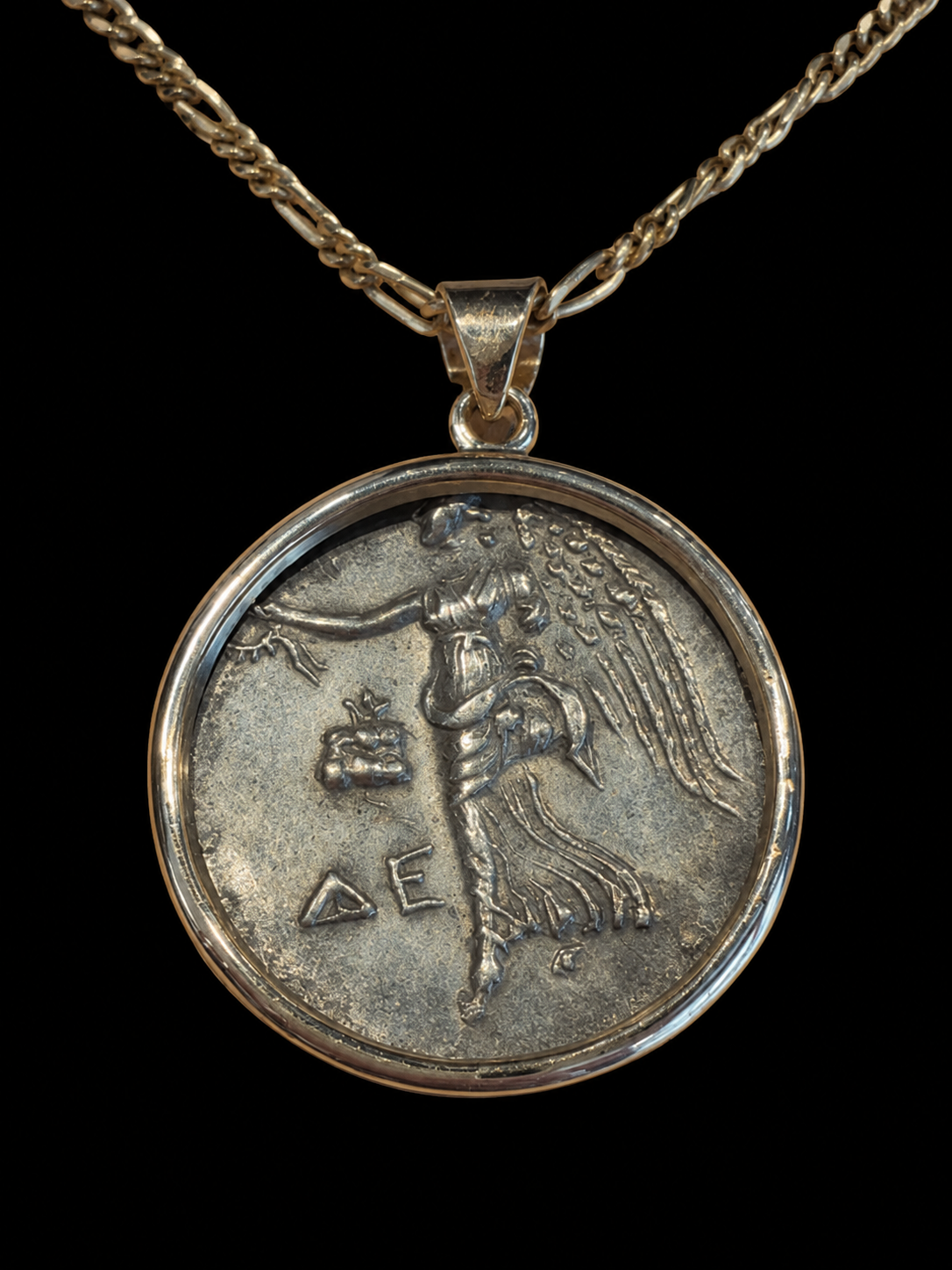
The reverse depicts Nike, the winged goddess of victory, advancing left with her magnificent wings extended behind her, holding a wreath in her outstretched hand. A pomegranate, the distinctive civic emblem of Side, appears in the field, accompanied by Greek magistrate’s letters. The composition reflects the artistic sophistication and celebrated symbolism of Hellenistic Greek coinage.
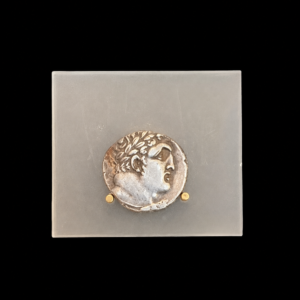
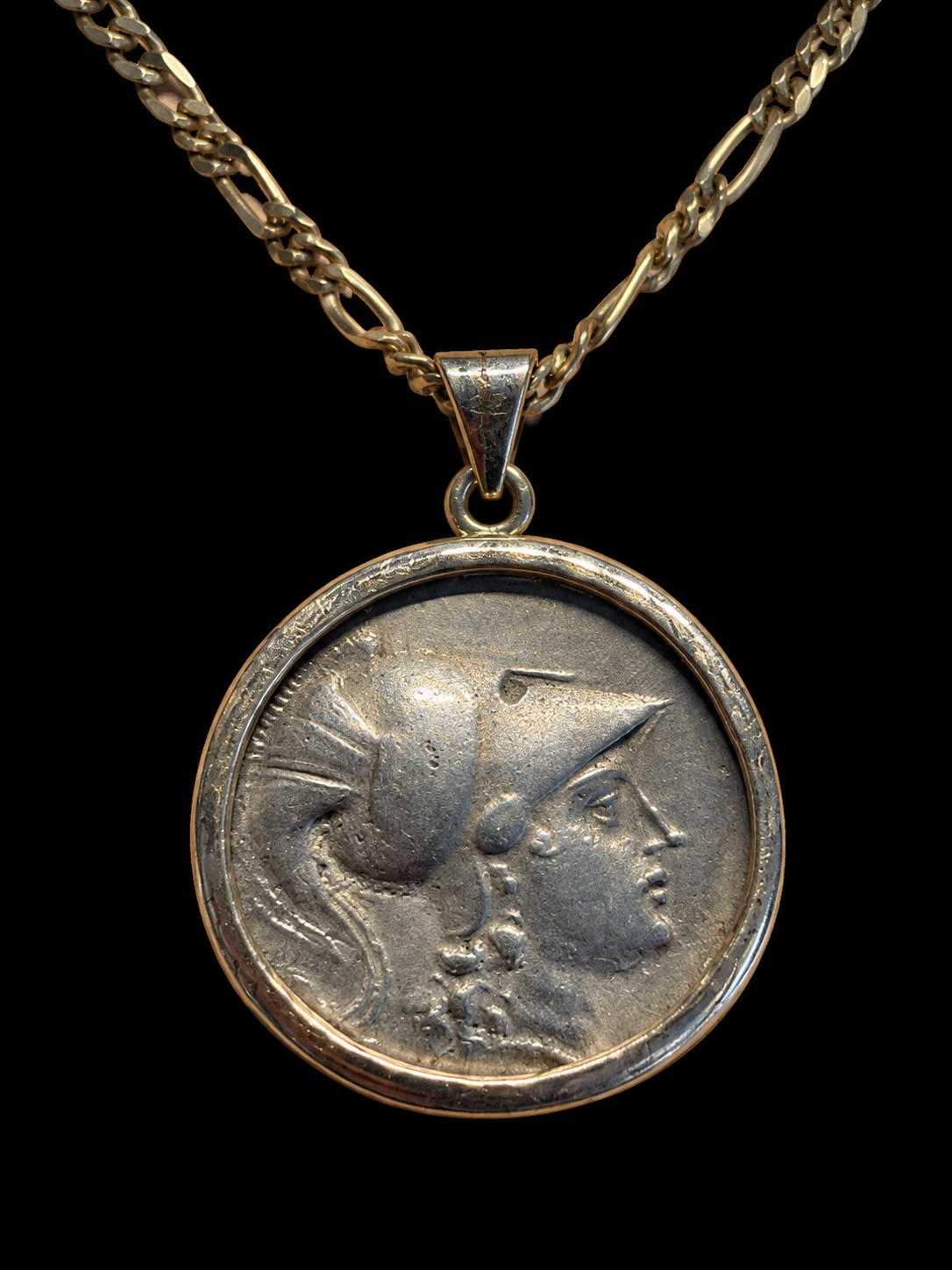
The obverse of this coin type features Athena, goddess of wisdom and warfare, wearing an elaborate Corinthian helmet, a powerful representation of divine protection, courage, and military strength.
The coin displays beautifully defined classical imagery, graceful sculptural details, and attractive natural silver toning. Its elegant 14-karat gold setting complements the ancient silver, transforming this remarkable piece of Greek numismatic history into a distinguished example of wearable antiquity.
An exquisite combination of Hellenistic artistry, ancient Greek mythology, and fine gold craftsmanship, preserving the enduring legacy of Side, one of the important commercial cities of ancient Pamphylia.
REFERENCE #
CO-GR-1005
CIVILIZATION
Hellenistic Period, circa 2nd–1st Century B.C.
PRICE
$3,000
PROVENANCE
Found in Samaria
Frequently Asked Questions
The reverse side of the tetradrachm features Nike, the winged goddess of victory, advancing left with her wings extended behind her. She holds a wreath in her outstretched hand, and a pomegranate, the civic emblem of Side, appears in the field along with Greek magistrate’s letters, symbolizing victory and the city's identity.
The obverse side depicts Athena, the goddess of wisdom and warfare, wearing an elaborate Corinthian helmet. This imagery represents divine protection, courage, and military strength, reflecting the values and beliefs of the Hellenistic period.
The pomegranate is the distinctive civic emblem of Side, the ancient city where the coin originated. Its presence on the coin signifies the city's identity and pride, linking the coin to its place of origin and its cultural heritage.
The ancient silver tetradrachm is elegantly mounted in a polished 14-karat gold pendant. This setting enhances the coin's natural silver toning and classical imagery, transforming it into a wearable piece of antiquity that combines ancient artistry with fine gold craftsmanship.
This coin dates back to the Hellenistic Period, approximately the 2nd to 1st century B.C. It reflects the artistic and cultural sophistication of that era in ancient Greek history, particularly from the city of Side in Pamphylia, Asia Minor.
The coin exhibits beautifully defined classical imagery, graceful sculptural details, and attractive natural silver toning. These features highlight the high level of craftsmanship and artistic sophistication characteristic of Hellenistic Greek coinage.
The provenance of this coin indicates it was found in Samaria, providing historical context and authenticity to the piece as an artifact from the ancient world.
Related products
-
Ancient Greek Silver Tetradrachm with Portrait of Ptolemy I Soter Set in 18K Gold
-
Silver Tyre Shekel Coin in an 18K Gold Pendent
-
PHOENICIAN SILVER TYRE SHEKEL
-
Silver Drachma of Alexander the Great Set in Gold