Description
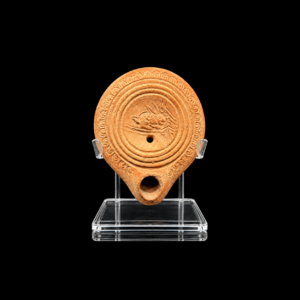
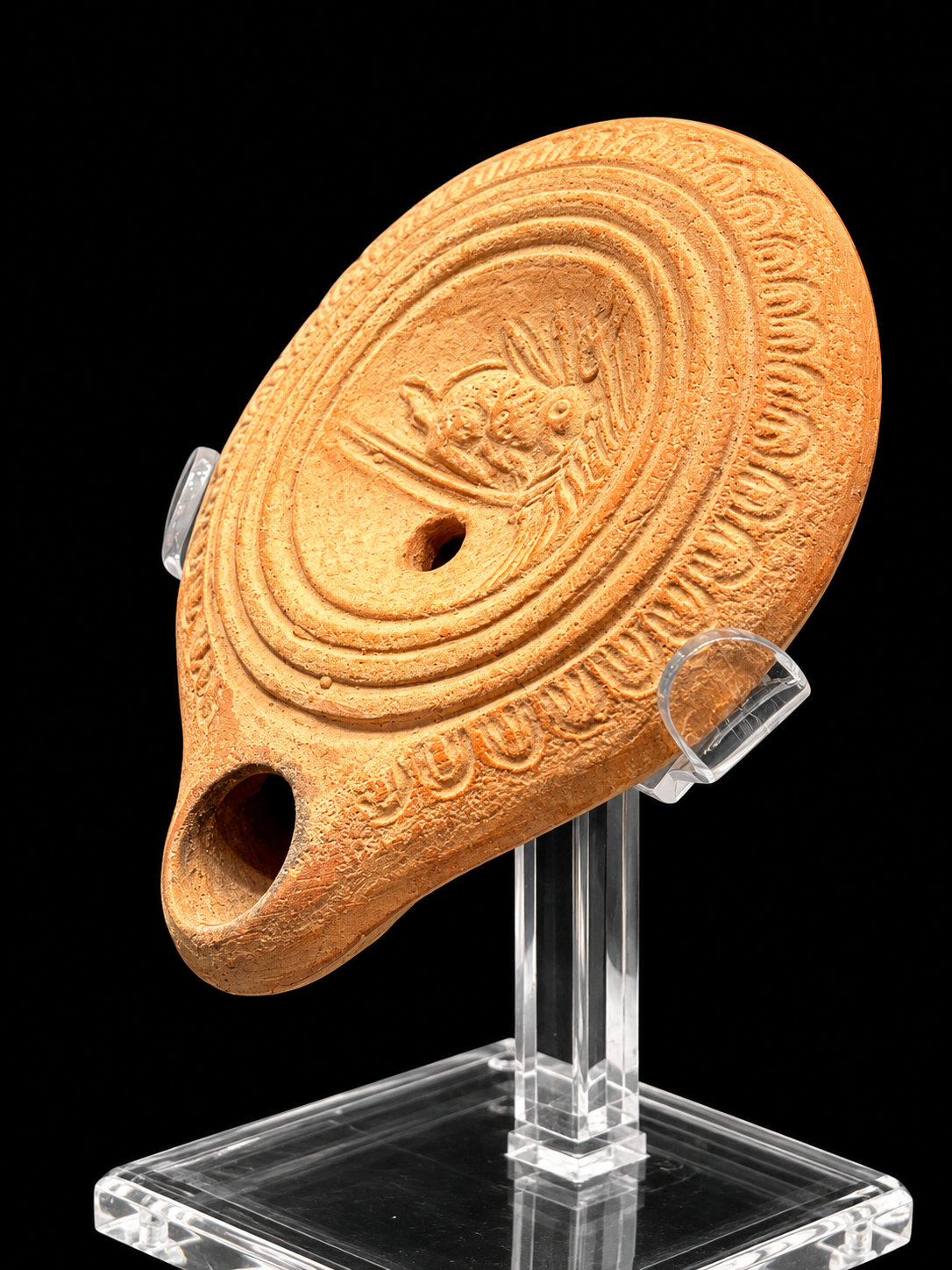
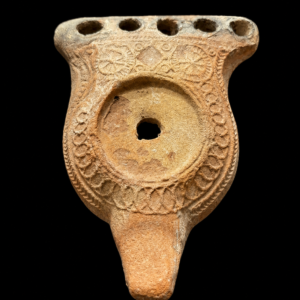
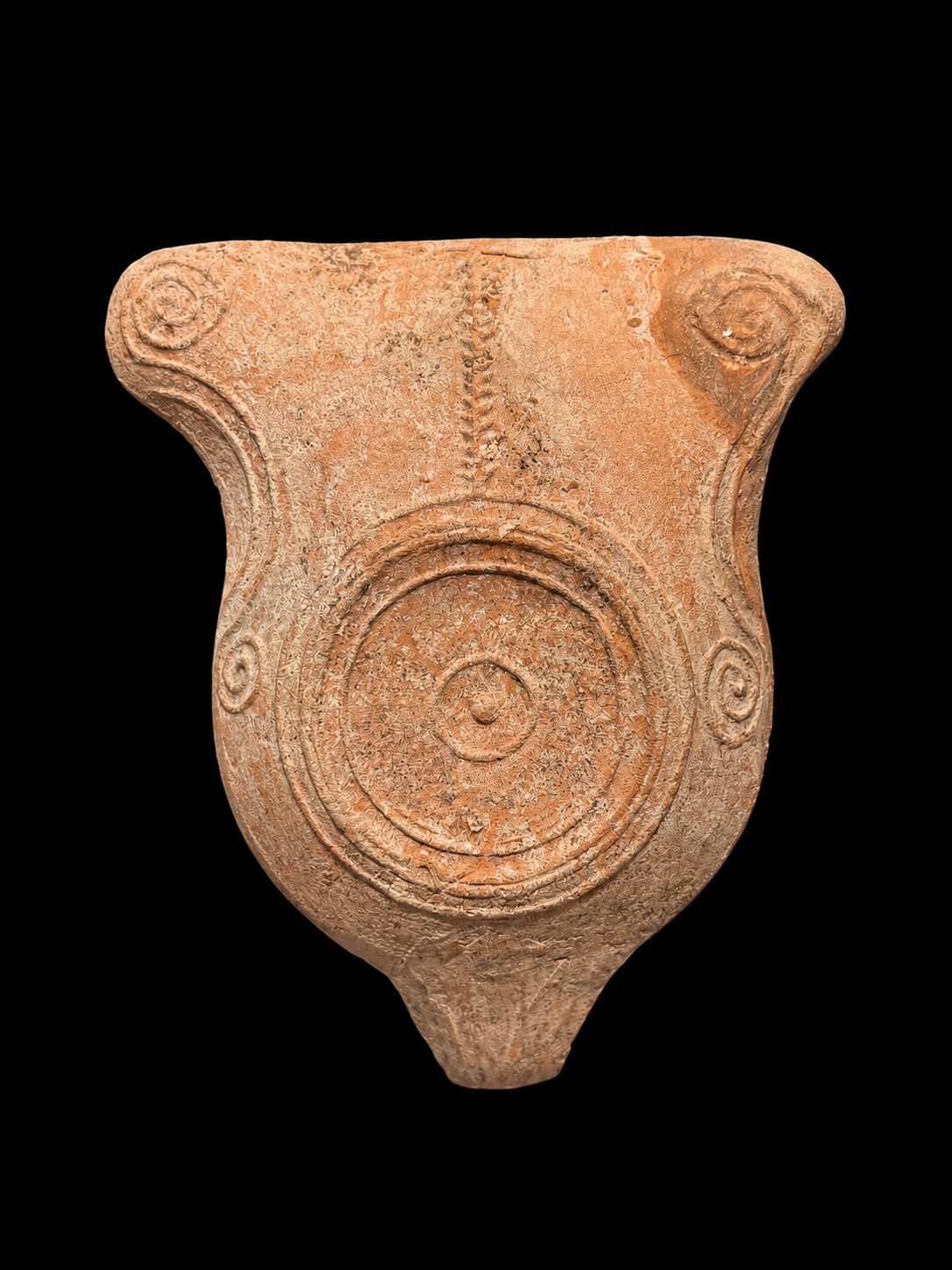
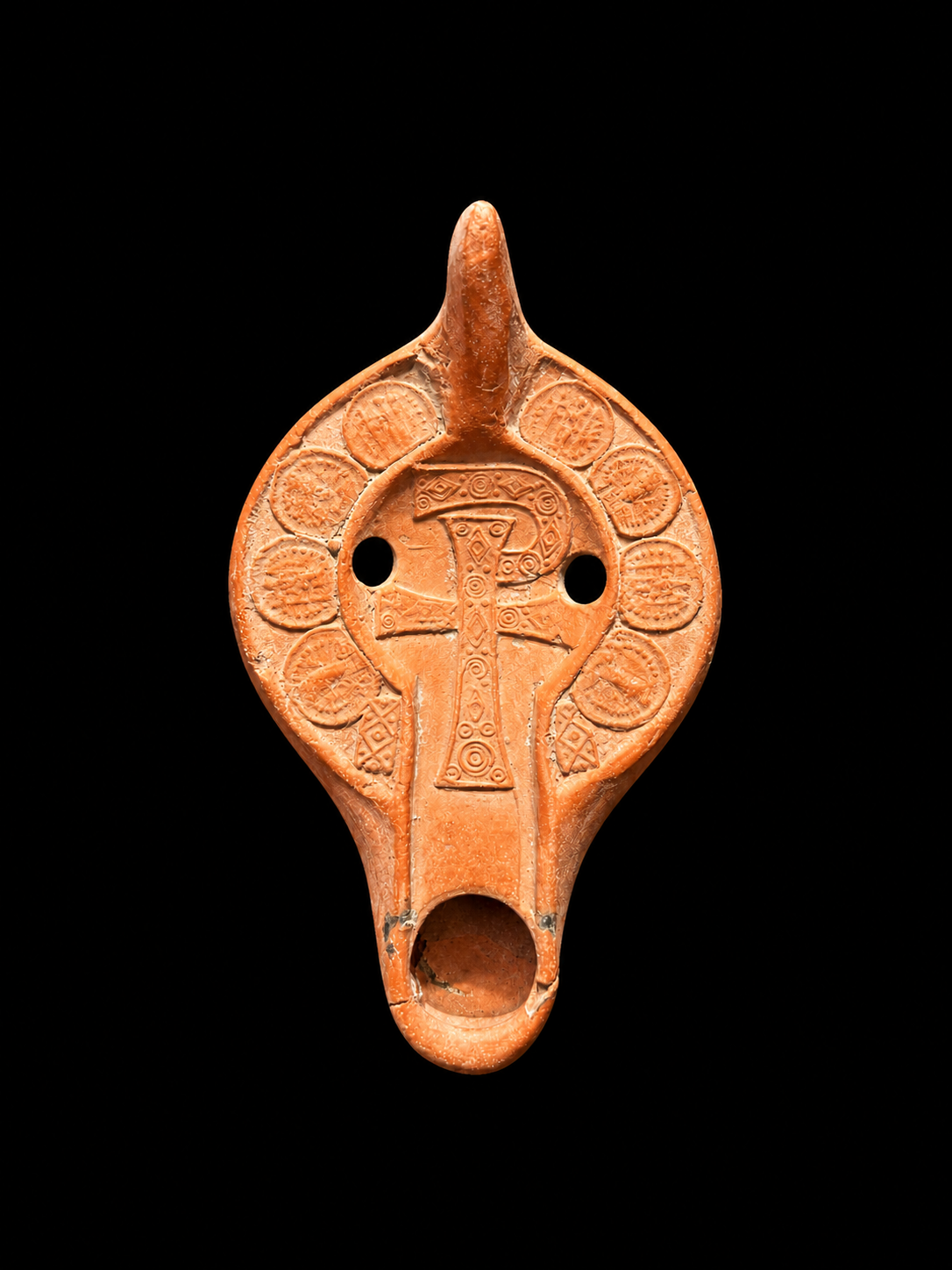
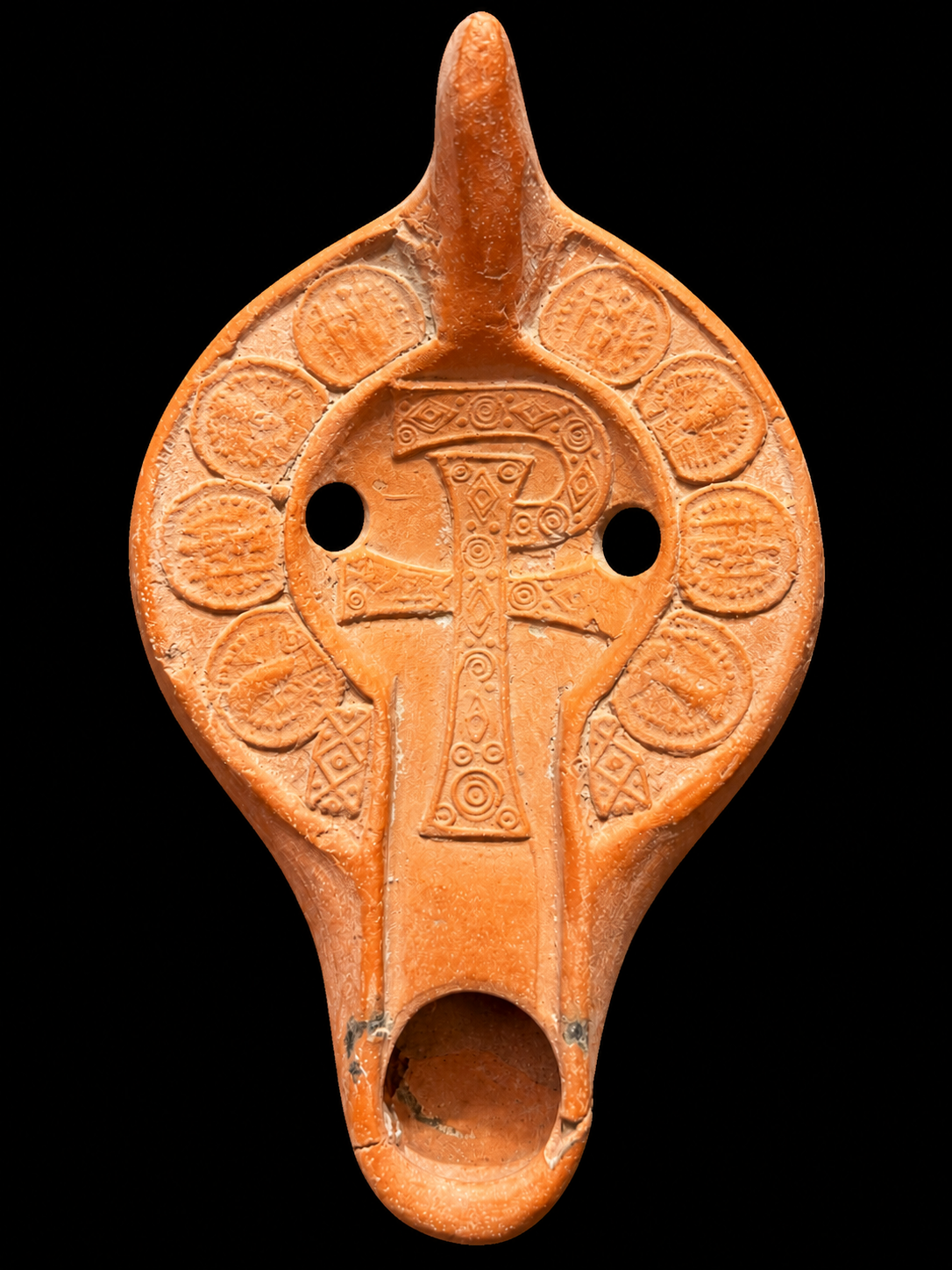
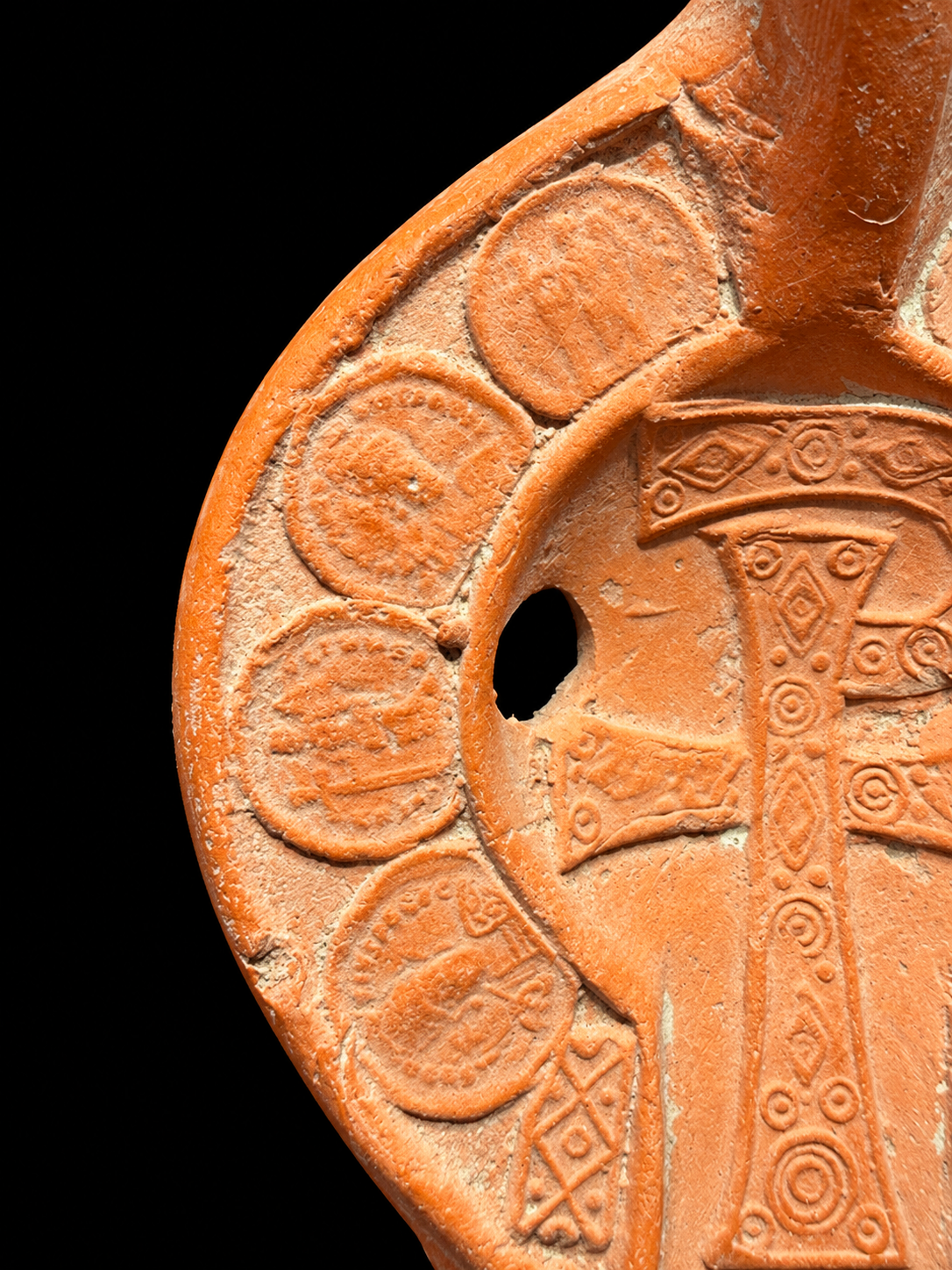
An exceptionally rare and iconographically important African Red Slip terracotta oil lamp, distinguished by a monumental Christian cross occupying the central discus and an extraordinary series of circular impressions derived from the gold solidi of the Eastern Roman emperor Theodosius II (AD 402–450).
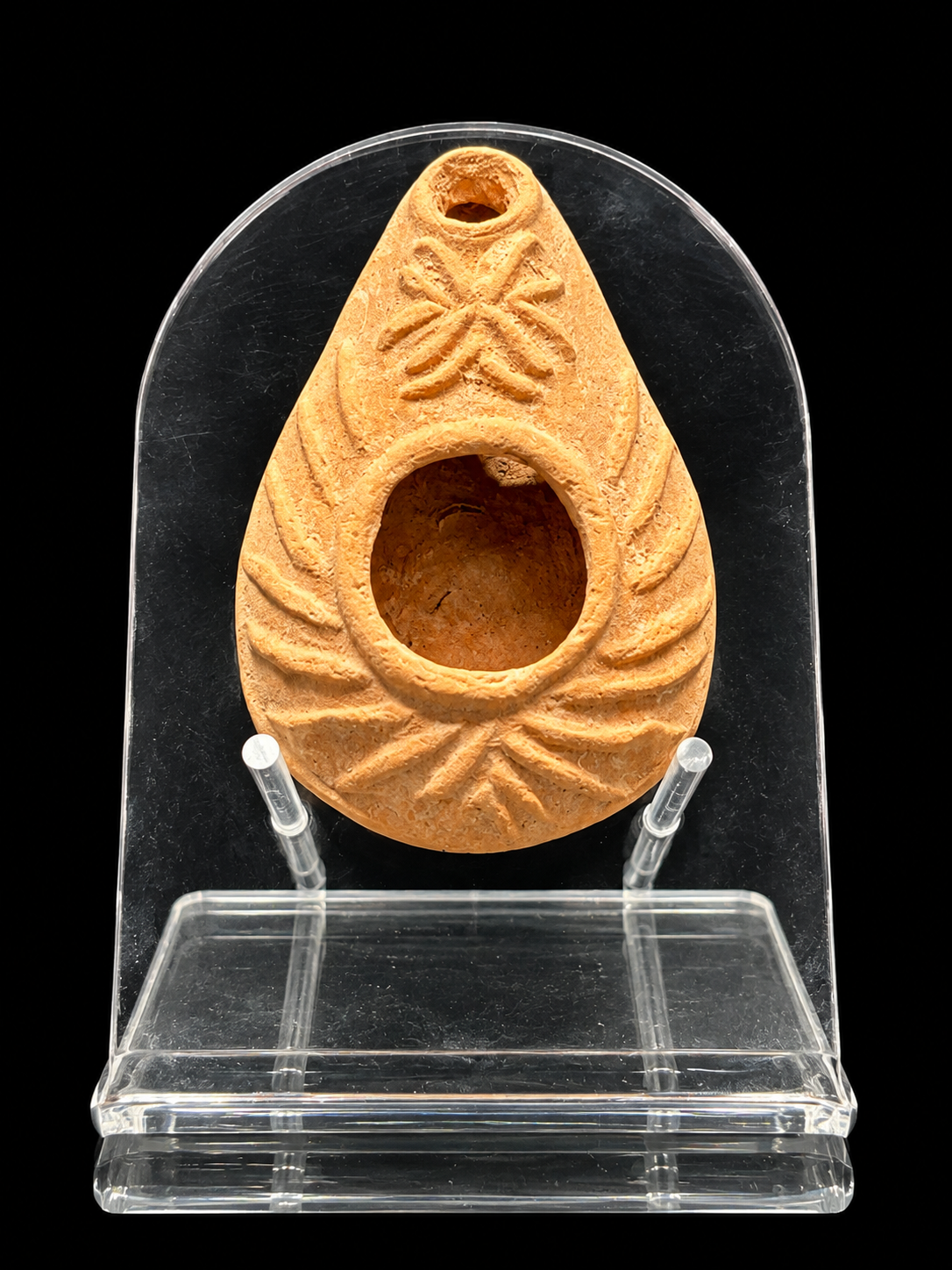
Mold-made from fine reddish-orange terracotta and retaining its characteristic red-slip surface, the lamp has an elongated oval body with a long channelled nozzle terminating in a large rounded wick-hole and a prominent solid, spike-shaped handle rising from the rear. The deeply recessed discus is pierced by two symmetrically positioned filling holes.
Dominating the entire central field is a large and elaborately ornamented Christian cross. The cross is rendered in high relief with flaring terminals and richly decorated with concentric circles, spirals, lozenges and geometric motifs, creating the appearance of a ceremonial or jeweled cross (crux gemmata). Its commanding placement at the center of the lamp reflects the growing prominence of the Cross as one of the principal symbols of Christianity during the fifth century.
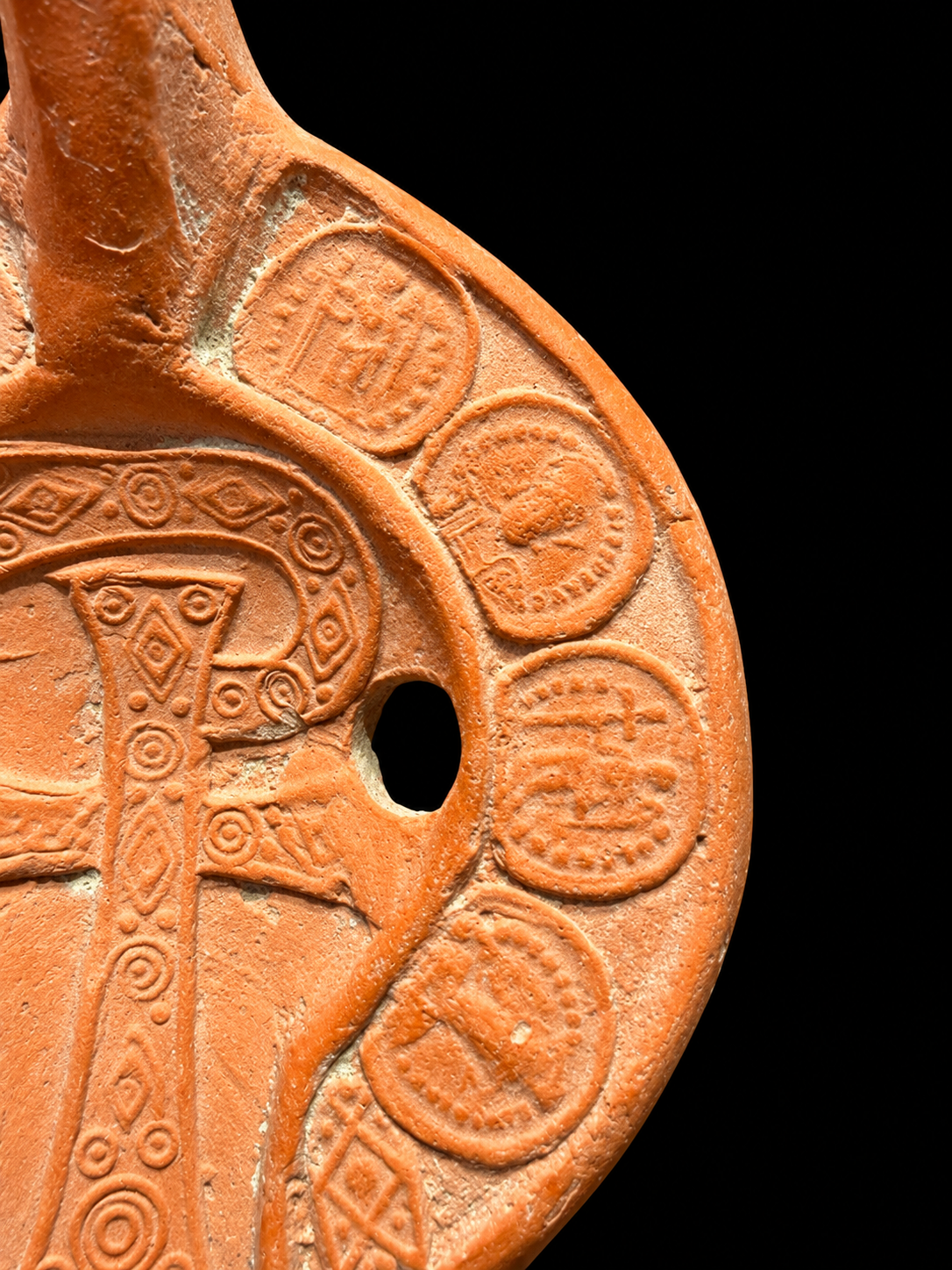
Of exceptional importance is the broad shoulder surrounding the discus, which is decorated with a sequence of approximately ten circular coin-derived medallions. These reproduce imperial monetary imagery associated with the gold solidi of Theodosius II, with traces of both imperial portrait and reverse types preserved among the impressions.
The coins themselves were not incorporated into the lamp. Rather, their imagery was transferred to the mold and reproduced as raised decorative medallions on the finished vessel. This unusual use of prestigious imperial gold-coin imagery transforms the shoulder into an almost continuous numismatic border surrounding the central Christian cross.
The identification finds an important parallel in the collection of the J. Paul Getty Museum, which preserves a closely related North African Red Slip lamp, inventory 83.AQ.377.270, likewise decorated with a prominent jeweled cross and alternating impressions derived from gold solidi commemorating the vicennalia—the twentieth anniversary of the reign—of Theodosius II in AD 422. The Getty example belongs to the Atlante X / Hayes II A tradition of North African lamp production.
The AD 422 coin prototypes provide an important chronological terminus post quem for this distinctive group. Since such monetary designs could continue to be reproduced after the original coins were issued, a dating within the 5th century AD, circa AD 425–500, is appropriate.
The juxtaposition of the Cross of Christ with the imperial imagery of Theodosius II gives the lamp exceptional historical significance. By the fifth century, Christianity had become deeply integrated into the public and political identity of the Roman Empire. Here, the Christian cross occupies the dominant central position while imperial imagery encircles it, creating a striking visual expression of the Christianized Late Roman world.
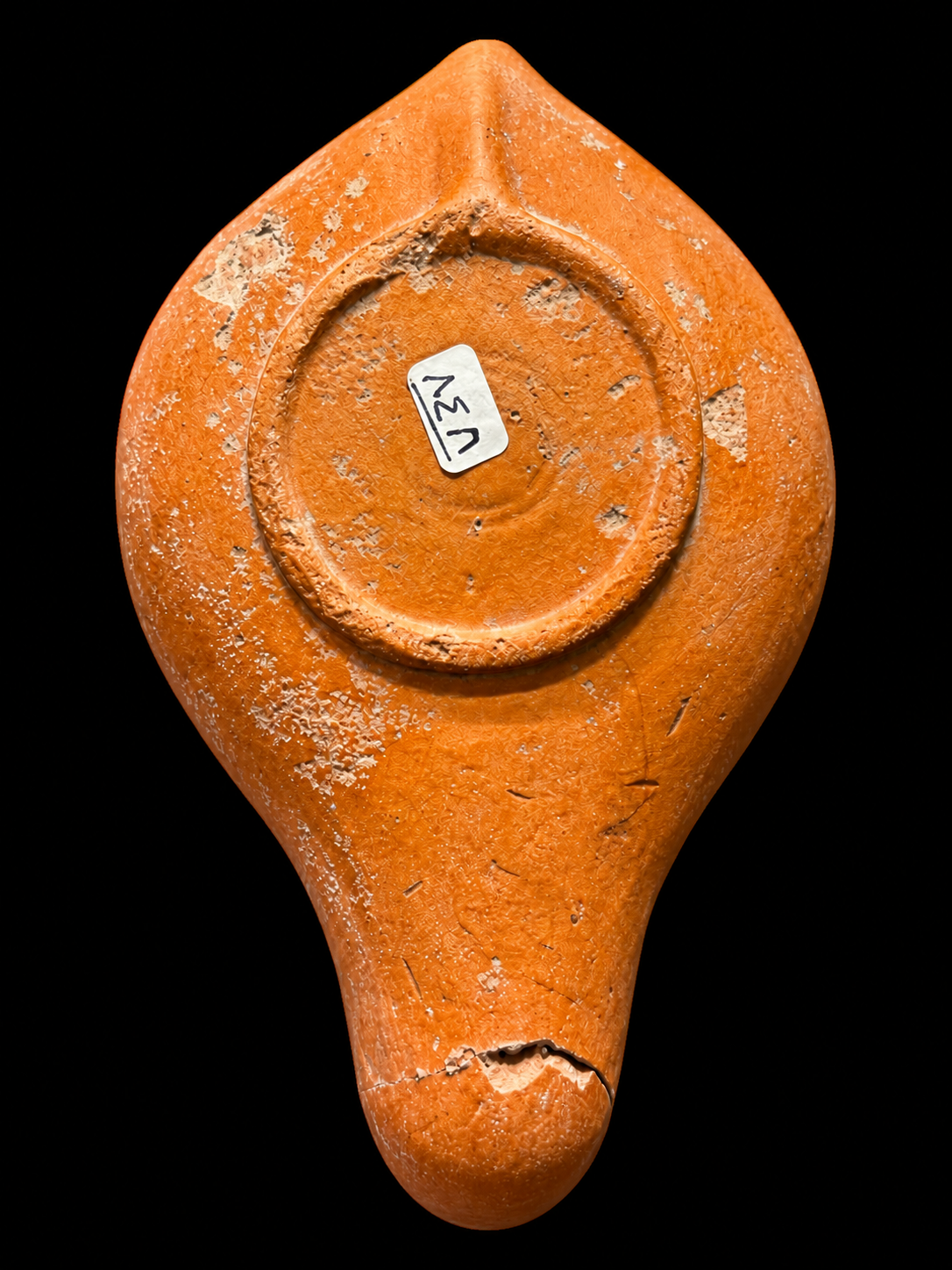
The underside is comparatively restrained, with a raised circular foot ring providing stability. This simplicity contrasts strongly with the sophisticated iconographic program of the upper surface and is characteristic of mold-made North African lamps of the period.
Significance
This is an exceptionally unusual example of Late Antique North African Christian ceramic art. Although African Red Slip lamps bearing Christian crosses are known, the combination of a monumental ornamented cross with an extensive sequence of medallions derived from the gold coinage of Theodosius II places this lamp within a particularly distinctive iconographic group.
The piece is significant simultaneously as a finely preserved example of African Red Slip manufacture, an important artifact of Early Christian material culture, and an extraordinary intersection of Christian, imperial and numismatic imagery during one of the most transformative periods of the Late Roman world.
Museum And Published References
J. Paul Getty Museum, Los Angeles — Inv. 83.AQ.377.270, Cat. No. 496. A particularly important comparison: a North African mold-made terracotta lamp decorated with a jeweled cross and alternating shoulder impressions derived from gold solidi commemorating the vicennalia of Theodosius II.
View the Getty Museum lamp — Inv. 83.AQ.377.270
Jean Bussière and Birgitta Lindros Wohl, Ancient Lamps in the J. Paul Getty Museum, J. Paul Getty Museum, Los Angeles, 2017. The Getty catalogue provides the specialist typological framework for this important group of North African lamps.
Ancient Lamps in the J. Paul Getty Museum
Getty — Full Published Catalogue PDF
Reference: Compare J. Paul Getty Museum, Los Angeles, inv. 83.AQ.377.270, cat. no. 496; Jean Bussière and Birgitta Lindros Wohl, Ancient Lamps in the J. Paul Getty Museum, Los Angeles: J. Paul Getty Museum, 2017.
REFERENCE #
OL-BZ-1026
CIVILIZATION
Late Roman / Early Byzantine, Circa AD 425–500
SIZE
L. 13.5 cm W. 8 cm
CONDITION
Exceptionally fine. The lamp is remarkably well preserved, retaining its original form, extensive red-slip surface and strongly defined molded decoration. The monumental central cross remains exceptionally clear, while the surrounding coin-derived medallions preserve substantial details of their original designs.
The end of the nozzle has been professionally repaired; otherwise, the lamp is intact and in outstanding condition.
PRICE
POR
PROVENANCE
Jerusalem Private Collection