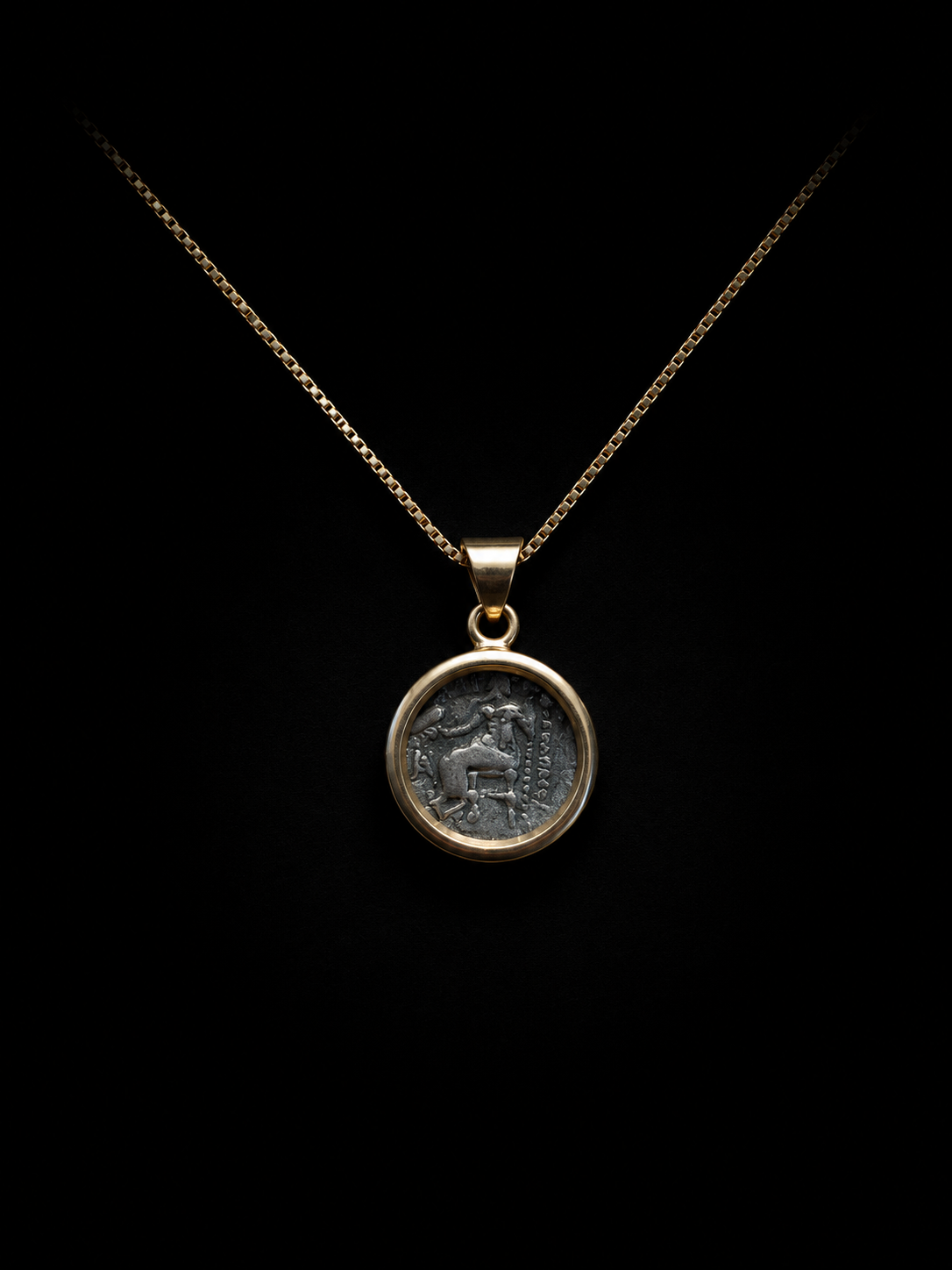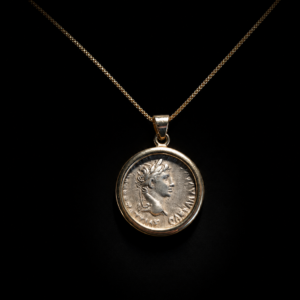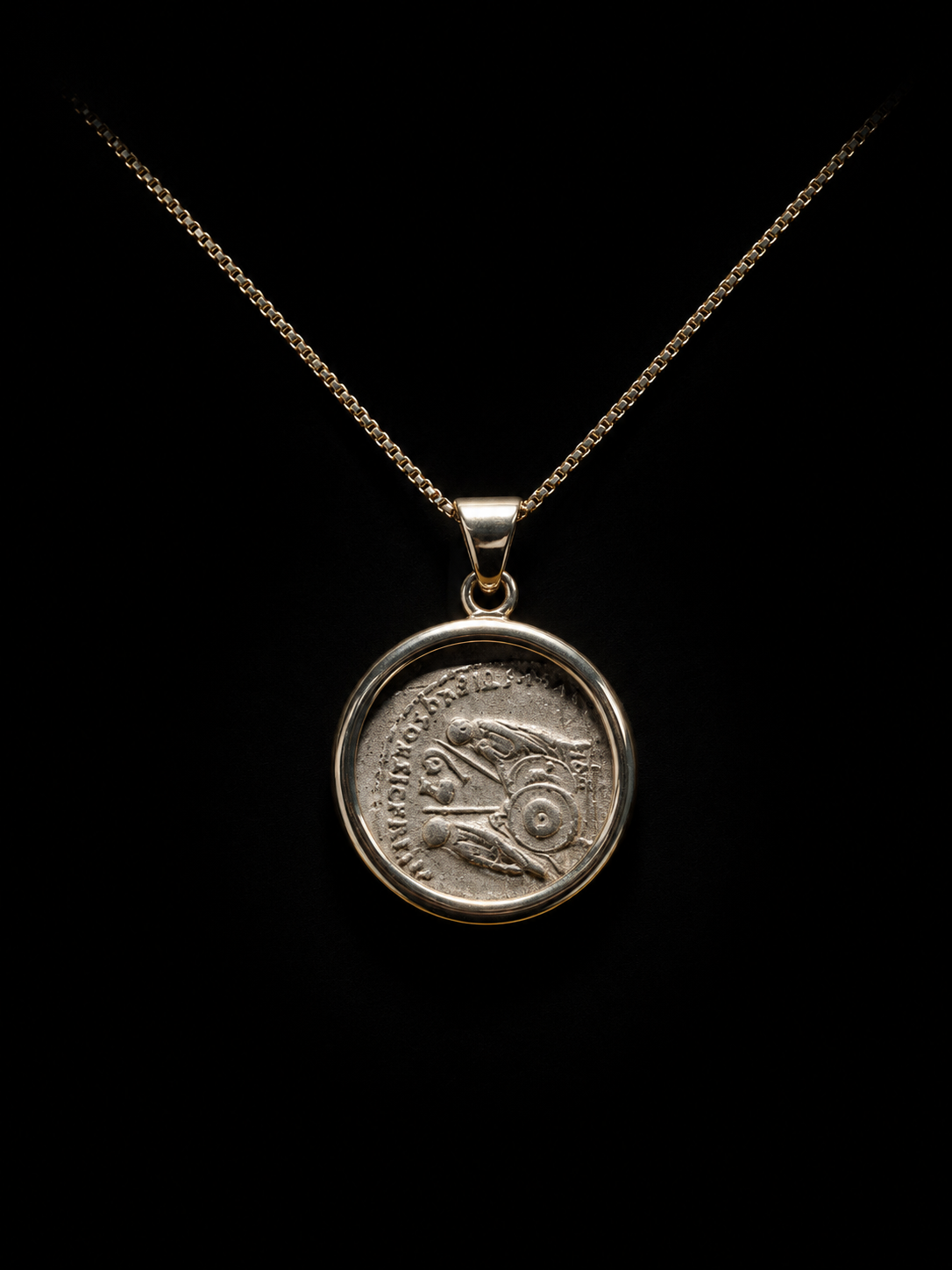
Alexander the Great Silver Tetradrachm with Heracles and Zeus
An impressive ancient Greek silver tetradrachm struck in the name of Alexander the Great, featuring the celebrated image of Heracles wearing the Nemean lion skin and Zeus Aëtophoros enthroned. The coin belongs to the influential Alexander-type silver coinage, which became one of the most widely recognized and enduring monetary systems of the ancient world.
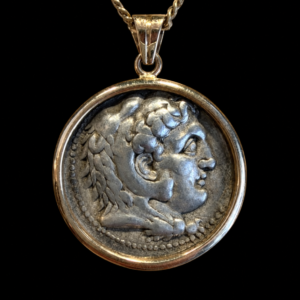
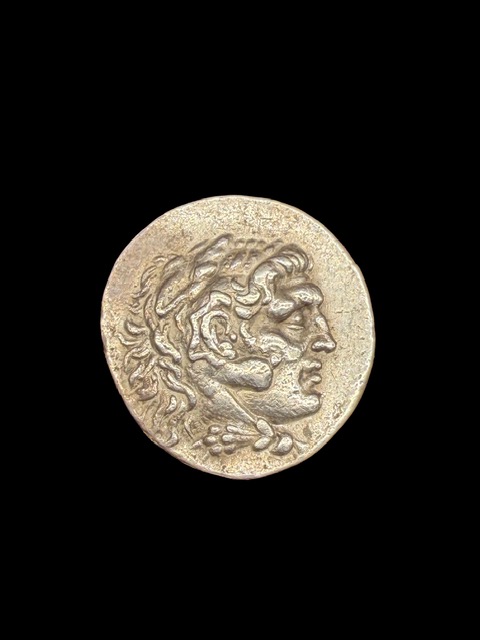
Obverse: A powerful and finely modelled head of Heracles facing right, wearing the skin of the Nemean lion, its jaws framing his forehead and its mane falling in deeply engraved, flowing locks behind his neck. The hero’s prominent brow, expressive eye, strong nose, and carefully articulated facial features demonstrate the accomplished portraiture characteristic of Hellenistic Greek coinage. Heracles was revered as the legendary ancestor of the Macedonian royal dynasty, symbolizing heroic strength, divine ancestry, and victorious kingship.
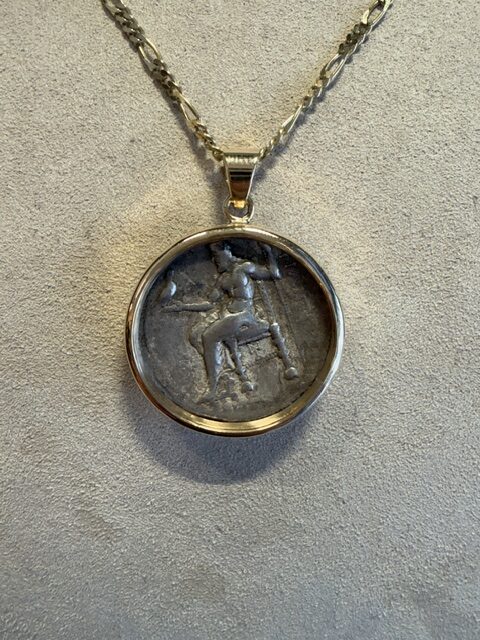
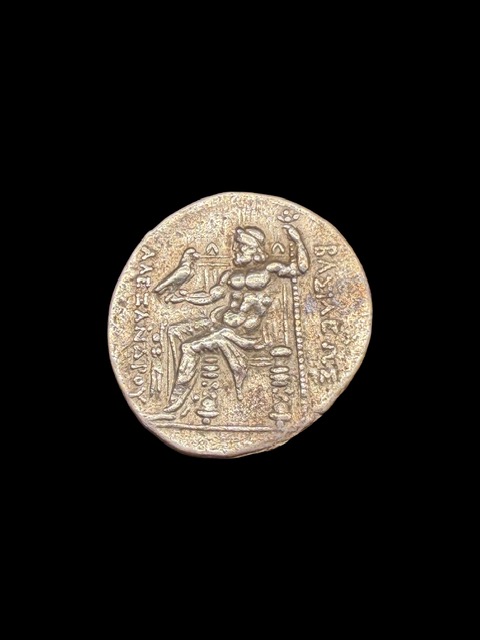
Reverse: Zeus Aëtophoros, supreme ruler of the Olympian gods, seated left upon an elaborate throne, holding an eagle upon his extended right hand and a long sceptre in his left. The throne is distinguished by its prominent architectural construction and carefully rendered decorative elements. The Greek inscription ΒΑΣΙΛΕΩΣ ΑΛΕΞΑΝΔΡΟΥ, meaning Of King Alexander, identifies the royal authority under whose name the coin was issued.
Historical Significance
Alexander the Great transformed the political and cultural landscape of the ancient world through his conquests, which extended from Greece and Egypt across the Persian Empire to the borders of India. His silver tetradrachms became an internationally accepted currency, facilitating commerce and economic exchange across his vast territories.
Following Alexander’s death in Babylon in 323 B.C., numerous successor kingdoms and independent Greek cities continued striking coins bearing his name and traditional imagery. These posthumous issues demonstrate the extraordinary prestige of Alexander’s monetary system and the lasting influence of his royal authority throughout the Hellenistic world.
Artistic and Numismatic Importance
The pairing of Heracles and Zeus embodies the fundamental religious and political symbolism of Alexander’s coinage. Heracles represented heroic achievement and the divine ancestry claimed by the Macedonian kings, while Zeus symbolized supreme authority, sovereignty, and divine protection.
The present example is distinguished by its expressive portrait of Heracles, deeply engraved lion-skin details, and carefully articulated representation of Zeus upon an imposing, elaborately decorated throne. The balanced composition and substantial relief reflect the artistic sophistication of ancient Greek silver coinage.
REFERENCE #
CS549
CIVILIZATION
Ancient Greek, Hellenistic Period, Posthumous Issue
CONDITION
Attractive ancient silver surfaces with age-related toning and evidence of circulation. The principal designs remain well defined, with a particularly expressive portrait of Heracles and clearly recognizable reverse imagery.
PRICE
$2500
PROVENANCE
Found in Judea
Frequently Asked Questions
The obverse features a finely modelled head of Heracles wearing the Nemean lion skin, symbolizing heroic strength and divine ancestry. The reverse shows Zeus Aëtophoros seated on an elaborate throne, holding an eagle and a sceptre, with the Greek inscription identifying King Alexander's authority.
Heracles was revered as the legendary ancestor of the Macedonian royal dynasty, symbolizing heroic strength, divine ancestry, and victorious kingship. His image reinforced Alexander's claim to divine heritage and heroic status, which was important for legitimizing his rule.
Alexander's silver tetradrachms became an internationally accepted currency that facilitated commerce across his vast empire, which stretched from Greece to India. After his death, successor kingdoms continued issuing coins with his name and imagery, highlighting the lasting prestige of his monetary system.
The coin exhibits accomplished portraiture with expressive facial features, deeply engraved details like the lion skin, and a balanced composition. The substantial relief and elaborate throne design on the reverse demonstrate the artistic sophistication typical of Hellenistic silver coinage.
The Greek inscription ΒΑΣΙΛΕΩΣ ΑΛΕΞΑΝΔΡΟΥ translates to 'Of King Alexander,' indicating the royal authority under whose name the coin was issued and affirming its official status as currency during Alexander's reign.
This coin was found in Judea and features attractive ancient silver surfaces with age-related toning and signs of circulation. Despite wear, the principal designs remain well defined, including an expressive portrait of Heracles and clearly recognizable reverse imagery.
Successor kingdoms and independent Greek cities continued striking coins with Alexander's name and imagery to capitalize on the extraordinary prestige and widespread recognition of his monetary system, which helped legitimize their own authority and maintain economic stability.
Related products
-
PHOENICIAN SILVER TYRE SHEKEL
-
Silver Drachma of Alexander the Great Set in Gold
-
Silver Coin of Augustus Set in Gold
-
Ancient Greek Silver Tetradrachm of Alexander the Great Set in 18K Gold