A Rare Sidonian Cobalt-Blue Mold-Blown Pentagonal Glass Juglet

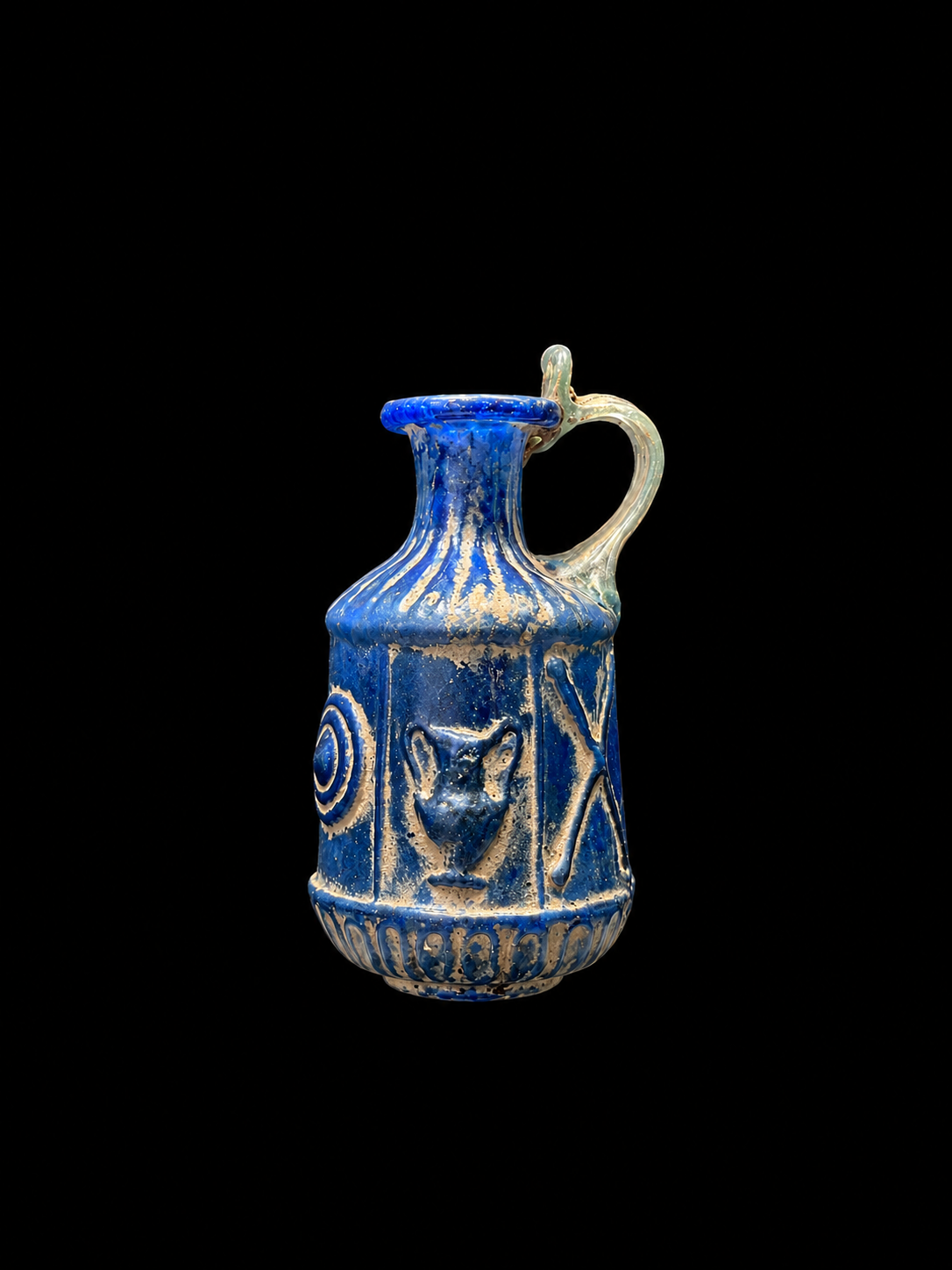
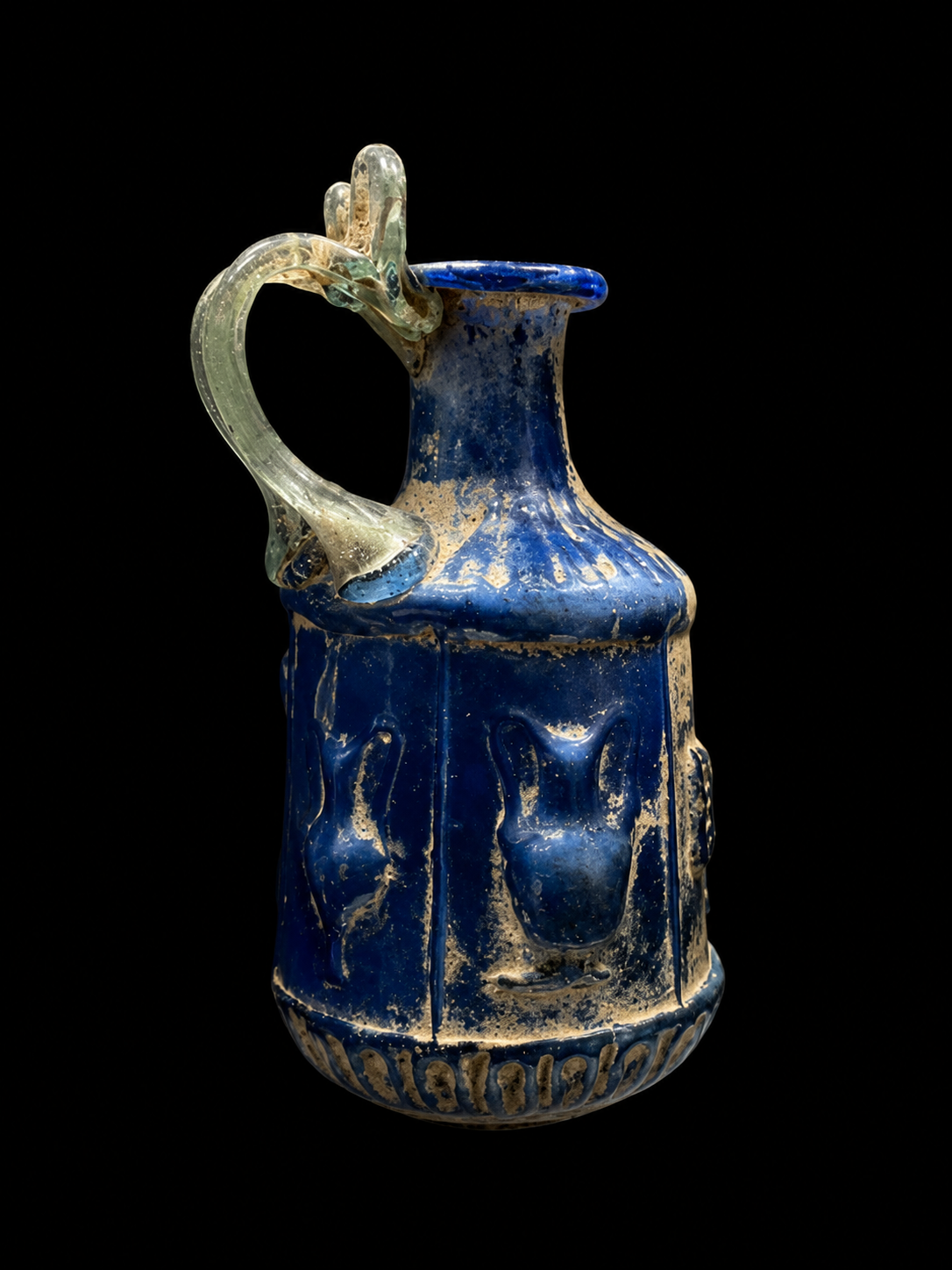
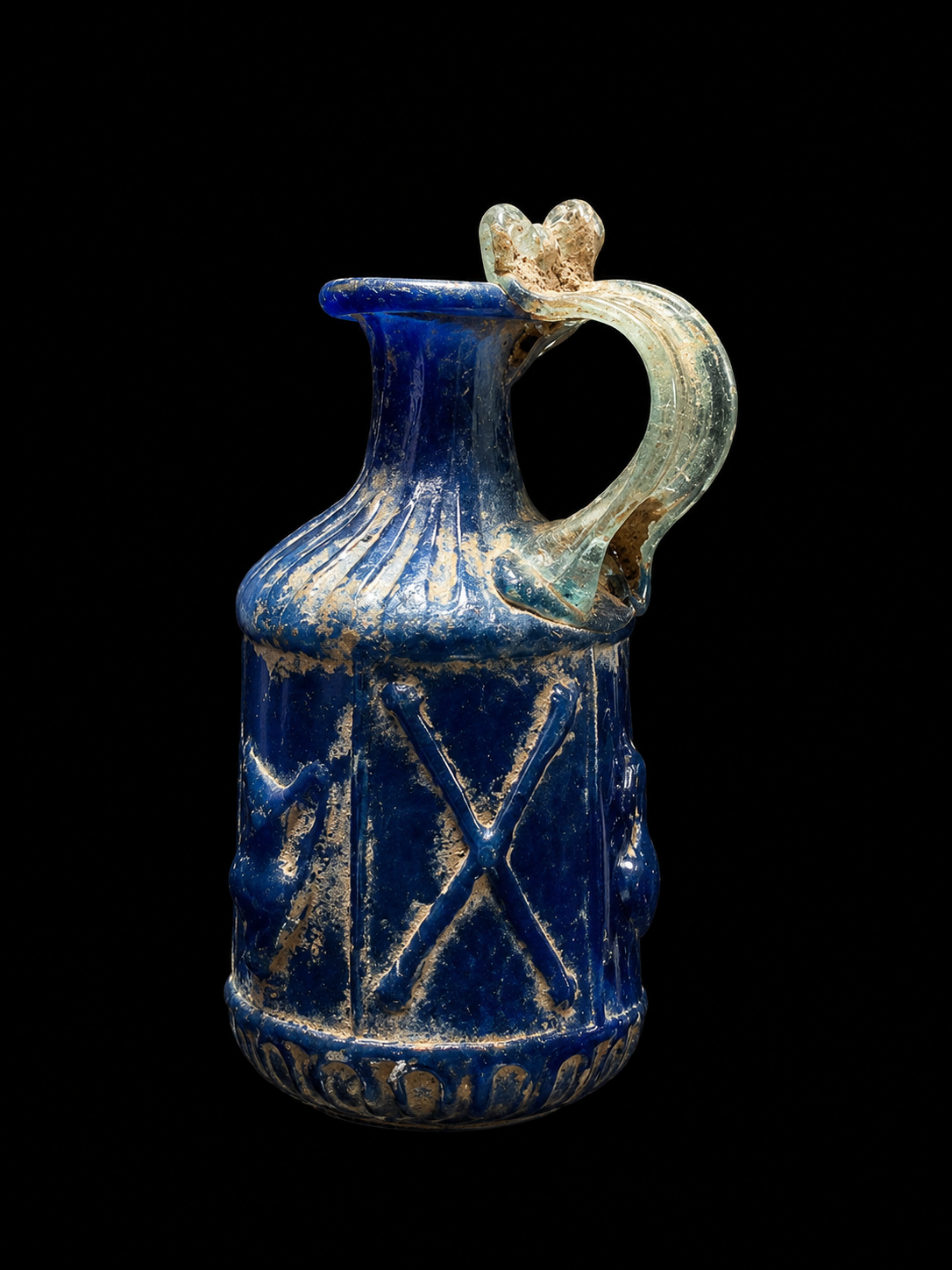
An exceptionally fine Sidonian mold-blown glass juglet, produced on the Phoenician coast during the 1st century CE. The vessel is distinguished by its rich cobalt-blue glass, elaborate relief decoration, and separately applied translucent pale blue-green handle, creating a striking contrast of color characteristic of sophisticated early Roman glass production.

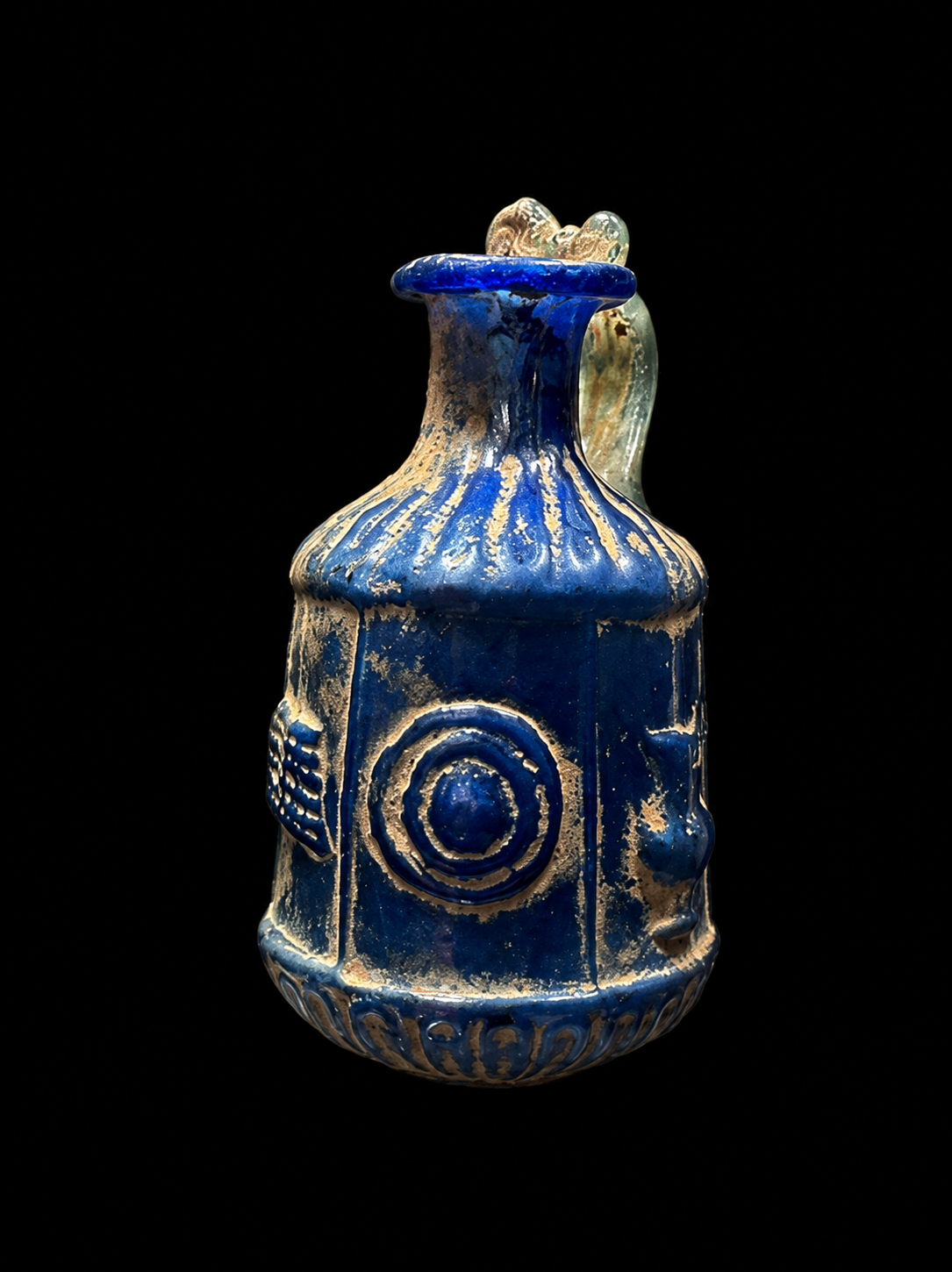
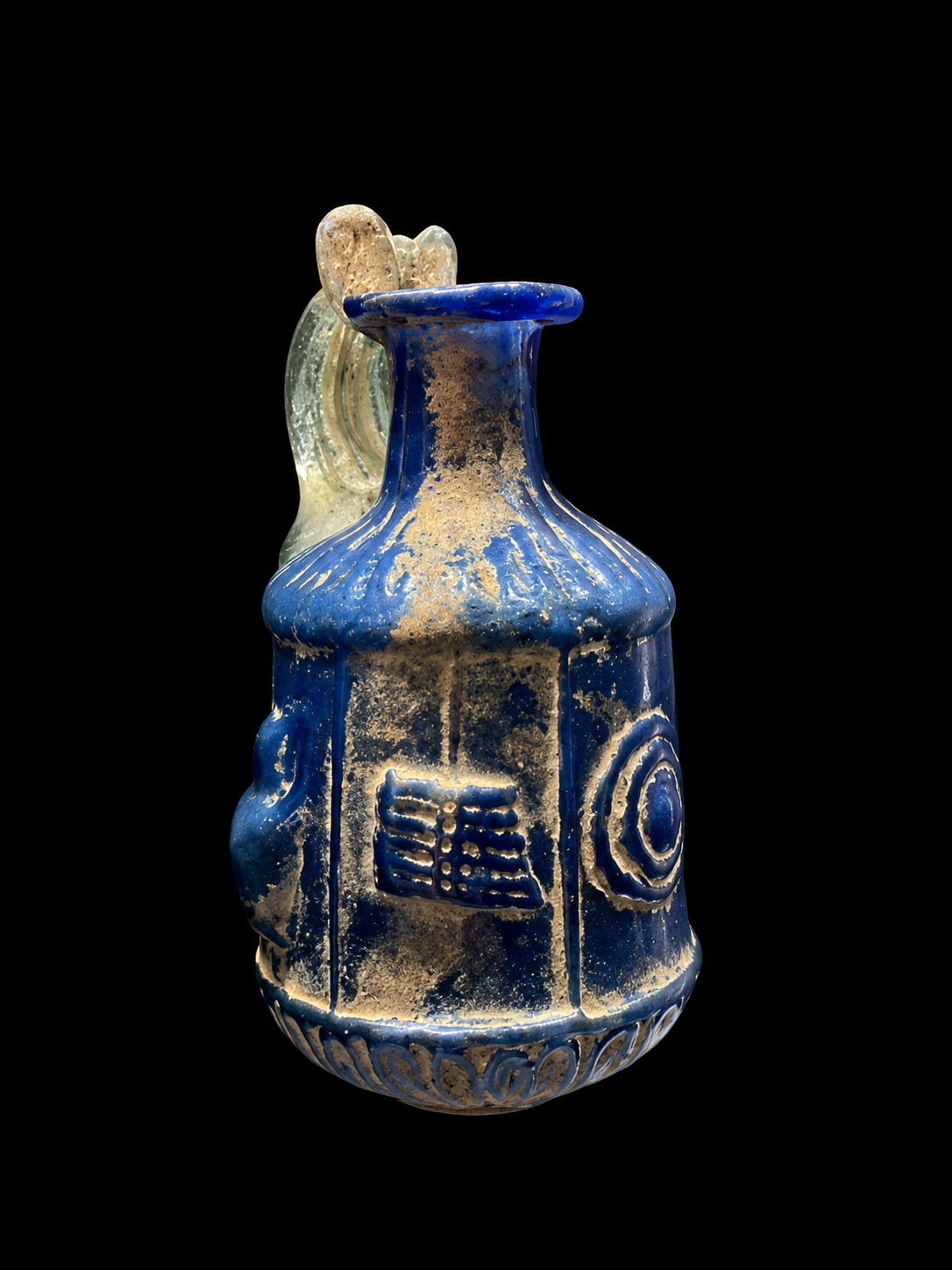
The vessel was formed in a multi-part mold with a pentagonal body, pronounced rounded shoulder, cylindrical neck, and thick folded rim. The shoulder is ornamented with a series of radiating vertical ribs that descend from the neck, while the base is encircled by a continuous molded decorative border. A substantial ribbed loop handle rises elegantly from the shoulder to the rim, terminating above the mouth in projecting thumb-rest-like extensions.

The body is divided by vertical ribs into five distinct decorative panels, each containing an individually molded motif in high relief. Among the surviving designs are a bird, a prominent concentric circular device, a pair of crossed objects, a rectangular ribbed element, and additional stylized emblems. The arrangement of separate symbols within architectural panels is characteristic of a distinctive group of luxury mold-blown vessels associated with the Phoenician coast.

The intense cobalt-blue glass dramatically emphasizes the molded decoration, while the contrasting pale handle adds considerable visual distinction. Areas of ancient weathering and earthen encrustation remain across the surface, particularly within the recessed areas of the relief, enhancing the definition of the individual motifs and preserving evidence of the vessel’s antiquity.

Sidonian Glass and the Phoenician Tradition

During the early Roman Imperial period, the cities of the Phoenician coast—particularly Sidon—were among the most celebrated centers of ancient glass production. Craftsmen working in this region played an important role in the development and refinement of mold-blown glass, using multipart molds to create vessels decorated with elaborate relief designs.

The present juglet belongs to this important tradition. Its pentagonal construction allowed each face of the vessel to carry an independent decorative composition, transforming a small utilitarian container into a highly sophisticated ornamental object. Such vessels demonstrate both the technical ingenuity and artistic imagination of the glassmakers working along the Syro-Phoenician coast during the 1st century CE.

The combination of deep cobalt-blue glass, contrasting translucent handle, molded symbolic decoration, fluted shoulder and carefully articulated base makes the present example particularly striking.

Published Parallels

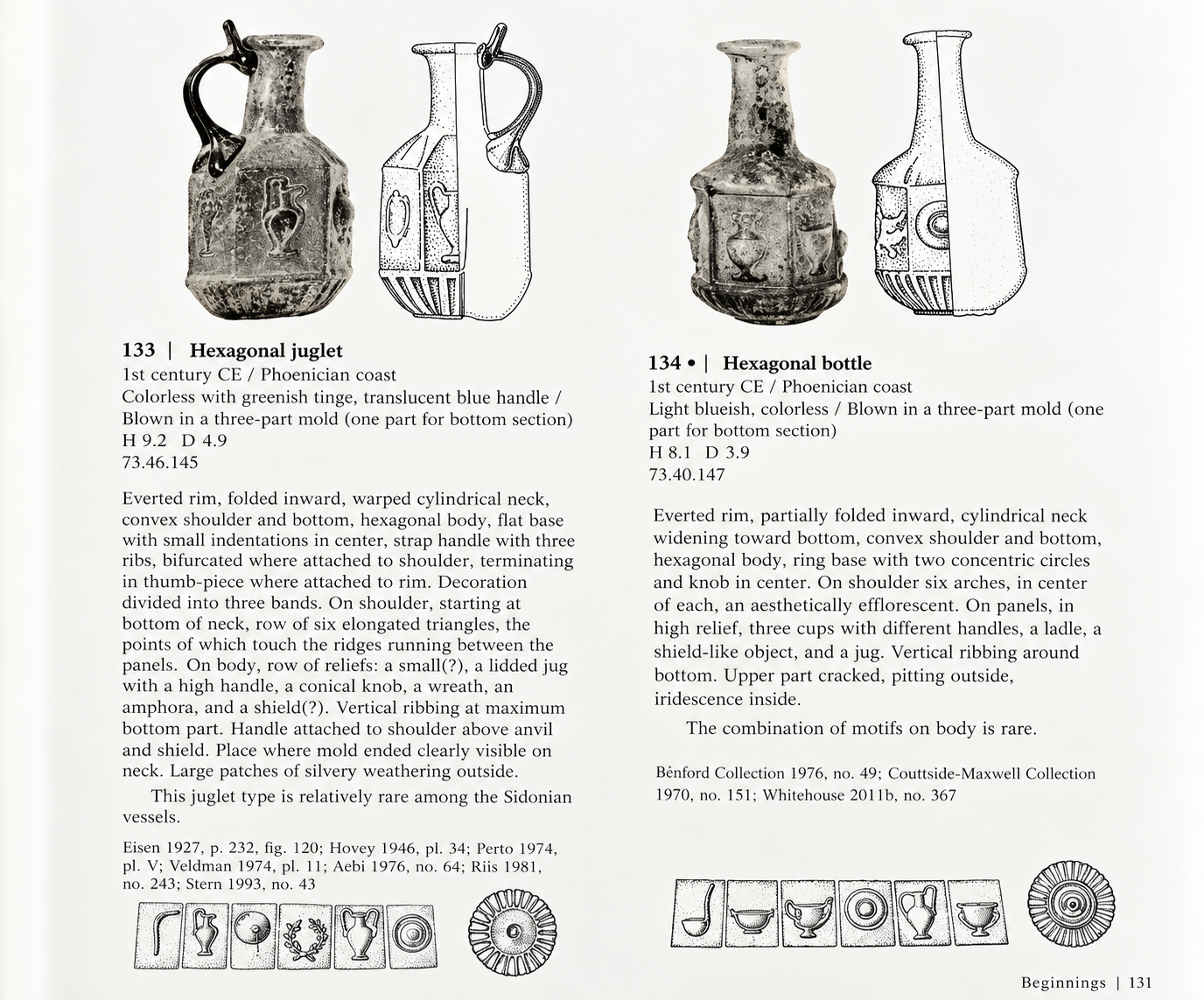
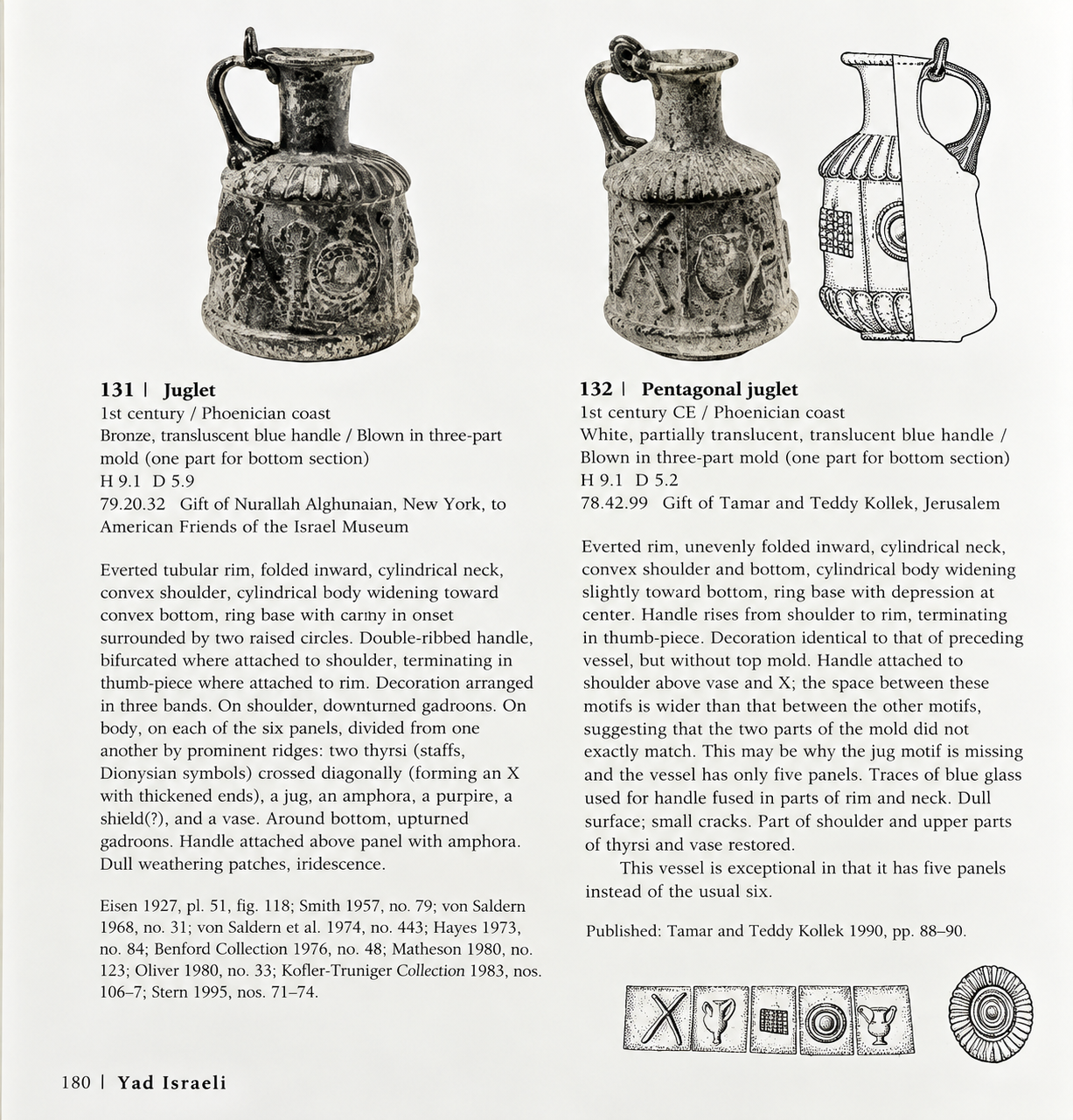
Close parallels are published by Yael Israeli in Ancient Glass in the Israel Museum: The Eliahu Dobkin Collection and Other Gifts, particularly catalogue nos. 132 and 133, both identified as 1st-century CE vessels from the Phoenician coast.

These published pentagonal juglets exhibit closely related construction and decoration, including cylindrical necks with folded rims, convex shoulders, contrasting applied handles, molded shoulder ornament, individually framed panels containing different relief motifs, and decorative bands surrounding the base.

The close relationship between the present vessel and these published examples firmly places it within the distinctive tradition of Phoenician mold-blown glass production of the 1st century CE.

Reference

Yael Israeli, Ancient Glass in the Israel Museum: The Eliahu Dobkin Collection and Other Gifts, Israel Museum, Jerusalem, pp. 130–131, particularly catalogue nos. 132–133.


Categories: ,

Description

REFERENCE #

GL-RM-1070

CIVILIZATION

Phoenician Coast Sidonian. 1st century CE

SIZE

H. 10.5 cm

CONDITION

Condition

Remarkably well preserved for an ancient mold-blown glass vessel of this elaborate form. The body, neck, rim, applied handle and principal relief decoration survive substantially intact. Areas of ancient surface weathering, iridescence and earthen encrustation are present, consistent with age and burial. The rich cobalt-blue coloration remains exceptionally strong, and the principal molded motifs retain excellent definition.

An exceptionally decorative and rare example of Sidonian mold-blown glass, combining brilliant cobalt coloration, contrasting applied glass, sophisticated multipart-mold construction and a remarkable sequence of individually modeled relief motifs—an accomplished product of the celebrated glassmaking tradition of the Phoenician coast during the 1st century CE.

PRICE

$16000

PROVENANCE

Private Jerusalem Collection

Frequently Asked Questions

The juglet was produced in the renowned workshops of Sidon during the early Roman period, specifically in the 1st century AD. Sidonian glassmakers were famous for their technical innovation and elegant designs, making this piece a fine example of their craftsmanship.

The juglet features a deep cobalt-blue glass body with a pale translucent blue-green applied handle. This color contrast is characteristic of fine Sidonian glass and highlights the vessel's aesthetic appeal.

The body of the juglet is divided into vertical panels decorated with molded motifs such as concentric roundels, crossed X-shaped ornaments, amphora-like forms, and other stylized emblems. Additionally, a band of repeating leaf decoration encircles the base, and finely ribbed fluting adorns the shoulder.

The juglet measures 10.5 cm in height and is in perfect condition, making it a rare and well-preserved example of Roman Sidonian glassware.

This juglet closely follows the celebrated Sidonian mold-blown vessels documented by Yael Israeli in 'Ancient Glass in the Israel Museum.' It represents one of the finest achievements of Roman glassmaking, combining technical innovation with elegant design typical of Sidonian workshops.

The juglet comes from a private Jerusalem collection and is priced at $16,000, reflecting its rarity, condition, and historical significance as a Sidonian Roman glass artifact.