Ancient Greek Gold Stater of Alexander the Great

Category:

Description

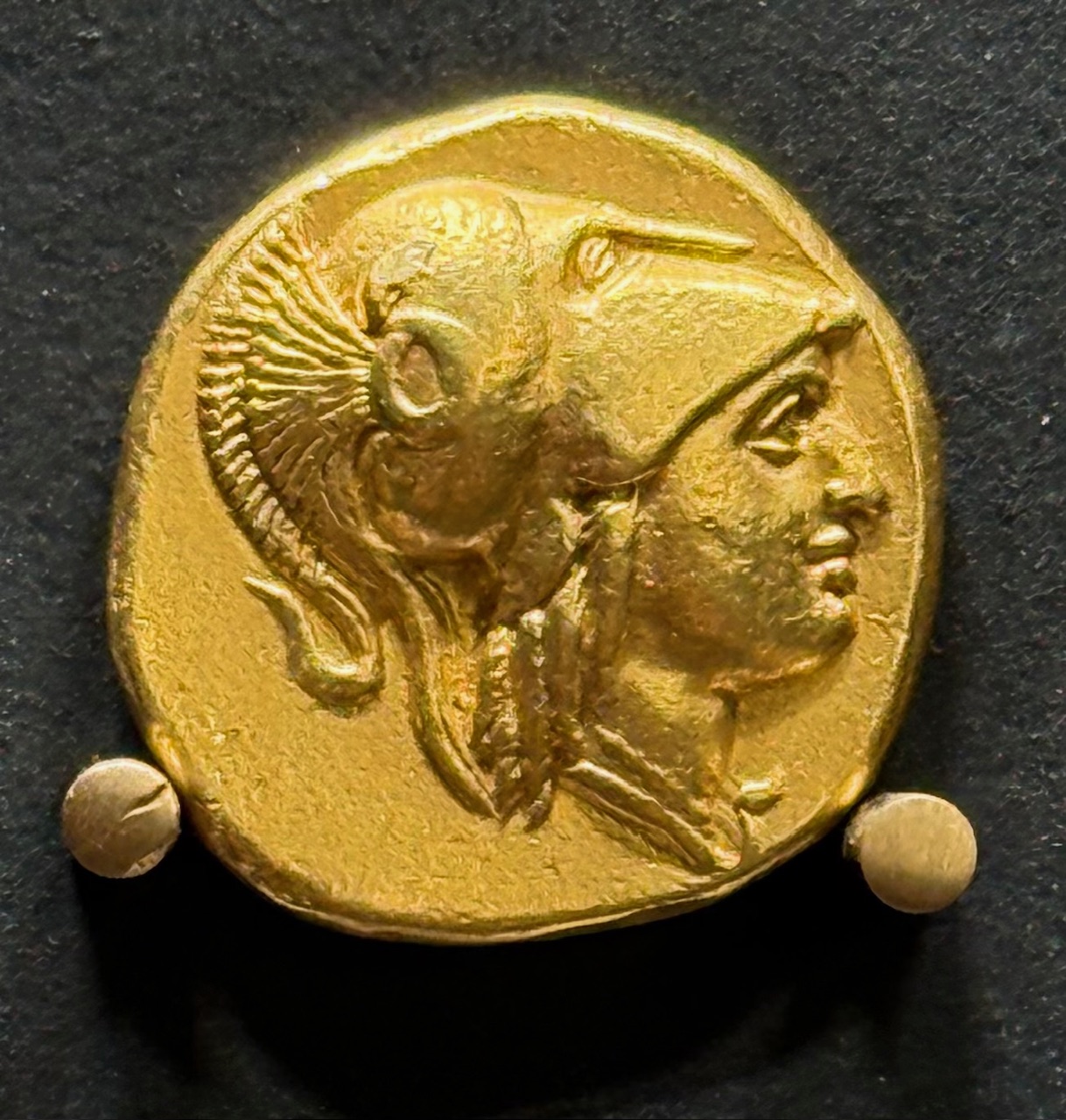
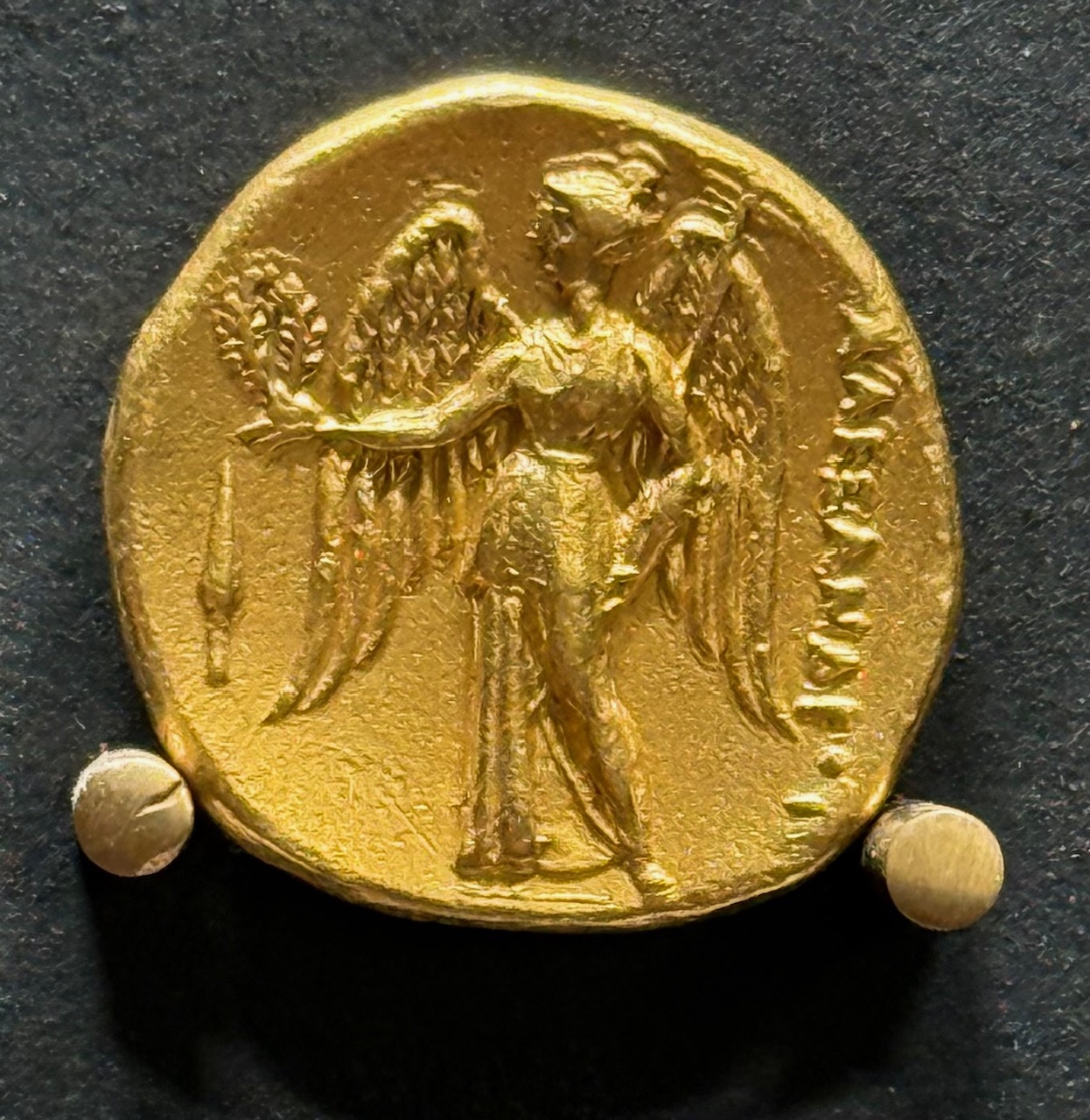
An exceptional ancient Greek gold stater issued in the name of Alexander III of Macedon, universally known as Alexander the Great (336–323 B.C.E.), one of history’s most extraordinary military commanders and influential rulers. This celebrated coin type represents the immense wealth, military supremacy, and artistic refinement of the Macedonian Empire, whose conquests transformed the ancient world and laid the foundations of Hellenistic civilization.

The obverse depicts Athena, the Greek goddess of wisdom, warfare, and strategic victory, facing right and wearing an elaborate Corinthian helmet adorned with a coiled serpent. The goddess, revered as a divine protector of warriors and cities, embodies the military strength, intelligence, and divine favor associated with Alexander’s remarkable campaigns.

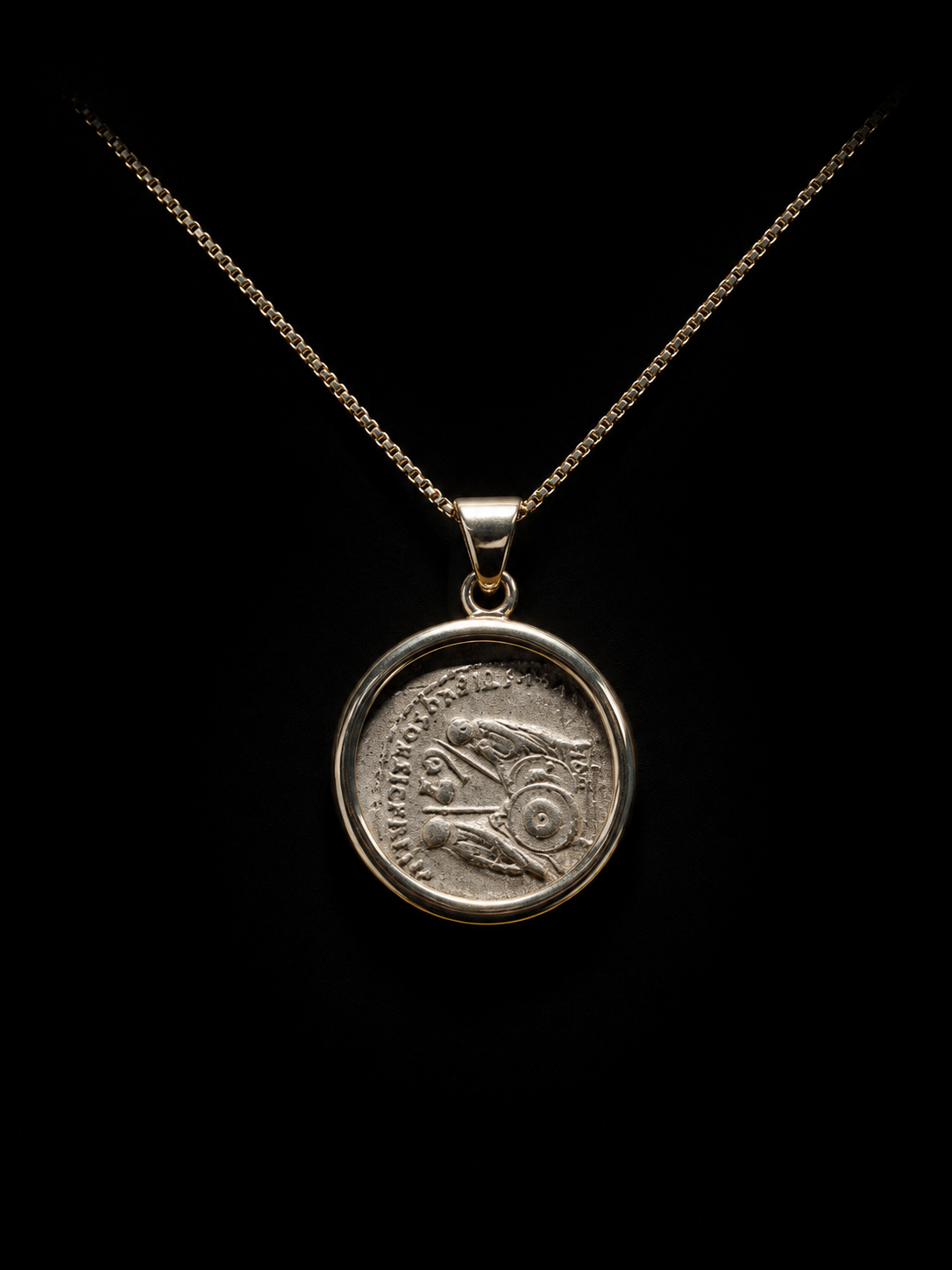
The reverse features Nike, the winged goddess of Victory, standing with her wings extended. In her outstretched right hand, she holds a laurel wreath, symbolizing triumph, honor, and military glory, while her left hand carries a stylis, a naval staff representing maritime command and victory at sea. The composition is accompanied by the royal inscription ΑΛΕΞΑΝΔΡΟΥ (ALEXANDROU), meaning “Of Alexander,” proclaiming the authority of the Macedonian king.

Gold staters of this distinguished type were introduced during Alexander’s reign and continued to be struck by his successors following his death in Babylon in 323 B.C.E. Issued across the extensive territories of the Macedonian Empire, these prestigious gold coins facilitated international commerce, military payments, and the consolidation of royal authority. Their distinctive imagery became among the most recognizable symbols of Macedonian power throughout the ancient Mediterranean and Near East.

The remarkable artistic quality and enduring historical importance of these coins reflect the extraordinary achievements of Alexander, whose empire extended from Greece and Egypt through Persia and into northwestern India. His conquests initiated a profound exchange of Greek and Eastern cultures, shaping the development of art, architecture, philosophy, and political institutions for centuries.

A magnificent example of ancient Greek numismatic artistry, this gold stater stands as a tangible testament to the grandeur of the Macedonian Empire and the enduring legacy of Alexander the Great, whose name remains synonymous with conquest, ambition, and extraordinary achievement.

Historical and Numismatic References

  • Price, Martin J. The Coinage in the Name of Alexander the Great and Philip Arrhidaeus: A British Museum Catalogue. Zurich and London, 1991.
  • Thompson, Margaret. Alexander’s Drachm Mints. American Numismatic Society, 1983. General comparative reference for Alexander’s coinage.
  • British Museum, London. Comparative examples of gold staters issued in the name of Alexander III of Macedon.

REFERENCE #

CO-GR-1007

CIVILIZATION

Ancient Greek, Macedonian Kingdom (336–323 B.C.E.)

CONDITION

Mint condition

PRICE

Por

PROVENANCE

Jerusalem Private Collection

Frequently Asked Questions

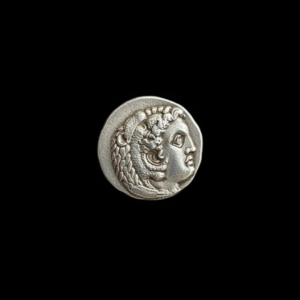
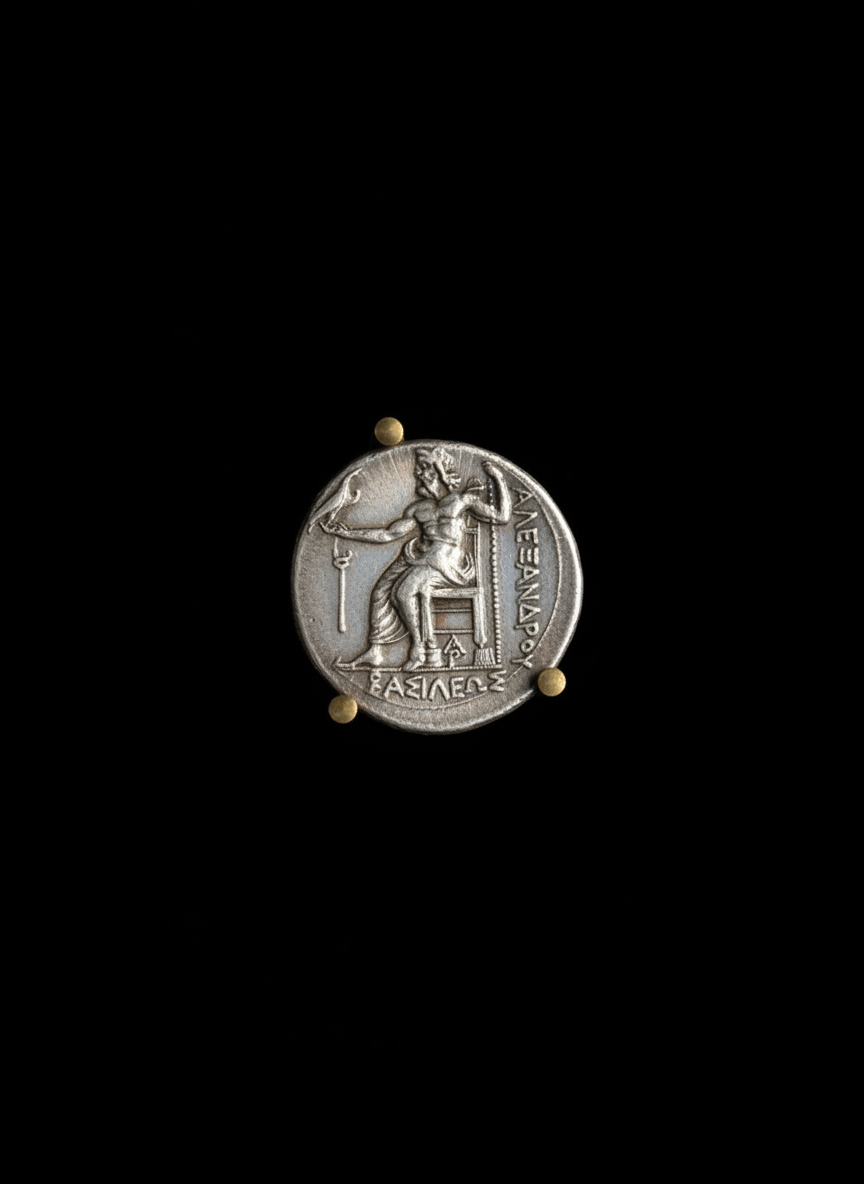
The obverse of the tetradrachm features the head of Herakles in profile, crowned with the pelt of the Nemean lion, while the reverse typically shows Zeus enthroned, holding an eagle and scepter, accompanied by the legend ΑΛΕΞΑΝΔΡΟΥ (of Alexander).

The tetradrachm was primarily used for fiscal and military purposes, especially to pay Alexander's vast army during his conquests. It also served as a symbol of royal legitimacy by pairing Herakles with Zeus to assert Alexander's divine and heroic lineage.

The tetradrachm maintained its status due to its trusted weight and purity, which allowed it to circulate seamlessly across the Greek world and territories conquered by Alexander. Its consistent standard made it a reliable currency for trade and military payments for over a century after Alexander's death.

Much of the bullion used to strike the tetradrachms was seized from Persian treasuries at Susa, Persepolis, and Babylon, linking the coinage directly to Alexander's military victories and the wealth acquired through his conquests.

Dates and mints are typically attributed through examining mint marks, monograms, and stylistic details on the reverse side of the coin. These features help numismatists distinguish between different issues produced over more than a century.

The tetradrachm described is in mint condition, indicating it has strong relief and detailed die-cutting with minimal wear, consistent with genuine ancient circulation.

The tetradrachm is associated with Macedonia during the period circa 336 BCE to 65 BCE, spanning from Alexander's reign through the Hellenistic period when his successors continued minting the coin.