Description
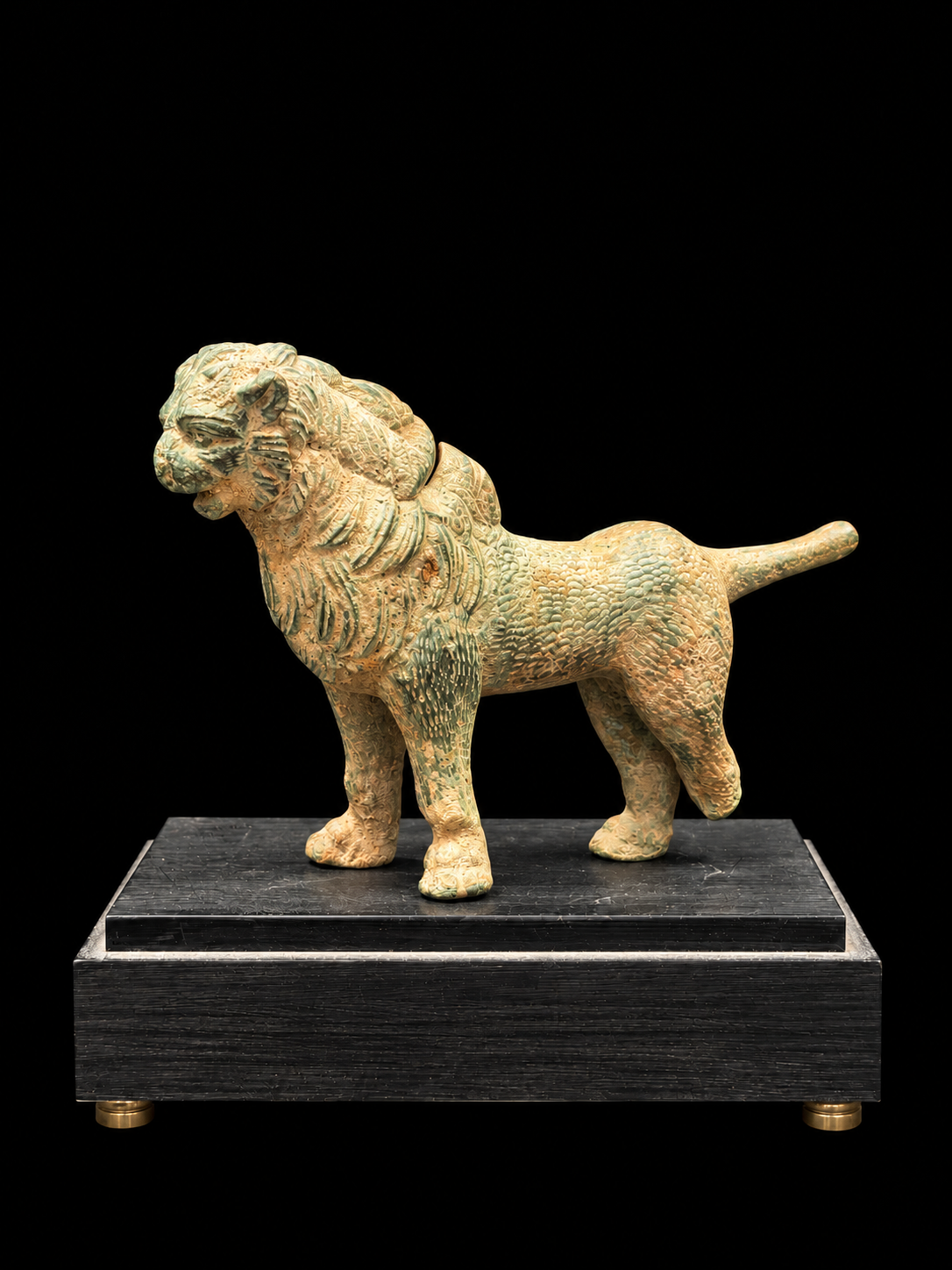
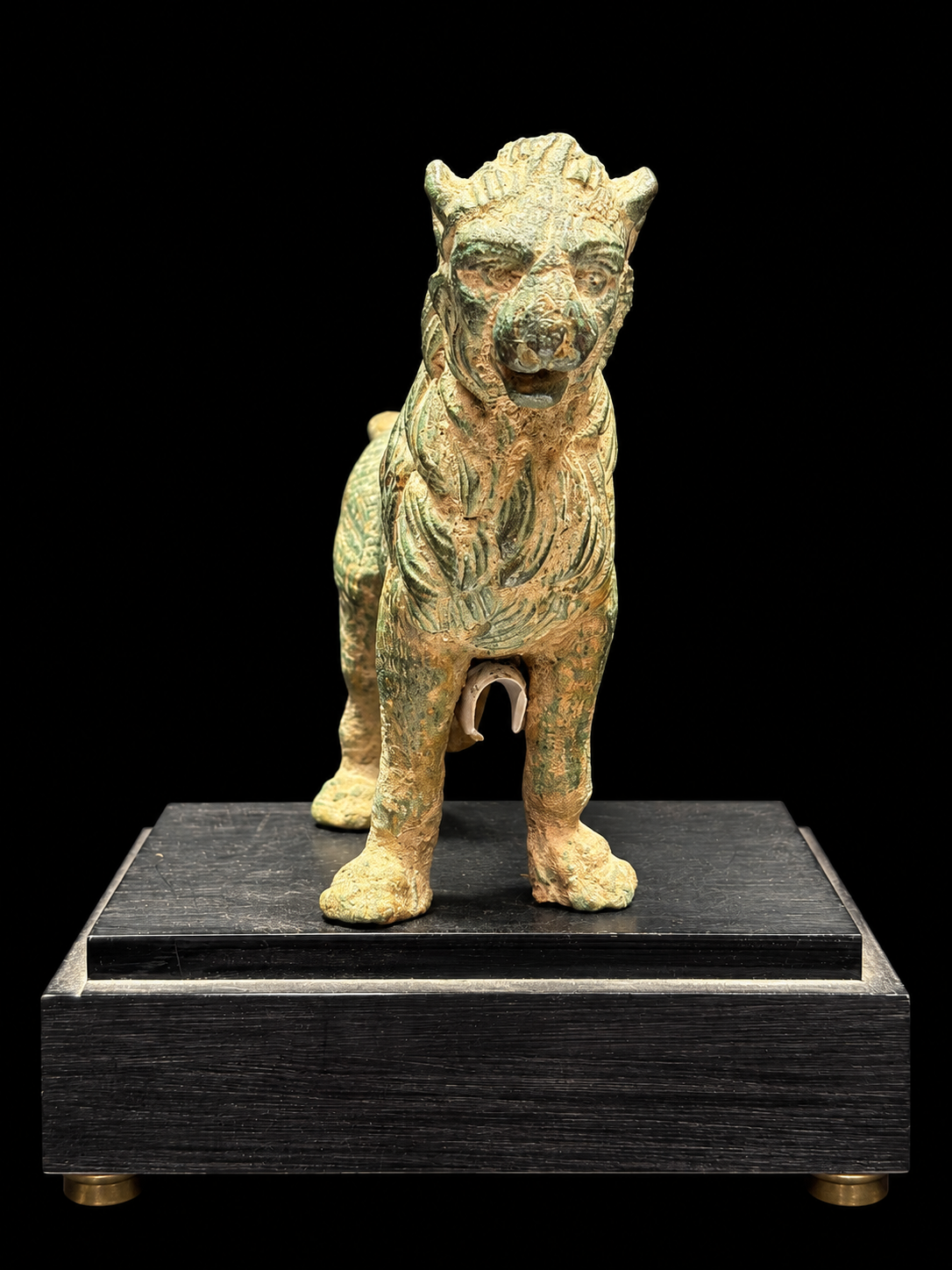
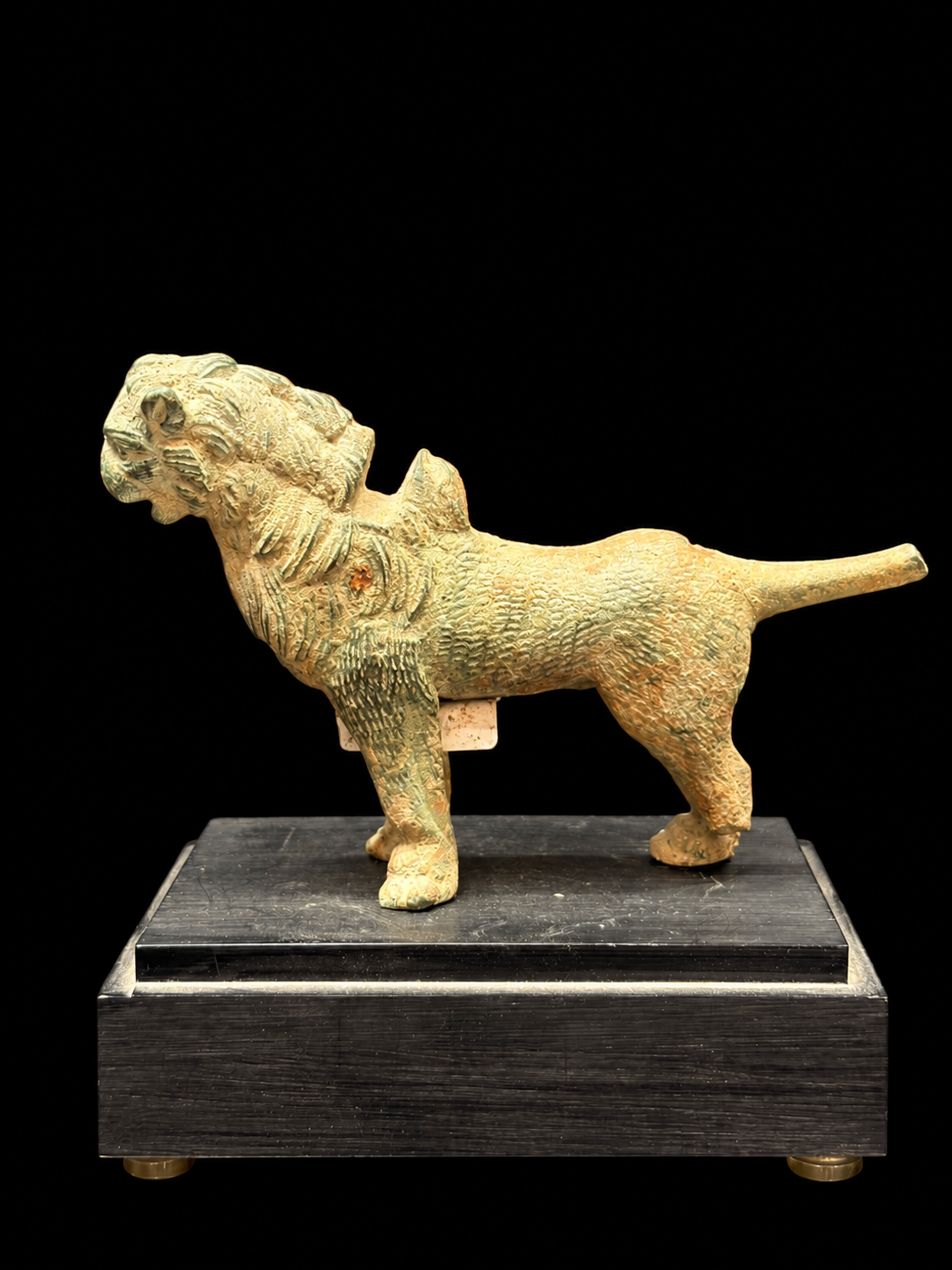
An impressive medieval cast-bronze figure of a standing lion, powerfully modeled with an imposing head, open mouth, prominent eyes and a luxuriant mane extending across the neck and chest. The animal stands firmly on four legs, its elongated body terminating in a long projecting tail, creating a commanding and highly sculptural silhouette.
Particularly remarkable is the extensive treatment of the surface. The mane is rendered through deeply incised and overlapping locks, while the body is covered with dense punched and engraved markings intended to suggest the animal’s coat. The face is deliberately expressive rather than naturalistic, with strongly defined brows, pointed ears, broad muzzle and open jaws. This combination of stylization and intricate surface ornament is characteristic of the decorative vocabulary encountered in medieval metalwork.
The figure possesses the combination of strength and abstraction characteristic of medieval representations of exotic animals. European and Mediterranean artists rarely encountered lions directly; consequently, their representations frequently combined inherited Classical imagery with artistic convention and imagination. The result was a powerful symbolic creature rather than a strictly anatomical study.
The Lion in Medieval Art
Throughout the medieval world, the lion was among the most potent and recognizable animal symbols. Celebrated for its perceived courage and strength, it became an emblem of royal authority, nobility, power and protection. Within Christian symbolism the lion could additionally carry associations with Christ, resurrection and spiritual triumph, although such a specific religious meaning cannot be established for the present figure without knowing its original context.
Lions were consequently represented across medieval art in sculpture, manuscripts, architectural decoration and metalwork. They were particularly suited to prestigious bronze objects, where their imposing forms could serve both decorative and functional purposes.
Medieval Bronze Tradition
The figure belongs stylistically to the broad tradition of medieval zoomorphic copper-alloy sculpture, which flourished across Europe and the Mediterranean during the Romanesque and High Medieval periods. Lions were especially favored for aquamanilia, vessels, furniture fittings, architectural elements and independent decorative bronzes.
The pronounced mane, patterned body, rigid yet powerful stance and deliberately expressive facial features of the present example are consistent with this medieval artistic vocabulary.
The exact original function remains uncertain. The projection preserved on the animal’s back suggests that the figure may originally have incorporated an attachment or functional element, although its purpose cannot be determined from the surviving form alone. It is therefore preferable to describe the object simply as a bronze lion rather than identify it definitively as an aquamanile or vessel.
REFERENCE #
SI_RM_1112
CIVILIZATION
Medieval, circa 11th–13th century AD.
SIZE
H. 7.5 cm, W. 11 cm
CONDITION
The figure is well preserved overall, retaining the head, body, extensive mane, tail and much of its finely incised surface decoration. The rear left leg is missing. There is additional age-related surface wear and minor losses consistent with antiquity.
The bronze retains an extensive archaeological patina, with areas of green and blue-green copper corrosion, reddish-brown tones, and substantial pale earthen and mineral accretions. These deposits are particularly pronounced within the deeply worked mane and textured body, accentuating the surviving decoration.
PRICE
$1500
PROVENANCE
Baidun private collection