Description
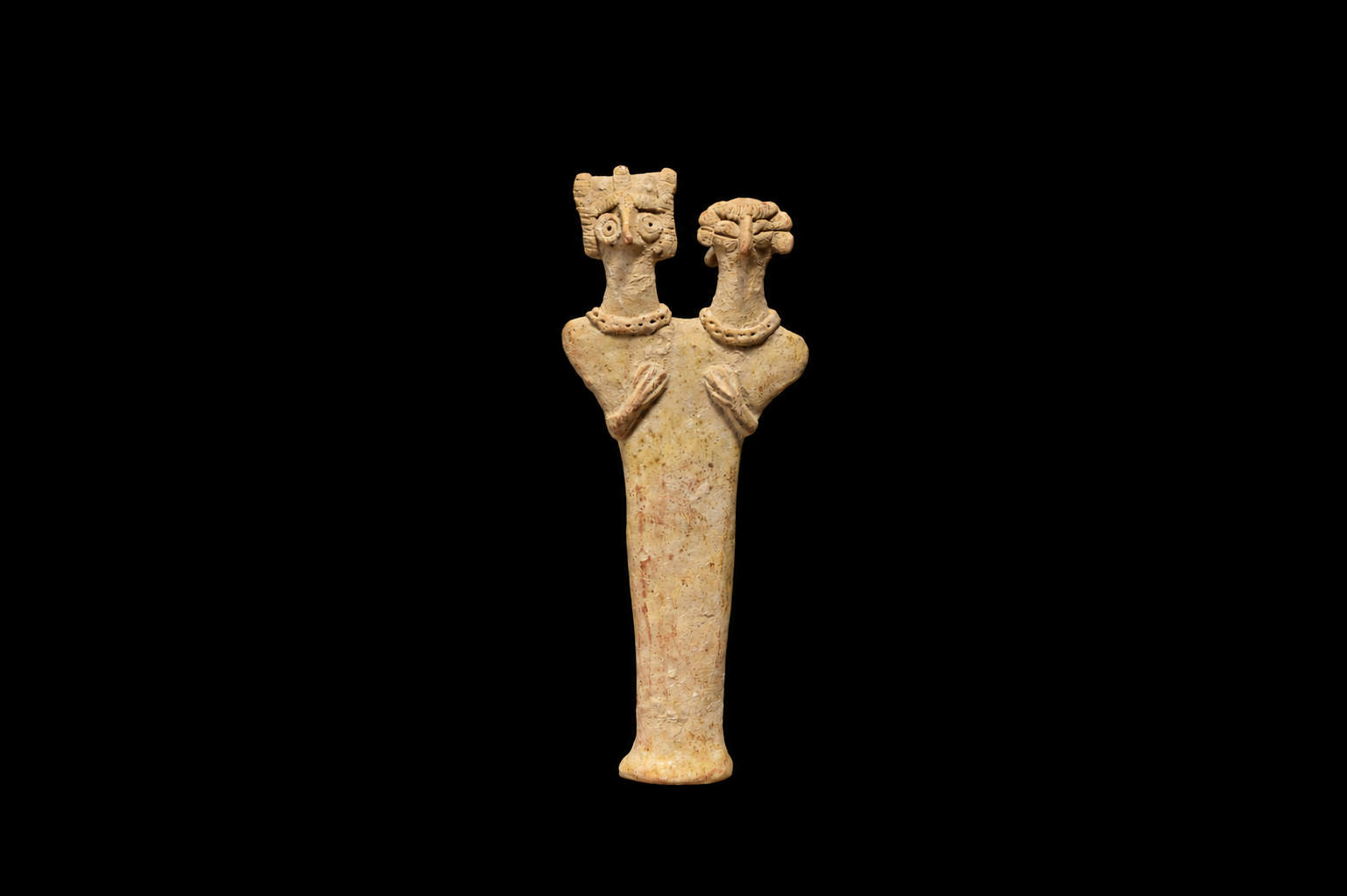
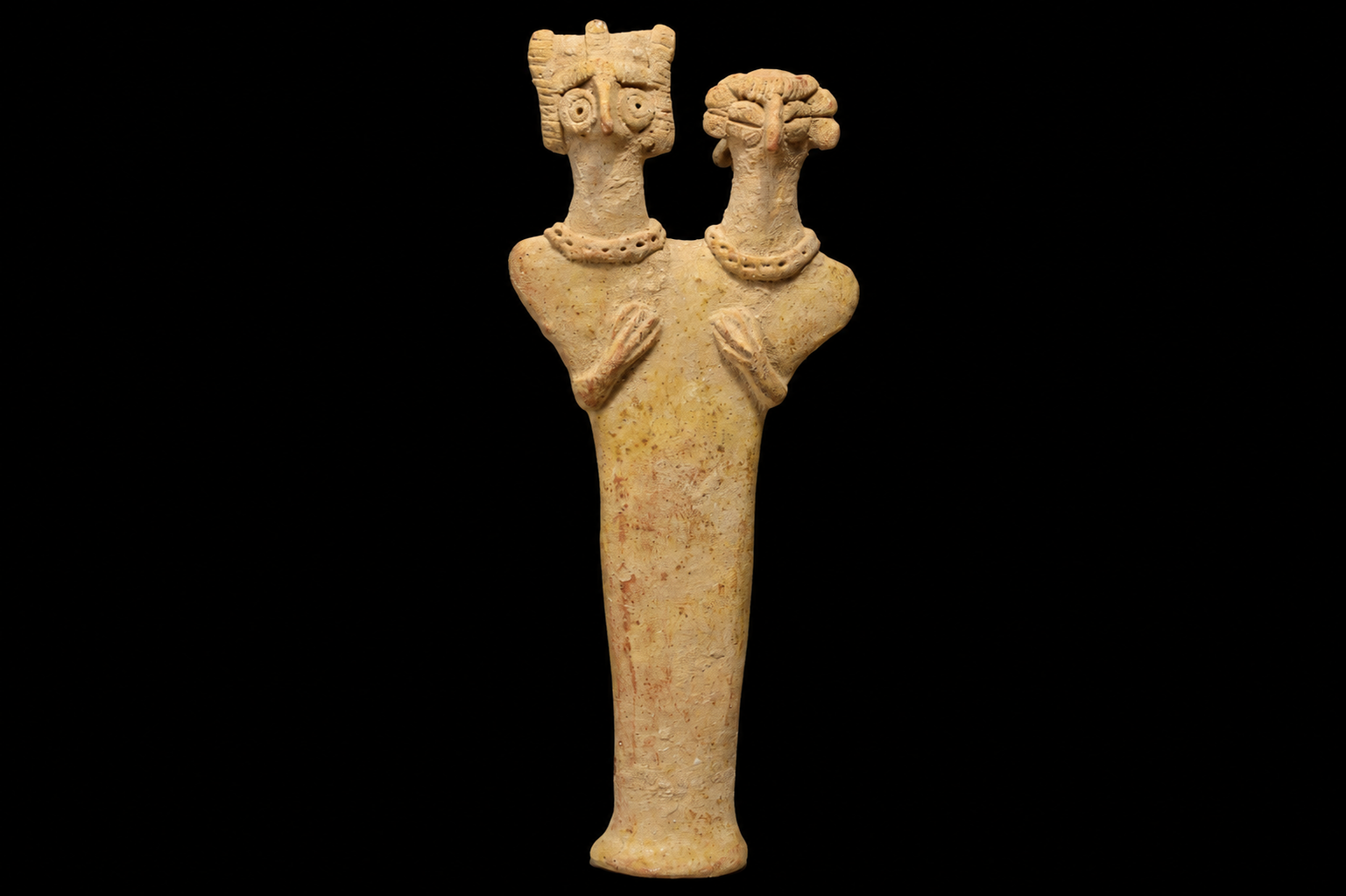
An exceptionally unusual Syro-Hittite terracotta figurine representing two anthropomorphic figures joined into a single standing composition. The paired figures rise from a tall, slender, slightly tapering body terminating in a gently flared foot, producing the characteristic columnar form associated with northern Syrian terracotta traditions. Comparable pillar-form figurines are particularly associated with the Iron Age coroplastic production of the northern Levant and Middle Euphrates region. AMS Dottorato
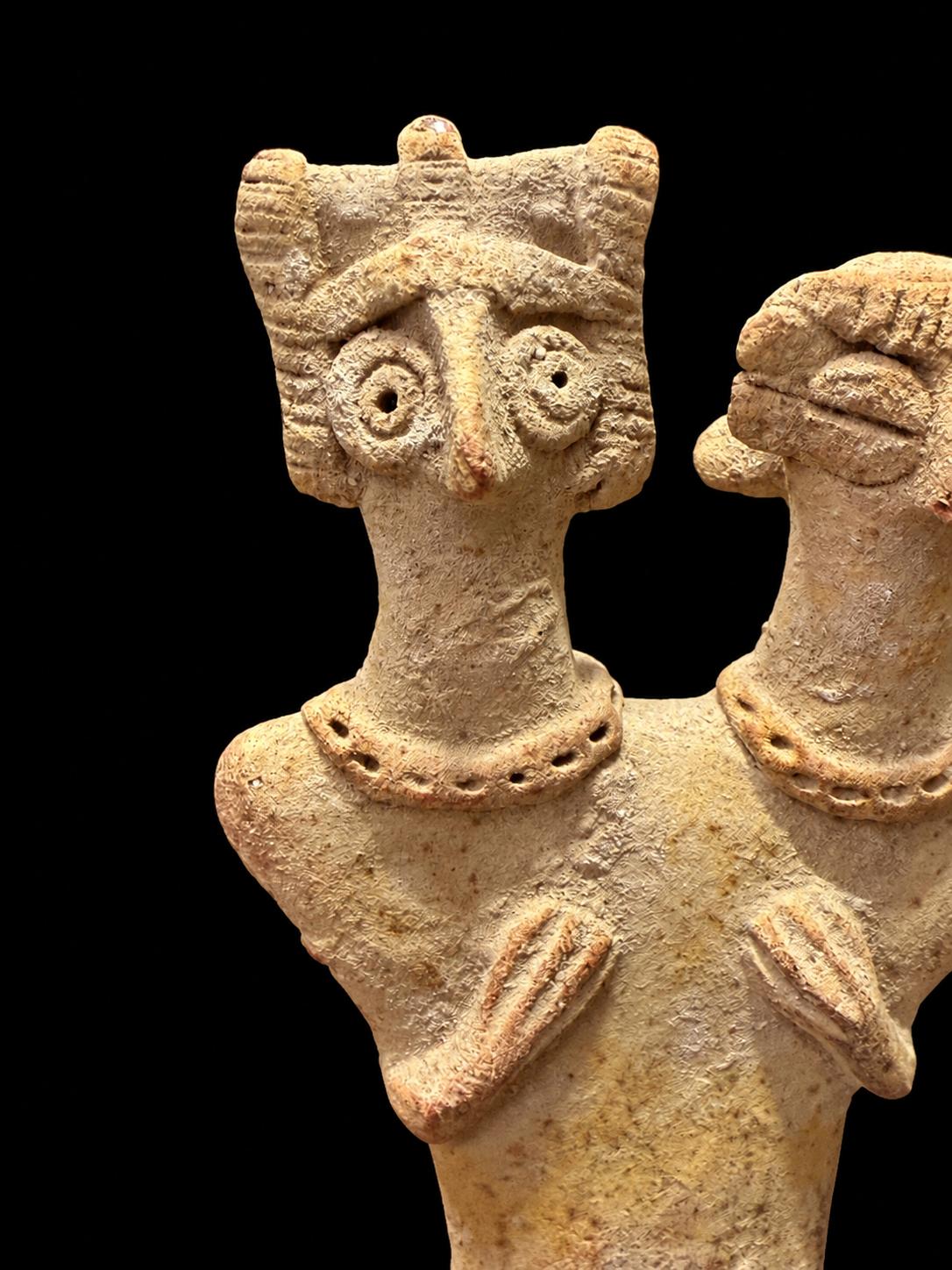
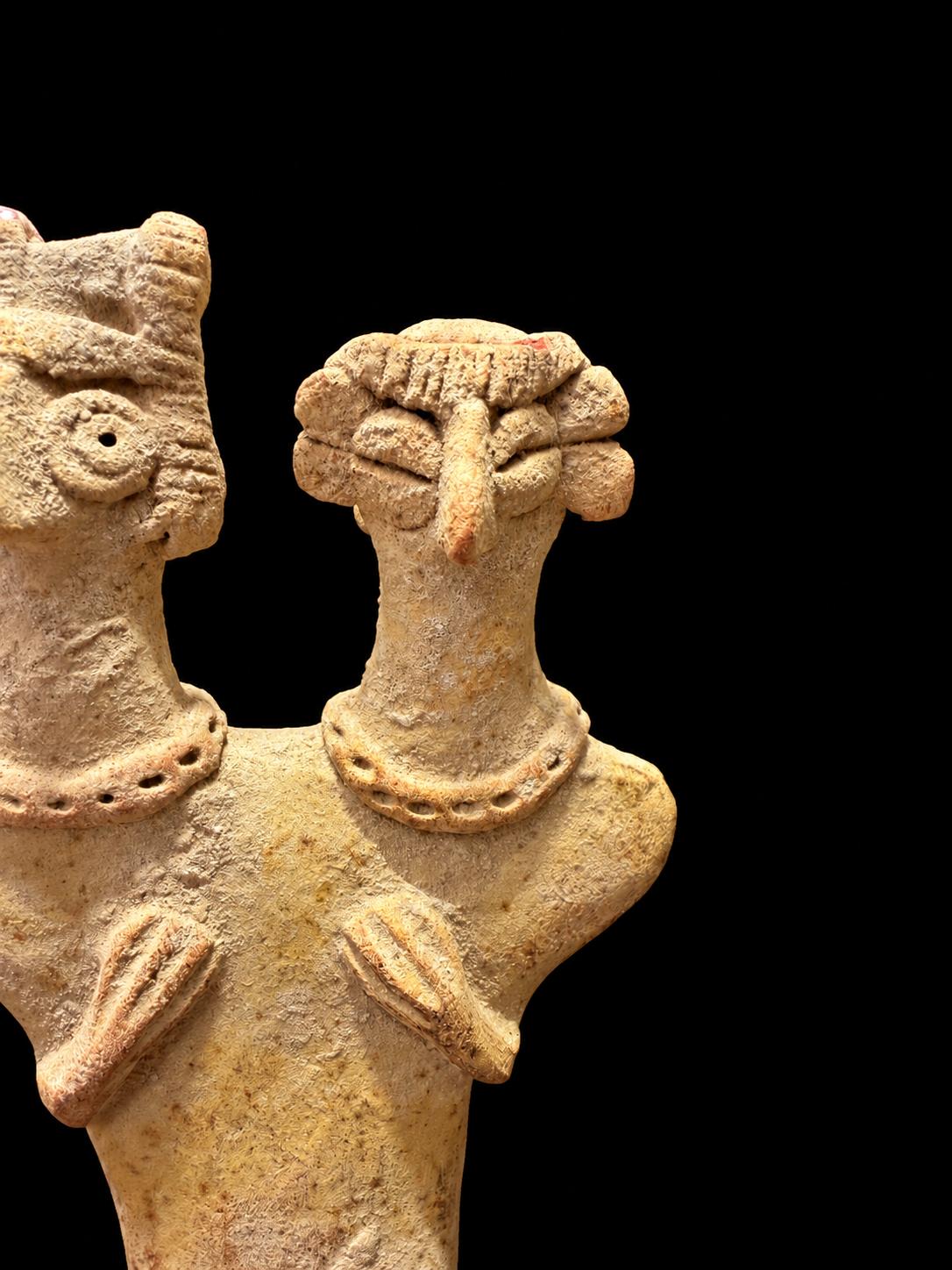
The two figures are deliberately differentiated. The figure on the left wears a striking high rectangular headdress, its face dominated by large circular pierced eyes, strongly modeled brows and a long projecting nose. The figure on the right is distinguished by an elaborate rounded coiffure or headdress composed of prominent radiating lobes framing the face and a similarly elongated nose. Both figures possess long cylindrical necks encircled by applied collars or necklaces ornamented with a regular series of impressed dots.
Their shoulders merge into a single broad upper body. Each figure raises one hand diagonally toward the chest, the fingers individually indicated by incised lines. The near-symmetrical placement of the hands and the corresponding necklaces create a carefully balanced composition despite the markedly different treatment of the two heads.
The figurine is principally modeled and decorated on the front, while the reverse is considerably plainer. The combination of a columnar body, strongly stylized facial features, applied ornament and simplified anatomy belongs broadly within the handmade terracotta traditions of Iron Age northern Syria. AMS Dottorato
Of particular interest is the survival of ancient surface coloration. Areas of yellowish pigment or coloring are preserved across portions of the body and upper torso, while traces of reddish pigment remain visible on and around several of the modeled details, including the faces, noses, headdresses, necklaces and hands. These surviving colors indicate that the figurine was originally conceived as a polychrome object, its modeled features further emphasized through painted decoration. The precise composition of the pigments should remain unidentified unless confirmed by scientific analysis.
The unusual pairing of two distinct figures within a single object strongly suggests a deliberate iconographic relationship. They may represent associated divinities, protective beings, or figures participating in a shared cultic concept. In the absence of an inscription or documented archaeological context, however, identification with specific named deities would be speculative. The more appropriate interpretation is therefore that of a paired divine or ritual representation.
The piece belongs to the wider artistic environment of the Syro-Hittite or Syro-Anatolian states that flourished across northern Syria and southeastern Anatolia during the Iron Age, particularly during the 9th–8th centuries BC.
REFERENCE #
SI-HT-1023
CIVILIZATION
Syro-Hittite / North Syrian, Iron Age, circa 9th–7th century BC
SIZE
H. 18 cm, W. 7 cm
CONDITION
Exceptionally well preserved and substantially complete. Both heads and headdresses, elongated necks, necklaces, shoulders, applied hands, columnar body and flared base survive. Minor surface wear, abrasions and localized losses are consistent with age. Particularly noteworthy are the surviving yellowish and reddish traces of ancient surface decoration.
PRICE
POR
PROVENANCE
Baidun private collection