Description
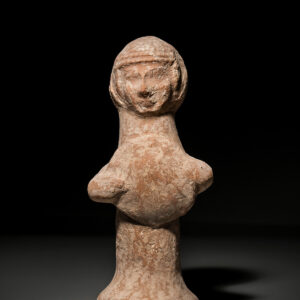
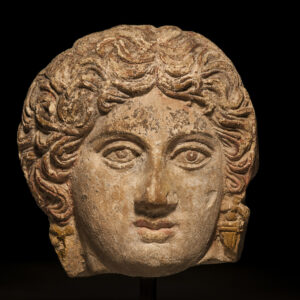
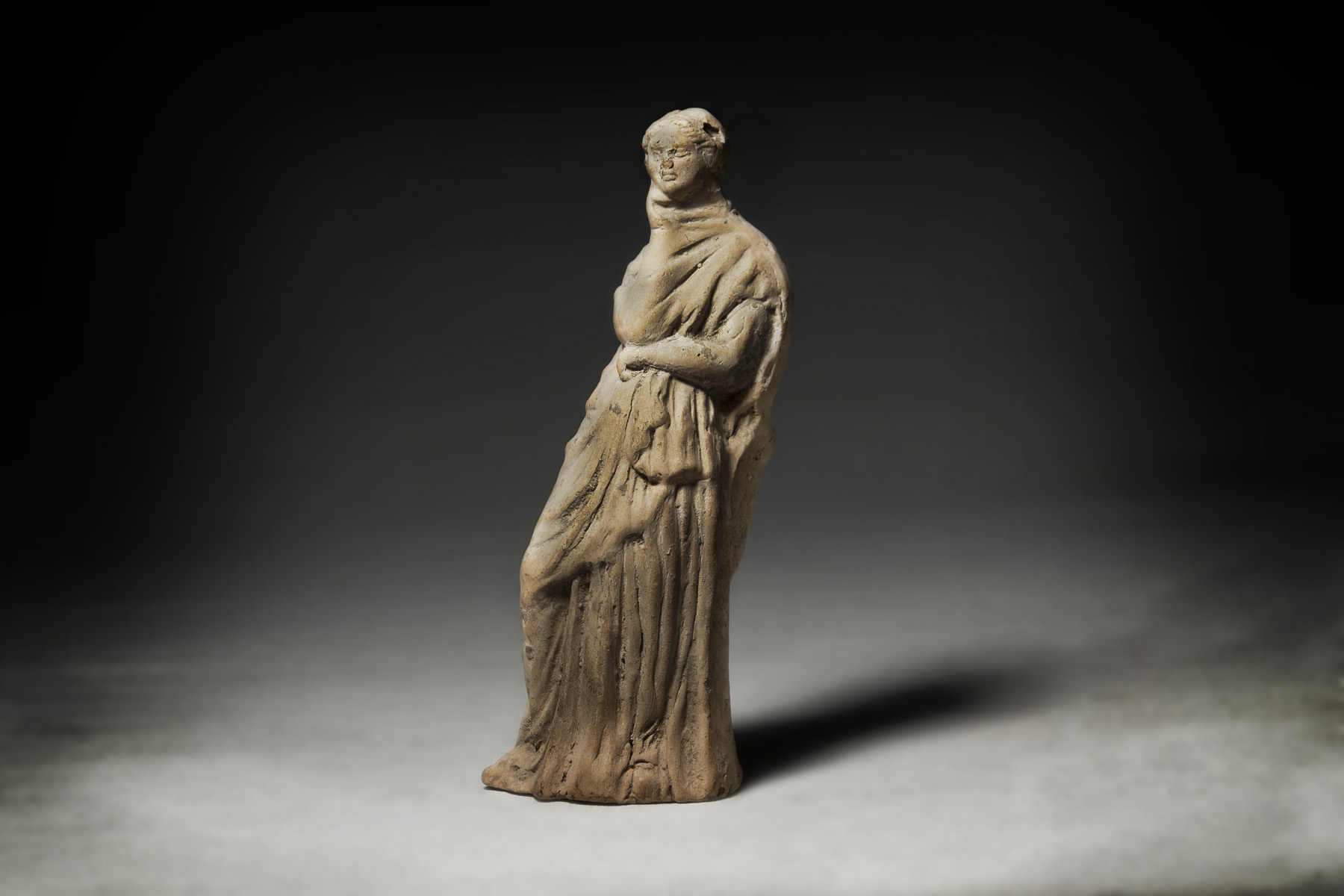
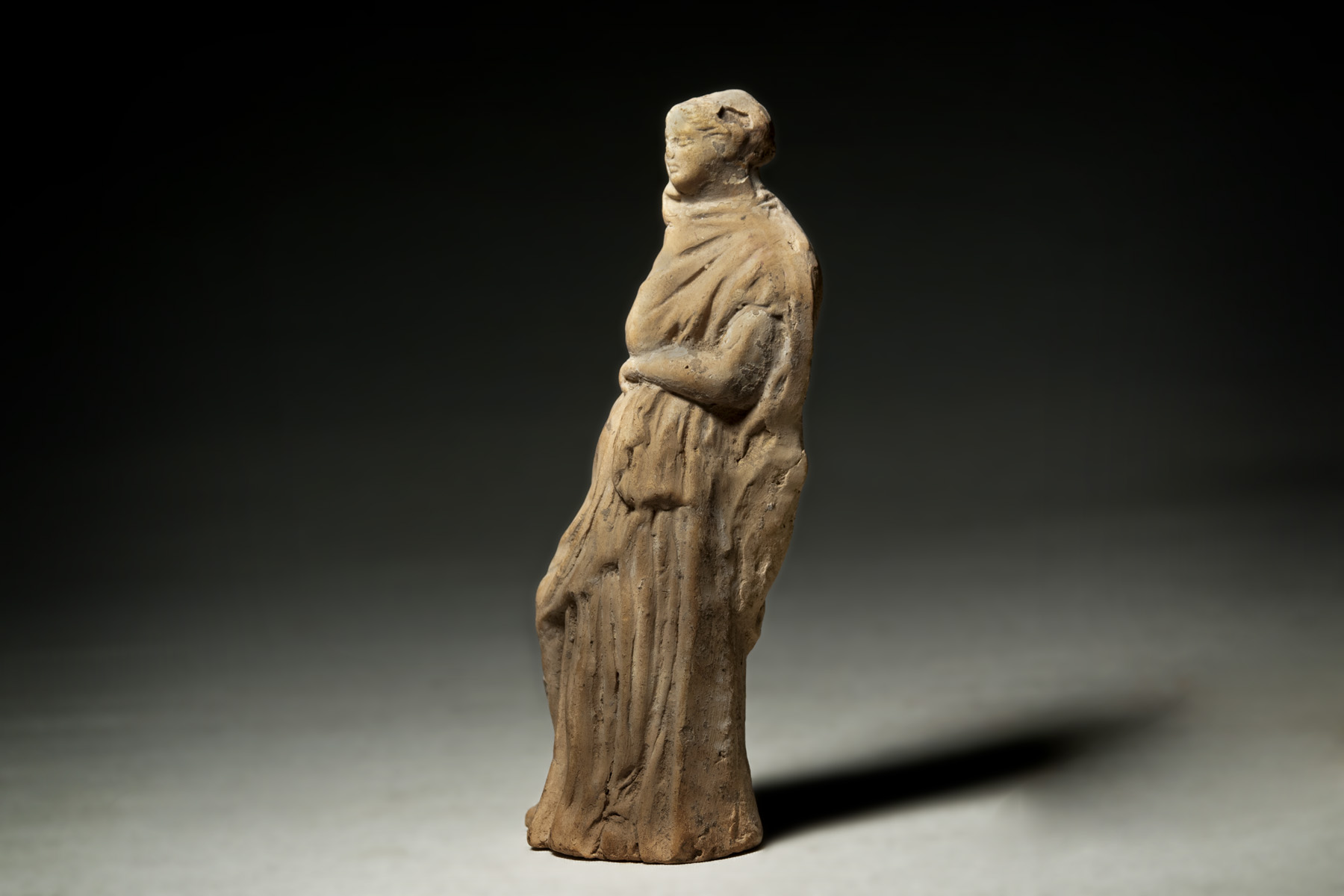
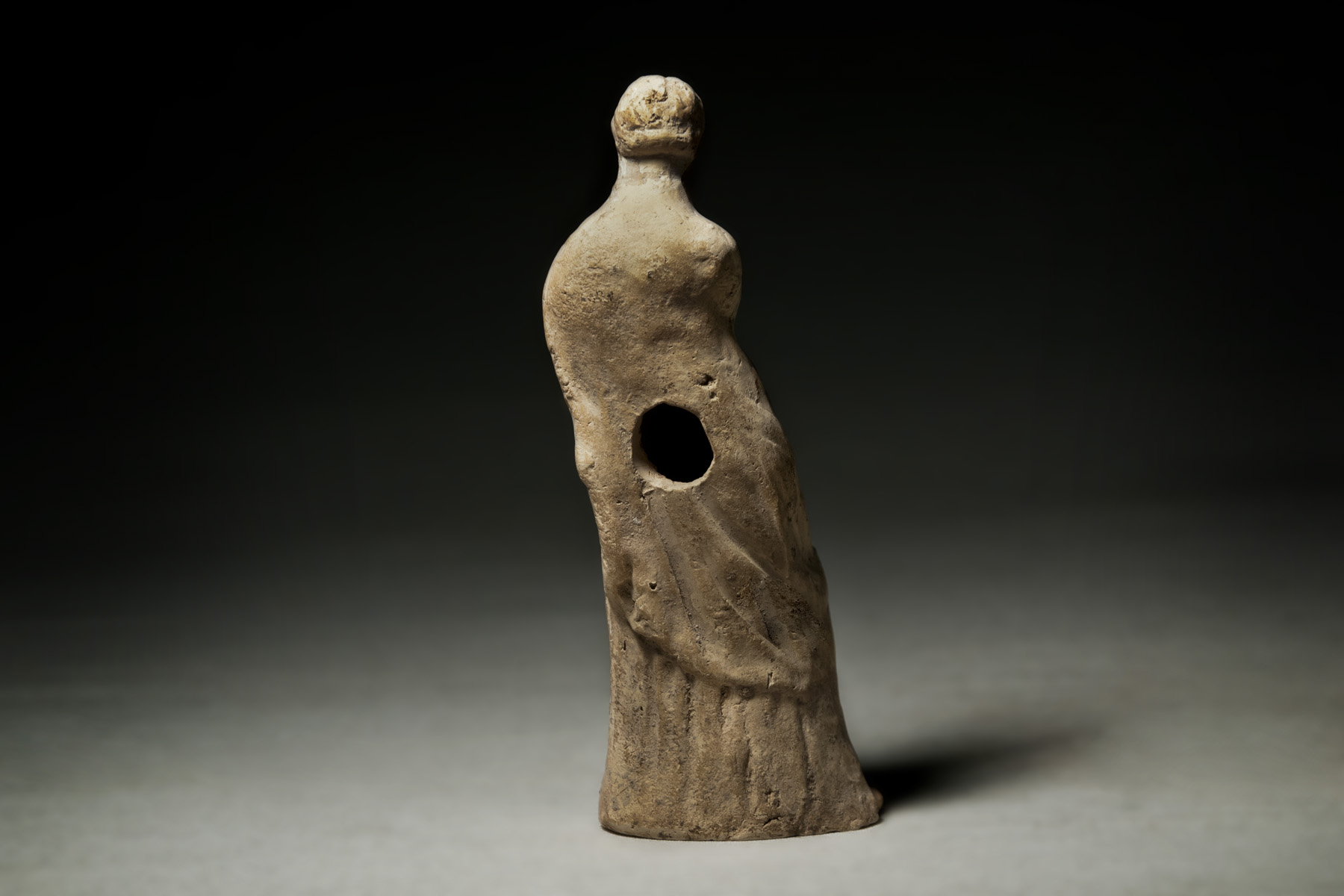
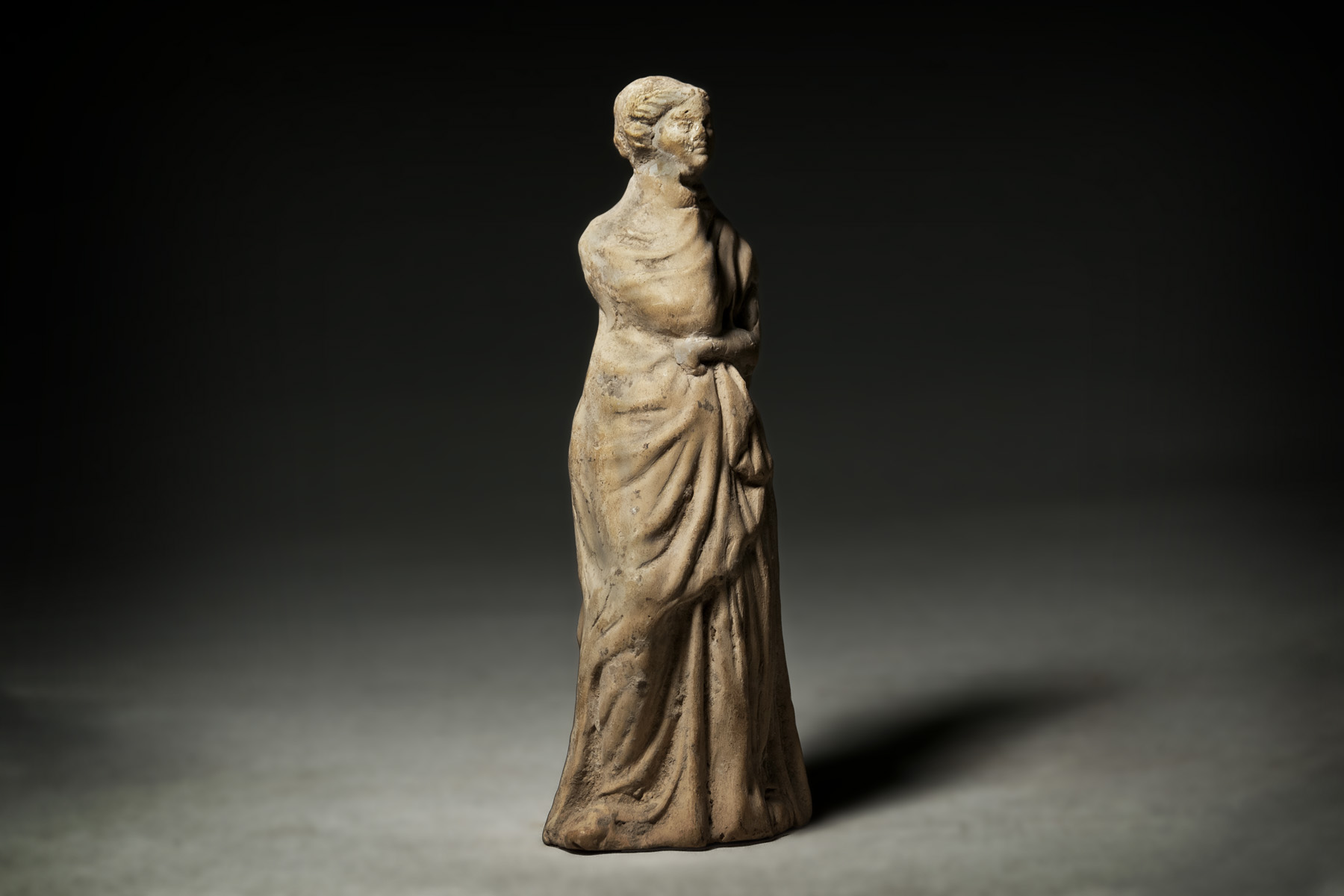
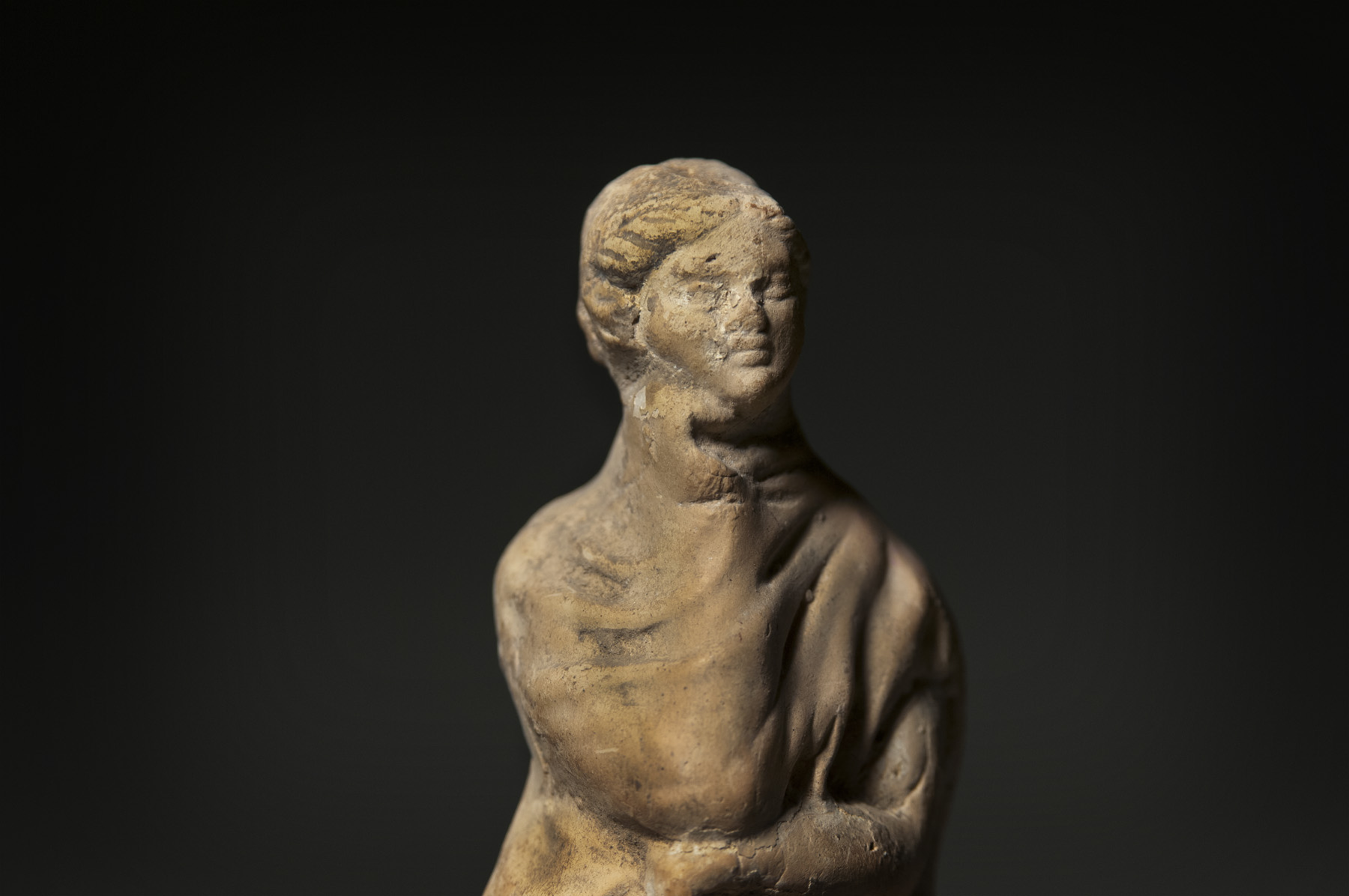
This standing female figure with her head leaning on her right hand over her left arm is dressed in a chiton and himation, which covers her arms, torso, and thighs. Following the tradition for Tanagra figurines, the drapery folds are crisp and sharply tooled, giving the impression of a sculpture rendered in bronze. The details of her face are in the finest Athenian miniaturist tradition for the end of the fourth century B.C.E., distinguished by round eyes, a wide-bridged nose, full cheeks, and a small, delicate chin. Her hair, parted in the center and pulled back in a twist at the back.
The Tanagra figurines were a mold-cast type of Greek terracotta figurines produced from the later fourth century B.C.E., primarily in the Boeotian town of Tanagra. They were coated with a liquid white slip before firing and were sometimes painted afterwards in naturalistic tints with watercolors, such as the famous “Dame en Bleu” (“Lady in Blue”) at the Louvre. Scholars have wondered why a rural place like Tanagra produced such fine and rather “urban” style terracotta figures. Tanagra figures depict real women — and some men and boys — in everyday costume, with familiar accessories like hats, wreaths or fans.
REFERENCE #
SI_GR_1007
CIVILIZATION
Greek, 500 B.C.E. – 300 B.C.E.
SIZE
H. 15 cm
CONDITION
Fine condition
PRICE
Price available upon request
Frequently Asked Questions
Tanagra figurines were made from terracotta, a type of clay, which was mold-cast and then coated with a liquid white slip before firing. Some figurines were also painted with naturalistic watercolors after firing to enhance their appearance.
The drapery on Tanagra figurines is characterized by crisp and sharply tooled folds, which create the impression of a bronze sculpture. This detailed treatment of clothing is a hallmark of the figurines' artistic style.
Tanagra figurines were produced primarily in the Boeotian town of Tanagra during the later fourth century B.C.E., within the broader Greek civilization timeframe of 500 B.C.E. to 300 B.C.E.
Tanagra figurines commonly depict real women, as well as some men and boys, dressed in everyday costumes. They often include familiar accessories such as hats, wreaths, or fans, reflecting daily life in ancient Greece.
Scholars find it intriguing that the rural town of Tanagra produced such refined and urban-style terracotta figures, as this level of artistic sophistication was typically associated with larger city centers rather than small rural communities.
The figurines exhibit finely detailed faces in the Athenian miniaturist tradition, including round eyes, a wide-bridged nose, full cheeks, and a small, delicate chin, showcasing the high level of craftsmanship at the end of the fourth century B.C.E.
Tanagra figurines are relatively small, with the example described standing about 15 centimeters tall, making them delicate and detailed miniature sculptures.