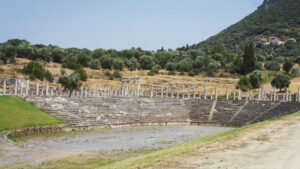
 Deep within a forest of olives in Greece, an asclepio, or an ancient healing center, was discovered – but one that has not been recorded in any ancient or modern source, explains archaeologist Xeni Arapogianni. It’s an entirely new discovery that tells us a tremendous amount about the ancient city that it came from. But there is one problem – a common problem amongst many Greek historical sites: there are limited resources for funding these kinds of excavations.
A new article from NPR brings this interesting dilemma to the forefront of the public eye. Greece has always prospered from the cultural and historical richness of its lands. With Greece experiencing one of its deepest detrimental economic recessions in history, it is difficult to find the proper funding for the excavation and preservation of archaeological sites. All funding for the asclepio research, as well as many other popular site, such as the Ancient Messene, has come solely from the private sector. There is much concern over putting this kind of control into the private sphere as well as concern about whether sufficients funds can be raised.
Olive-oil exporter, Giorgos Dinardakis, points out that even though Greek faith in the state is at an all-time low after the economic crisis, most Greeks still don’t trust the private sector. “They think a private company would hike up prices on admission or allow inappropriate activities or generally disrespect the antiquities in favor of profit,” he said. On the other hand, it may be the only way for these landmarks to live and benefit the state as a whole.
Frequently Asked Questions
An asclepio is an ancient healing center dedicated to Asclepius, the god of medicine in Greek mythology. The discovery of a previously unrecorded asclepio in a Greek olive forest is significant because it provides new insights into the ancient city it originated from and expands our understanding of ancient Greek medical practices.
Funding for archaeological excavations in Greece is limited primarily due to the country's severe economic recession. The financial crisis has reduced government resources, making it difficult to allocate sufficient funds for excavation and preservation of historical sites, leading to reliance on private sector funding.
Due to limited public funding, many archaeological sites in Greece, including the newly discovered asclepio and Ancient Messene, rely heavily on private sector funding. Private companies and individuals provide financial support for excavation and preservation efforts, although this raises concerns about control and management of these cultural landmarks.
Many Greeks are wary of private sector involvement because they fear that private companies might increase admission prices, allow inappropriate activities, or disrespect the antiquities in pursuit of profit. This skepticism stems from a general lack of trust in both the state and private entities following the economic crisis.
Despite concerns about private sector involvement, private funding may be the only viable option to ensure the survival and maintenance of important archaeological landmarks. Without sufficient financial support, many sites risk deterioration or neglect, which would ultimately harm Greece's cultural heritage and tourism economy.
Giorgos Dinardakis is an olive-oil exporter who highlights the dilemma faced by Greece regarding archaeological site funding. He notes that while faith in the state is low, Greeks also distrust private companies to manage these sites responsibly, fearing profit-driven exploitation rather than preservation.