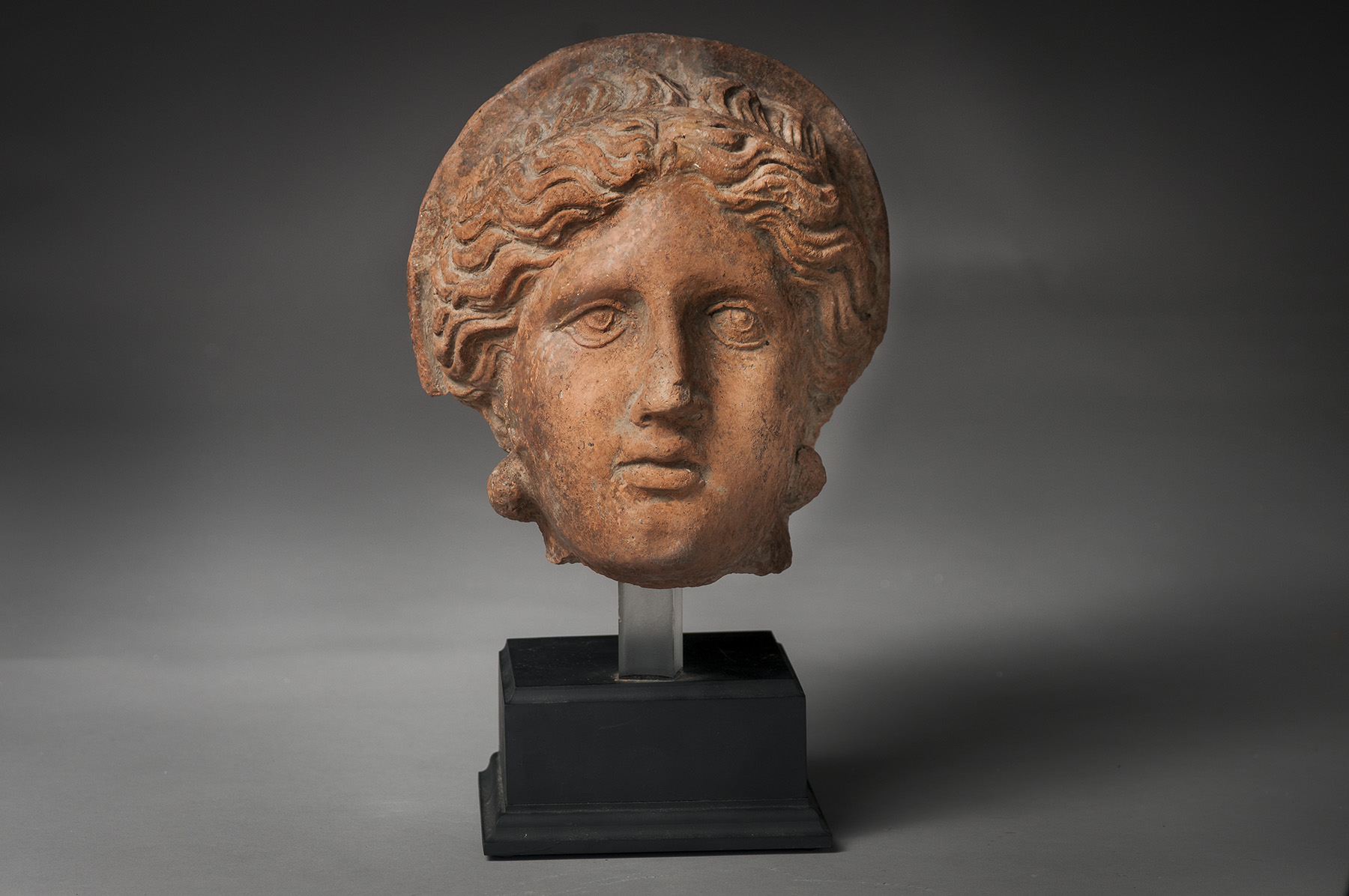
Description
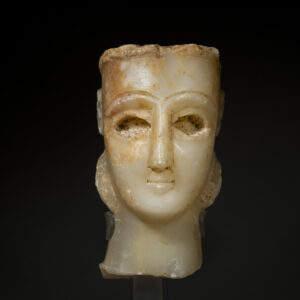
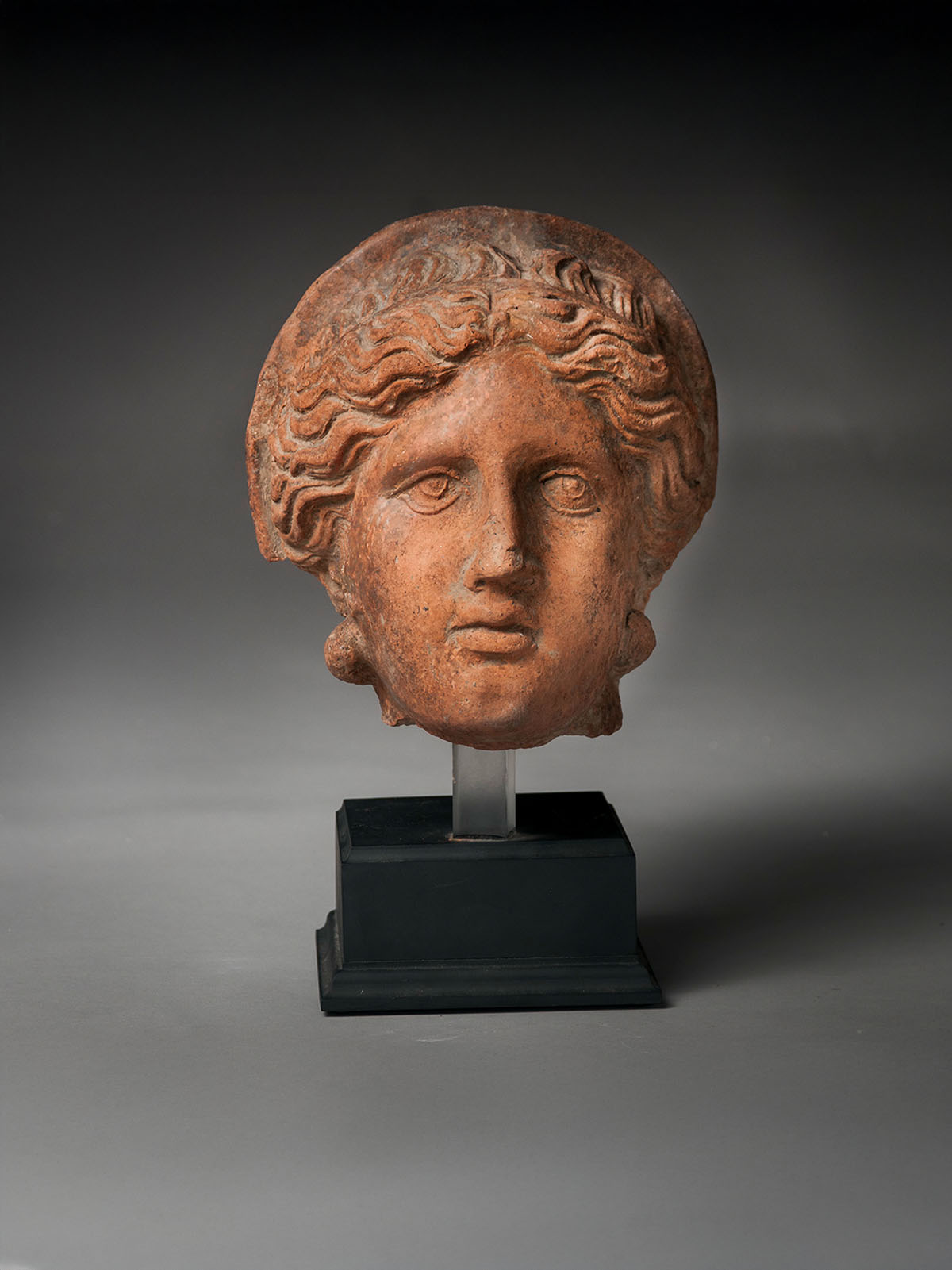
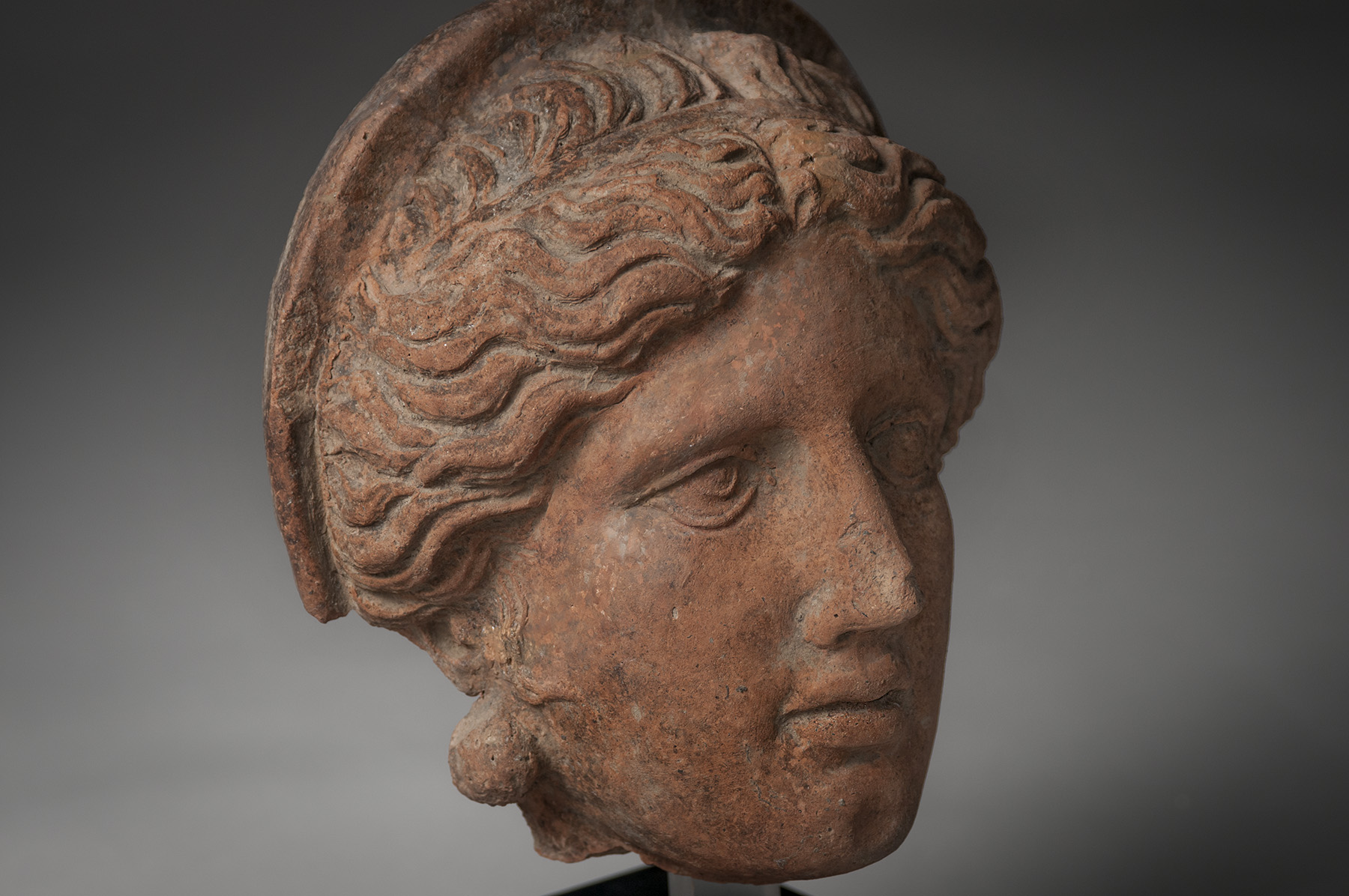
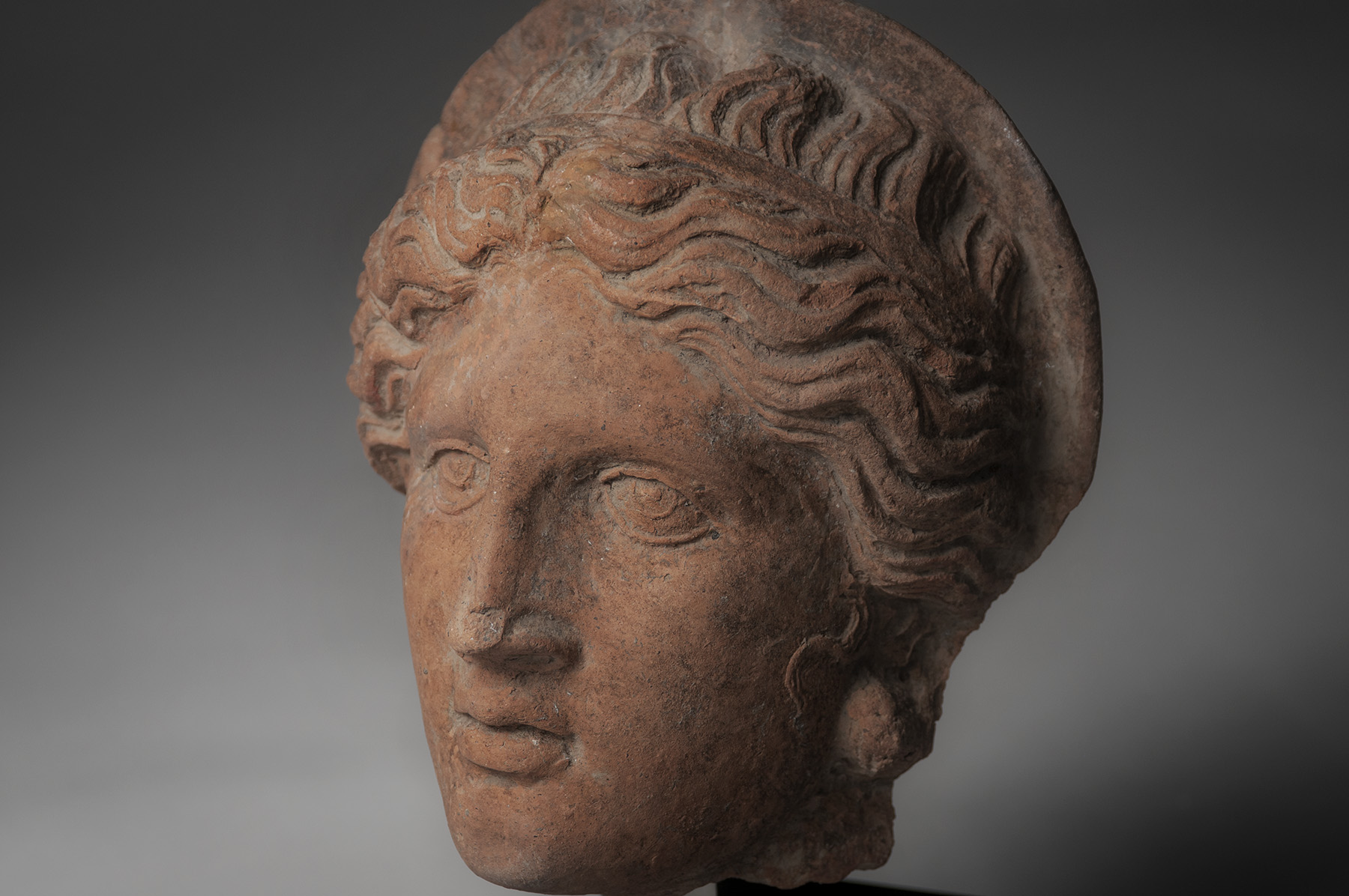
The front of the head is made from a mold and with a modeling tool reworked. The rear is Hollow. The sculpture shows a young female’s head in frontal orientation The even facial features women are very attractive. Expressive, with deep-set eyes coupled with strong eyelids. The pupils are clearly defined. A Strong protruding nose and full lips slightly opened. the chin has a gentle dimple. The symmetrically styled hair is parted in the middle, starting in soft curls that are combed back. On the cheeks is a single sleeping curls, and round earrings. The hairstyle is held by a headband. More curls on Top of the head are covered by a corona.
Cf .: St. Ohlig , antique cabinet, catalog no. 3 ( 1998) ” The Etruscans , a sign of life Civilized people . ” Fig.53 .
REFERENCE #
P 20753
CIVILIZATION
Greek, 400 B.C.E.
SIZE
H. 19.5 cm
CONDITION
A small chip on the tip of the nose, otherwise in Fine quality,
PRICE
Price available upon request
PROVENANCE
Private collection of Dr. Ludenscheid , acquired in the 1960s
Frequently Asked Questions
The front of the head was made from a mold and then reworked using a modeling tool to refine the details. This technique allowed for precise and expressive facial features to be crafted.
The sculpture depicts a young female with even and attractive facial features, including deep-set eyes with strong eyelids, clearly defined pupils, a strong protruding nose, slightly opened full lips, and a chin with a gentle dimple.
The hair is symmetrically styled and parted in the middle, starting with soft curls combed back. There are single sleeping curls on the cheeks, round earrings, and the hairstyle is held by a headband. Additional curls on top of the head are covered by a corona.
The sculpture is in fine quality condition with only a small chip on the tip of the nose. Otherwise, it has been well preserved.
The sculpture originates from Greek civilization around 400 B.C.E., reflecting the artistic style and cultural elements of that period.
The sculpture measures 19.5 centimeters in height, making it a relatively small and detailed piece.
The sculpture was part of the private collection of Dr. Ludenscheid and was acquired in the 1960s, indicating its provenance and history of ownership.