
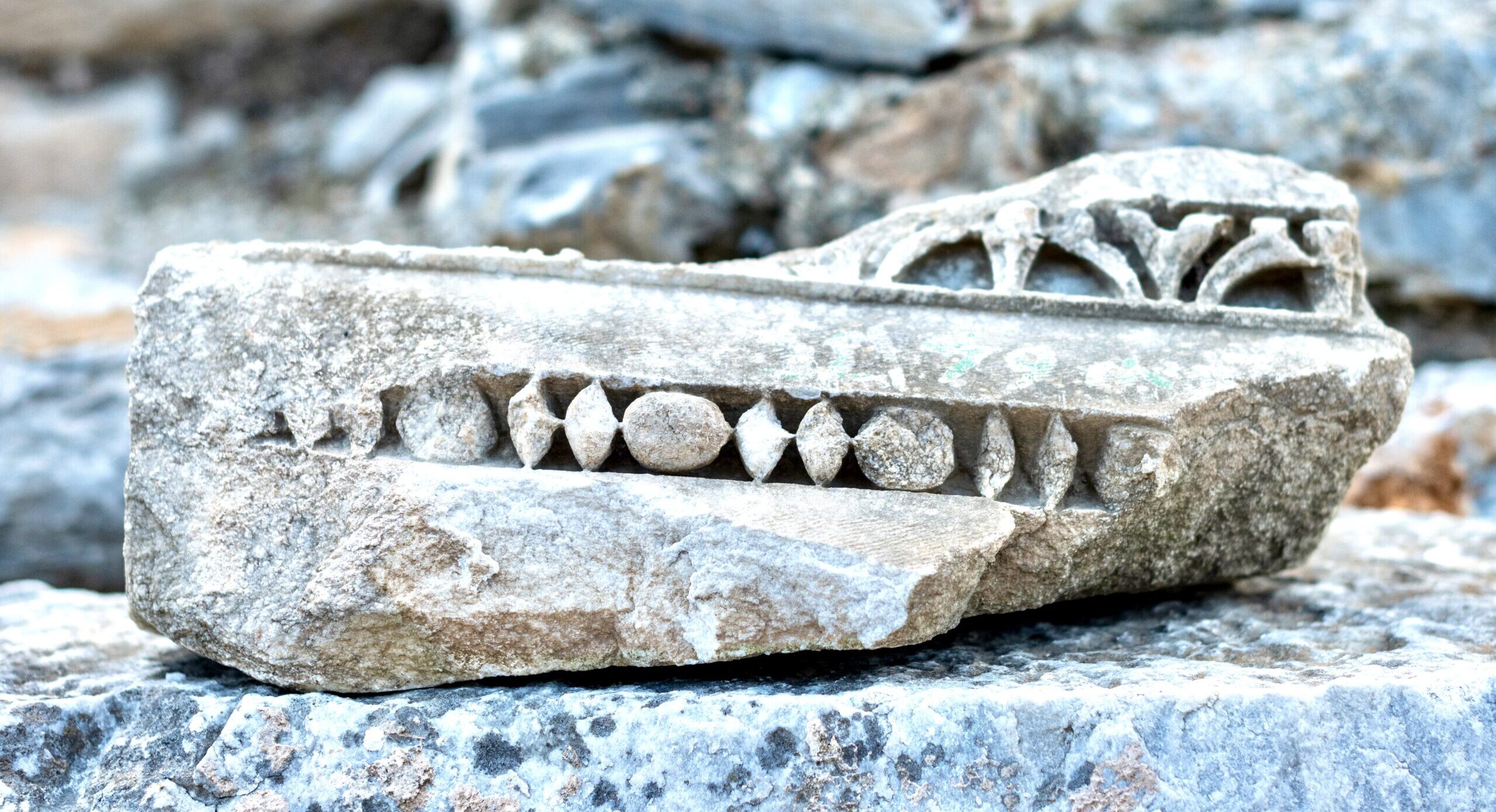
Why is it that ISIS continues to destroy all record of the past? “All attacks on archaeological sites and artifacts are brutal assaults on our collective human memory,” says Sturt Manning of CNN. “They deprive us of the evidence of human endeavors and achievements” So what is the incentive?
The goal of ISIS is to reform the region into a single homogeneous Muslim caliphate under its control and destroy any contradicting information of the past – a fairly typical tactic carried out in mass genocide. According to some Iraqi archaeologists, Mosul Museum, a major target of ISIS, has the majority of Iraq’s archaeological wealth, with more than 3,500 sites, including centuries-old religious and historic sites. New videos and images are constantly being released, reminding us of the horror taking place in the middle east. Sometimes it feels hopeless. What could we possibly provide to help better the situation? Technology.
According the the NY Post, experts are using crowdsourced images and 3D printing technology in an attempt to recreate ancient artifacts destroyed by ISIS in the Iraqi city of Mosul.
Project Mosul, part of the European Union-funded Initial Training Network for Digital Cultural Heritage, is calling on volunteers for help in restoring the museum’s devastated historical artifacts.
“We need pictures of the artifacts found in the Mosul Museum,” explains the project’s website. “These pictures allow us to digitally reconstruct the original artifacts, and can eventually aid in the restoration [of] those artifacts. The more pictures the better, and as many angles and perspectives, even better still!”
Frequently Asked Questions
ISIS has targeted historical artifacts and archaeological sites as part of its effort to erase cultural and religious history that conflicts with its ideology. Destroying museums, monuments, and ancient relics is intended to eliminate evidence of diverse civilizations and reshape historical narratives.
Project Mosul was an international initiative that used crowdsourced photographs and digital technology to reconstruct artifacts destroyed in the Mosul Museum. The project demonstrated how modern technology can help preserve cultural heritage even after physical objects have been lost.
By collecting photographs from multiple angles, experts can use photogrammetry to create accurate 3D digital models of damaged or destroyed artifacts. These models can be used for research, education, virtual exhibits, and future restoration efforts.
Once a digital model has been created, 3D printing can produce highly detailed replicas of destroyed artifacts. Although replicas cannot replace the originals, they help preserve historical knowledge and allow museums and researchers to share these cultural treasures with future generations.
Archaeological artifacts provide valuable evidence about ancient civilizations, religions, cultures, and human achievements. Protecting these objects helps historians and archaeologists better understand our shared past and ensures future generations can learn from it.
While technology cannot restore the original artifact once it has been destroyed, it can digitally recreate its appearance using photographs, historical records, and 3D modeling. These reconstructions preserve important information that might otherwise be lost forever.
People can contribute by sharing historical photographs, supporting preservation organizations, participating in digital archiving projects, and raising awareness about efforts to protect endangered archaeological sites and cultural artifacts.
Photogrammetry is a process that converts multiple photographs into detailed 3D models. Archaeologists use this technology to document historical sites, digitally reconstruct damaged artifacts, and create permanent records that help preserve cultural heritage for future generations.