Ancient Roman Bronze Statue (Statuette) of a Finely Detailed Roman Eagle

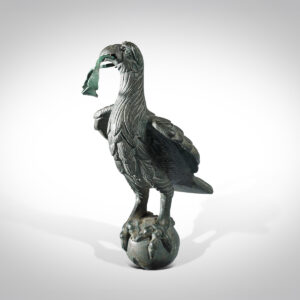
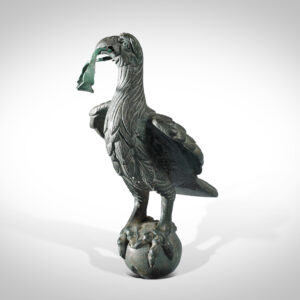
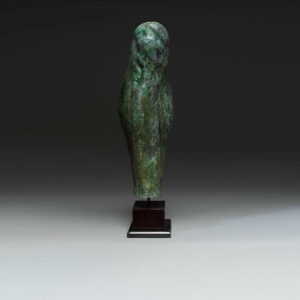
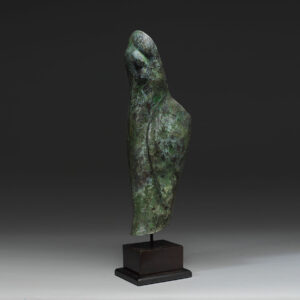
Ancient Roman bronze eagle statue (statuette) of a Roman eagle holding a crown in its beak showing finely detailed metalwork by the artist in the feathers, face and talons.  The wings of the metal eagle are slightly raised from its side and the legs are close together set on thick talons.

The majestic eagle, being one of the traditional Roman symbols, stands atop a bronze orb which represents the dominion of Rome over the world.  A simple crown of laurels hangs from the bird’s beak in a nod to the eagle’s close association with the royalty of ancient Rome.

The eagle, was a prominent symbol used in ancient Rome, especially as the standard of a Roman legion.  A Roman legionaire known as an aquilifer, or eagle-bearer, was the standard bearer who carried this standard on Roman military conquests.  Each Roman legion carried one eagle.   The eagle was extremely important to the Roman army, beyond merely being a symbol of a legion.   A lost standard was considered an extremely grave occurrence, and the Roman military often went to great lengths to both protect a standard and to recover it if lost.

For example, see the aftermath of the Battle of the Teutoburg Forest, where the Roman army spent decades attempting to recover the lost standards of three Roman legions. That’s why they are relatively small size, since a standard bearer in circumstances of danger will wrench the eagle from its staff and conceal it in the folds of his girdle.

REFERENCE #

SI_RM_1090

CIVILIZATION

Roman, 200 C.E. – 300 C.E.

SIZE

H. 10.2 cm

CONDITION

Excellent condition

PRICE

SOLD

PROVENANCE

Ex private collection, acquired before 1973.

Archaic Bronze Greave

The shape of this bronze shin guard or ‘greave’ is emphasized by the exaggeration of the anatomical muscular structure, on one side a deep crescent-shaped groove and a bulge indicates the position of the calf. The arched upper end protected the knee joint. Above the ankle, the outline of the plaque is rounded and slightly flared to allow for movement.

REFERENCE #

WP_GR_1010

CIVILIZATION

Greek, 600 B.C.E.

SIZE

H. 42 cm

CONDITION

Minor repairs for cracks, and some reinforcements done from the inside

PRICE

Price available upon request

PROVENANCE

Previously in a private Japanese collection since the 1970’s


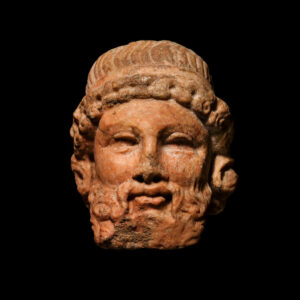
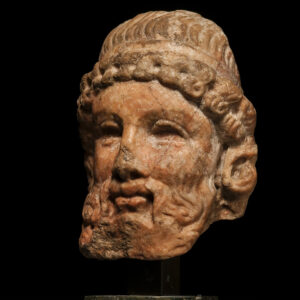
Archaistic Rosso Antico Herm Head of Dionysus

Description

Dionysus, the god of wine, is portrayed frontal, looking forward. His hair is tied with a thick fillet with two rows of locks across his forehead. He has a long moustache and a square beard composed of curving locks. The face with arched eyebrows, large eyes sockets, pronounced cheeks, straight nose and a smiling mouth with fleshy lips. The Archaistic head is inspired by the Greek Archaic style, frontal and frozen, with stylized features and smiling mouth. It has a strong and majestic expression.

Reference: Cf. Anderson M. L., Nista L. (Eds.), Radiance in Stone. Sculptures in Colored Marble from the Museo Nazionale Romano, De Luca Edizioni d’Arte, Rome, 1989, p.72, fig. 9.

REFERENCE #

SI_RM_1081

CIVILIZATION

Roman, 100 C.E. – 200 C.E.

SIZE

H. 10.2 cm

CONDITION

Missing inlayed eyes and lower part of beard, chipped at the back of the upper part.

PRICE

Price available upon request

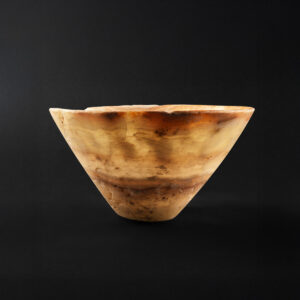
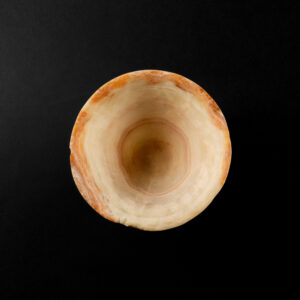
Banded Alabaster Bowl

This elegant alabaster bowl exemplifies the artistry and craftsmanship of ancient Mesopotamian artisans. Crafted from fine, translucent alabaster, the bowl features a rounded, symmetrical form with a smooth, polished surface that showcases the natural beauty of the stone. Measuring approximately 12 cm in diameter and 7 cm in height, it is a compact yet finely detailed vessel.

The most striking feature of the bowl is its decorative banding, which encircles its exterior. These bands are composed of carved lines and geometric motifs, adding a sense of rhythm and harmony to the piece. The craftsmanship demonstrates a mastery of stone carving techniques, with precise incisions and smooth finishes that highlight the skilled artisanship of the period.

This vessel likely served both functional and ceremonial purposes, possibly used in ritual offerings or as a display piece in a noble or religious setting. Its durable alabaster material and sophisticated decoration reflect the high status of its owner and the cultural importance of craftsmanship in ancient Mesopotamian society.

REFERENCE #

SW-PR-1003

CIVILIZATION

Mesopotamian, 1200 B.C.E. – 800 B.C.E.

SIZE

L. 7cm

CONDITION

Fine condition

PRICE

$3500

PROVENANCE

The Baidun Collection

Banded Alabaster Egyptian Mace Head

Description

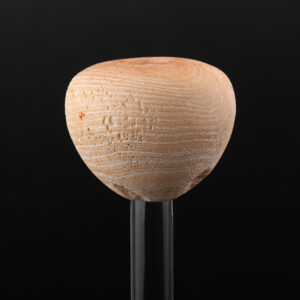
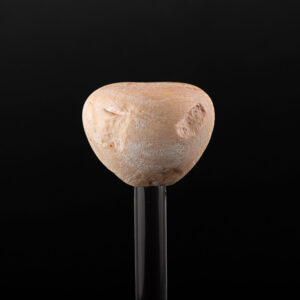
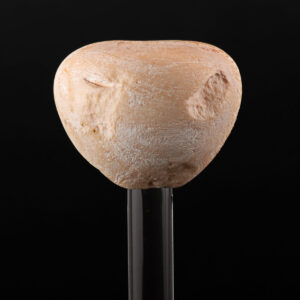
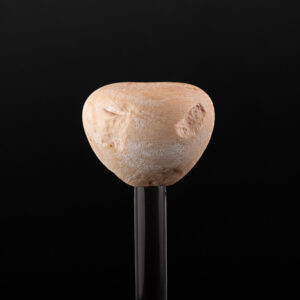
This commanding alabaster mace head exemplifies the artistry and technical skill of Egyptian stone‑workers of the Middle Bronze Age. Crafted from fine, dense alabaster, the piece presents a rounded, slightly pear‑shaped mass terminating in a short, tapering socket for hafting; its surfaces are smoothly finished to reveal the stone’s subtle veining and a soft, satin-like luster. Measuring approximately [dimensions available on request], it is a compact yet powerfully rendered implement.

The most striking feature of the mace head is its sculptural silhouette and the careful modulation of form between the striking face and the haft socket, which together create a balanced, purposeful object. The workmanship demonstrates mastery of stone‑shaping techniques, with precise contouring and evidence of controlled tool work around the socket and perimeter. Minor surface abrasions and faint impact marks may be present, consistent with functional use, while surviving tool marks are minimal and secondary to the overall polished presentation.

This object likely served both practical and symbolic roles: employed as a percussive weapon in conflict or as a status emblem and ceremonial object signaling authority and power. The selection of alabaster—a prized material—speaks to the prominence of its owner and the value attributed to finely

REFERENCE #

WP-PR-1002

CIVILIZATION

Egyptian, Circa 2100 B.C.E. – 1550 B.C.E.

Time Of Abraham

SIZE

L. 5cm

CONDITION

Fine condition

PRICE

$1850

PROVENANCE

The Baidun Collection

Banded Alabaster Egyptian Mace Head

This commanding alabaster mace head exemplifies the artistry and technical skill of Egyptian stone‑workers of the Middle Bronze Age. Crafted from fine, dense alabaster, the piece presents a rounded, slightly pear‑shaped mass terminating in a short, tapering socket for hafting; its surfaces are smoothly finished to reveal the stone’s subtle veining and a soft, satin-like luster. Measuring approximately [dimensions available on request], it is a compact yet powerfully rendered implement.

The most striking feature of the mace head is its sculptural silhouette and the careful modulation of form between the striking face and the haft socket, which together create a balanced, purposeful object. The workmanship demonstrates mastery of stone‑shaping techniques, with precise contouring and evidence of controlled tool work around the socket and perimeter. Minor surface abrasions and faint impact marks may be present, consistent with functional use, while surviving tool marks are minimal and secondary to the overall polished presentation.

This object likely served both practical and symbolic roles: employed as a percussive weapon in conflict or as a status emblem and ceremonial object signaling authority and power. The selection of alabaster—a prized material—speaks to the prominence of its owner and the value attributed to finely[/vc_column_text]

REFERENCE #

WP-PR-1002

CIVILIZATION

Egyptian, Circa 2100 B.C.E. – 1550 B.C.E.

Time Of Abraham

SIZE

L. 5cm

CONDITION

Fine condition

PRICE

$1850

PROVENANCE

The Baidun Collection

[/vc_column][/vc_row]

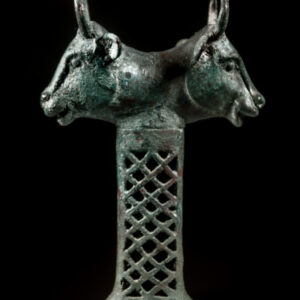
Bronze Double-Headed Bull Mace Head

$25,000.00

This Elamite Bronze Double-Headed Bull Mace Head, originating from the Near East region circa 2100–1550 B.C.E., is a striking example of ancient artistry and symbolism. The mace head features two imposing bull heads sculpted with remarkable detail and power, with their facial features exuding strength and dominance.

The bulls’ horns and expressions reflect the reverence for these animals in ancient cultures, often symbolizing fertility, power, and protection.

The handle, crafted in an openwork lattice style, showcases the artisan’s advanced skill in metalworking. The lattice pattern adds both aesthetic beauty and functional lightness to the piece. Though one of the bulls’ ears shows an ancient loss, the artifact remains in fine condition, its surface adorned with a rich natural patina, adding to its historical authenticity and appeal.

In the ancient Elamite kingdom, bulls were potent symbols of strength, fertility, and divine power, often associated with deities and rulers. This double-headed bull mace head likely held ceremonial or ritual significance, symbolizing authority, protection, or a connection to the divine. Its exquisite craftsmanship speaks to the advanced skills of the ancient Near Eastern metalworkers and their ability to imbue objects with profound cultural meaning.[/vc_column_text]

REFERENCE #

WP_AT_1001

CIVILIZATION

Persian, Middle Bronze 2100 B.C.E. – 1550 B.C.E.

SIZE

L. 19 cm, W. 13 cm

CONDITION

Fine condition.

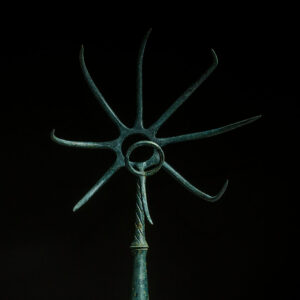
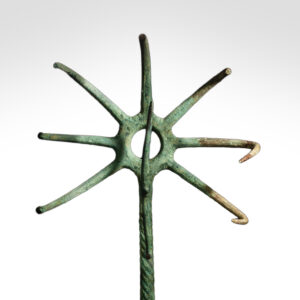
Bronze Etruscan Harpago

A bronze Etruscan harpago, or underwater sponge collecting hook, with seven curved tines set radially around a central torus. The hook piece is set upon a large handle with a coiled design along its shaft. An additional pair of tines protrudes just below the torus at the top of the coiled shaft.

Reference: Cf. MFA Bronzes, p. 421, fig. 608. Published: HASB 1, 1975, 21ff


REFERENCE #

MW_GR_1006

CIVILIZATION

Etruscan, 600 B.C.E.

SIZE

H. 33 cm

CONDITION

Fine Condition, some of the tips are reattached.

PRICE

$17,000

PROVENANCE

Private Collection P.C. Nuremberg

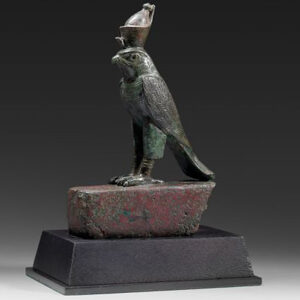
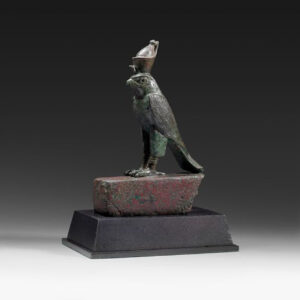
Bronze Figurine of Horus as a Falcon

$45,000.00

Description

Solid cast, the bird is shown in a typical pose, wings crossed over the tail with the feathers all cleanly incised. It wears the double crown of Egypt and traces of gilding remains scattered over the surface. This probably once decorated the top of a sarcophagus.

The so-called Horus falcon is one whose characteristics do not conform exactly with any of the four species known to the Egyptians: it is an idealized falcon with elements inspired by more than one of the predatory birds. The falcon was revered from earliest times for its awesome climb into the heavens and its headlong yet sure swoop upon its prey. The earliest element of the royal titulary, which officially proclaimed the ruler’s name, was the Horus name by which the holder of the royal office and the royal bird were indissolubly linked. Horus was essentially protective of the king and so an image of a falcon held an inherent concept of protection. But in one creation legend, the creator god was held to be a falcon whose outspread wings formed the vault of heaven, his two eyes being the sun and moon. Thus the image of the falcon was also strongly associated with creation and regeneration.

Not surprisingly it was a form adopted by a number of Egyptian gods. Even the name Horus refers to more than one deity since Horus of Edfu, Horus the son of Isis and Osiris and Horus the Elder are three completely separate gods with only the name in common; all could manifest themselves as a falcon. In addition, the sun god Re, Monthu the Theban war god, Sokar the Memphite funerary god, Khonsu of Thebes, even one of the Sons of Horus called Qebhsenuef could appear as falcons or falcon-headed (and there are others), with only special attributes to help distinguish each from the other and the multiplicity of Horuses. If none of these distinctive features is present and there is no inscription, identification of a falcon as being the manifestation of a specific deity is frequently impossible.

REFERENCE #

SI_EG_1047

CIVILIZATION

Egyptian, 26th/30th Dynasty, 664 B.C.E. – 342 B.C.E.


SIZE

H. 14.4 cm

CONDITION

Excellent condition

PRICE

$45,000

PROVENANCE

Former French private collection, acquired ca. 1970. French Passport # 128908

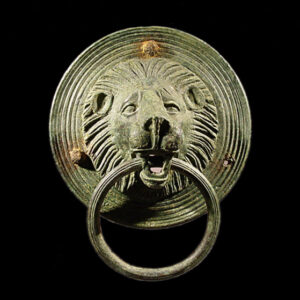
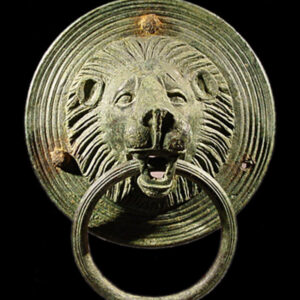
Bronze Handle in the Shape of a Lion’s Head

$18,000.00

Description

Here we see a bronze handle with a lion’s head holding the bronze ring from its mouth. This handle was cast sometime between 100 C.E. – 300 C.E. and depicts the lion in a highly realistic manner with much care given to the proportion of its protruding snout, fierce teeth, and vibrant mane. The heads of two iron nails remain from where the handle was hammered onto the surface from which it rested against. A series of concentric circles frame the lion’s head with beautiful precision, while the handle’s ring is fully intact and symmetrical.

This piece is in excellent condition and has a diameter of approximately 13 cm. The bronze has been cleaned and cared for, and all of its original details remain as fresh as the day they were cast. The lion has long been a symbol of strength and pride, and this piece continues to resonate across two thousand years of history.

REFERENCE #

SI_RM_1063

CIVILIZATION

Roman, 100 C.E. – 300 C.E.

SIZE

D. 13.7 cm

CONDITION

Fine condition

PRICE

$18,000

Bronze Imperial Roman Bull Stomping Hoof

Description

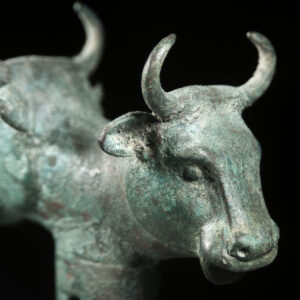
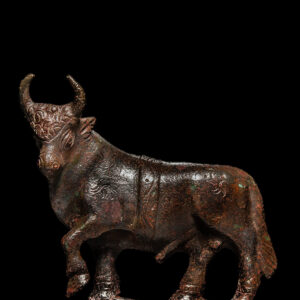
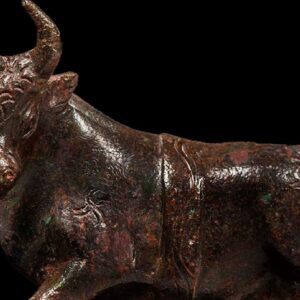
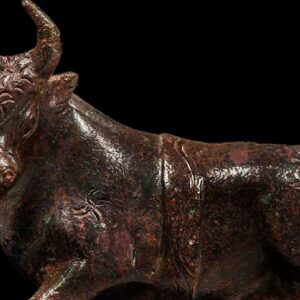
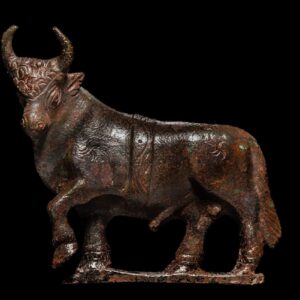
This incredible Bronze Imperial Roman Bull statuette dating from 200 – 300 C.E. is decorated with two stylized markings on its flanks and one large ribbon across its torso.  The bull’s powerful stance is accentuated by his head that is turned, as well as his front left leg that is raised in an aggressive stomping motion.  Additional decorations are present on the bull’s head in the form of decorous curls.  This Bronze Imperial Roman Bull statuette was part of a composed relief depicting a procession that leads to the sacrifice of the bull which was performed for the welfare of the Roman empire.

For more than 5,000 years, bronze and other copper alloys have been essential materials used to create everything from life-size sculptures to objects of daily life such as weapons, jewelry, tableware, and as featured here:  This incredible Bronze Imperial Roman Bull statuette.  Similar pieces are found in museums such as the Met Museum in New York City, but few found are as majestic and powerful as this piece.

Roman Bull in Cult of Magna Mater (Great Mother of the gods) Cybele

The religious practices of the Roman Empire of the 2nd to 4th centuries C.E. included the taurobolium, in which a bull was sacrificed for the well being of the people and the state. Around the mid-2nd century C.E. the practice became identified with the worship of Magna Mater (i.e. the Great Mother of the gods, Cybele), but was not previously associated only with that cult (cultus).

After 159 CE all private taurobolia inscriptions mention Magna Mater.  Public taurobolia enlisting the benevolence of Magna Mater on behalf of the emperor became common in Italy, Gaul, Hispania, and Africa. The last public taurobolium for which there is an inscription was carried out at Mactar in Numidia at the close of the 3rd century C.E. It was performed in honor of the emperors Diocletian and Maximian.


Roman Bull in Eastern Cult of Mithras

Another Roman mystery cult in which a sacrificial bull played a role was that of the 1st-4th century C.E. Mithraic Mysteries.  The cult of Mithras was very popular throughout the Roman Empire and was followed especially by soldiers.  It was one of several eastern cults that spread rapidly as a result of the Pax Romana (Roman peace) – others included the worship of Jupiter Dolichenus, Manichaeism, and of course Christianity.

Shrouded in secrecy, ancient mystery cults fascinate and capture the imagination.  Like all Greco-Roman mysteries, the cult of Mithraic Mysteries was limited to initiates, and there is very little known about the cult’s beliefs or practices.  In the so-called “tauroctony” artwork of that cult (cultus) – and which appears in all its temples – the god Mithras is seen to slay a sacrificial bull. The tauroctony should not be confused with a “taurobolium”, which was an actual bull-killing cult act performed by initiates of the Mysteries of Magna Mater, and has nothing to do with the Mithraic Mysteries.

Although there has been a great deal of speculation on the subject, the mystery that the tauroctony scene was intended to represent remains unknown.  Like the other ancient “mystery religions” such as the Eleusinian mysteries and the mysteries of Isis, Mithraism maintained strict secrecy about its teachings and practices, revealing them only to initiates. As a result, reconstructing the beliefs of the Mithraic devotees has posed an enormously intriguing challenge to scholarly ingenuity.

Owing to the Mithraic cult’s secrecy, we possess almost no literary evidence about the beliefs of Mithraism. The few texts that do refer to the cult come not from Mithraic devotees themselves, but rather from outsiders such as early Church fathers who mentioned Mithraism in order to attack it, as well as from Platonic philosophers who attempted to find support in Mithraic symbolism for their own philosophical ideas.

However, although our literary sources for Mithraism are extremely sparse, an abundance of material evidence for the cult exists in the many Mithraic temples and artifacts that archaeologists have found scattered throughout the Roman empire – from England in the north and west to Palestine in the south and east.  The temples – called mithraea by scholars – were usually built underground in imitation of caves.  These subterranean temples were filled with an extremely elaborate iconography: carved reliefs, statues, and paintings – depicting a variety of enigmatic figures and scenes. This iconography is our primary source of knowledge about Mithraic beliefs, but because we do not have any written accounts of its meaning the ideas that it expresses have proven extraordinarily difficult to decipher.


Sources:

1.) Met Museum – Bronze Statuette of Bull

2.) Met Museum – Bronze Plaque of Mithras slaying the bull

3.) Met Museum – Mystery Cults in the Greek and Roman World

4.) Harvard Art Museums – Ancient Mediterranean and Near Eastern Bronzes

5.) Wikipedia – Sacred Bull Roman Empire

6.) Wikipedia – Taurobolium

7.) Wikipedia – Magna Mater, Cybele

8.) Wikipedia – Tauroctony

9.) Wikipedia – Pax Romana

10.) Ulansey, D., “The Origin of Mithraic Mysteries”, 1991; and
  Ulansey, D., “Solving the Mithraic Mysteries” within:  Biblical Archaeology Review, vol. 20, #5 (September/October 1994) pp. 40-53

11.) The Tertullian Project – The Roman Cult of Mithras

 

REFERENCE #

SI_RM_1085

CIVILIZATION

Roman, 200 C.E. – 300 C.E.

SIZE

H. 16 cm

CONDITION

Fine condition

PRICE

Price available upon request

PROVENANCE

The Baidun Collection, Ex German Private Collection, acquired in the 1980’s

Bronze Persian Axe Head

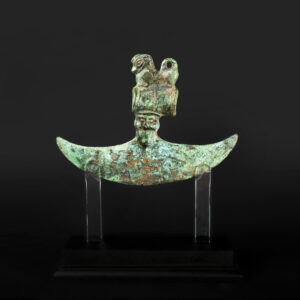
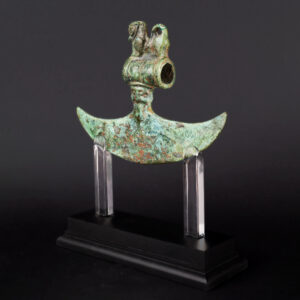
This remarkable ancient Elamite crescent axe features a distinctively curved, finely detailed blade that appears to emerge from the mouth of a bearded man, creating a powerful and evocative visual narrative. The figure of the bearded man, likely representing a deity or a legendary figure, is elegantly cast or carved, with a well-defined facial expression and beard, symbolizing strength or authority. The blade itself, attached seamlessly to the mouth, displays polished surfaces and sharp edges, indicative of high-quality craftsmanship from the Achaemenid periods. The axe’s shaft extends from the figure and is adorned with an intricate relief of a horse, symbolizing power, nobility, or martial prowess. The combination of the mythic figure, the dynamic crescent blade, and the equine motif reflects the sophisticated iconography and artistry characteristic of ancient Persia’s ceremonial weaponry. Crafted from bronze, this artifact exemplifies the masterful metallurgical techniques and symbolic artistry of the period.

REFERENCE #

WP_PR_1116

CIVILIZATION

Iron Age, 1200 B.C.E. – 900 B.C.E.

SIZE

L. 18 cm

CONDITION

Excellent condition, with dark green patina.

PRICE

$6998

PROVENANCE

The Private Collection of K. Baidun

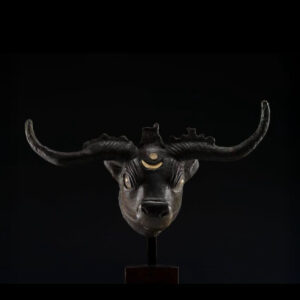
Bronze Sabaean Bull Head

Bronze bull head

A rare Sabaean bronze bull head.

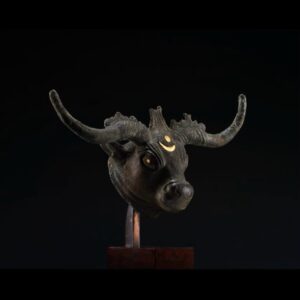
Cast around a solid terracotta core the naturalistically modelled head has grooved eyebrows and neck, recessed nostrils, small erect ears and eyes with dark stone inlays, the pupils drilled. The forehead is also recessed with a small circle above a crescent, symbolic of the bull’s connection with the moon god. The long upward curving horn remains intact (left), restored (right) horn. A loop for suspension or attachment on top of the head. A very Strong and imposing piece.Powerful, enigmatic, and deeply expressive, this is a commanding piece that speaks to the strength and spiritual significance of the bull in Sabaean culture.

REFERENCE #
SI_SA_1018

CIVILIZATION SABAEAN,

CIRCA 200 B.C. – 100 B.C.

SIZE

H.16 cm

CONDITION

Fine condition

(Right Horn Restored)

PRICE
$45,000

PROVENANCE

Christies 23.3.71 Property of a Gentleman, from Al-Jubah to the south of Marib

Private collection UK, acquired late 1960s