Description
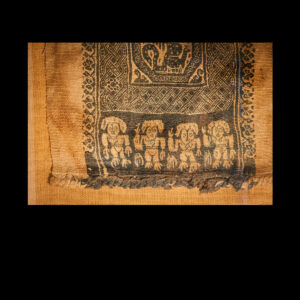
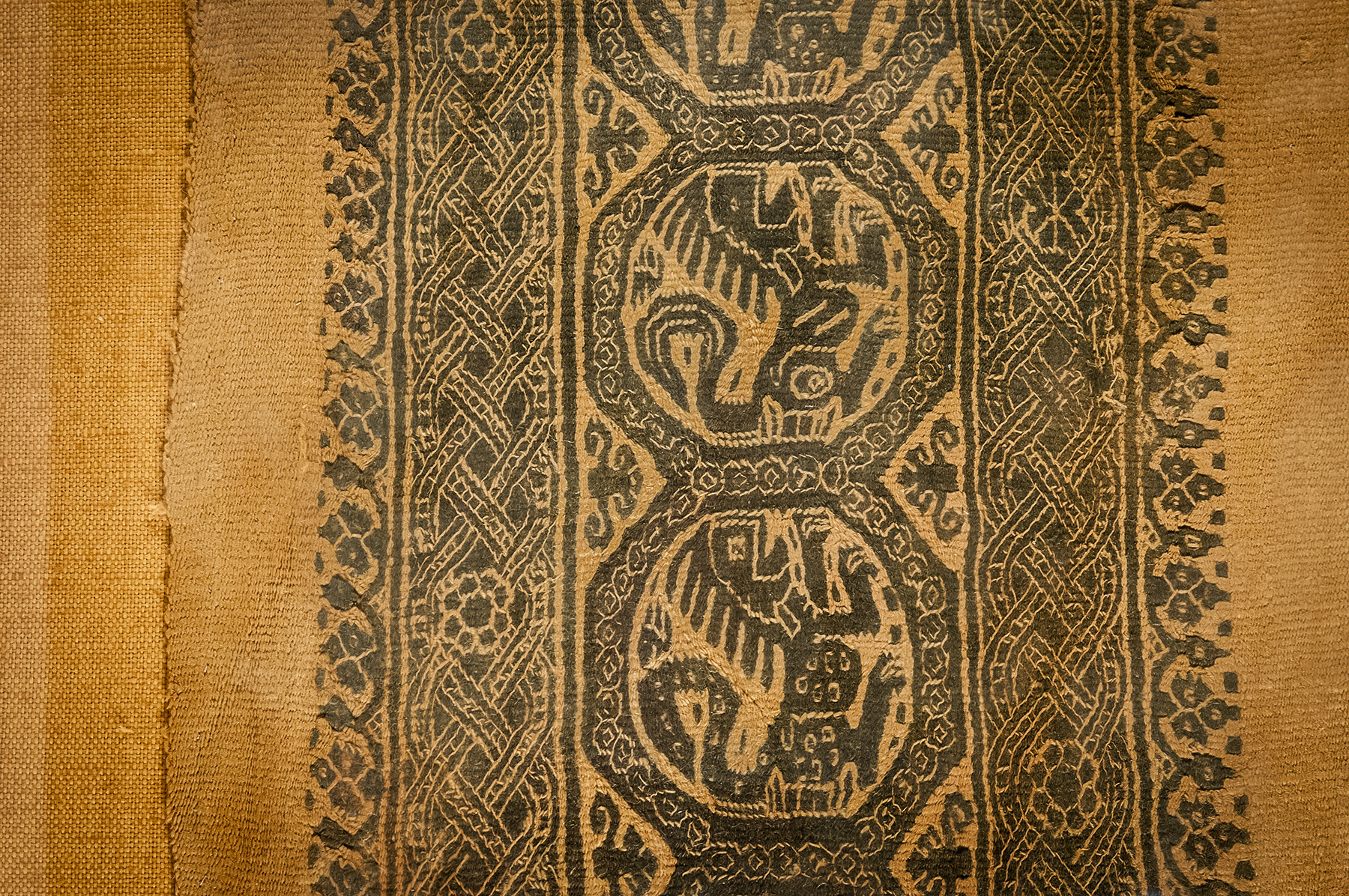
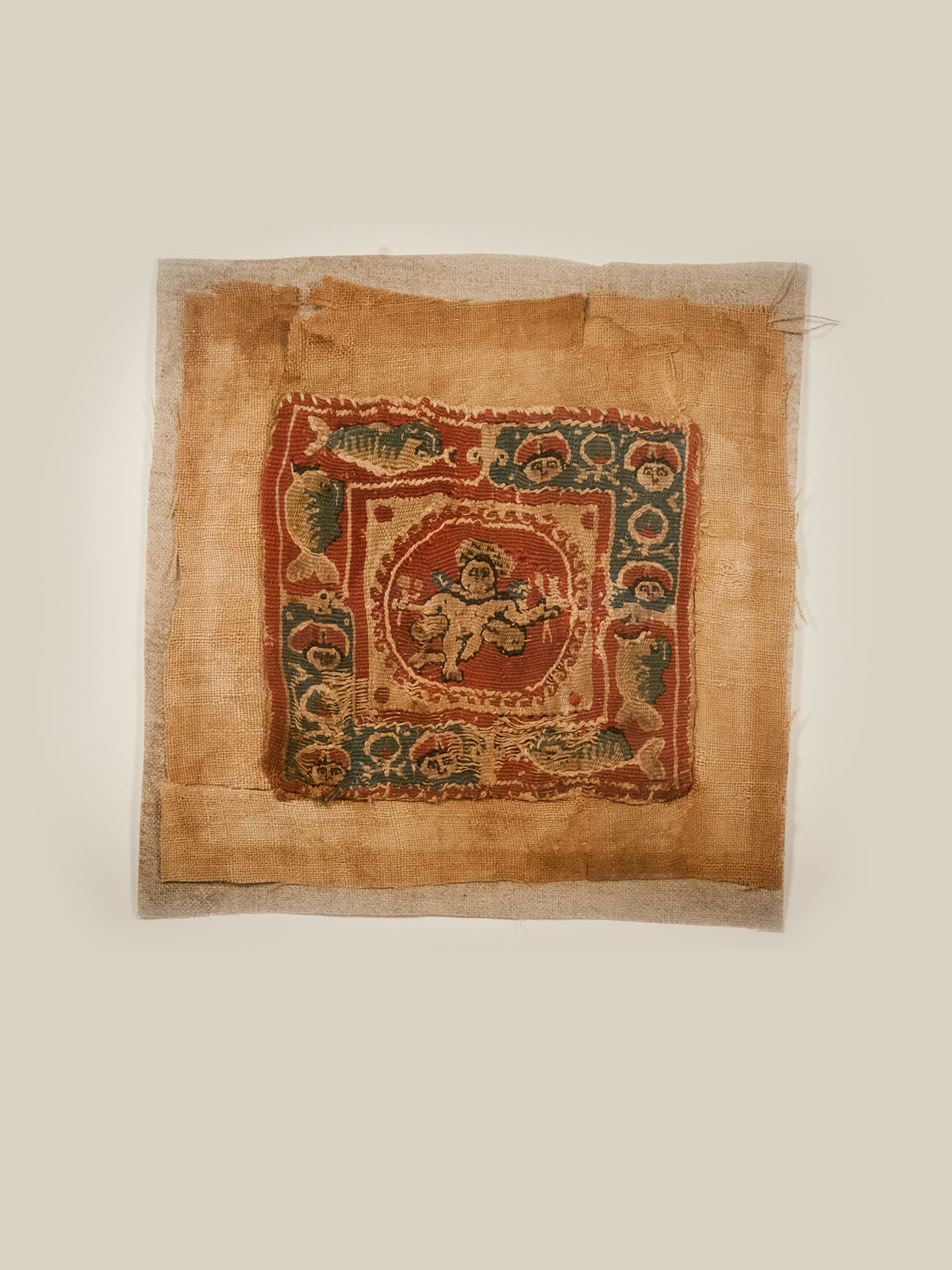
Woven Fragment with Dancing Eros (?) . Multi-coloured cloth in beige, green and red. Fine-threaded.
The tondo with “running dog” frame is set inside an almost square, red and green frame with an ornamental band composed of fishes and human heads. At its centre is a nude, wreathed figure with crotales, branches and wineskins.
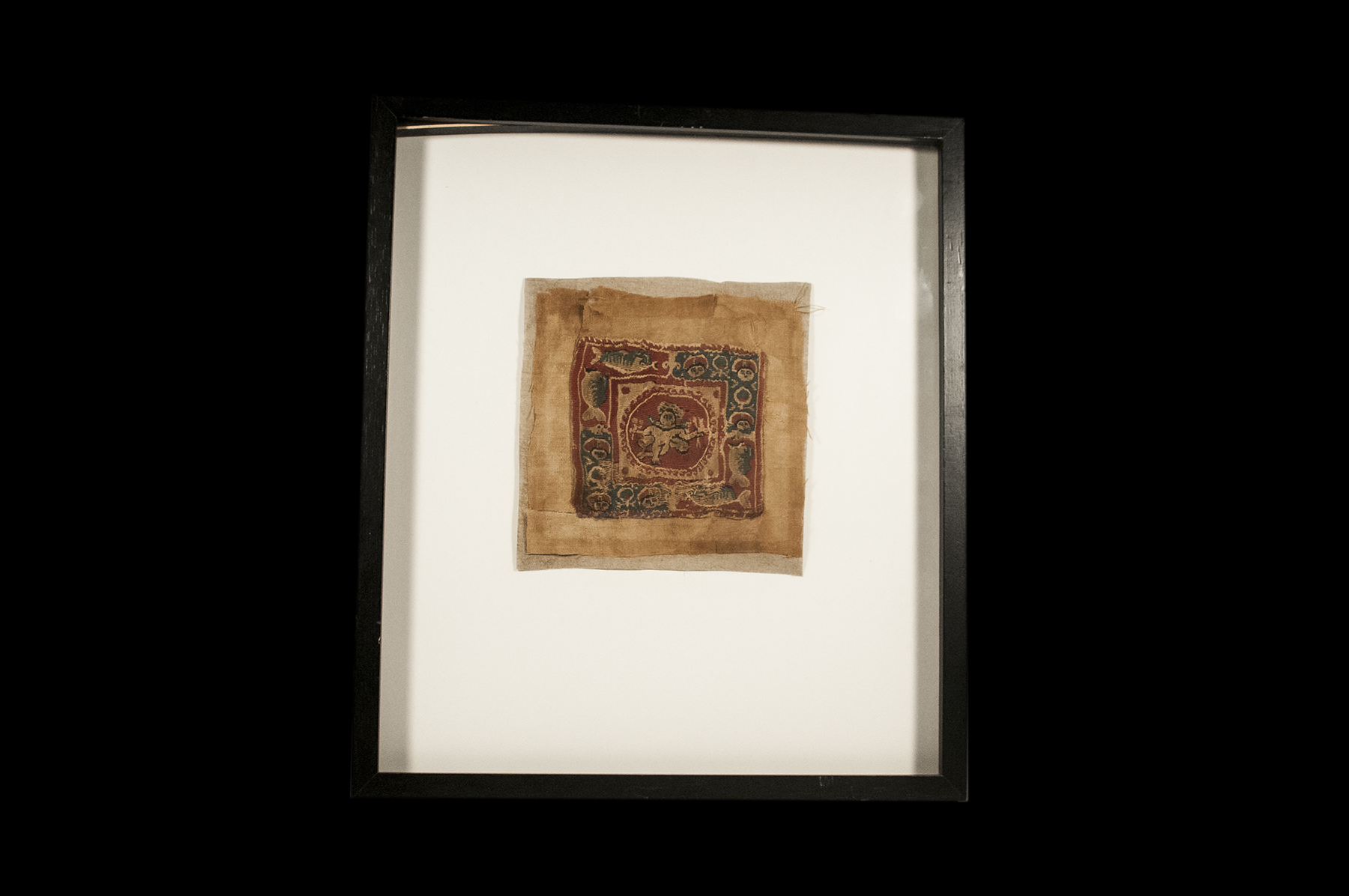
Sewn onto beige linen and framed. Fragment of a tunic or tabula. – Cf. Cat. Leipzig – 2002, 66, 71 nos. 1, 15 with illus.
REFERENCE #
TX_EG_1003
CIVILIZATION
Egypt, Coptic, 400 C.E. – 600 C.E.
SIZE
L. 10 cm, W. 10 cm
CONDITION
Fine Condition
PRICE
$2,000
PROVENANCE
Coll. A. and E. Offermann, Cologne (1965-2012). – Formerly Coll. Bareiss. Thereafter auction Neumeister, Munich, ca. 2009.
Frequently Asked Questions
The Woven Fragment with Dancing Eros is a multi-coloured cloth piece featuring a nude, wreathed figure possibly representing Eros, surrounded by ornamental bands with fishes and human heads. It is a fragment of a tunic or tabula from the Coptic period in Egypt, dating between 400 and 600 C.E.
The fragment is made of fine-threaded cloth sewn onto beige linen. It features multi-coloured threads in beige, green, and red, with a red and green frame and ornamental bands.
The fragment measures 10 cm in length and 10 cm in width. It is described as being in fine condition, indicating it has been well preserved over time.
The fragment originates from the Coptic civilization in Egypt, dating from approximately 400 C.E. to 600 C.E., a period known for its distinctive textile art and Christian influences.
The fragment was part of the collection of A. and E. Offermann in Cologne from 1965 to 2012. Before that, it belonged to the Bareiss collection and was auctioned at Neumeister in Munich around 2009.
The ornamental bands feature fishes and human heads, which are typical decorative motifs in Coptic textiles. These elements may have symbolic meanings related to fertility, protection, or religious iconography during the period.
The fragment is sewn onto beige linen and framed, which helps preserve its delicate threads and allows it to be displayed safely while maintaining its fine condition.