Roman Silver Denarius of Emperor Tiberius — The Biblical Tribute Penny, Set in Gold
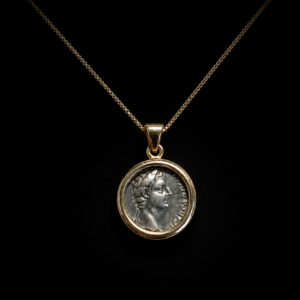
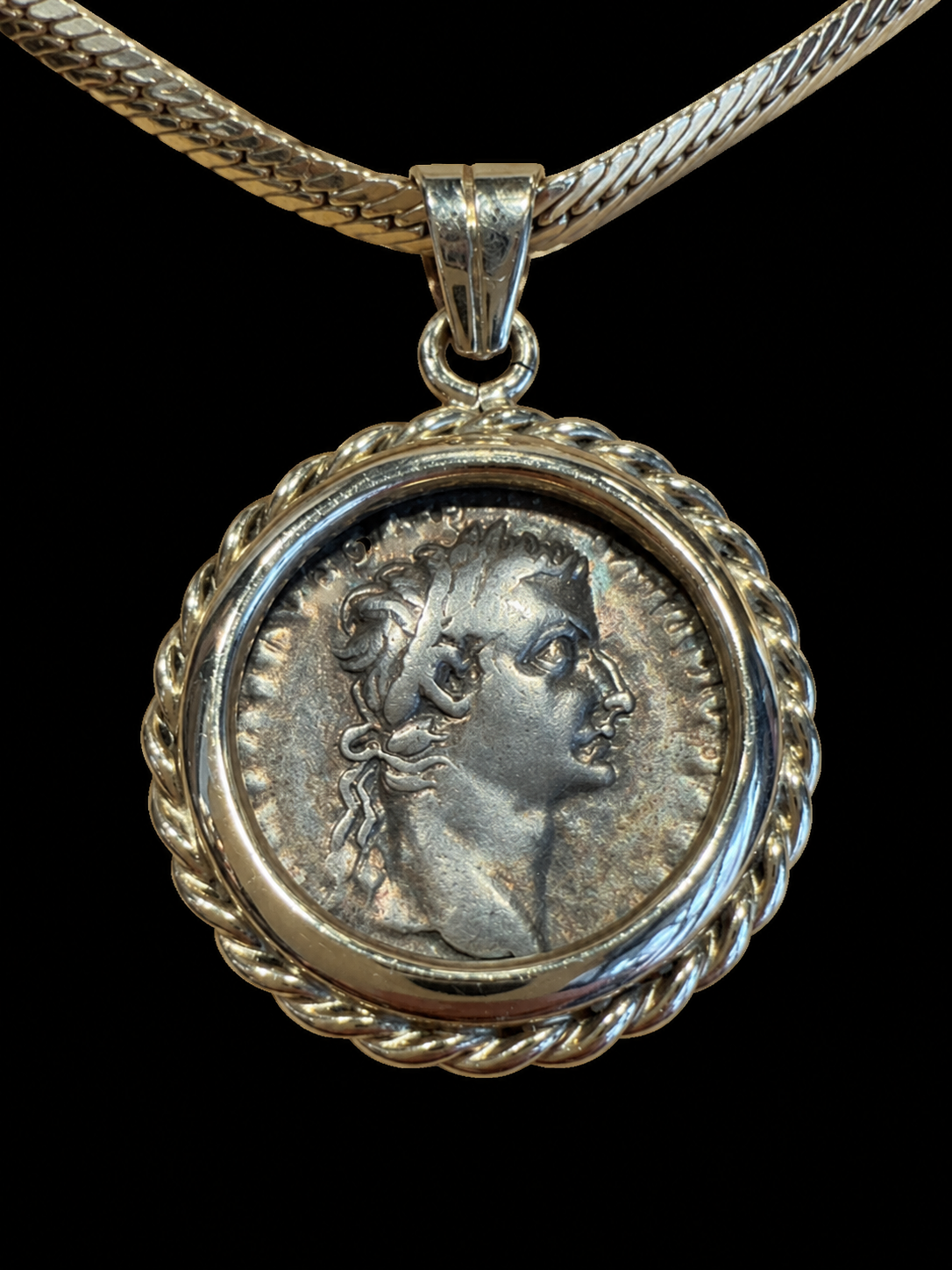
An exceptional Roman silver denarius issued during the reign of Emperor Tiberius, the second Emperor of Rome and ruler during the ministry and Crucifixion of Jesus Christ. Elegantly mounted in a finely crafted gold pendant with an ornamental twisted-rope border, this remarkable coin represents one of the most celebrated types associated with biblical history.
The obverse features a finely detailed laureate portrait of Emperor Tiberius facing right, surrounded by the Latin inscription TI CAESAR DIVI AVG F AVGVSTVS, identifying him as Tiberius Caesar Augustus, son of the divine Augustus.
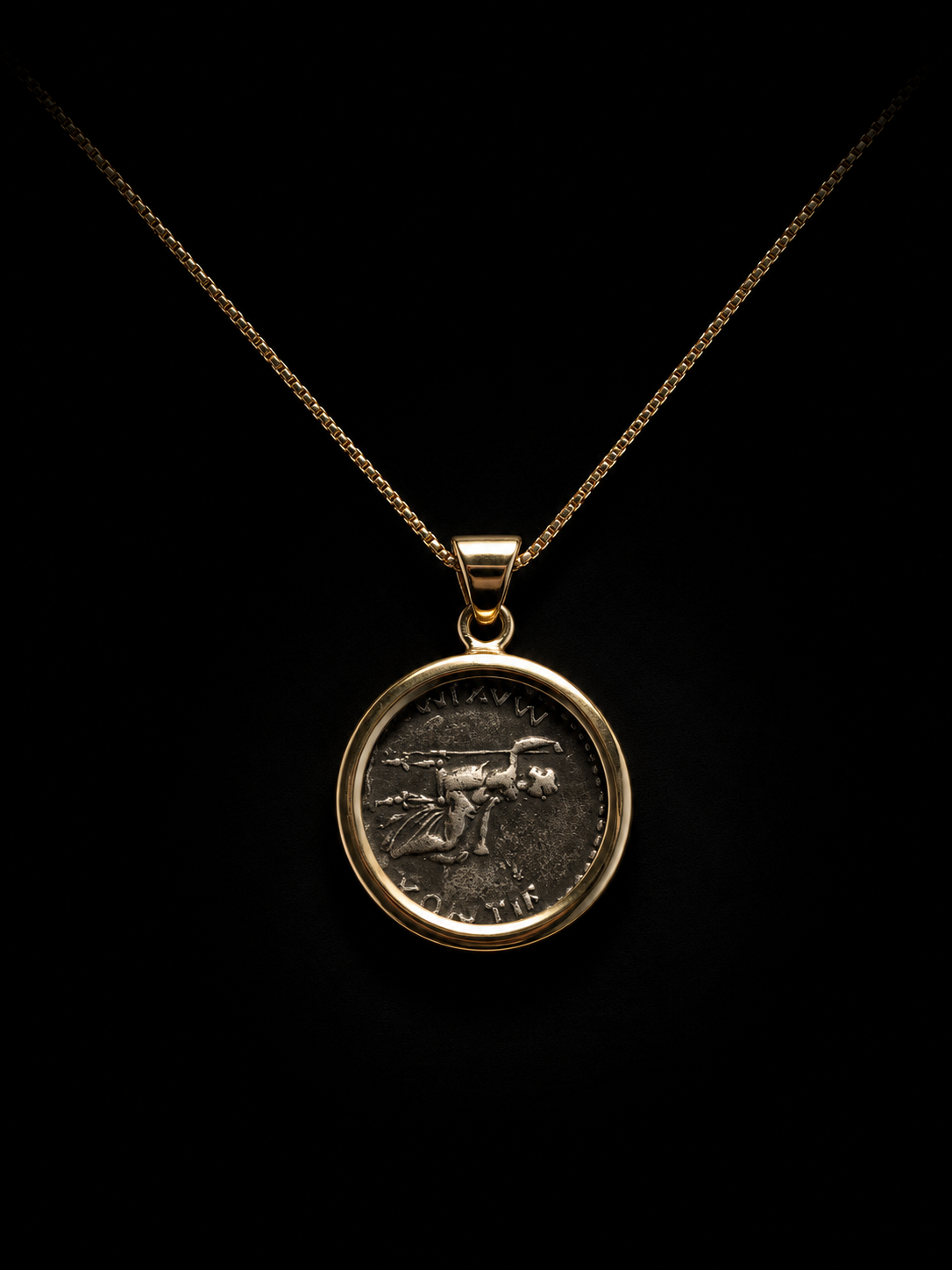
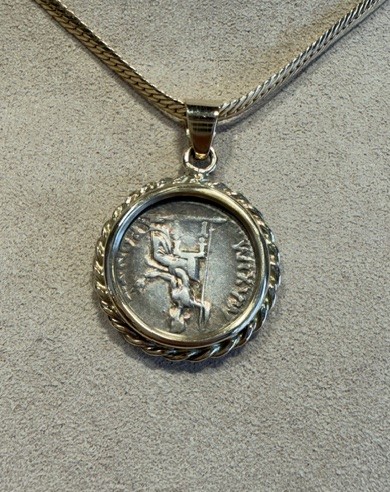
The reverse depicts Livia, mother of Tiberius, traditionally identified as the personification of Pax, the Roman goddess of Peace, seated upon a throne and holding a sceptre and olive branch. The surrounding inscription, PONTIF MAXIM, refers to the emperor’s position as Pontifex Maximus, the supreme religious authority of Rome.
This celebrated coin type is traditionally identified as the Tribute Penny, associated with the Gospel account in which Jesus was asked whether it was lawful to pay taxes to Caesar. His response, recorded in Matthew 22:19–21, was: “Render therefore unto Caesar the things which are Caesar’s; and unto God the things that are God’s.”
The coin displays a striking imperial portrait, well-preserved classical details, and attractive natural silver toning. Its elegant gold setting enhances its historical significance, creating a distinguished combination of Roman imperial artistry, biblical heritage, and fine contemporary jewelry.
A remarkable piece of ancient history, preserving a tangible connection to the Roman Empire and the world of Jesus Christ.
REFERENCE #
JW-RM-1114
CIVILIZATION
Roman Imperial Period, A.D. 14–37
PRICE
$4,500
PROVENANCE
Baidun private collection
Frequently Asked Questions
The Roman silver denarius from Emperor Tiberius's reign is historically significant because it is traditionally identified as the 'Tribute Penny' mentioned in the Bible during Jesus Christ's ministry. This coin is linked to the Gospel account where Jesus discusses the lawfulness of paying taxes to Caesar, making it a tangible connection to biblical history and the Roman Empire.
The obverse of the coin features a detailed laureate portrait of Emperor Tiberius facing right, with the Latin inscription 'TI CAESAR DIVI AVG F AVGVSTVS,' identifying him as Tiberius Caesar Augustus, son of the divine Augustus. The reverse depicts Livia, mother of Tiberius, personified as Pax, the Roman goddess of Peace, seated on a throne holding a sceptre and olive branch, with the inscription 'PONTIF MAXIM' referring to the emperor's role as Pontifex Maximus, Rome's supreme religious authority.
This coin is called the 'Tribute Penny' because it is traditionally identified with the coin Jesus referenced in Matthew 22:19–21 when asked about paying taxes to Caesar. Jesus's response, 'Render therefore unto Caesar the things which are Caesar’s; and unto God the things that are God’s,' highlights the coin's role in this significant biblical teaching about civic duty and spiritual obligation.
This coin pendant is unique and valuable due to its exceptional preservation, striking imperial portrait, and natural silver toning. Additionally, it is elegantly mounted in a finely crafted gold pendant with an ornamental twisted-rope border, combining Roman imperial artistry, biblical heritage, and fine contemporary jewelry, which enhances both its historical and aesthetic significance.
The inscription 'PONTIF MAXIM' on the coin signifies the emperor's role as Pontifex Maximus, the supreme religious authority in ancient Rome. This title emphasized the emperor's religious leadership and was an important aspect of his authority during the Roman Imperial Period.
This Roman silver denarius originates from the Roman Imperial Period, specifically during the reign of Emperor Tiberius from A.D. 14 to 37. This timeframe coincides with significant historical and biblical events, including the ministry and Crucifixion of Jesus Christ.
The provenance of this coin pendant is from the Baidun private collection, indicating it has been part of a private collection before being offered for sale. Provenance helps establish the coin's authenticity and historical ownership.
Related products
-
Silver Coin of Tiberius Set in Gold
-
Large Silver Coin of Athena Set in Gold
-
Ancient Greek Gold Stater of Alexander the Great
-
Silver Tetradrachm of Alexander the Great