Roman Imperial Iron Gladius

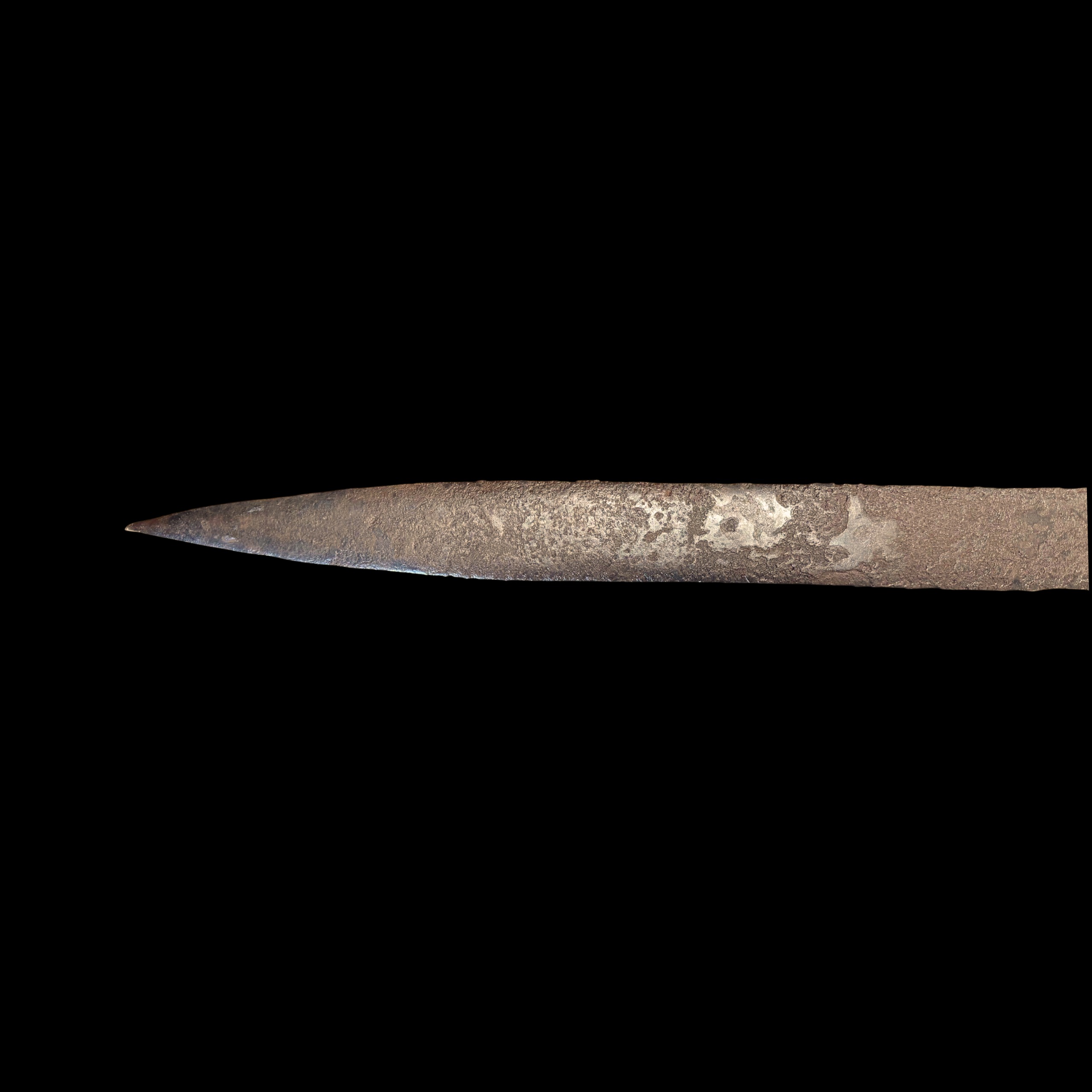
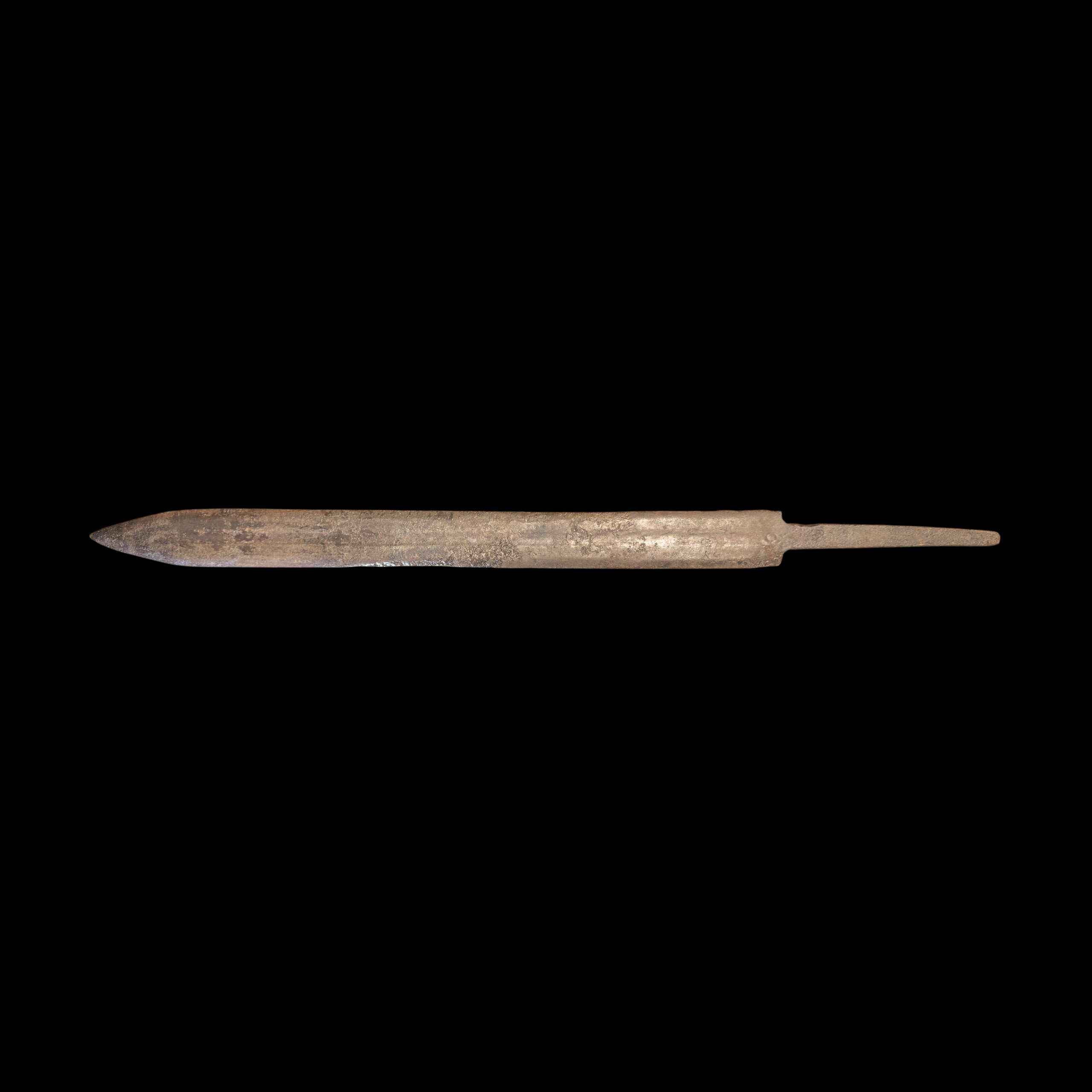
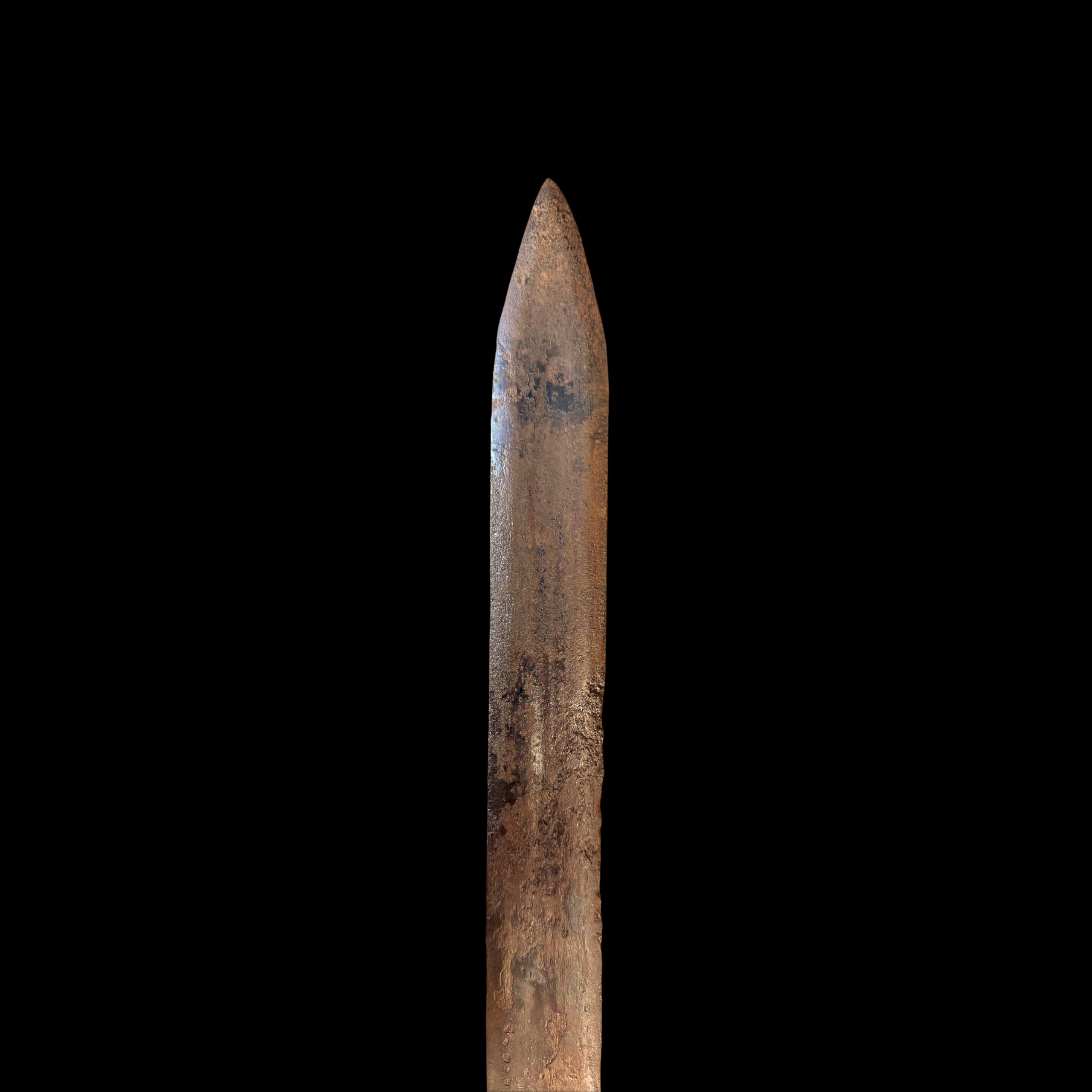
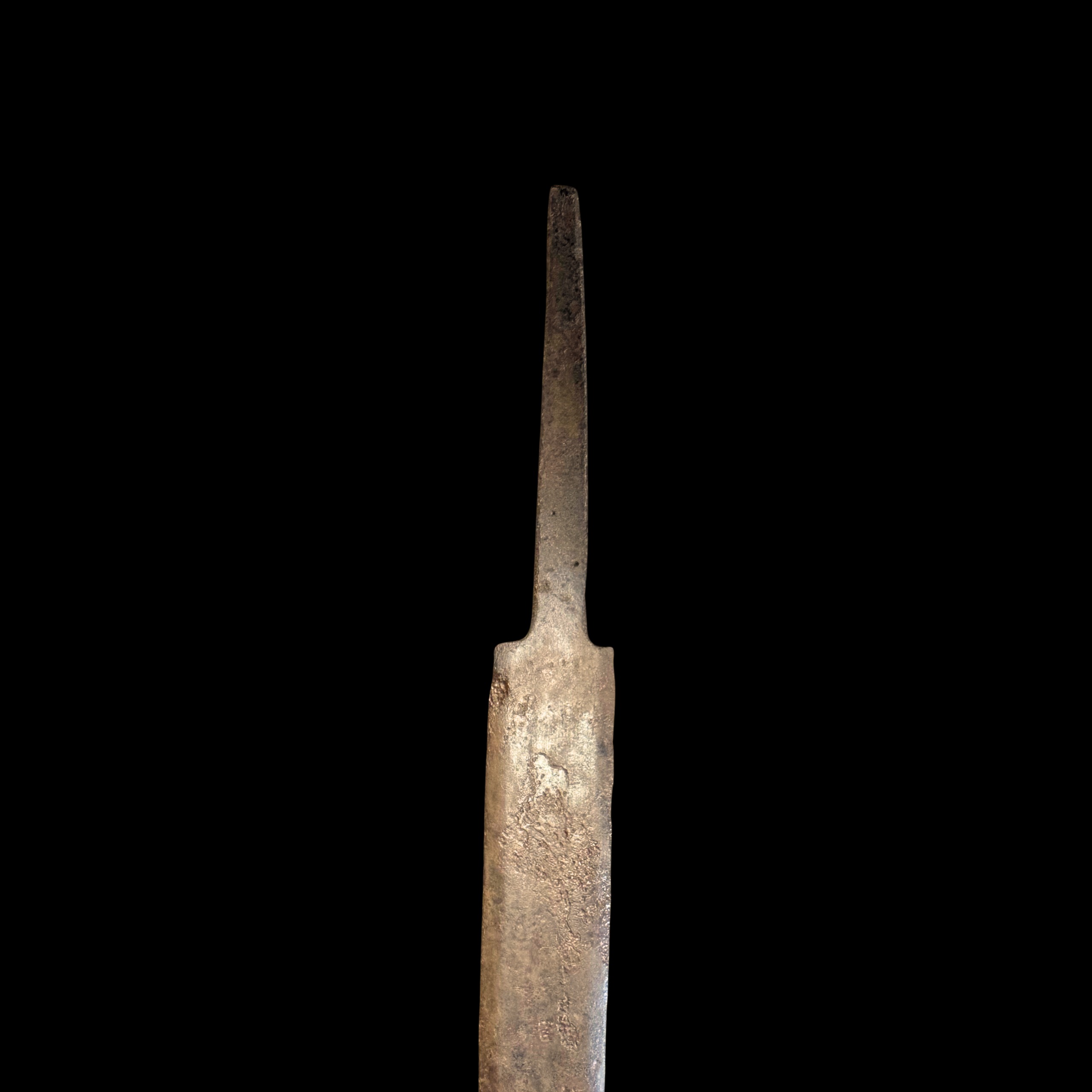
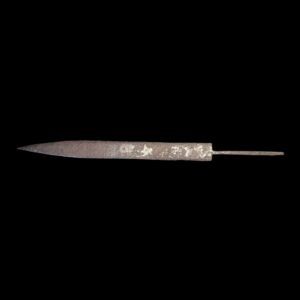
An impressive Roman iron gladius, the iconic close-combat sword carried by the Roman legionary during the Early Imperial period. The weapon preserves its long double-edged blade, terminating in a pronounced point, together with the original elongated tang that once supported a separately fashioned hilt of wood, bone, or other organic material.

The gladius was one of the defining weapons of the Roman army. Used in conjunction with the large scutum shield, it was particularly effective in the disciplined close-quarter combat for which the Roman legions became famous. Its design permitted both powerful thrusting attacks and cutting blows while allowing the legionary to maintain the tightly organized formations fundamental to Roman battlefield tactics.

Dating to the 1st century A.D., this sword belongs to one of the most consequential periods of Roman military history, spanning the Julio-Claudian and Flavian dynasties. Roman legionaries equipped with swords of this tradition campaigned throughout the Empire, from Britain and the Rhine frontier to Judaea and the eastern Mediterranean. The period witnessed the First Jewish–Roman War (A.D. 66–73) and the Roman capture of Jerusalem under Titus in A.D. 70.

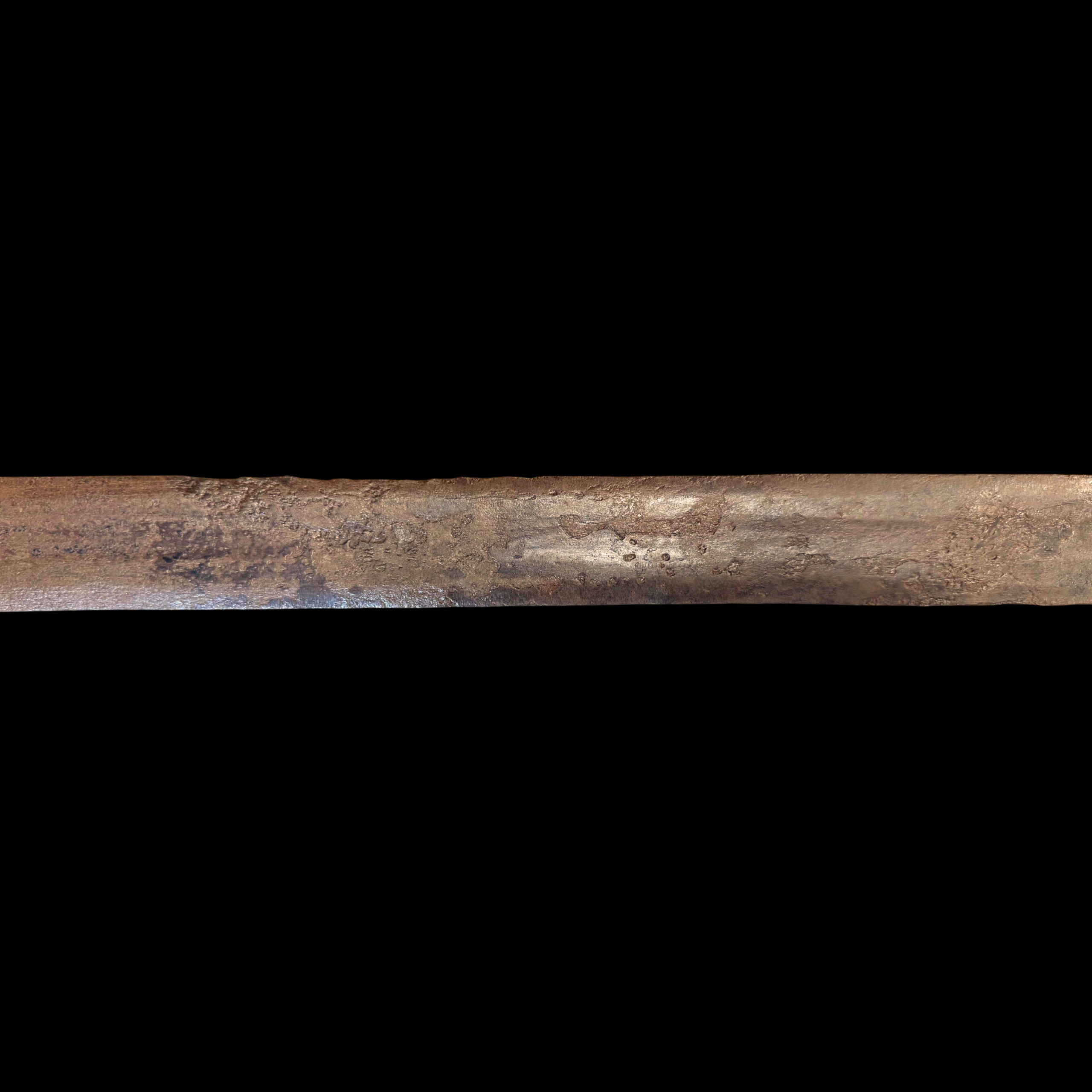
The iron surface displays oxidation, pitting, and areas of mineralization consistent with archaeological preservation. Despite its considerable antiquity, the sword retains a remarkably recognizable profile, including the blade, point, shoulders, and substantial tang.

A powerful and evocative example of Roman military equipment and of the weapon that became synonymous with the Roman legionary and the expansion of Imperial Rome.

Category:

Description

CIVILIZATION

Roman. circa 1st century A.D

SIZE

L. 60 cm, W 4.5 cm

CONDITION

Excellent condition

PRICE

$13,000

Frequently Asked Questions

This artifact belongs to the Roman civilization, dating back to approximately the 1st century A.D. It reflects the craftsmanship and cultural heritage of that era.

The artifact measures 60 cm in length and 4.5 cm in width, making it a relatively elongated piece. These dimensions help in understanding its use and display.

The artifact is in excellent condition, indicating it has been well-preserved over the centuries. This enhances its value and appeal to collectors and historians.

The price of the artifact is $13,000. This reflects its historical significance, condition, and rarity in the market.

The artifact originates from the 1st century A.D., a period significant for Roman history and culture. This dating helps place the artifact in its historical context.
Frequently Asked Questions

This artifact belongs to the Roman civilization, dating back to approximately the 1st century A.D. It reflects the craftsmanship and cultural heritage of that era.

The artifact measures 60 cm in length and 4.5 cm in width, making it a relatively elongated piece. These dimensions help in understanding its use and display.

The artifact is in excellent condition, indicating it has been well-preserved over the centuries. This enhances its value and appeal to collectors and historians.

The price of the artifact is $13,000. This reflects its historical significance, condition, and rarity in the market.

The artifact originates from the 1st century A.D., a period significant for Roman history and culture. This dating helps place the artifact in its historical context.