Roman Gold Tortoise Pendant
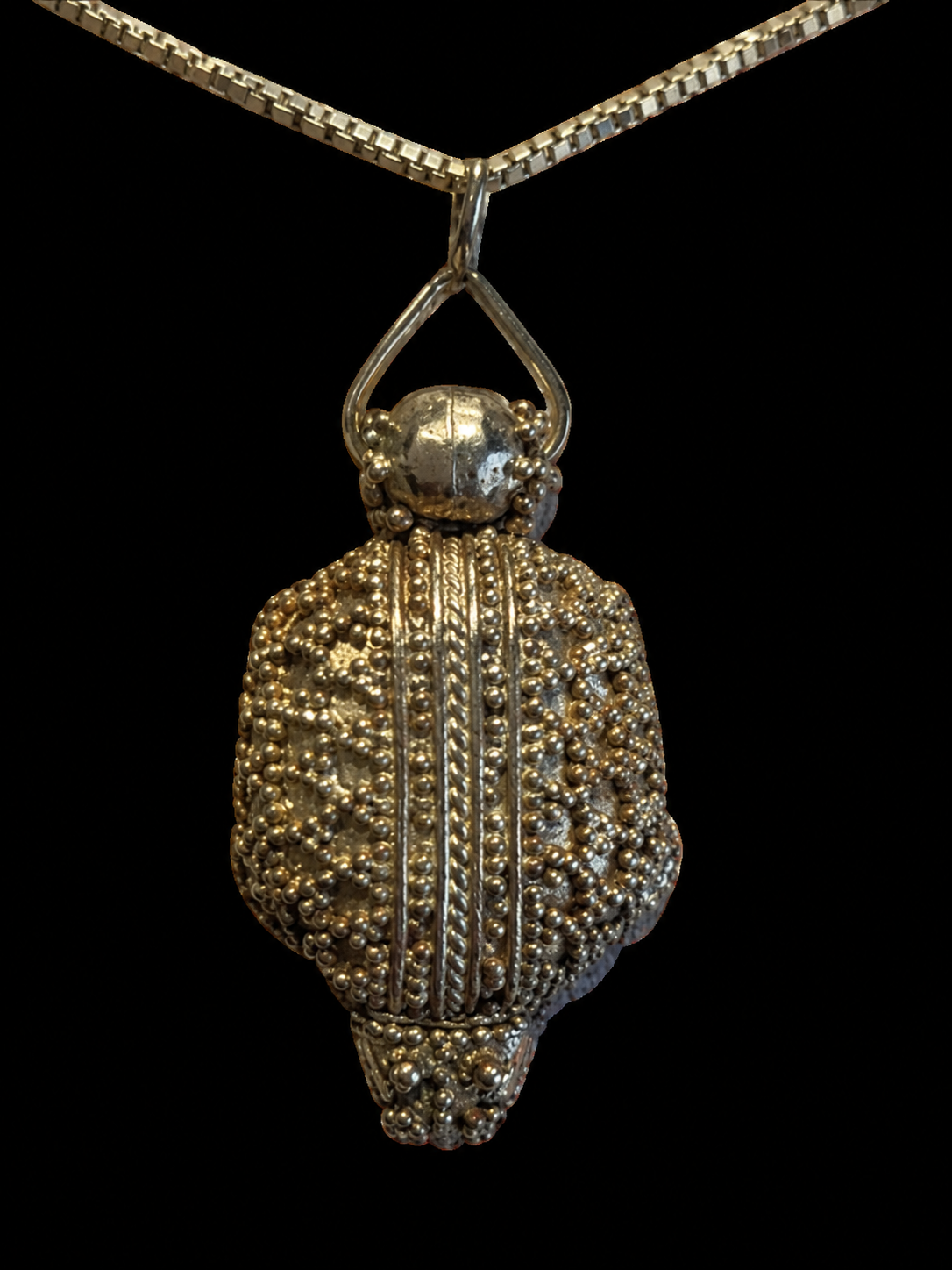
An exceptional ancient gold pendant fashioned in the form of a tortoise, distinguished by its elaborate granulation, intricate filigree decoration, and finely executed sculptural form.
The hollow body is adorned with richly textured geometric patterns composed of minute applied gold granules, arranged in triangular formations between raised longitudinal bands of twisted gold wire. The stylized head, limbs, and shell demonstrate the goldsmith’s remarkable ability to combine naturalistic representation with sophisticated ornamental craftsmanship.
In the ancient Mediterranean world, the tortoise was associated with longevity, endurance, and protection. The pendant’s hollow construction may also suggest a secondary function as a miniature receptacle for precious aromatic substances, although this remains unconfirmed.
A distinguished example of ancient luxury jewelry, reflecting the refinement, technical accomplishment, and artistic traditions of Roman goldsmithing.
REFERENCE #
JW-RM-1076
CIVILIZATION
Roman Period, circa 1st–4th Century A.D.
PRICE
POR
PROVENANCE
Baidun private collection
Frequently Asked Questions
The pendant is made of gold and features elaborate granulation and intricate filigree decoration. The goldsmith used minute applied gold granules arranged in geometric triangular patterns and raised longitudinal bands of twisted gold wire to create a richly textured surface.
In the ancient Mediterranean world, the tortoise symbolized longevity, endurance, and protection. This cultural symbolism likely influenced the choice of the tortoise form for the pendant, reflecting these valued qualities.
The pendant has a hollow body adorned with geometric patterns made from tiny gold granules. This hollow construction might have served a secondary function as a miniature container for precious aromatic substances, although this use is not confirmed.
The pendant dates back to the Roman Period, approximately from the 1st to the 4th Century A.D., showcasing the artistic and technical skills of Roman goldsmiths during that era.
This pendant exemplifies the refinement, technical accomplishment, and artistic traditions of Roman goldsmithing. Its combination of naturalistic representation and sophisticated ornamentation highlights the skill and creativity of ancient Roman artisans.
Yes, the pendant comes from the Baidun private collection, indicating its documented ownership and history prior to its current status.
Related products
-
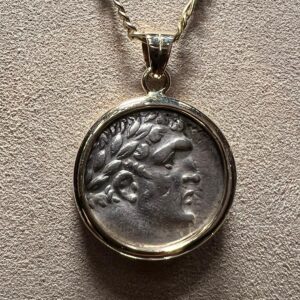
Silver Tyre Shekel Coin in an 18K Gold Pendent
-
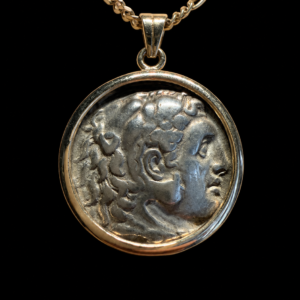
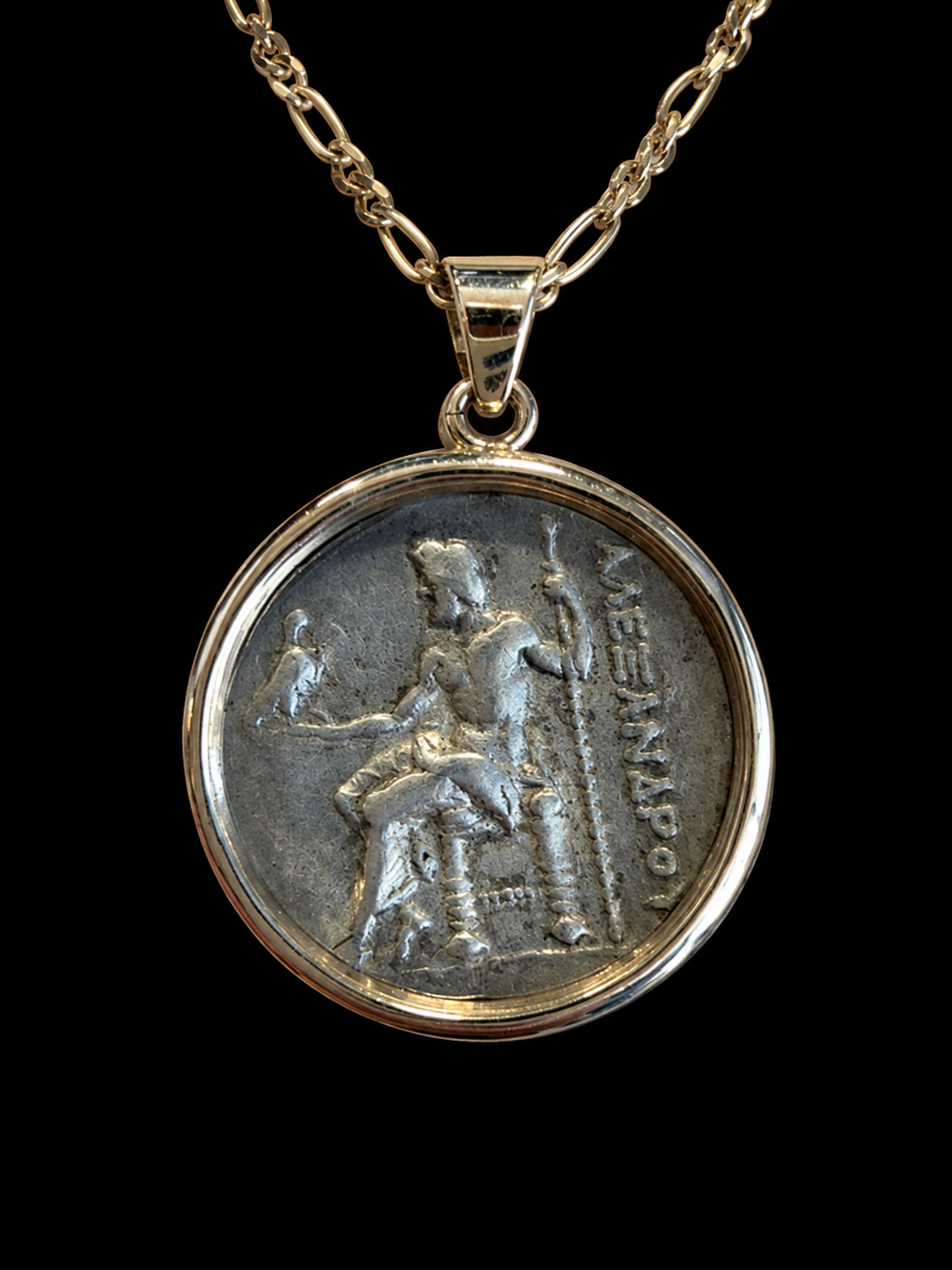
Ancient Greek Silver Tetradrachm of Alexander the Great Set in 14K Gold
-
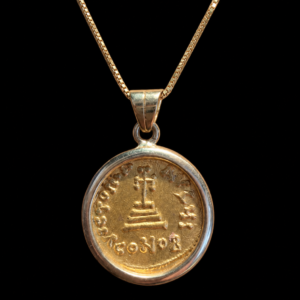
Byzantine Gold Solidus of Heraclius and Heraclius Constantine in a 14K Gold Pendant
-
Ancient Greek Silver Tetradrachm of Alexander the Great Set in 18K Gold