Description
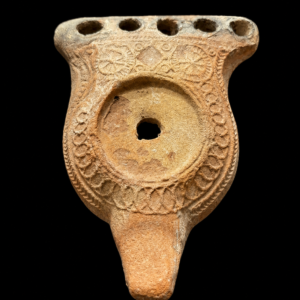
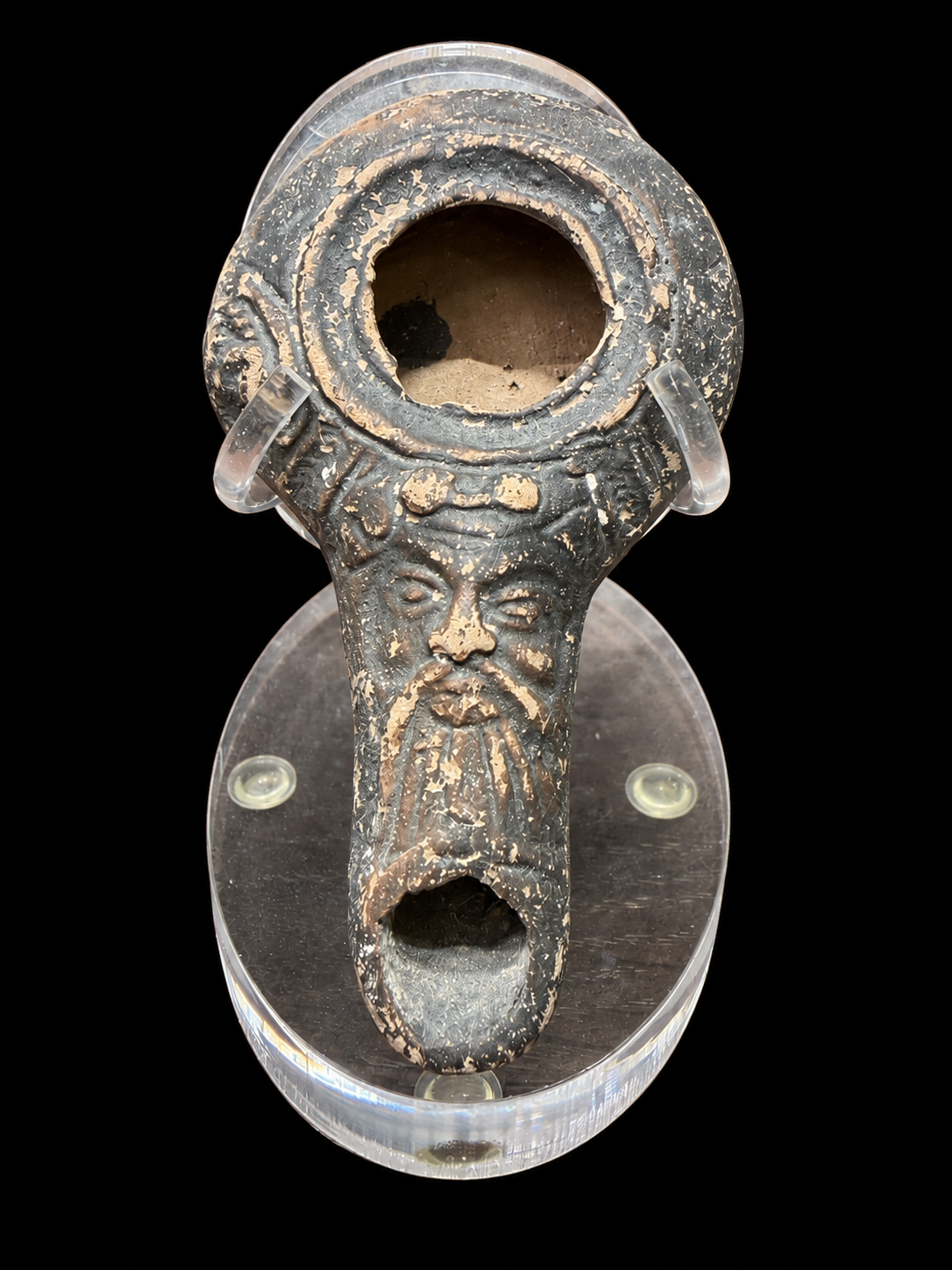
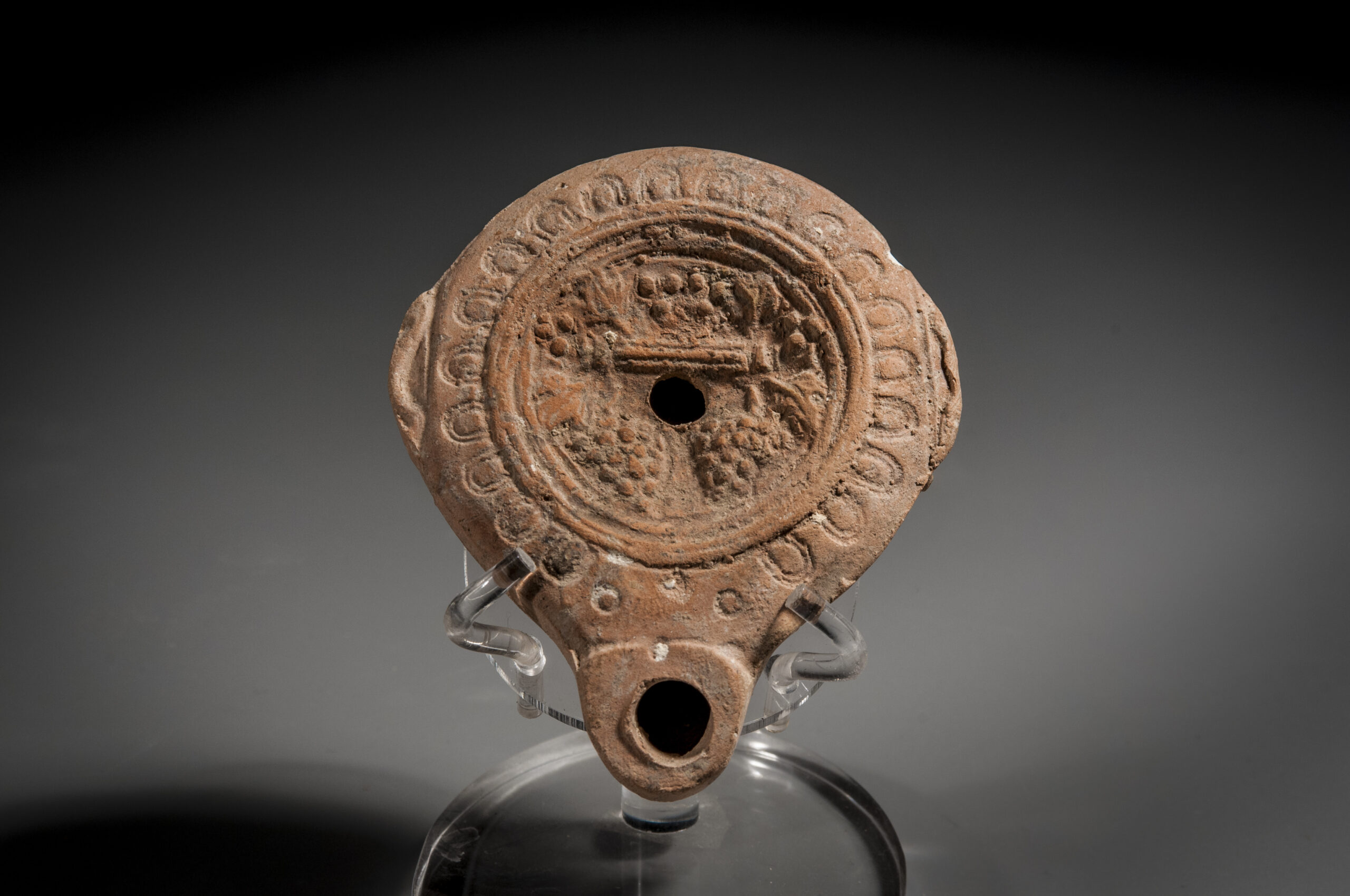
A finely molded Roman terracotta discus oil lamp, distinguished by an elaborate arrangement of grape clusters and vine ornament decorating the recessed central discus.
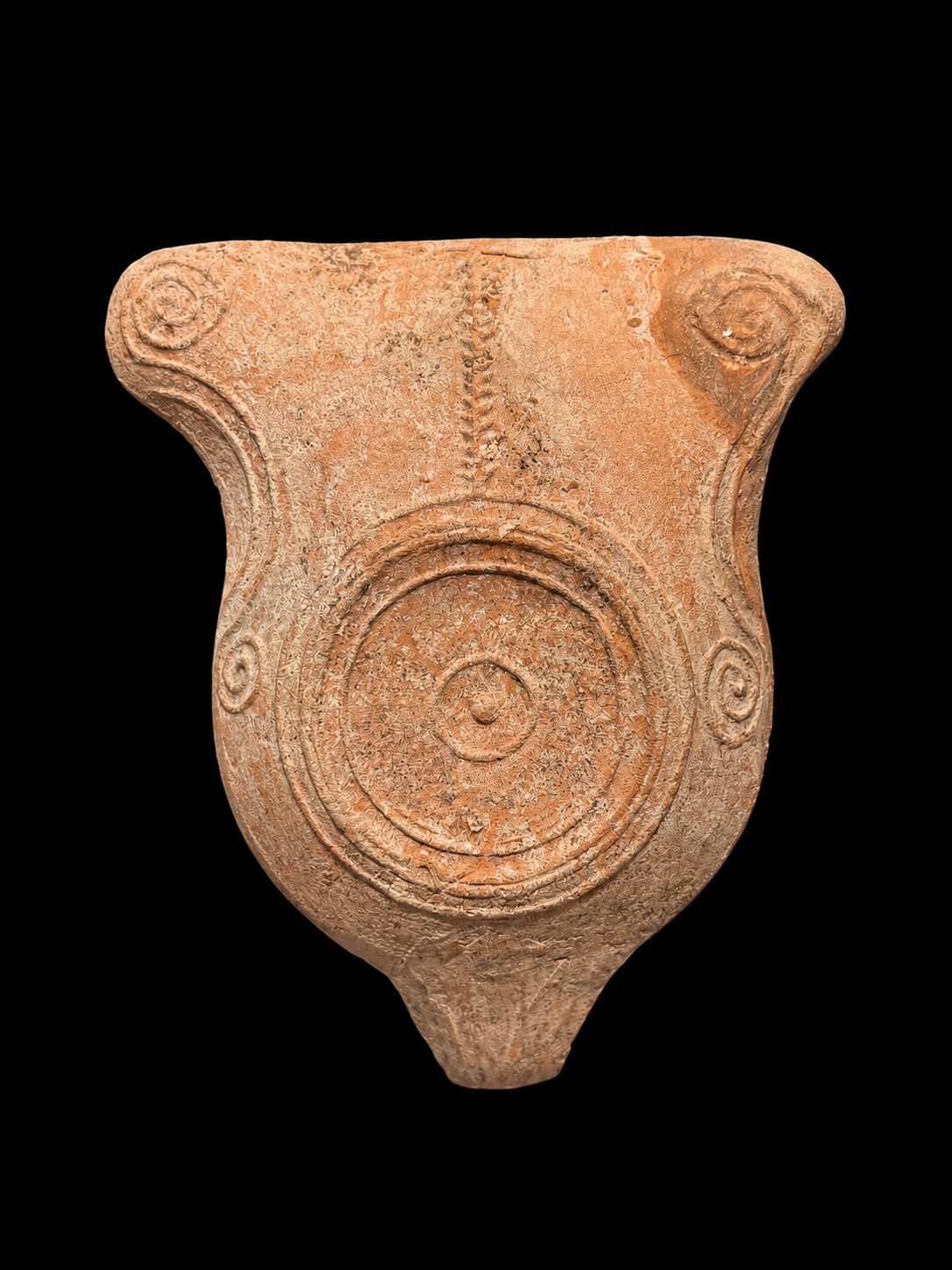
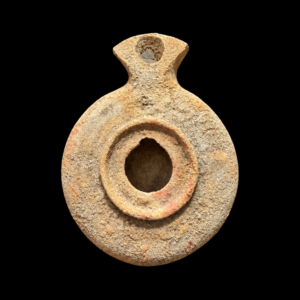
The lamp has a compact circular body with a short projecting nozzle and circular wick-hole. The broad discus is enclosed by concentric molded borders, while the narrow shoulder is decorated with a continuous ovolo pattern, creating a richly ornamented frame around the central composition.
Within the discus, clusters of grapes and associated vegetal elements are arranged around the central filling hole. The decoration reflects the importance of the grapevine and wine in Roman life and visual culture. Grapes were associated with viticulture, abundance, feasting and the god Dionysus/Bacchus, whose imagery and attributes were particularly popular throughout the Roman world. The motif need not, however, indicate that the lamp itself had a specifically religious function.
Mold-made discus lamps of this general tradition were widely produced and circulated throughout the Roman Empire, including the provinces of the eastern Mediterranean and Roman Judaea-Palaestina, where oil lamps formed an essential element of everyday domestic life.
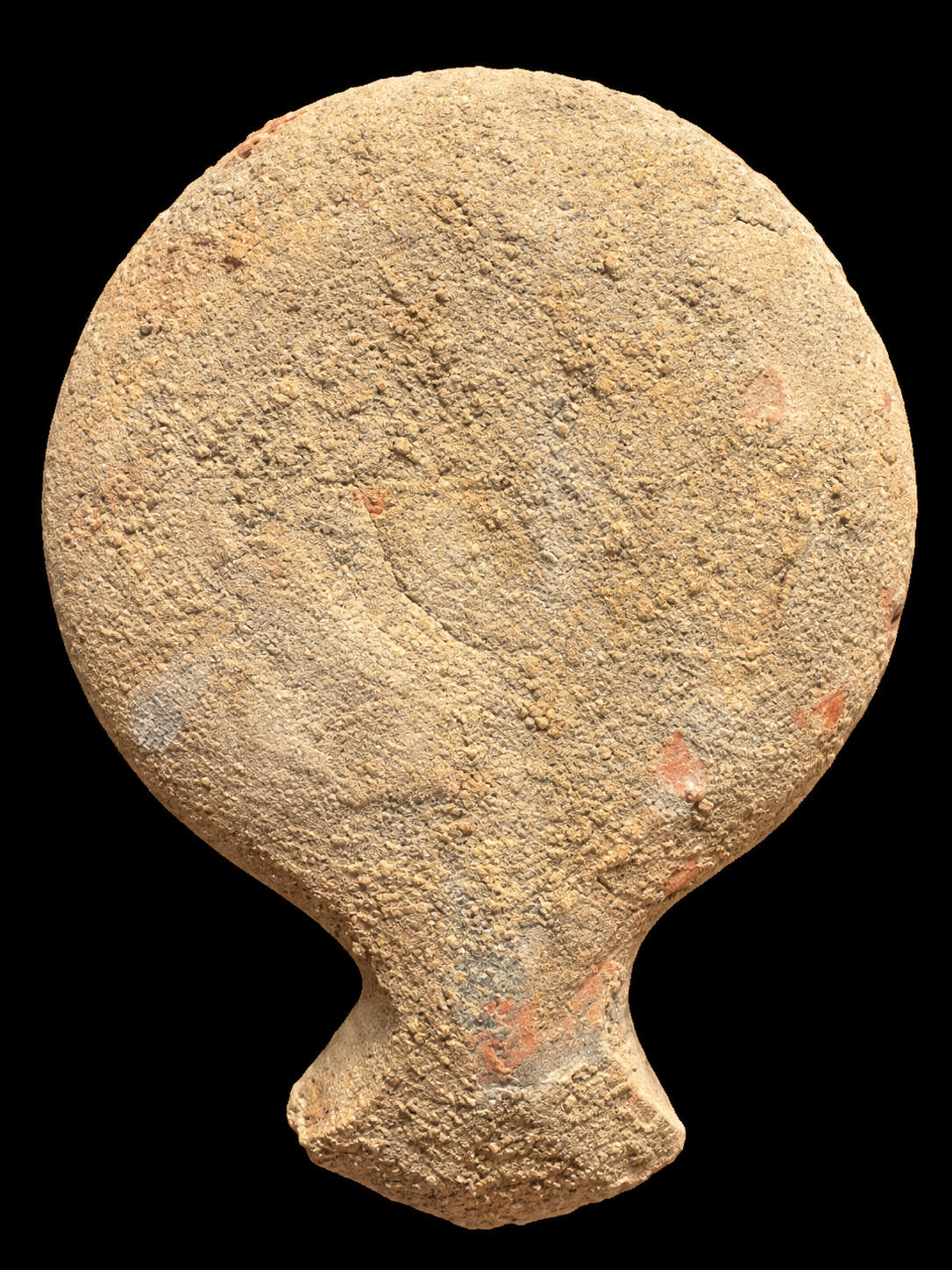
The lamp is formed from reddish-orange terracotta and retains substantial ancient surface deposits and encrustation. Despite this weathering, the grape clusters, concentric borders and ovolo shoulder decoration remain clearly legible, preserving the character of the original molded design.
REFERENCE #
OL-RM-1029
CIVILIZATION
Roman Imperial Period, circa A.D. 150–250
CONDITION
Well preserved overall, with surface wear, deposits and encrustation consistent with age. The body, filling hole, nozzle and wick-hole are preserved, with the principal molded decoration remaining clearly visible.
PRICE
$650
PROVENANCE
Jerusalem Private Collection