Description
This imposing piece is an archaic masterwork from one of the most remarkable cultures in Central Asia: the Bactrians. Bactria is a nebulously-defined area encompassing parts of Afghanistan, Tajikistan, Turkmenistan and Uzbekistan, and is notable for two major cultural phenomena. The best-known is the Hellenistic occupation of Central Asia, when Alexander the Great’s forces took over from the previous Persian invaders. However, the current piece predates this by almost two thousand years, pertaining to the Bronze Age phenomenon known as the BMAC (Bactria-Margiana Archaeological Complex), also known as the Oxus civilization. This comparatively understudied cultural complex peaked between 2200 and 1700 B.C.E., and was characterized by a complex agricultural society which was capable of supporting craft specialists. These include enigmatic ground-stone sculptural forms – often anthropomorphic figures – although large, highly abstract geometric examples such as this are very rare.
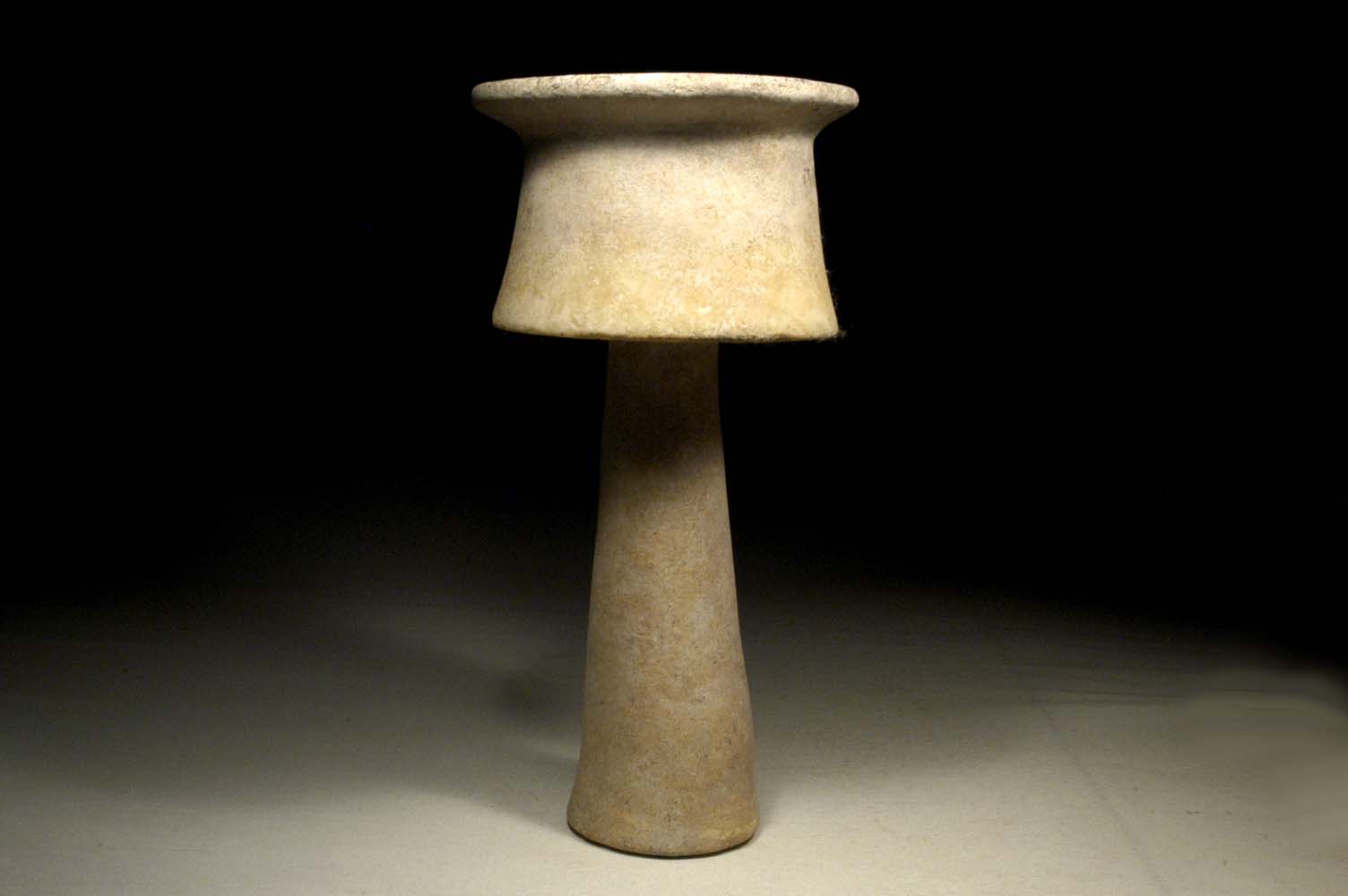
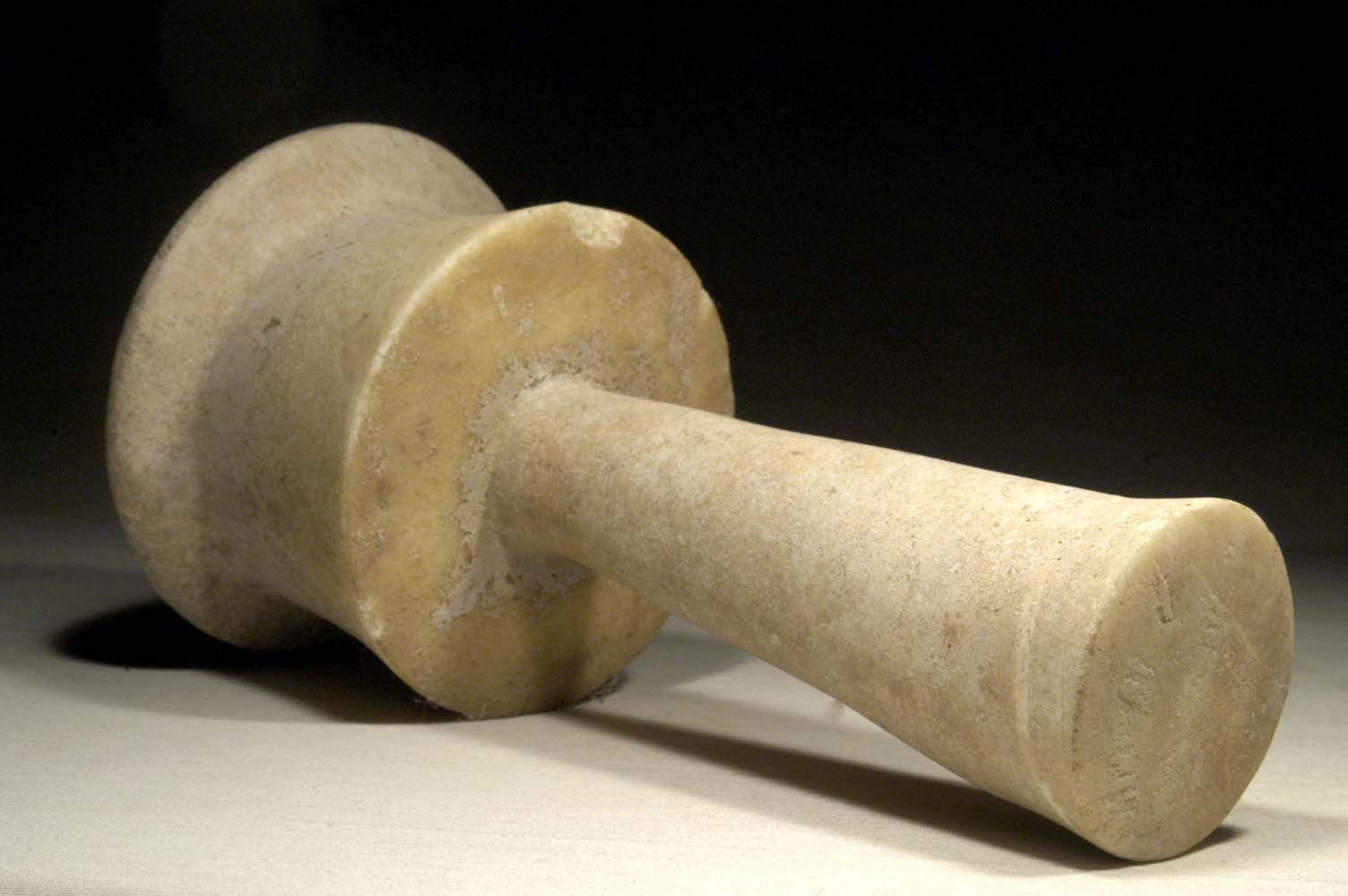
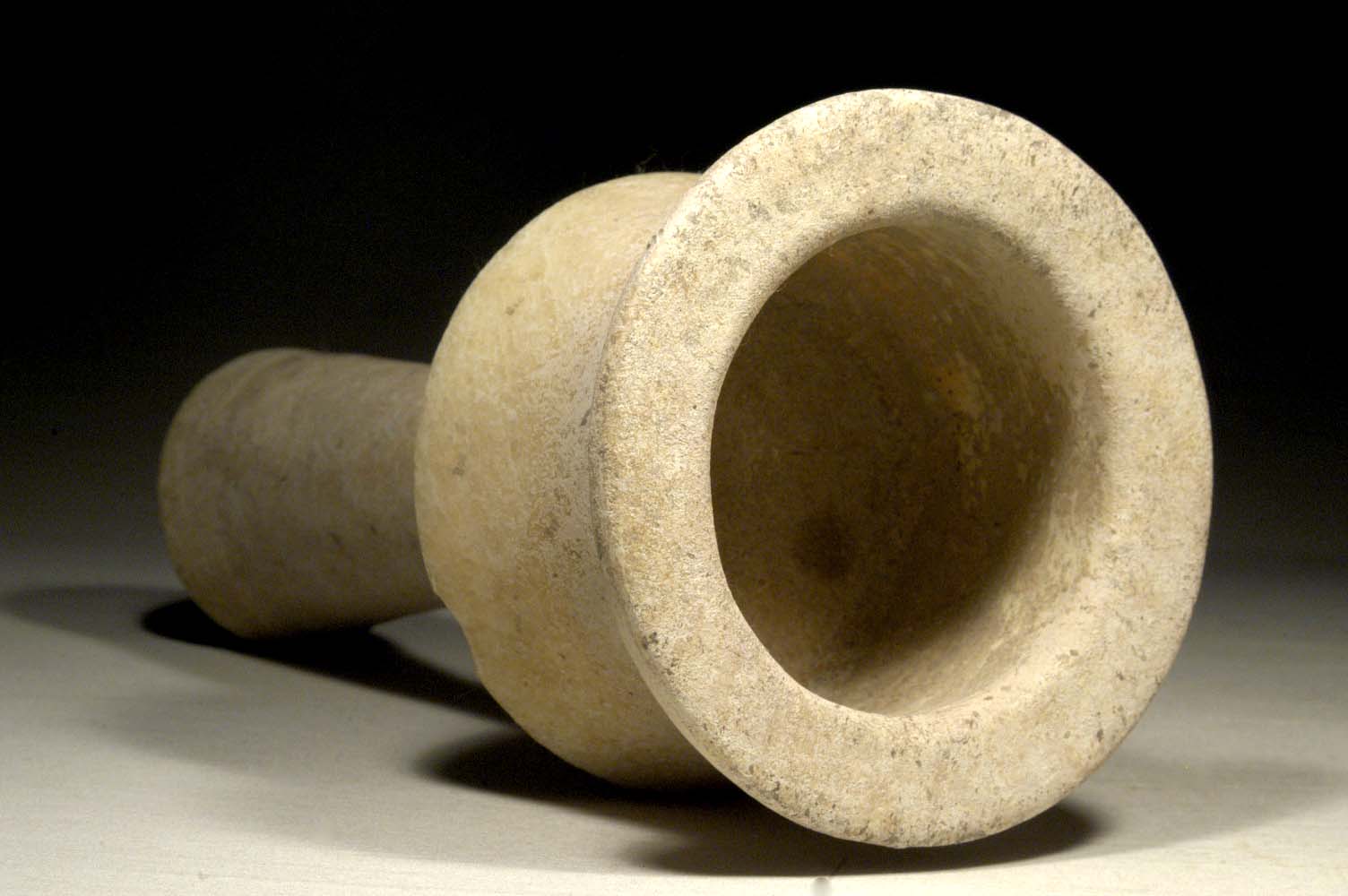
The body of the chalice is cylindrical, with a pinched-in shoulder underneath a flared rim and lip, widening again towards the base of the body which is completely flat beneath. It stands upon a tall, central stem, which gradually flares from a narrow top to a somewhat larger, simple round base. The entire piece is carved from a single block of alabaster, which would have been roughed out into a general form using stone and copper tools then laboriously ground using wood/leather and an abrasive such as sand. This has been done with considerable delicacy, exploiting the banded nature of the alabaster which highlights the linear construction of the piece. The role of the piece is uncertain as we currently lack any contextual information. What it apparent, however, is that every piece of ground stone from this culture is associated with a ritual or at least elite social setting, from anthropomorphic figurines (arguably goddesses, with detachable ivory/bone heads) to outstanding artifacts such as this.
Frequently Asked Questions
The alabaster chalice originates from the Bactrian culture, specifically linked to the Bronze Age Bactria-Margiana Archaeological Complex (BMAC), also known as the Oxus civilization, which flourished between 2200 and 1700 B.C.E. This culture was located in parts of modern Afghanistan, Tajikistan, Turkmenistan, and Uzbekistan.
The chalice predates the Hellenistic period by almost two thousand years, belonging to the Bronze Age BMAC period, which peaked between 2200 and 1700 B.C.E. This makes it an ancient artifact from a time well before Alexander the Great's occupation of Central Asia.
The chalice was carved from a single block of alabaster. The initial shaping was done using stone and copper tools, followed by a laborious grinding process using wood or leather combined with an abrasive like sand. The banded nature of the alabaster was skillfully used to emphasize the linear design of the piece.
The chalice features a cylindrical body with a pinched-in shoulder beneath a flared rim and lip, widening again towards a flat base. It stands on a tall central stem that flares from a narrow top to a simple round base. The design is highly abstract and geometric, which is rare among BMAC ground-stone artifacts.
The exact function of the chalice remains uncertain due to a lack of contextual information. However, all ground-stone artifacts from the BMAC culture are believed to be associated with ritual or elite social settings, suggesting this chalice likely had a ceremonial or symbolic role.
Unlike the more common anthropomorphic figurines from the BMAC culture, this chalice is a large, highly abstract geometric form, which is very rare. Its delicate craftsmanship and use of alabaster also highlight its uniqueness among Bactrian ground-stone artifacts.
The BMAC represents a complex agricultural society in Central Asia during the Bronze Age, capable of supporting craft specialists who produced sophisticated artifacts. It is an understudied culture known for its ritual and elite social artifacts, including enigmatic ground-stone sculptures and figurines.