Description
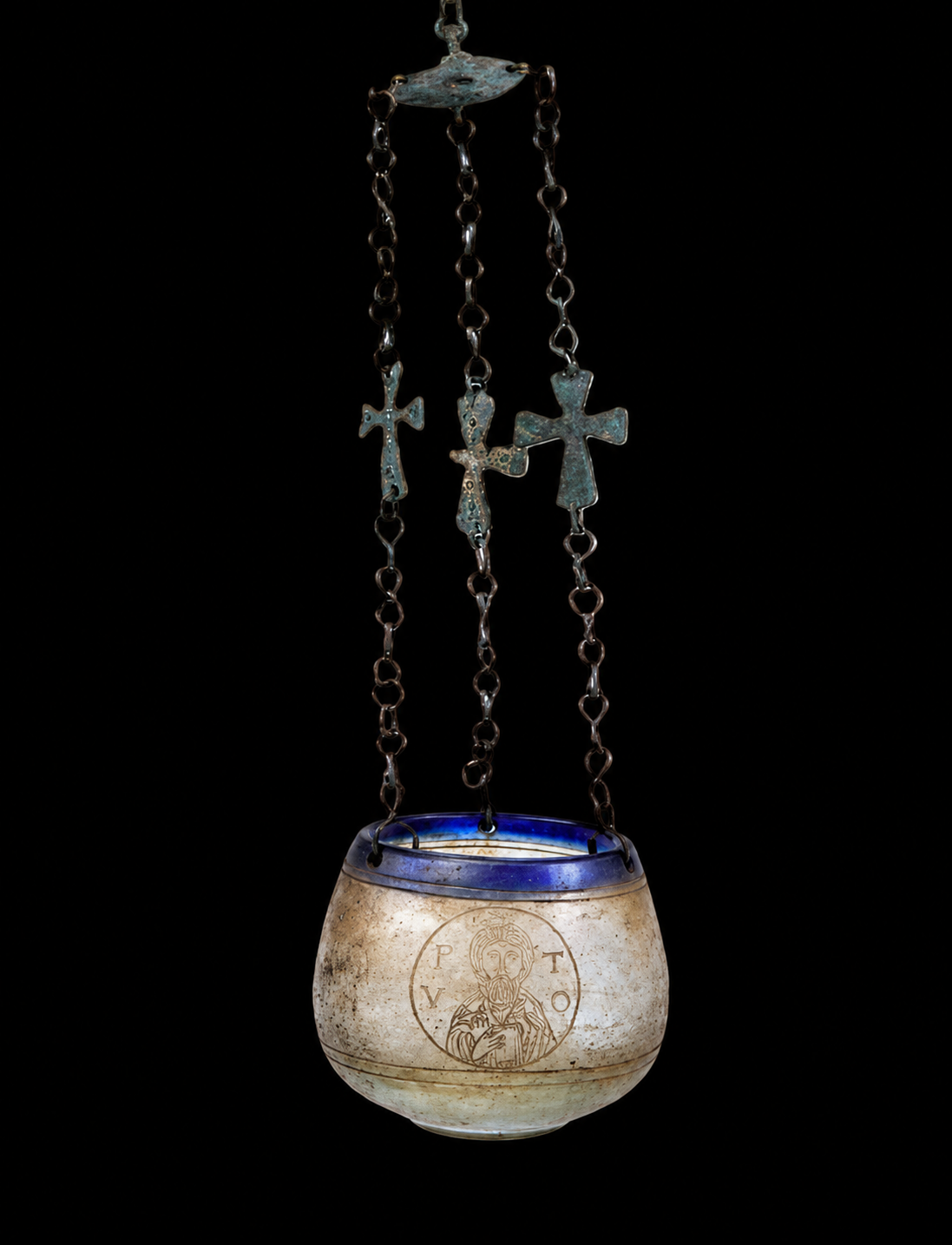
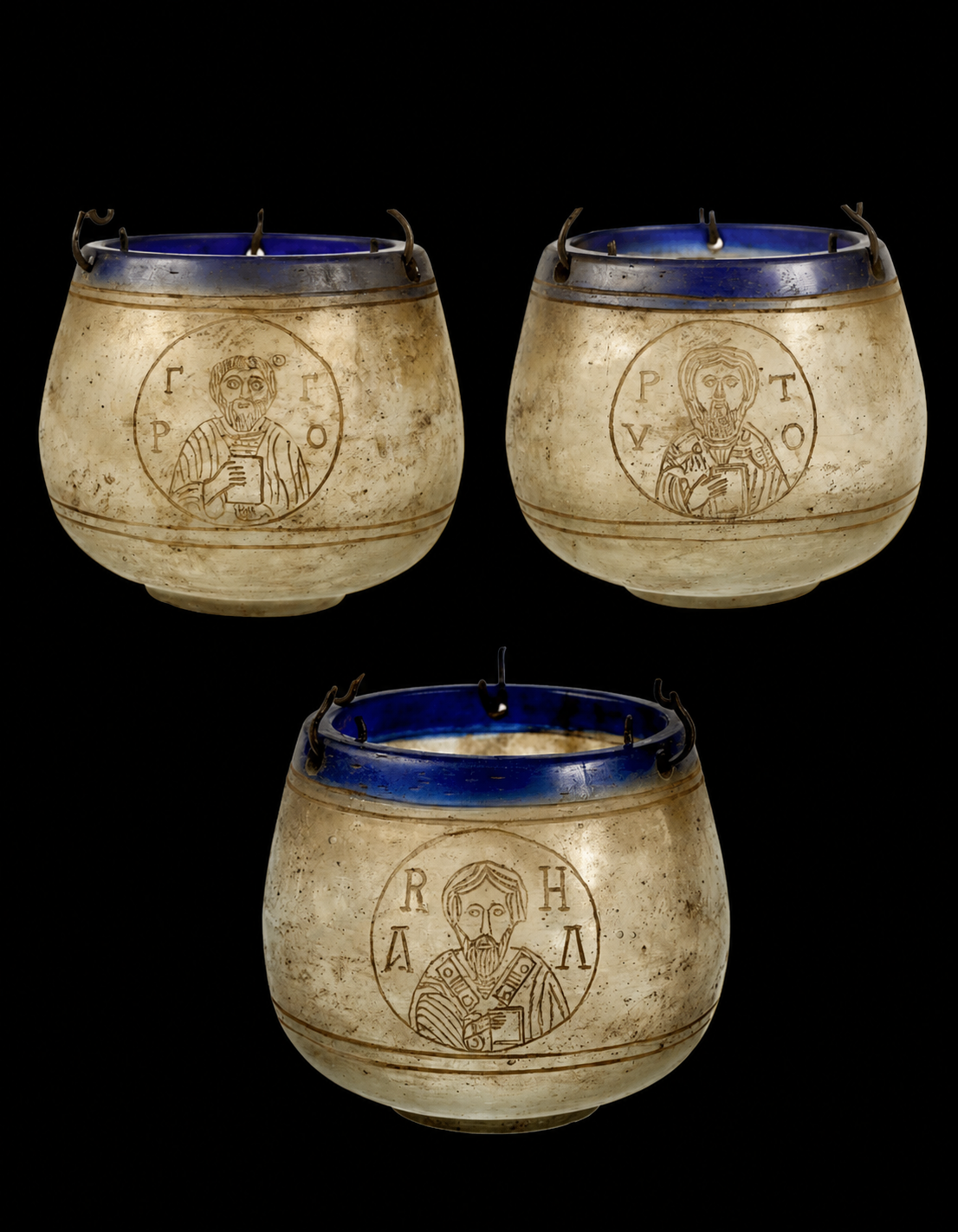
The clear yellowish cut glass globular lamp with deep cobalt-blue rim, with suspension three chains with crosses, on a central hanging domed medallion. The lamp walls cut with a horizontal register framed by two lines above and below. In between are three cut medallions, each with a bust of a saint identified by Greek abbreviations: Π–Τ–Ο for Peter, Γ–Ρ–Ο for Gregory, and Ρ–Η–Α for Andrew.
The kandile – a thick-walled, globular glass lamp of substantial weight, intended for suspension in an ecclesiastical setting. The vessel has a rounded body and a wide rim enriched with a continuous band of fused cobalt-blue glass, carefully integrated during reheating. The glass body is pale yellow-green with numerous small bubbles, characteristic of medieval tank glass.
The exterior is decorated with a wheel-engraved circular three medallions enclosing a frontal bust of three saints.
The figures are rendered in a schematic, hieratic style, with large almond-shaped eyes, linear beard and hair, and vertically striated garments. Around the medallion are engraved Greek letters forming an abbreviated devotional inscription consistent with Middle Byzantine Christological formulae.
Technique and Manufacture
The lamp is distinguished by its heavy glass fabric, markedly thicker than the more common thin-walled blown Byzantine lamp cups. Such vessels represent a technically demanding and higher-status production, likely intended for prominent liturgical use.
The cobalt-blue rim is integral to the vessel and not applied superficially. The use of cobalt glass in Byzantine ecclesiastical vessels is documented but rare, typically reserved for objects of symbolic or prestige value. The rim shows micro-chipping, rounding, and surface devitrification consistent with medieval manufacture and long-term suspension.
The engraving was executed by wheel, with variable line depth and rounded profiles softened by corrosion.
The combination of: figural imagery, engraved technique, heavy glass body, and cobalt-enriched rim place this lamp within a
restricted and elite group of Byzantine liturgical glass.
As no parallels have been found, the dating is based preliminary on the engraved figures of the saints, with the typical saints names abbreviations, style and iconography of the Byzantine liturgical art.
Cf. Early Byzantine and Later Glass Lamps
REFERENCE #
GL-BZ-1016
CIVILIZATION
Byzantine, 8th – 12th century AD
CONDITION
Fine condition
PRICE
SOLD
Frequently Asked Questions
A kandile is a thick-walled, globular glass lamp designed for suspension in ecclesiastical settings. It served as a liturgical lamp, often hung in churches, and was made from heavy glass to signify its importance and durability in religious ceremonies.
The lamp was made from pale yellow-green glass with numerous small bubbles, characteristic of medieval tank glass. It features a deep cobalt-blue rim fused during reheating, not applied superficially. The decoration was created by wheel engraving, producing circular medallions with busts of saints and Greek inscriptions, showcasing a technically demanding and high-status production.
The lamp features three medallions, each enclosing a frontal bust of a saint identified by Greek abbreviations: Π–Τ–Ο for Peter, Γ–Ρ–Ο for Gregory, and Ρ–Η–Α for Andrew. These figures are rendered in a schematic, hieratic style consistent with Byzantine liturgical art.
The cobalt-blue rim is integral to the vessel, fused during reheating rather than applied superficially. Cobalt glass was rare in Byzantine ecclesiastical vessels and typically reserved for objects of symbolic or prestige value, indicating the lamp's elite status and importance in liturgical use.
This lamp is distinguished by its heavy, thick-walled glass body, the use of cobalt-blue glass for the rim, and the detailed wheel-engraved figural imagery of saints with Greek inscriptions. These features place it within a restricted and elite group of Byzantine liturgical glass, unlike the more common thin-walled blown lamp cups.
The dating is preliminary and based on the engraved figures of the saints, their typical name abbreviations, and the style and iconography consistent with Middle Byzantine liturgical art. No direct parallels have been found, so stylistic and iconographic analysis guides the dating to between the 8th and 12th centuries AD.
The lamp is in fine condition, showing signs of medieval manufacture such as micro-chipping and surface devitrification on the rim. However, it has been sold and is no longer available for purchase.