Bar Kokhba Revolt Bronze Coin with Seven-Branched Palm Tree
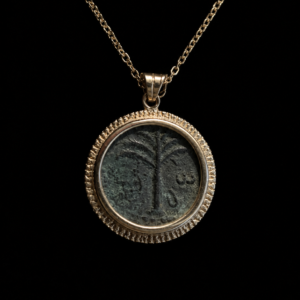
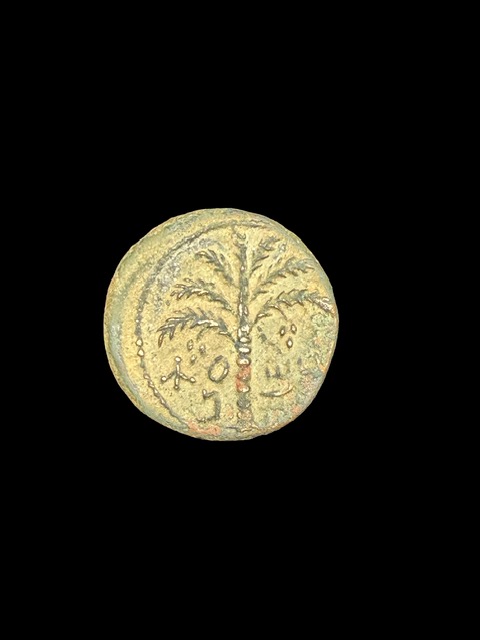
An important ancient Judaean bronze coin issued during the Bar Kokhba Revolt (A.D. 132–135), the last major Jewish uprising against Roman rule. The coin features a distinctive seven-branched date palm, a powerful symbol of Judaea’s agricultural prosperity, national identity, and ancestral homeland.
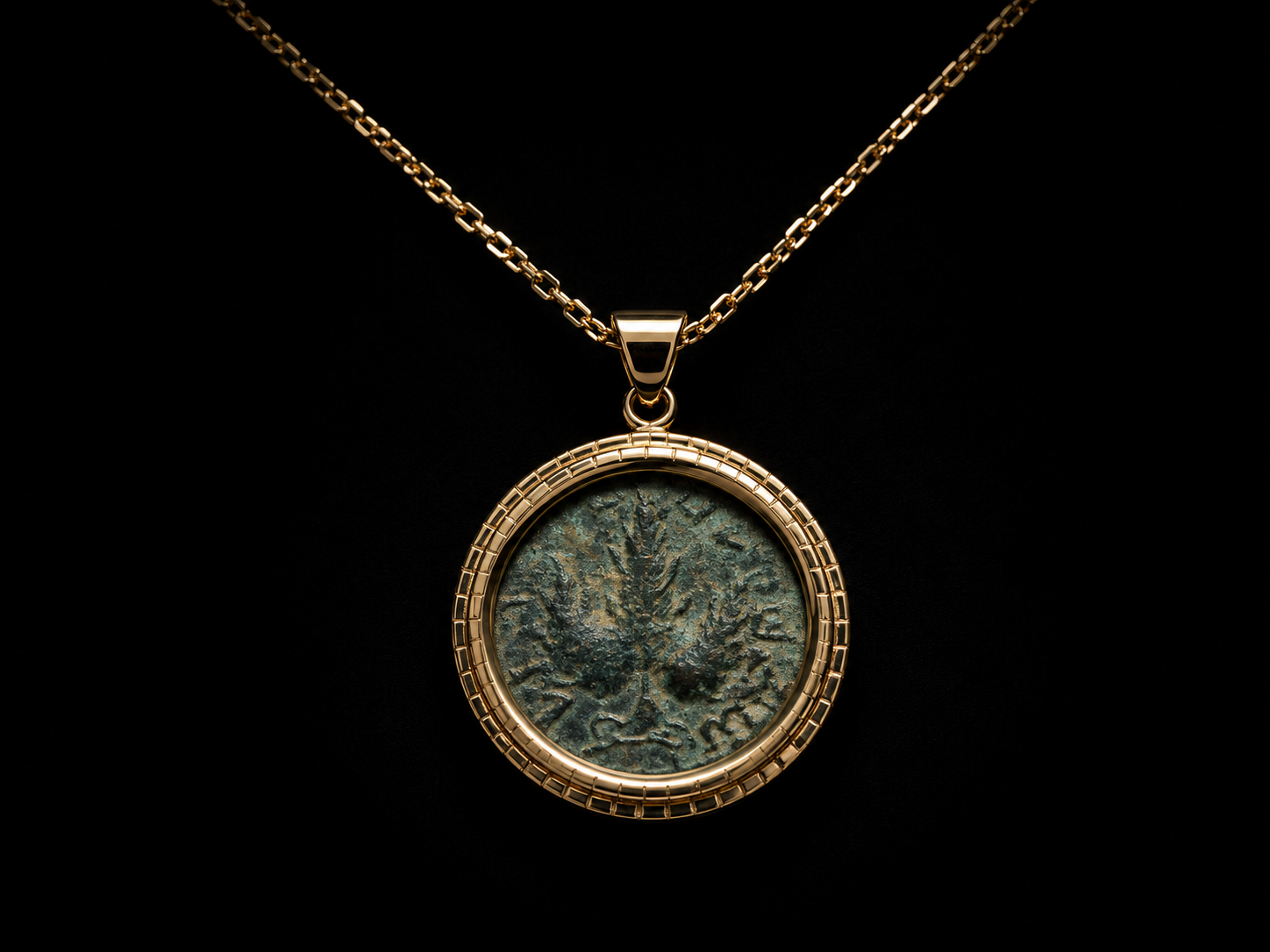
Obverse: A prominently rendered date palm with seven spreading branches, a textured trunk, and clusters of dates suspended beneath the foliage. The tree is surrounded by an ancient Hebrew inscription associated with the revolt’s aspirations for Jewish national independence and the liberation of Jerusalem.
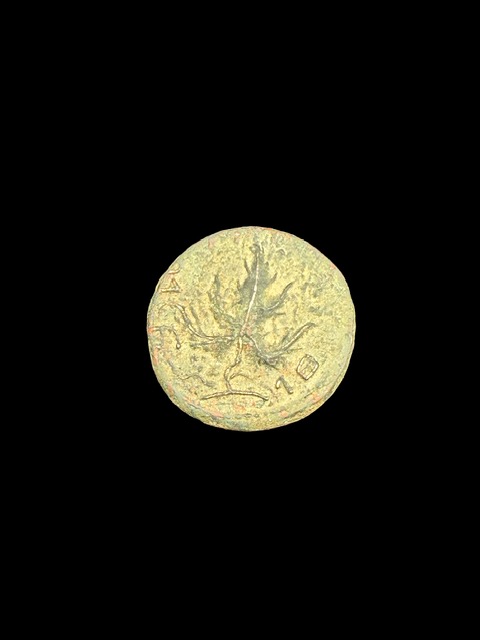
Reverse: A vine leaf with radiating veins and a slender stem, accompanied by Paleo-Hebrew lettering and subsidiary symbols. The vine was an important symbol of the fertility and agricultural abundance of the Land of Israel, frequently appearing in ancient Jewish art and coinage.
Historical Significance
The Bar Kokhba Revolt, led by Simon Bar Kokhba between A.D. 132 and 135, represented the final major attempt to restore Jewish sovereignty following the destruction of the Second Temple in A.D. 70.
During the uprising, the Jewish rebels issued their own distinctive coinage, frequently overstriking circulating Roman provincial coins. These issues deliberately replaced Roman imperial imagery with traditional Jewish symbols, including palm trees, grapevines, musical instruments, and representations associated with the Jerusalem Temple.
The palm tree and vine leaf express the close relationship between the Jewish people, their ancestral homeland, and the religious and agricultural traditions of ancient Judaea.
Numismatic Importance
Coins of the Bar Kokhba Revolt are among the most historically evocative issues of ancient Jewish numismatics. Their Hebrew inscriptions and traditional symbols provide direct material evidence of the political and religious aspirations of the revolt.
The present example preserves a clearly recognizable palm tree and vine leaf, with portions of the surrounding ancient Hebrew inscriptions visible. Its surfaces display natural green and earthen patination consistent with prolonged burial.
REFERENCE #
CO-JU-1011
CIVILIZATION
Ancient Judaea, Second Jewish Revolt Against Rome, Circa A.D. 132–135
CONDITION
Ancient bronze with green and earthen patina, areas of surface wear, and partial preservation of the inscriptions. The principal motifs remain clearly identifiable.
PRICE
$1500
PROVENANCE
Found in Judea
Frequently Asked Questions
The seven-branched date palm symbolizes Judaea's agricultural prosperity, national identity, and ancestral homeland. It was prominently featured on the coin to represent the Jewish people's connection to their land and their aspirations for independence during the Bar Kokhba Revolt.
The reverse side features a vine leaf with radiating veins and a slender stem, accompanied by Paleo-Hebrew lettering and subsidiary symbols. The vine represents fertility and agricultural abundance in the Land of Israel, a common motif in ancient Jewish art and coinage.
Coins issued during the Bar Kokhba Revolt replaced Roman imperial imagery with traditional Jewish symbols and Hebrew inscriptions, reflecting the political and religious aspirations of the Jewish rebels. They serve as direct material evidence of the revolt's goal to restore Jewish sovereignty after the destruction of the Second Temple.
The Jewish rebels often overstruck circulating Roman provincial coins with their own designs, deliberately replacing Roman imperial imagery with Jewish symbols such as palm trees and grapevines. This practice asserted Jewish independence and identity during the uprising.
The ancient Hebrew inscriptions surrounding the palm tree and on the reverse side express the revolt's aspirations for Jewish national independence and the liberation of Jerusalem. These inscriptions provide valuable insight into the political and religious motivations of the uprising.
Such coins often display natural green and earthen patination due to prolonged burial, along with areas of surface wear and partial preservation of inscriptions. Despite this, principal motifs like the palm tree and vine leaf usually remain clearly identifiable.
The coin dates to the Bar Kokhba Revolt (A.D. 132–135), the last major Jewish uprising against Roman rule aiming to restore Jewish sovereignty after the Second Temple's destruction in A.D. 70. It reflects the cultural and political identity of ancient Judaea during this turbulent period.
Related products
-
Bronze Coin of the Bar Kokhba Revolt Set in Gold
-
Silver Tetradrachm of Alexander the Great
-
Silver Coin of Alexander The Great
-
Pamphylia Tetradrachm with Athena and Nike