Ancient Judaean Masada Coin – First Jewish Revolt Bronze Prutah
An ancient Judaean bronze prutah issued during the First Jewish Revolt against Roman rule (A.D. 66–70), traditionally associated with the defenders of Masada and the final struggle for Jewish independence in the first century A.D.
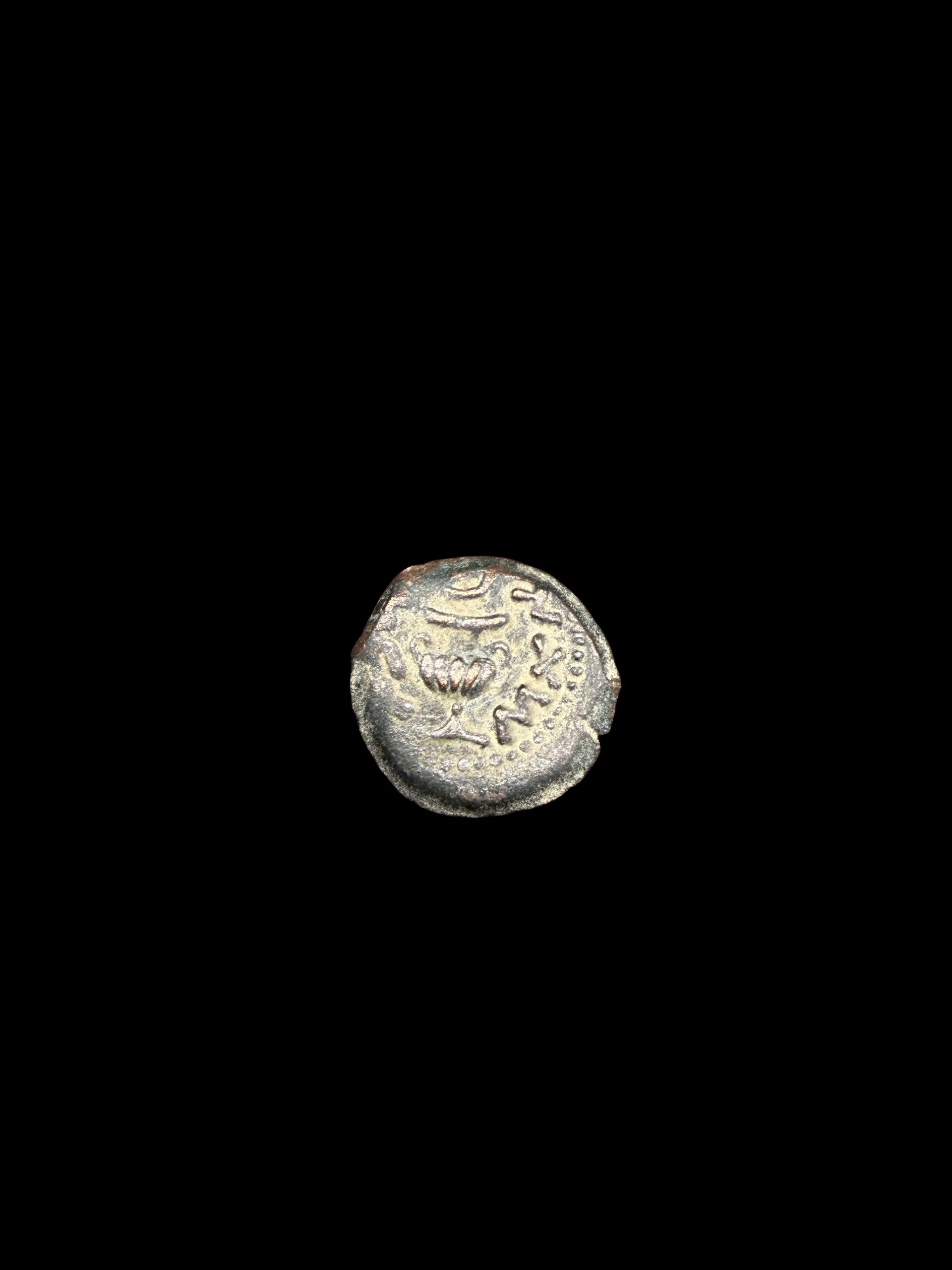
Obverse: A ceremonial amphora with a broad body, narrow neck, and handles, surrounded by an ancient Hebrew inscription associated with the revolt. The vessel represents the ritual and religious traditions of the Jewish people during the final years of the Second Temple.
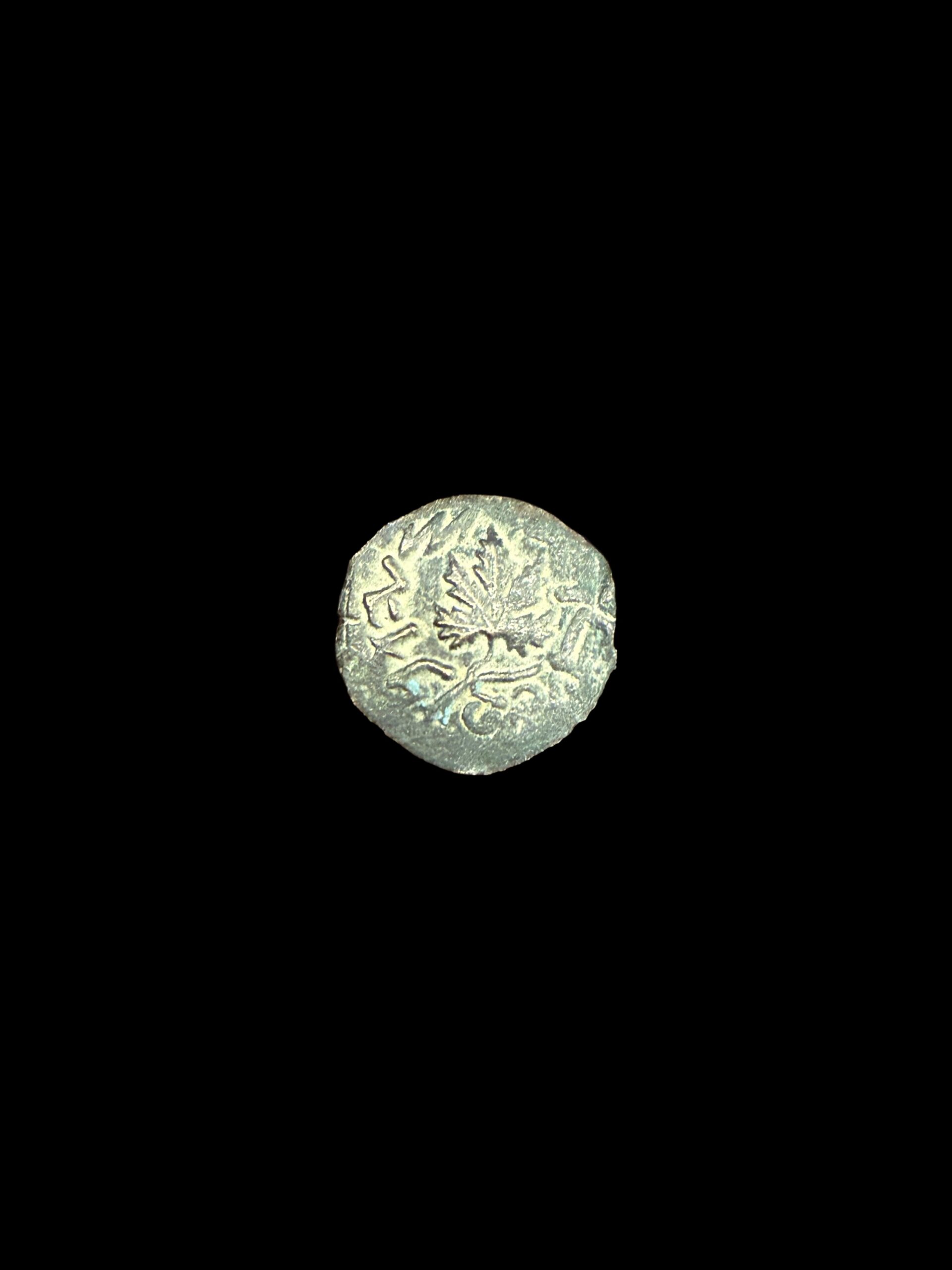
Reverse: A vine leaf with radiating veins and a prominent central stem, surrounded by an ancient Hebrew inscription. The vine was an enduring symbol of the fertility and prosperity of Judaea and appeared frequently in Jewish religious and artistic traditions.
Historical Significance
The First Jewish Revolt began in A.D. 66 as a major uprising against Roman imperial authority. During the rebellion, Jewish authorities in Jerusalem issued distinctive bronze and silver coinage bearing Hebrew inscriptions and traditional religious symbols, deliberately asserting Jewish national identity and independence.
Following the destruction of the Second Temple in Jerusalem in A.D. 70, the fortress of Masada became one of the last strongholds of Jewish resistance. Its defenders continued to resist Roman forces until the fortress fell, traditionally dated to A.D. 73 or 74.
Coins of the First Jewish Revolt have been recovered during archaeological excavations at Masada, providing direct evidence of the fortress’s connection to the uprising and its defenders.
Numismatic and Biblical Importance
The amphora and vine leaf motifs reflect the religious and agricultural symbolism of ancient Judaea during the Second Temple period. Such imagery deliberately avoided portraits of Roman emperors, emphasizing Jewish identity and the sacred traditions associated with Jerusalem.
The present example preserves recognizable central designs and portions of the surrounding ancient Hebrew inscriptions. Its dark bronze surfaces, natural earthen deposits, and areas of green patination are consistent in appearance with prolonged burial.
REFERENCE #
CO-JU-1002
CIVILIZATION
Judaea, First Jewish Revolt Against Rome, Circa A.D. 66–70
CONDITION
Ancient bronze with dark and green patination, age-related wear, and partially preserved inscriptions. The principal designs remain recognizable.
PRICE
$200
Frequently Asked Questions
The bronze prutah was issued during the First Jewish Revolt (A.D. 66–70) as a symbol of Jewish resistance against Roman rule. It reflects the assertion of Jewish national identity and independence through Hebrew inscriptions and religious symbols during a critical period leading up to the destruction of the Second Temple and the fall of Masada.
The obverse features a ceremonial amphora, representing Jewish ritual and religious traditions, surrounded by ancient Hebrew inscriptions. The reverse shows a vine leaf with radiating veins, symbolizing fertility and prosperity in Judaea, also surrounded by Hebrew inscriptions, emphasizing Jewish cultural and religious identity.
Hebrew inscriptions and religious symbols were used deliberately to assert Jewish national identity and independence from Roman rule. By avoiding Roman imperial portraits and emphasizing traditional Jewish imagery, the coins reinforced cultural pride and resistance during the uprising.
The discovery of First Jewish Revolt coins at Masada provides archaeological evidence linking the fortress to the Jewish defenders who resisted Roman forces after the fall of Jerusalem. It confirms Masada's role as a final stronghold during the revolt and the continued assertion of Jewish sovereignty.
The prutah exhibits dark bronze surfaces with natural earthen deposits and areas of green patination, consistent with prolonged burial. While there is age-related wear and some inscriptions are partially preserved, the principal designs remain clearly recognizable.
The amphora symbolizes ritual and religious traditions, while the vine leaf represents fertility and prosperity, both central themes in Jewish religious and agricultural life during the Second Temple period. These motifs reinforced cultural identity and spiritual values amid the turmoil of the revolt.
Related products
-
Silver Denarius of Tiberius Tribute Penny
-
Ancient Greek Silver Tetradrachm of Alexander the Great Set in 18K Gold
-
Silver Tyre Shekel Coin in an 18K Gold Pendent
-
Silver Coin of Tiberius Set in Gold