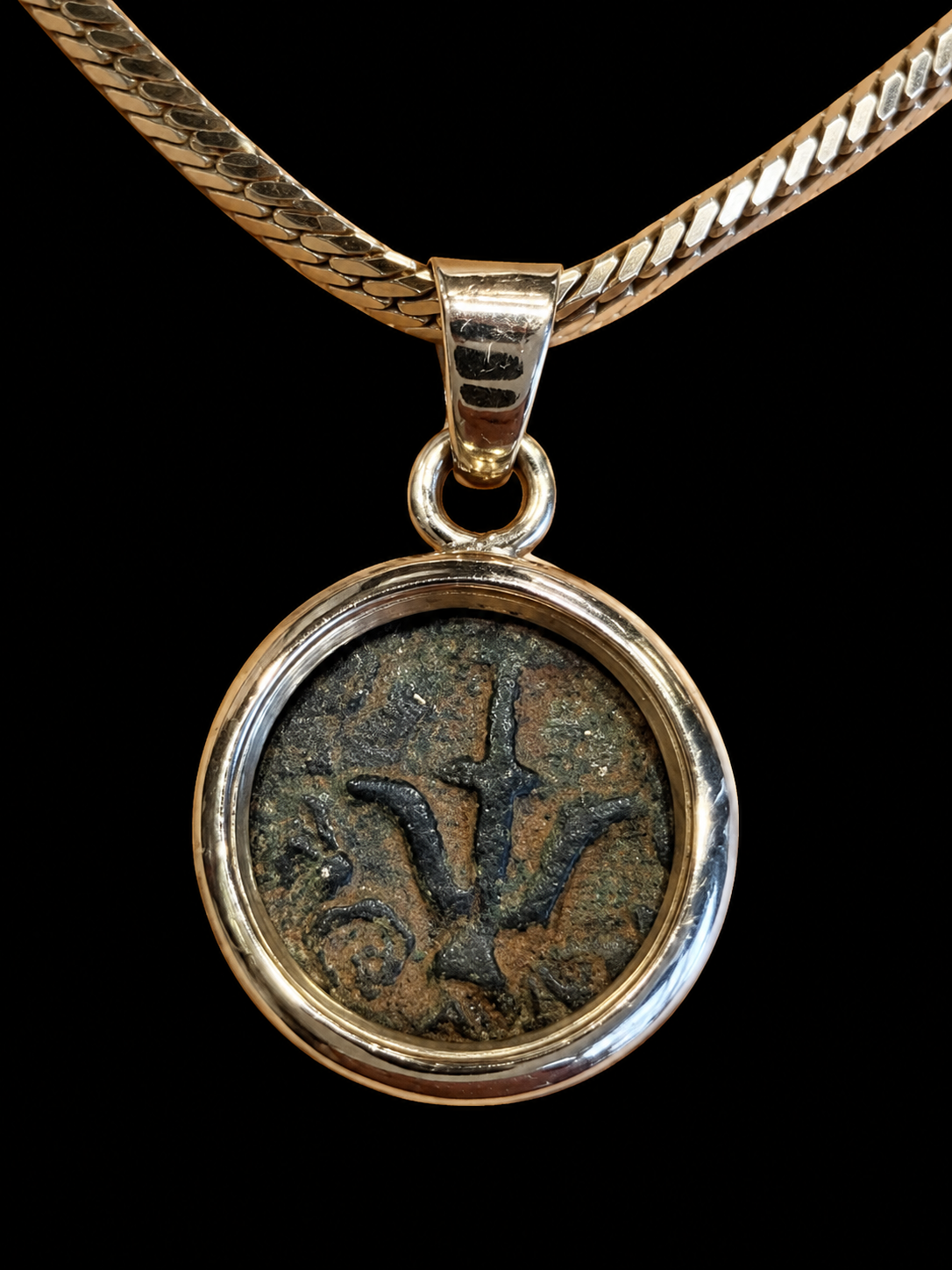
Ancient Judaean Bronze Widow’s Mite Coin Set in Gold
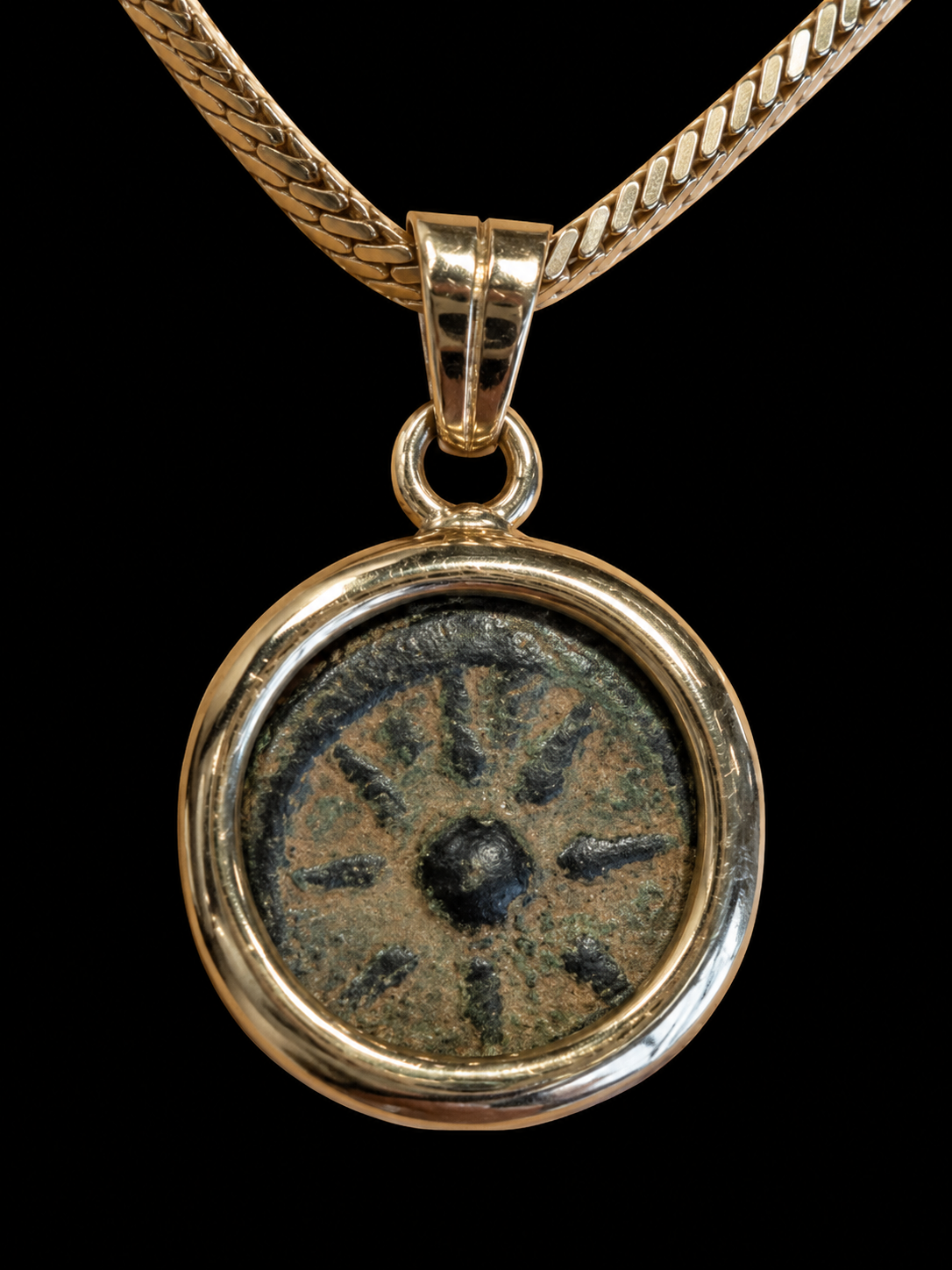
An important ancient Judaean bronze prutah, traditionally known as the Widow’s Mite, issued during the reign of Alexander Jannaeus, the Hasmonean king and High Priest of Judaea. This historically significant coin is elegantly mounted in a polished 14K gold pendant.
The obverse depicts a ceremonial anchor, a symbol of royal authority and maritime power, accompanied by traces of a Greek inscription identifying King Alexander.
The reverse features an eight-rayed star or wheel surrounding a central pellet, enclosed within a circular border. This distinctive design is characteristic of the bronze coinage of Alexander Jannaeus, reflecting the artistic and symbolic traditions of the Hasmonean kingdom.
The Widow’s Mite holds profound significance in biblical history, being traditionally associated with the account of the poor widow who offered two small coins to the Temple treasury in Jerusalem. As recorded in Mark 12:41–44 and Luke 21:1–4, Jesus praised her generosity, declaring that she had given more than those who contributed from their abundance.
Struck approximately a century before the ministry of Jesus, coins of this type continued to circulate in Judaea during the first century A.D. and are widely associated with the small bronze coins described in the Gospel accounts.
The coin retains its original ancient patina and distinctive Hasmonean imagery, beautifully complemented by its elegant gold setting. A remarkable combination of biblical heritage, ancient Jewish history, and fine contemporary jewelry, preserving a tangible connection to the Holy Land and the world of Jesus Christ.
REFERENCE #
JW-RM-1084
CIVILIZATION
Hasmonean Period, Reign of Alexander Jannaeus, 103–76 B.C
PRICE
$1,100
PROVENANCE
Found in Judea
Related products
-
Silver Tyre Shekel Coin in an 18K Gold Pendent
-
Silver Tetradrachm of Alexander the Great
-
A Roman Silver Denarius of Emperor Augustus
-
Silver Coin of Augustus Set in Gold